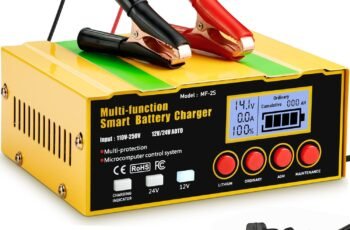
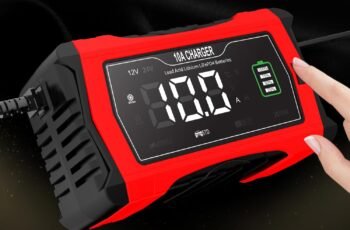
Have we ever wished we could use just one smart charger for almost all our vehicles and battery systems instead of juggling a whole stack of gadgets?

What Is the C20 Adjustable Battery Charger BLB-C20?
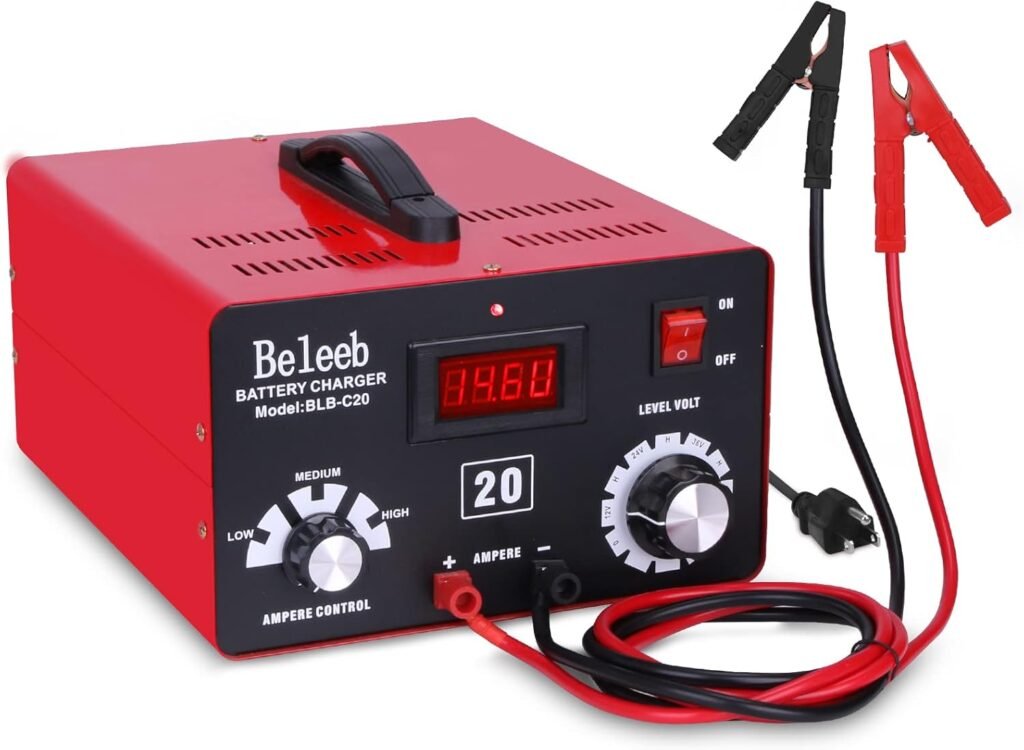
When we first look at the C20 Adjustable Battery Charger 12V 24V 36V 48V, 12A Pulses of High-Voltage Battery Desulfator Maintainer with Smart Chip (BLB-C20), we are essentially looking at a multi-voltage, multi-chemistry battery charger and maintainer. It is built to handle several common battery types and voltages using one compact device.
This means we can support our car, golf cart, motorcycle, RV, boat, or off‑grid battery bank with a single charger. The C20 is designed to be flexible, protective, and user-friendly, especially for those of us who maintain more than one battery-powered machine.
Main Features at a Glance
The strongest appeal of the C20 lies in its ability to support several voltages, multiple battery types, and two distinct operating modes. It is not only a charger but also a battery maintainer and desulfator.
Here is a quick summary that helps us understand what it offers before we go deeper into each aspect.
| Feature Category | Details |
|---|---|
| Supported Voltages | 12V, 24V, 36V, 48V |
| Max Current Output | 12V – 12A, 24V – 10A, 36V – 8A, 48V – 6A |
| Battery Types | SLA, AGM, GEL, lead‑acid, lithium, LiFePO4, deep-cycle |
| Modes | Normal Mode, “H” Mode (high-voltage pulse / equalizing) |
| Core Functions | Charging, maintenance, desulfation, equalization |
| Safety | Overload circuit breaker, automatic control chip, smart voltage logic |
| Use Cases | Cars, motorcycles, RVs, ATVs, SUVs, golf carts, forklifts, boats |
| Weight Class | Lightweight vs C40 model (about 1/4 lighter) |
By seeing all this together, we can already sense that this is meant as an all‑in‑one solution, especially where we need to work with multiple systems across different voltages.

Supported Voltage Ranges: How Flexible Is It?
The C20 stands out because we can use it as a 12V, 24V, 36V, or 48V battery charger. That covers most small to medium vehicle and equipment setups we commonly own.
We still need to select the correct voltage setting manually before charging, but once we do, the internal smart chip manages the rest. This flexibility can dramatically cut down on how many dedicated chargers we need to own or store.
Voltage-Specific Current Output
For each voltage setting, the maximum charging current is different. This is important because it affects how fast we charge and how safely the charger handles different battery banks.
- 12V: up to 12A
- 24V: up to 10A
- 36V: up to 8A
- 48V: up to 6A
We adjust the charging rate using the AMPERE knob, and this gives us a lot of control. For a smaller battery, we might keep it low and gentle, while for a larger deep-cycle bank, we can push closer to the maximum for quicker charging when needed.
Multi-Chemistry Support: One Charger for Many Batteries
If we maintain several types of vehicles, we may have different battery chemistries scattered across them. The C20 aims to cover that entire spread.
It is built to handle the following battery types:
- Traditional flooded lead‑acid
- SLA (Sealed Lead Acid)
- AGM (Absorbed Glass Mat)
- GEL
- Deep-cycle lead‑acid
- Lithium
- LiFePO4 (with BMS)
This versatility means we can move between our car, motorcycle, RV, ATV, golf cart, and boat without swapping chargers. We just need to be certain we choose the correct voltage and respect the battery’s chemistry limitations, especially for lithium-based packs.
Important Note for Lithium and LiFePO4
While the C20 is suitable for lithium and LiFePO4 batteries, there is a key caution: we should not connect lithium or LiFePO4 batteries that do not have a built-in BMS (Battery Management System) for long-term maintenance charging.
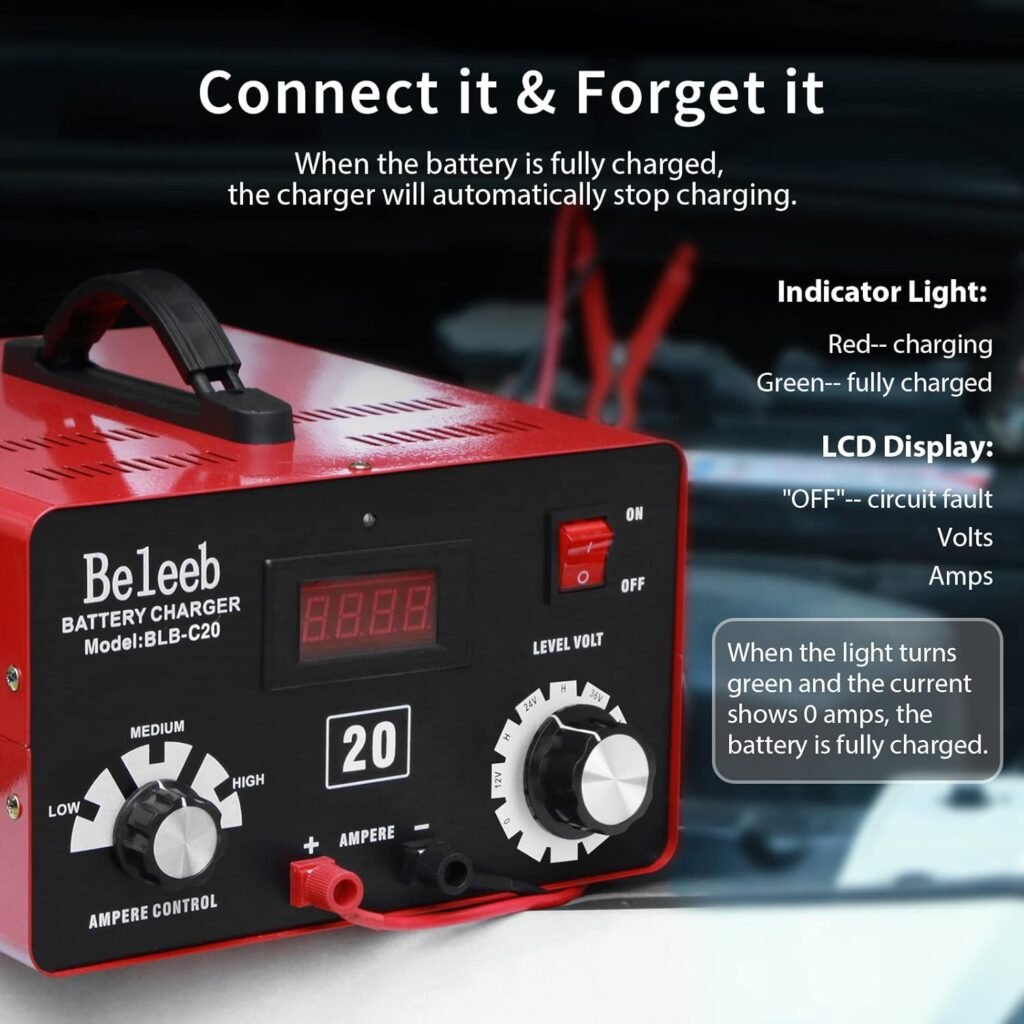
For lithium packs, the BMS is what keeps cells balanced and prevents overcharge or over-discharge. The charger’s “connect it and forget it” convenience really applies more safely to lead‑acid and to lithium packs with robust BMS protection.
Two Charging Modes: Normal vs “H” Mode
A key part of what makes the C20 more than a generic charger is the presence of two distinct charging modes: Normal mode and “H” mode. Each is designed for different use cases and battery conditions.
These modes help us decide whether we are doing daily charging, urgent charging, or maintenance-oriented work on tired batteries.
Normal Mode: Everyday Charging and Quick Boosts
Normal mode is what we use for typical charging sessions. We connect the charger, set the proper voltage, and then adjust the AMPERE knob based on how fast or gentle we want the charge to be.
Within normal mode we have two main approaches:
- LOWER rate: gentler charging, better for battery longevity and smaller batteries
- HIGH setting: quicker charging when we need a faster turnaround
Normal mode covers standard charging for our vehicles and equipment. If we do not have any obvious battery issues, this is where we should stay most of the time.
“H” Mode: High-Voltage Pulses and Equalization
The “H” mode is what makes the C20 truly stand out for maintenance and troubleshooting. “H” stands for pulses of high voltage, and functionally it is an equalizing and desulfating mode.
In this mode the charger sends controlled high-voltage pulses into the battery bank, with the goal of:
- Breaking down lead sulfate crystals on the plates (desulfation)
- Equalizing the voltage between cells in a multi-battery or multi-cell system
This is especially relevant for systems like golf carts, which often use 4 to 8 batteries in series. If one battery drifts behind or becomes partially sulfated, “H” mode can sometimes bring it back closer to normal performance.
When we use “H” mode, the manufacturer recommends keeping the charging rate low (“LOW” on the AMPERE knob). The idea is to allow a more controlled maintenance and equalizing process rather than blasting the pack with high current.
Intelligent Charging Program: How Smart Is It?
Beyond just providing power, the C20 uses a smart chip to manage charging stages and adapt to the battery’s condition. This is key to avoiding both undercharging and overcharging.
The charger automatically adjusts both voltage and current after we set the main voltage category. That means it can detect the battery status and respond appropriately, instead of just pushing a fixed output.
Constant Current and Constant Voltage Management
The C20 uses a mixture of:
- Constant current (CC): provides stable current at the beginning or when the battery is deeply discharged
- Constant voltage (CV): holds a set voltage as the battery nears full, allowing current to taper off
This pattern matches how good-quality chargers manage charging for lead‑acid and compatible lithium batteries. It helps fill the battery fully without stressing it unnecessarily.
Zero Voltage Charging and Recovery Help
Another notable feature is zero voltage charging. In practice this allows the charger to attempt to charge batteries that have fallen to a very low voltage, which many basic chargers simply refuse to recognize.
This can be useful when:
- A vehicle sat unused for months, and the battery dropped too low
- A battery in a multi-battery series string fell behind the others
- We want to troubleshoot whether a seemingly “dead” battery can be recovered at least partially
The charger will try to bring such batteries back by providing controlled, low-level power. It is not magic, and truly damaged batteries will still need to be replaced, but this feature can sometimes save us money and help extend service life.

Battery Equalization and Desulfation: What “H” Really Does for Us
One of the standout roles of “H” mode is equalization, often called equalizing charge. Equalizing is especially relevant when we have multi-battery setups like golf carts, RV house banks, and some off‑grid power systems.
Over time, some batteries in a bank charge more fully than others. This imbalance reduces total available capacity and can shorten system life.
Equalization in Golf Carts and Multi-Battery Systems
In a typical golf cart, we may have 4, 6, or 8 batteries. It is not unusual for one or two batteries to degrade faster. When that happens, the cart starts feeling weak, even if we replaced a few batteries recently.
“H” mode allows us to:
- Push higher pulses to tackle sulfation on weaker batteries
- Bring cell voltages across batteries closer into alignment
- Potentially postpone full replacement of an entire bank
We may decide to replace only the worst battery and then use “H” mode to help harmonize the rest temporarily, especially if we are weekend users or on a budget. While this is not a permanent cure for deeply aged batteries, it can buy us more run time and keep our system more usable.
Desulfation: Battling the Crystals
Lead sulfate crystals naturally form in lead‑acid batteries as they discharge. If a battery is left discharged for a long time, these crystals harden and become difficult to convert back, causing loss of capacity.
The high-voltage pulses in “H” mode can:
- Break down some of the hardened sulfate
- Improve plate activity
- Allow the battery to accept and hold more charge again
We should not expect this mode to turn a completely failed battery into a new one, but it can often turn a sluggish, underperforming battery into a more usable one. Over time, using maintenance routines like “H” mode can slow capacity loss.
Safety and Protection: Can We Truly “Connect It and Forget It”?
One of the marketing angles of the C20 is that we can connect it and leave it running around the clock, especially on lead‑acid batteries. The built‑in safety features are what make this possible.
It uses:
- An overload circuit breaker to prevent excessive current
- An automatic control chip that monitors charging behavior and battery feedback
For lead‑acid batteries, this means we can leave them on long-term maintenance without constantly babysitting the charger. The smart logic adjusts output, and the protections reduce the risk of overcharging.
Long-Term Use and Caution With Lithium
However, there is an important nuance. The manufacturer clearly says we should not connect lithium or LiFePO4 batteries without BMS for an extended period. Without a BMS, there is no internal balancing or protection at the cell level, so long-term floating or maintenance charging could pose a risk.
For LiFePO4 or other lithium packs with an internal BMS, long-term use is generally safer, but we should still follow the recommendations of the battery manufacturer. Many lithium battery makers recommend avoiding constant float charging and prefer charge‑and‑disconnect usage patterns.
Using the AMPERE Knob: Charging Rate Control
The AMPERE knob is a simple but critical control on the C20. Instead of giving us only one fixed current, the charger lets us set the rate based on our needs and the size of our battery.
On smaller batteries or when we want to prioritize longevity, we set a lower rate. On larger deep-cycle batteries or when we need faster charging before a trip, we can turn the knob up.
LOW vs HIGH in Daily Use
For day-to-day use we might follow guidelines like:
-
LOW setting:
- Ideal for motorcycle batteries
- Good for maintenance charging on cars and small deep-cycle packs
- Better when we have time and want to minimize wear on the battery
-
HIGH setting (in Normal mode):
- Useful for large 12V deep-cycle batteries used in RVs and boats
- Helpful when we need to bring a battery from mid-level to full relatively quickly
- Should be used with awareness of battery size and condition
In “H” mode, the recommendation is to stick to LOW. That way, the equalizing and desulfation process is controlled and less stressful.
Real-World Use Cases: Where the C20 Fits Into Our Life
Many of us have more than one powered machine that uses a battery. The C20 is especially appealing when our household or workshop looks like a small fleet.
Here are some common use cases where this charger fits neatly.
Cars, SUVs, and Light Trucks
For standard 12V automotive batteries, the C20 works as both a regular charger and a long-term maintainer. We can:
- Recover low-voltage batteries that sat unused during winter
- Keep a classic car or seldom-used vehicle topped up in the garage
- Use low or medium current levels for steady, safe charging
Cars and light trucks typically do very well with the charger in Normal mode and occasional maintenance use if we store the vehicle.
Motorcycles, ATVs, and Small Vehicles
Smaller batteries need gentle handling, and the AMPERE knob lets us keep the current low for these systems.
We can charge:
- Motorcycles
- ATVs and UTVs
- Small scooters and similar light vehicles
By using a lower current, we reduce the risk of overheating or stressing a small-capacity battery, and we extend its life between replacements.
RVs, Boats, and Deep-Cycle Banks
In the RV and marine world, we often deal with larger deep-cycle batteries or banks of them. The C20 supports 24V, 36V, and 48V as well, so it can integrate with multi-battery systems.
We can use it to:
- Maintain house batteries in an RV or camper when parked
- Charge marine deep-cycle batteries between outings
- Perform equalizing charges on lead‑acid banks to keep them healthy
The smart CC/CV behavior and “H” mode equalization provide tools we usually see in more specialized chargers and maintainers.
Golf Carts and Industrial Equipment
Golf carts are one of the standout use cases mentioned directly in the product details. With 4–8 batteries arranged in series for 36V or 48V systems, partial failures and imbalance are common.
“H” mode plays a strong role here:
- We can focus on keeping the entire pack better balanced
- We may nurse a cart along with only one or two replacement batteries instead of a full bank swap
- Equalization becomes a regular part of our maintenance schedule
Beyond golf carts, the C20 can also support equipment such as:
- Forklifts (within the supported voltage range)
- Small industrial carts or tugs
- Warehouse vehicles that rely on lead‑acid battery banks
Lightweight Design Compared With the C40
The C20 is described as a “lightweight version” compared to the manufacturer’s C40 model. Specifically, it is said to be roughly a quarter lighter.
For many of us, this matters when we:
- Carry the charger between different locations or sheds
- Work on vehicles in different bays or outdoor spots
- Need to store the charger in a small space
The tradeoff is that the C20 does not support 60V or 72V batteries, which the C40 may handle. If our systems stay within 12V to 48V, the lighter weight and more portable design make the C20 a better everyday choice.
Ease of Use and Day-to-Day Practicality
One of the underrated strengths of the C20 is how straightforward it is to integrate into our routine. While it includes advanced functions like equalization and desulfation, operating it does not require deep technical knowledge.
We mainly need to:
- Select the correct voltage (12V, 24V, 36V, or 48V).
- Choose the desired mode (Normal for charging, “H” for maintenance work).
- Adjust the AMPERE knob based on battery size and urgency.
- Connect the clamps to the battery terminals correctly.
- Let the smart chip manage the rest.
Over time, we learn the sweet spots for each of our batteries: when to use HIGH vs LOW in Normal mode, and how often we want to schedule “H” mode equalization for our deep-cycle banks or golf cart packs.
Pros and Cons: Our Balanced Take
No charger is perfect for every situation, so it helps to weigh where the C20 shines and where it has limits. This gives us a clearer picture for our own use.
Advantages
We see several strong positives:
- Wide voltage support (12V–48V) for a single charger
- Multi-chemistry compatibility including SLA, AGM, GEL, lead‑acid, lithium, LiFePO4
- Smart chip with CC/CV behavior and automatic adjustment
- “H” mode for equalization and desulfation, especially useful for golf carts and deep-cycle banks
- Zero voltage charging that can help revive low-voltage batteries
- Connect-it-and-forget-it convenience for lead‑acid systems thanks to built-in protections
- Lightweight design compared with the C40, easier to carry and store
- Adjustable current through the AMPERE knob for flexible charging speeds
For many of us with mixed fleets of vehicles, this combination can reduce clutter, simplify maintenance, and extend battery life.
Limitations
There are also some constraints we should keep in mind:
- It does not support 60V or 72V systems (those would require a different model, like the C40).
- Long-term connection is not advised for lithium or LiFePO4 packs without a BMS.
- We must manually select the correct voltage before charging; setting it wrong could damage a battery.
- While “H” mode helps with sulfation and imbalance, it cannot repair severely damaged or worn-out batteries.
These are not deal-breakers for most of us, but they remind us to use the charger thoughtfully and to respect the limitations of both the charger and the batteries we own.
Who Will Benefit Most From the BLB-C20?
The more varied our battery setups are, the more value we tend to get from a charger like this. It is especially helpful if we fit one or more of these profiles.
We are likely an ideal user if we:
- Own multiple vehicles: a car or truck plus a motorcycle, ATV, or side-by-side
- Have an RV, camper, or boat that sits for periods without use
- Run a golf cart at home, on property, or at a course
- Maintain deep-cycle banks for solar, marine, or off‑grid applications
- Frequently encounter low-voltage or slightly neglected batteries and want a way to recover them when possible
- Prefer a single, smart charger instead of several different chargers for different voltages
For a single daily driver car with a simple 12V battery, the C20 might feel like more capability than we need. But if our battery world is broader and more complex, its flexibility starts to pay off quickly.
Best Practices for Getting the Most Out of the C20
To put the charger to work effectively and safely, there are a few habits we can adopt. These will help us protect our batteries, extend their lifespan, and get consistent value from the device.
Always Match Voltage Correctly
Before connecting, we should double-check:
- The battery system voltage (12V / 24V / 36V / 48V)
- The selector setting on the charger
This single step prevents mischarging, which can be harmful to batteries and potentially unsafe. It takes just a moment to verify and saves a lot of trouble later.
Use Low Current for Smaller Batteries
For motorcycles, scooters, and smaller ATV batteries, we set the AMPERE knob to a low value. Gentle charging reduces heat and extends the service life of these smaller units.
For large deep-cycle batteries or bigger automotive batteries, we can experiment with higher current levels in Normal mode, especially when time is limited.
Schedule “H” Mode for Maintenance, Not All the Time
“H” mode is best treated as a maintenance tool:
- Use it occasionally for golf cart batteries or RV house banks
- Consider running it when we notice a drop in performance or range
- Keep the current on LOW while in “H” mode, as recommended
We do not need to leave “H” mode engaged constantly; instead, we use it strategically to keep our batteries more balanced and less sulfated.
Respect Lithium and LiFePO4 Guidelines
For lithium and LiFePO4 batteries:
- Confirm there is a built‑in BMS before using long-term maintenance charging
- Follow the charging voltage and procedure recommended by the battery manufacturer
- Avoid leaving lithium packs indefinitely on maintenance charge if the manufacturer advises against it
By doing so, we keep both our batteries and the charger within their safe operating ranges.
Our Overall Assessment of the C20 Adjustable Battery Charger BLB-C20
Looking at the C20 as a whole, we see a charger that combines versatility, intelligence, and maintenance capability in a compact, lighter-weight housing. It is not just a basic charger; it is more like a tool for battery care over the long term.
We appreciate that one unit can handle:
- 12V, 24V, 36V, and 48V systems
- A wide range of battery chemistries
- Standard charging, emergency quick charging, and maintenance through equalization and desulfation
For households, workshops, or small fleets that manage several battery-driven machines, this can replace multiple chargers and add some advanced functions we usually only see in more specialized equipment.
While we must still use it responsibly—choosing correct voltage, being careful with lithium packs, and recognizing that “H” mode cannot reverse extreme battery damage—it offers strong value and real convenience.
In our view, the C20 Adjustable Battery Charger 12V 24V 36V 48V, 12A Pulses of High-Voltage Battery Desulfator Maintainer with Smart Chip (BLB-C20) is an excellent choice when we want one friendly, capable charger to manage many different batteries and keep them performing better for longer.
Disclosure: As an Amazon Associate, I earn from qualifying purchases.