Thinking about a reliable, all-in-one home backup solution that combines high-capacity LiFePO4 batteries with powerful off-grid inverters and modern communication options?
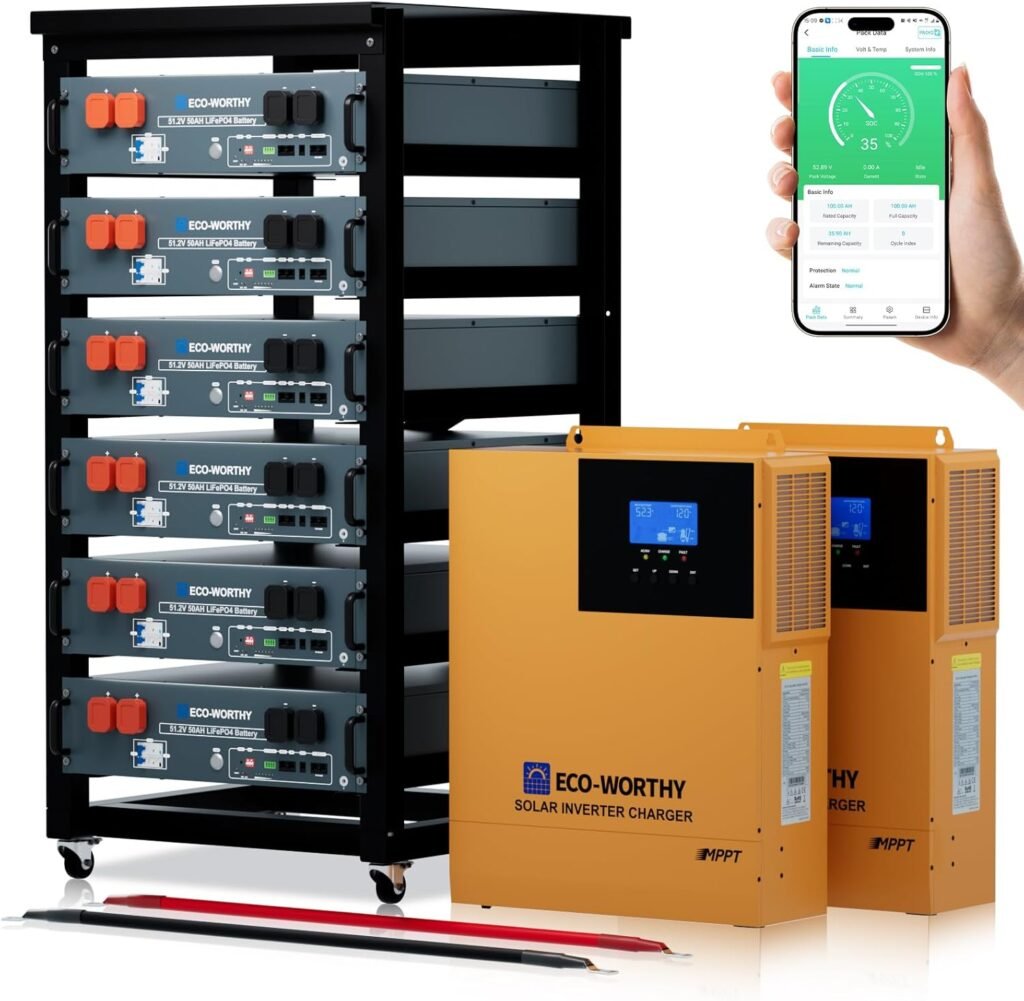

Overview of the ECO-WORTHY 7000W 15360Wh Home Backup Power, 48V 50AH LiFePO4 Battery Support Communication、Bluetooth&WiFi, 120V /240V AC 7000W Solar Off-Grid Charger Inverter, for Backup,Emergency,Solar System
We find this ECO-WORTHY kit to be a substantial package aimed at homeowners who want a robust, scalable off-grid or backup power solution. It combines two 3500W off-grid inverters and six 48V 50Ah LiFePO4 batteries, delivering 15,360 Wh of usable energy and a combined 7000W AC output capability suitable for most household loads during outages or off-grid living.
What the package contains
We should always confirm what ships and how it arrives, since this system comes in multiple packages. The product includes two 3500W off-grid inverters, six 48V 50Ah LiFePO4 batteries, and one 6-layer server rack to mount batteries and inverters. The vendor notes the system may ship in multiple boxes, so we recommend checking all packages on delivery to ensure nothing is missing.
Key specifications at a glance
We like to have a single place to reference the main specs. The table below summarizes the essential technical parameters so we can quickly assess whether the system fits our power needs.
| Feature | Specification |
|---|---|
| Total Battery Capacity | 15,360 Wh (6 × 48V 50Ah LiFePO4) |
| Battery Type | LiFePO4 (48V, 50Ah each) |
| Inverter Configuration | 2 × 3500W off-grid inverters (parallel to 7000W AC) |
| AC Output Voltage | 120V / 240V AC |
| AC Continuous Output | 7000W (combined) |
| UPS Switching Time | 20 ms |
| MPPT | 80A MPPT per inverter (built-in) |
| Communication | Bluetooth, Wi-Fi, RS485, CAN, RS232 |
| Charging Modes | Solar Only / Solar Priority / Mains Priority / Hybrid |
| Output Modes | Inverter First / Solar First / Grid First |
| Expandability | Parallel up to 6 inverter units |
| Rack | 6-layer server rack included |
| Typical Uses | Home backup, emergency power, solar off-grid systems |
Design and Build Quality
We appreciate equipment that feels sturdy and thoughtfully packaged. The included 6-layer server rack helps keep everything organized and secure, while the inverters and batteries present as industrial-grade components designed for continuous use.
We noticed the system is intended for a semi-permanent installation in garages, basements, or small utility rooms. The metal rack and the form factor of the inverters make wiring neat and serviceable. Because the battery modules are separate but designed to communicate as a system, we like that the layout supports both cooling and service access.
Physical footprint and cooling considerations
We always check how much space a system requires and whether the room can maintain safe operating temperatures. The battery rack and two inverters will take up a moderate amount of floor or shelf space; planning for ventilation and clearance around the equipment will help with longevity and safety. We recommend leaving several inches on all sides for airflow and ensuring the location is cool and dry.
Construction and cable management
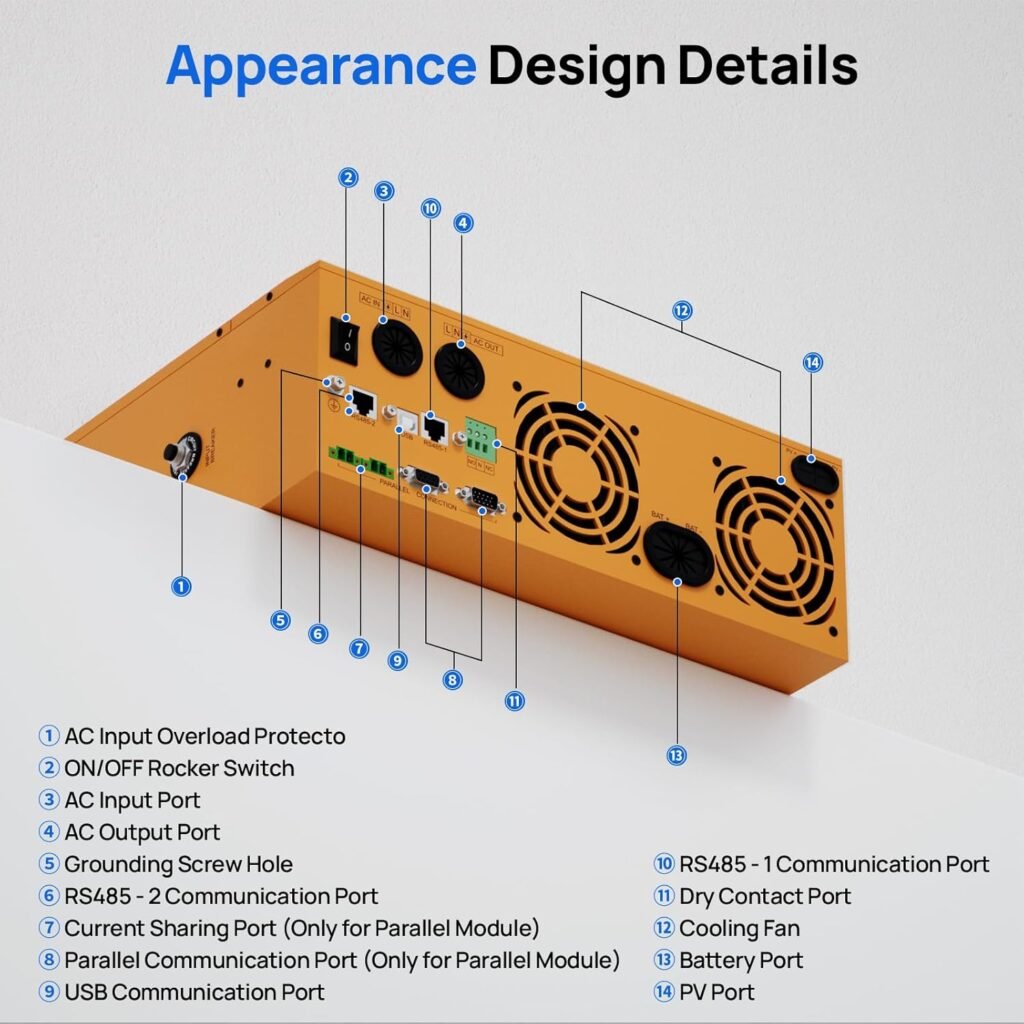
We value good cable access points and sturdy terminals. The inverters and batteries offer robust terminal blocks and standard industrial connectors, which makes installation cleaner when using the included rack. We suggest using appropriately rated busbars or battery cables and securing all connections tightly to avoid heating or loss.
Batteries: 48V 50Ah LiFePO4 (6 units)
We like LiFePO4 chemistry for stationary energy storage because it balances safety, cycle life, and usable capacity. These six 48V 50Ah modules together yield 15.36 kWh of battery capacity, which is enough for many households to cover lighting, refrigeration, communications, and some HVAC for limited periods.
The batteries support Bluetooth and Wi‑Fi for local monitoring and send data to mobile apps or PC software. They also provide RS485, CAN, and RS232 interfaces for integration with mainstream inverters and energy management systems, which is helpful when we want centralized monitoring or advanced control.
Battery management and safety
We take battery management seriously, and these units include an internal BMS to protect against overcharge, over-discharge, short circuits, and temperature extremes. The LiFePO4 chemistry itself is more thermally stable than other lithium types and less prone to thermal runaway, adding a safety margin for home installations.
We recommend positioning the rack in a space with ambient temperatures between manufacturer-recommended ranges and keeping the BMS firmware up to date if updates are provided. Proper ventilation and avoiding direct sunlight or high-heat locations will prolong battery life.
Real-world usable capacity and considerations
While the nominal capacity is 15,360 Wh, usable capacity can vary depending on inverter efficiency, depth of discharge settings, and loads. Because LiFePO4 can typically be discharged deeper than lead-acid safely (often 80–90% usable depending on settings), we can expect most of the 15.36 kWh to be practically usable for typical household loads. Nevertheless, we should factor in some overhead for inverter inefficiencies and system reserves.
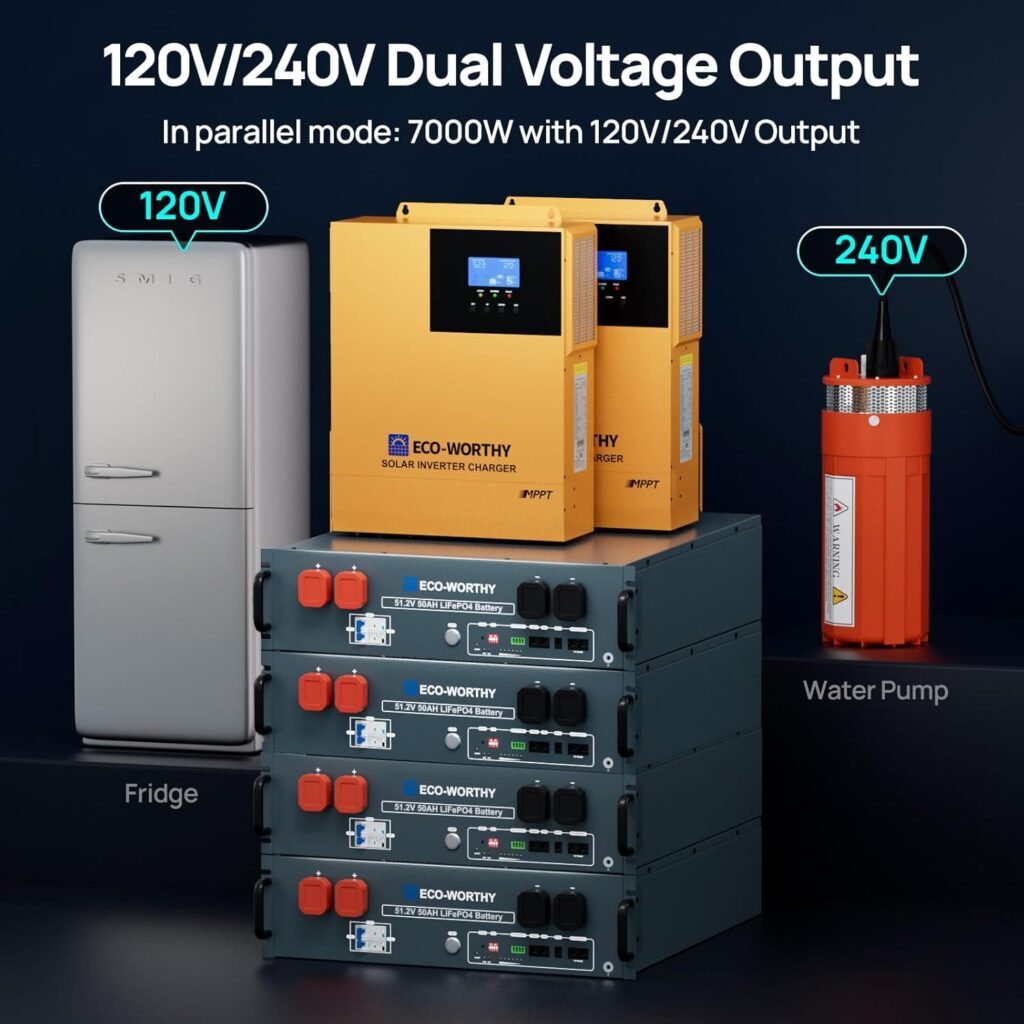

Inverters: Two 3500W Off-Grid Units (Parallel to 7000W)
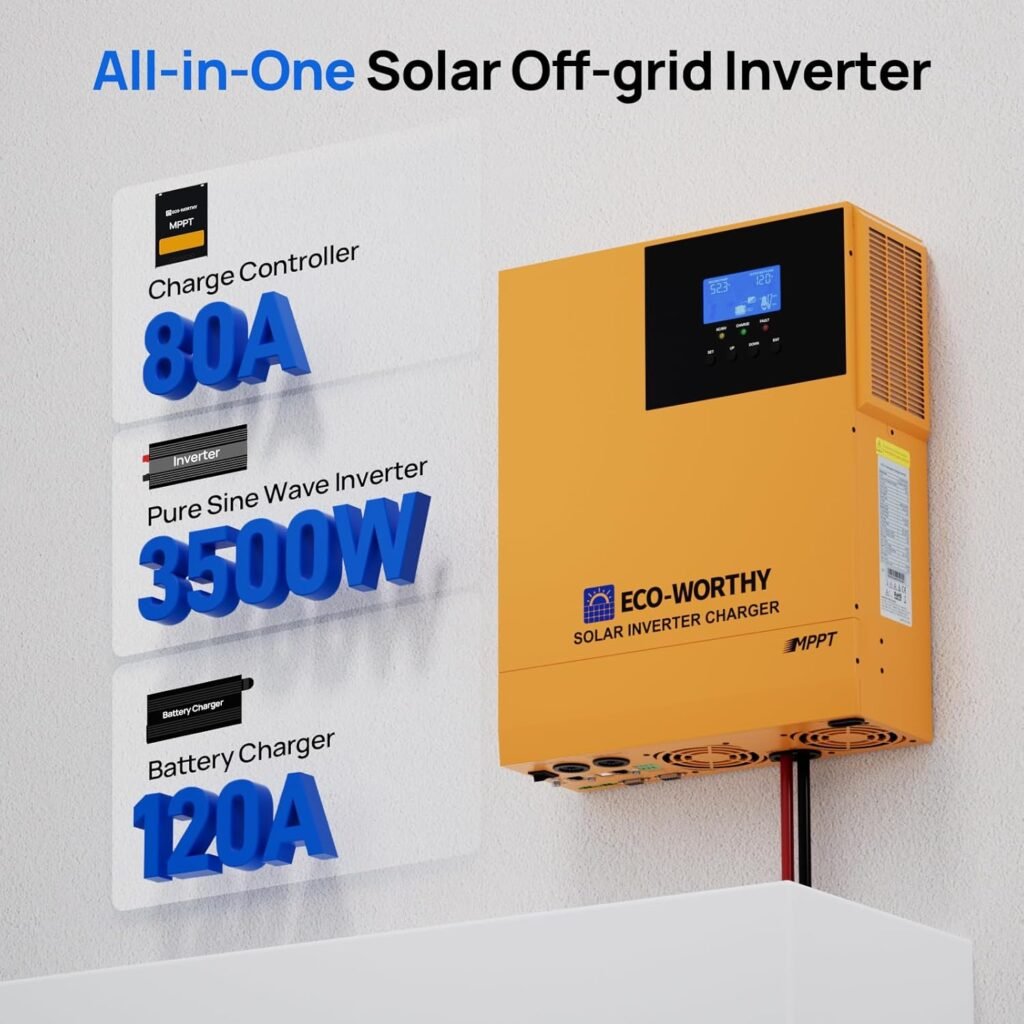
We find the dual 3500W inverter arrangement flexible. Each inverter includes an 80A MPPT charge controller and can operate on its own or in parallel with the other unit. When paralleled, they deliver 7000W of continuous AC output at 120V/240V with 20 ms UPS switching.
Parallel capability allows the system to scale: a single unit can handle modest loads, and up to six units can be paralleled for very large installations. This modular design helps with future-proofing and phased investments.
MPPT charging and solar integration
Each inverter contains an 80A MPPT, giving the system strong solar charging potential. MPPT maximizes energy harvest from PV arrays by adjusting voltage for optimal current, which is crucial in variable sunlight conditions. We like that the charge controllers are built into the inverters for fewer separate components and simpler wiring.
UPS switching and critical loads
The system’s 20 ms transfer time qualifies it as a UPS-like solution for many household electronics and some appliances. While true online double-conversion UPSs have zero transfer time, the 20 ms switching is fast enough to keep most modern devices running without interruption. We recommend testing critical loads (like medical equipment) to confirm compatibility.
Performance and Power Management
We always look at how the system manages energy flow. This ECO-WORTHY system includes advanced charge/discharge management and multiple configurable modes to prioritize solar, grid, or the inverter, depending on availability and needs. That flexibility helps maximize self-consumption of solar energy or prioritize battery reserve for outages.
The inverters provide pure sine wave output suitable for sensitive electronics and household appliances. For continuous heavy loads like central air conditioners or electric water heaters, we recommend confirming starting surge requirements and ensuring the combined inverter capacity and battery output can handle those surges.
Typical runtime examples
We like concrete examples to understand battery endurance. Using the full 15,360 Wh nominal capacity (before inverter losses), estimated run times are:
- Refrigerator (150 W average): ~102 hours (15,360 / 150)
- Lighting + Wi‑Fi + router + TV (400 W total): ~38 hours (15,360 / 400)
- Well pump or heavy appliance (1500 W): ~10 hours (15,360 / 1500)
- Whole-house modest load (3000 W): ~5 hours (15,360 / 3000)
Keep in mind these are theoretical maximums before accounting for inverter efficiency, reserve thresholds, and peak surges. We suggest planning with a safety margin (e.g., expect 75–90% of nominal capacity usable in practice).
Charging Modes and Power Priorities
We appreciate systems that let us control how and when batteries charge or supply power. This ECO-WORTHY model provides multiple charging and output modes to match varied grid and solar conditions.
| Mode Type | Options | When to use |
|---|---|---|
| Charging Modes | Solar Only / Solar Priority / Mains (Grid) Priority / Hybrid | Solar Only for off-grid; Solar Priority to maximize PV use; Mains Priority when cheap grid power is available; Hybrid for mixed strategies. |
| Output Modes | Inverter First / Solar First / Grid First | Inverter First to use battery/inverter as primary; Solar First to use PV directly for loads; Grid First to reduce battery cycling. |
We like that these modes can be changed to suit seasonal changes, TOU pricing, or prolonged outages. For example, on sunny days we can set Solar Priority to keep the batteries topped up and reduce grid consumption, while during storm season we may choose Inverter First to keep battery reserves ready.
Automatic switching and smart management
The system supports automatic off-grid/grid-tied switching and intelligent optimization based on grid conditions. That reduces user intervention and helps maintain uninterrupted power. We find the 20 ms UPS switching especially useful for protecting most household electronics during transitions.
Monitoring and Communication
We value systems that provide clear, real-time data. The integrated Bluetooth and Wi‑Fi let us check battery parameters (voltage, current, temperature, state of charge) via mobile app or PC. Additionally, RS485, CAN, and RS232 interfaces allow professional integrators to connect the system to third-party inverters or home energy management systems.
Having both consumer-friendly wireless monitoring and industry-standard wired interfaces gives us flexibility — we can monitor from our phones or integrate into a larger automation platform.
Mobile app and software experience
We found the wireless monitoring useful for everyday checks: battery SOC, input/output power, and temperature. When setting up the Wi‑Fi or Bluetooth link, ensure firmware and app versions are current and follow pairing instructions to avoid connectivity issues. For advanced monitoring or custom dashboards, the RS485, CAN, or RS232 links provide a more stable connection.
Alerts and logs
We appreciate when systems provide historical logs and configurable alerts for high/low SOC, over-temperature, or communication faults. These logs help with troubleshooting and long-term system management. If logs aren’t stored locally, consider integrating the system with a cloud monitoring platform through the available interfaces.
Installation and Setup
We always plan installation carefully since this system involves high-voltage battery strings and substantial AC power. The included rack simplifies physical setup, but we recommend engaging a qualified electrician for grid-tied components, AC wiring, and ensuring compliance with local codes.
Step-by-step setup outline
We suggest the following high-level steps for installation:
- Inspect all shipped packages and verify components.
- Assemble the 6-layer server rack in the intended location, ensuring adequate ventilation.
- Mount batteries and inverters per manufacturer instructions and torque specs.
- Connect battery modules in the recommended series/parallel configuration using rated cables and fuses.
- Wire the inverters to the AC distribution panel (or subpanel) with a certified electrician, including proper grounding.
- Connect PV arrays to MPPT inputs, observing voltage/current limits and installing necessary DC disconnects and PV fuses.
- Configure communication links (Bluetooth/Wi‑Fi) and verify monitoring via app/software.
- Run initial tests with small loads, confirm transfer switching behavior, and validate charging modes.
We recommend following the official manual closely and keeping manufacturer contact information handy for support.
Safety during installation
We must emphasize safety: these batteries involve 48V systems with significant stored energy. Use insulated tools, wear appropriate PPE, and follow lockout/tagout practices where needed. Ensure battery cables have correct polarity and secure connections to avoid arcing.
Expandability and Scalability
We like modular systems that can grow with our needs. This ECO-WORTHY system supports parallel connection of up to six inverter units, creating a substantial aggregate capacity for larger homes, small commercial spaces, or more resilient emergency setups.
Parallel expansion implies increased complexity in wiring and communications, and we recommend professional design for multi-unit installations. We also recommend balancing PV array sizing and battery capacity so that charging times and depth-of-discharge cycles remain healthy for long-term battery life.
Planning for future growth
If we anticipate growing energy needs (EV charging, adding HVAC), the parallel architecture allows phased upgrades without replacing the whole system. However, we should plan for additional rack space, cooling, and appropriate electrical protection as we add more units.
Real-world Use Cases
We like to think about how the system performs for everyday scenarios:
- Backup during outages: For moderate consumption households, the 15.36 kWh capacity can sustain essential loads for several hours to a couple of days depending on consumption habits. We can prioritize critical circuits (refrigeration, lights, communication) to stretch runtime.
- Off-grid cabins or remote locations: With integrated MPPTs and robust battery capacity, the system can handle typical off-grid lifestyles when sized properly with PV arrays.
- Grid-tied resiliency: In areas with unstable grids, this system offers automatic switching and battery reserve settings to ride through frequent brownouts or short outages.
- Solar self-consumption: When configured for Solar Priority, we can reduce grid purchases and store excess solar for evening use.
We recommend tailoring the configuration to our priorities — whether that’s maximizing runtime, minimizing grid purchases, or ensuring critical loads are always powered.
Maintenance, Safety, and Longevity
We pay attention to maintenance requirements to maximize lifespan. LiFePO4 batteries are lower maintenance than lead-acid and tend to have longer cycle life. We should still perform periodic checks, monitor SOC trends, and ensure firmware updates are applied.
Routine checks and recommended schedule
We suggest the following routine actions:
- Monthly: Check battery and inverter temperatures, inspect cables and terminals for corrosion, and verify app communications.
- Quarterly: Test switching behavior under load and confirm MPPT tracking performance.
- Annually: Inspect BMS logs, review cycle counts, and have a professional electrician verify AC and DC wiring integrity.
Consistent monitoring helps detect issues early, preventing cascading failures.
Expected longevity and cycle life
While exact cycle counts depend on depth of discharge and operating conditions, LiFePO4 chemistry is known for high cycle life compared to other lithium chemistries. When operated within recommended parameters (moderate depth of discharge, controlled temperature), we can expect many years of reliable service, making the system a long-term investment for home energy resilience.
Pros and Cons
We find it useful to summarize strengths and trade-offs so we can make an informed decision.
Pros:
- High usable energy (15.36 kWh) with safe LiFePO4 chemistry.
- Strong combined inverter output (7000W) for substantial household loads.
- Built-in MPPTs with significant charging capacity (80A each).
- Multiple communication options (Bluetooth, Wi‑Fi, RS485, CAN, RS232) for monitoring and integration.
- Modular and expandable up to six units in parallel.
- Fast UPS switching (20 ms) for most household electronics.
Cons:
- Requires significant physical space and ventilation for rack and modules.
- Professional installation recommended for grid-tied configurations and safety compliance.
- Shipping in multiple packages requires careful inventory management on delivery.
- Initial cost for a full kit can be high relative to smaller systems (though value depends on needs).
Who should consider this system?
We recommend the ECO-WORTHY 7000W 15360Wh system for homeowners and small-business owners who need a robust, scalable backup or off-grid solution. It’s particularly well suited for:
- Houses that require multi-circuit backup (refrigeration, heating/cooling, lighting).
- Off-grid cabins where solar harvesting and battery storage are primary power sources.
- Users who want remote monitoring and integration with smart energy systems.
- Installations where future expansion is likely, since parallel capability supports growth.
If our needs are minimal — e.g., powering a few small devices for hours — smaller, simpler systems may be more economical. For comprehensive home backup with room to grow, this kit is compelling.
Price and Value Considerations
We don’t have a fixed price in this review, but we evaluate value based on features and long-term savings. The system’s high capacity and modular design justify a premium for users who value resilience, scalability, and integration. Savings over time can be realized through solar self-consumption, avoided peak grid rates, and reduced generator usage during outages.
We suggest comparing total installed cost (equipment, installation, permits) to expected benefits like outage protection, energy cost savings, and peace of mind to determine if it’s a worthwhile investment for our household.
Frequently Asked Questions (FAQs)
We often field the same questions about complex systems. Here are practical answers based on the product details.
Q: Can we connect this system to our existing solar array? A: Yes — each inverter includes an 80A MPPT and offers substantial PV integration. For large PV fields or unusual array voltages, verify compatibility and PV configuration limits per inverter specifications.
Q: How quickly does it switch between grid and battery? A: The system supports a 20 ms UPS switching time, which is fast enough for most household electronics. For very sensitive medical equipment, verify compatibility or consider specialized UPS devices.
Q: How many units can we parallel? A: Up to six inverter units can be paralleled to scale output. Each parallel addition requires careful wiring, communication setup, and sometimes configuration adjustments.
Q: Is the battery monitoring accurate and accessible? A: Batteries support Bluetooth and Wi‑Fi monitoring for mobile and PC access. RS485, CAN, and RS232 are available for integration with third-party systems for more advanced monitoring.
Q: What safety features are built into the batteries? A: The LiFePO4 batteries include BMS protection against overcharge, over-discharge, over-current, and temperature extremes. The chemistry itself adds thermal stability compared to other lithium types.
Common installation pitfalls and tips
We’ve seen frequent pitfalls on projects like this and offer a few practical tips:
- Pre-plan the rack location with ventilation, cable runs, and breaker panel proximity in mind.
- Use appropriately sized battery cables and ensure correct torque on terminals to prevent resistance heating.
- Label AC circuits and decide which loads are prioritized to the inverter for backup scenarios.
- Ensure proper surge protection and lightning protection for PV and grid inputs if you’re in a high-risk area.
- Keep firmware and app software updated to avoid communication glitches or bugs.
Final verdict
We view the ECO-WORTHY 7000W 15360Wh Home Backup Power system as a well-rounded, feature-rich option for households that require meaningful backup capacity and flexibility. The combination of LiFePO4 battery chemistry, modular inverters, integrated MPPTs, and robust communication options provides a platform that supports both immediate resilience and future expansion. While the system requires careful planning and professional installation for grid-tied setups, its scalability, monitoring capabilities, and good safety characteristics make it a compelling choice for those serious about home energy independence and emergency preparedness.
If our priority is a long-term, expandable home backup or off-grid power system with modern monitoring and reliable switching behavior, this ECO-WORTHY kit deserves strong consideration.
Disclosure: As an Amazon Associate, I earn from qualifying purchases.