Have we ever caught ourselves wishing our home backup system felt simpler, smarter, and more efficient all at once?

What Is the ECO-WORTHY UL1741 5000W 48V Solar Inverter Charger?
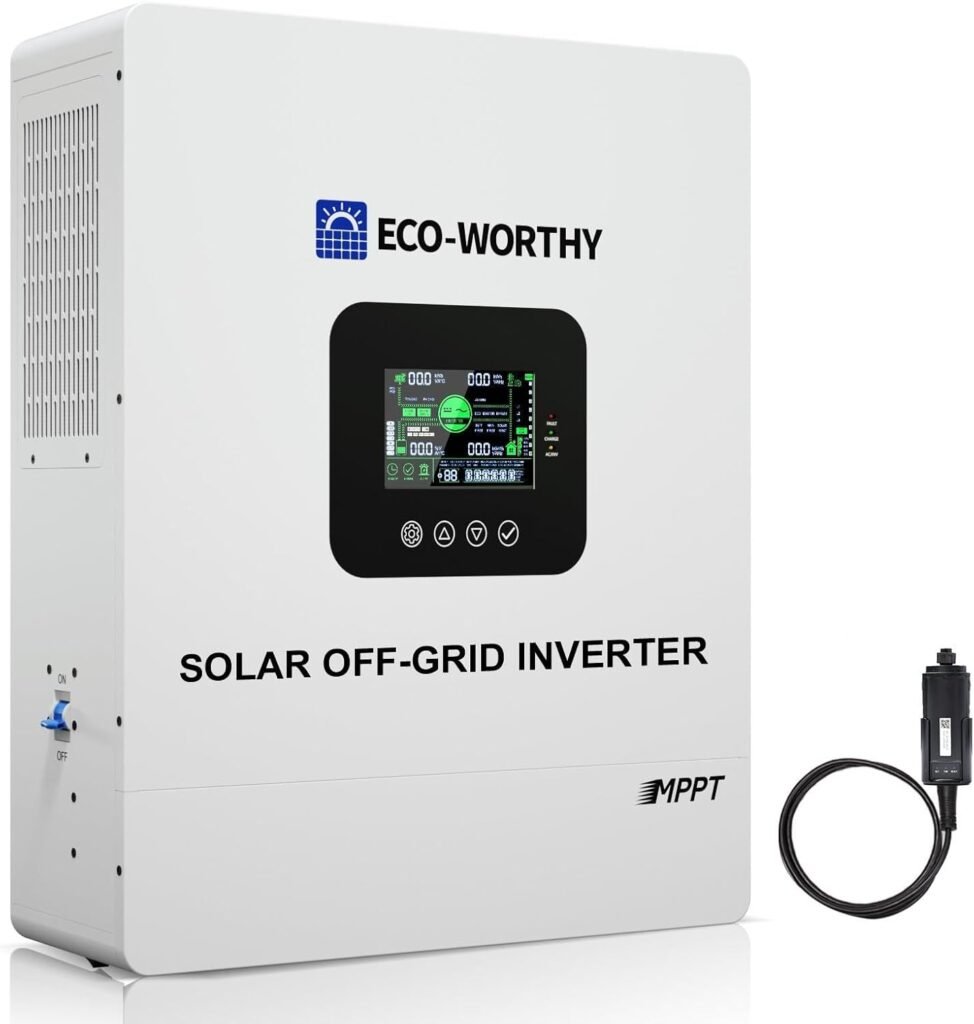
When we look at the ECO-WORTHY UL1741 5000W 48V solar inverter charger with WiFi, we are looking at a true all‑in‑one solar power hub. It is designed to convert 48V DC from batteries into 120V AC power for our home, while also handling solar charging and AC battery charging in a single compact unit.
This model combines a pure sine wave inverter, a 100A MPPT solar charge controller, and an AC charger up to 40A. For anyone building or upgrading an off‑grid, hybrid, or backup power system, it aims to simplify the entire setup into one integrated device.
Key Features at a Glance
Before we get into how it works for daily use, it helps to see the core specs and capabilities in one place. The ECO‑WORTHY 5000W inverter charger is packed with features that target both reliability and flexibility.
Here is an easy‑to‑scan breakdown of the main specifications:
| Feature | Details |
|---|---|
| Product Type | 3‑in‑1 Solar Inverter Charger (Inverter + MPPT + AC Charger) |
| Inverter Power | 5000W rated, 10000W peak (pure sine wave) |
| DC Input Voltage | 48V DC (battery bank) |
| AC Output Voltage | 120V AC (single unit); 120/208/240V AC when multiple units in parallel |
| Parallel Capability | Up to 6 units (max 30kW) |
| PV Input Voltage Range | 120–500V DC |
| Built‑in Solar Charge Controller | 100A MPPT |
| AC Battery Charger | Up to 40A from grid/generator |
| Hybrid Charging Capability | Up to 100A combined (mains + solar hybrid) |
| Output Waveform | Pure sine wave |
| Compliance | UL1741 |
| Supported Battery Types | Lead‑acid, LiFePO4 (and other 48V compatible types with settings) |
| Output Modes | Mains priority, battery priority, PV priority |
| Charging Modes | Only Solar, Mains Priority, Solar Priority, Mains & Solar Hybrid |
| Communication/WiFi | WiFi monitoring; dedicated cable for ECO‑WORTHY rack batteries |
| Extra Protections | Over‑voltage, reverse current, current limiting, over‑heat, etc. |
This combination lets us design a fairly sophisticated solar and backup setup without juggling three or four separate devices.
3-in-1 Design: Inverter, MPPT Controller, and AC Charger
We often run into systems where we must buy an inverter, a charge controller, and a separate charger. This unit’s main promise is to merge all of that into one box while still being flexible.
5000W Pure Sine Wave Inverter
The heart of this product is a 5000W pure sine wave inverter with a 10000W peak capacity. Pure sine wave output means our sensitive electronics—like laptops, TVs, fridges with digital controls, and medical equipment—receive stable and clean power similar to the utility grid.
We can reliably power:
- Essential home loads (lights, refrigerator, router, TV, fans)
- Power tools (within reason, depending on surge draw)
- Computers and networking gear
- Small air conditioners or pumps depending on total load
That 10000W peak rating is especially important for appliances with startup surges, like fridges, freezers, or well pumps. The inverter is designed to handle these brief surges without tripping.
100A MPPT Solar Charge Controller
Inside the same unit is a 100A MPPT (Maximum Power Point Tracking) solar charge controller. MPPT tech helps us extract the maximum usable power from our solar panels by continuously adjusting to the panel voltage and sunlight conditions.
A 100A rating at 48V means we can push a substantial solar array through this inverter, depending on system design. With the PV input voltage range of 120–500V DC, we can wire panels in higher‑voltage strings, which reduces wire size and losses over longer distances from the array to the inverter.
In short, the built‑in MPPT controller helps keep our battery charging efficient without needing a separate charge controller.
Up to 40A AC Charger
The product also includes an integrated AC battery charger that can draw from the grid or a generator up to 40A. This is especially helpful if:
- Our solar production is limited during bad weather.
- We need to top up batteries before a known outage.
- We want a hybrid system that uses both grid and solar strategically.
With up to 40A of AC charging, we can get our batteries back up to a healthy state reasonably quickly, especially when combined with solar input.
Parallel Support Up to 6 Units (30kW Max)
One of the standout capabilities is the option to parallel up to six units, reaching up to 30kW total capacity. That level of scalability allows us to start with a single inverter and expand later as our energy needs or budget change.
Single Phase and Split Phase Options
With one inverter, we get 120V AC output—great for many standard US household circuits and most typical loads. When we connect more than two units in parallel, we can configure them to provide:
- 120V / 208V / 240V output (depending on configuration)
This is important if:
- Our home or building uses 240V appliances (like some air conditioners, well pumps, or electric dryers).
- We want a more full‑featured backup for the entire home, not just a few circuits.
This flexibility lets us design a system that grows with our home’s electrical demands.
When and Why We Might Parallel Units
We would consider paralleling units when:
- Our total loads exceed 5000W regularly.
- We wish to back up an entire home, not just a critical load panel.
- We plan for future expansions, such as adding EV chargers or more 240V loads.
Since all the units still act with the same kind of all‑in‑one logic, we keep a consistent interface and set of settings, rather than running mixed brands or models.

Configurable Output Modes: Power the Way We Prefer
Different homes and different locations call for different priorities in how power flows. This inverter gives us three main output modes that change how it chooses between grid, battery, and solar.
Mains Priority Mode
In mains priority, the inverter uses grid power first and will switch to battery/solar when grid power is unavailable or based on our settings. This is a common choice when:
- We mainly want backup and do not intend to run off‑grid most of the time.
- Our grid power is relatively cheap, and we use solar to reduce a portion of our bill or as a backup.
This mode helps keep batteries topped up and ready for outages.
Battery Priority Mode
In battery priority mode, the system uses energy stored in our batteries and available solar first, switching to the grid later when needed. This is more oriented toward:
- Saving on grid electricity by consuming our own solar energy as a priority.
- Running our home in a more off‑grid style when solar and battery capacity permit.
We may still rely on the grid as a safety net, but the intention is to lean on stored solar energy.
PV Priority Mode
PV priority mode aims to prioritize solar power when it is available, then supplement with batteries and grid as needed. This is useful when:
- We want to maximize use of the power generated by our panels during the day.
- We prefer to save battery capacity for evenings and nighttime.
- Our primary goal is to make the most of free solar energy before touching the grid.
Having these three options makes the system adaptable to changing seasons, energy prices, and usage patterns.
Flexible Charging Modes for Different Situations
The inverter charger also offers four distinct charging modes. These let us decide exactly how we want to refill our batteries under different conditions.
Only Solar Mode
In Only Solar mode, the batteries get charged exclusively from the solar array. We would choose this mode when:
- We live in an area with expensive grid power and good sun.
- We purposefully want to limit grid usage.
- We use the grid mostly as a backup, not a main source.
This is very helpful for off‑grid cabins, RV setups, or homes that have unreliable or costly grid supply.
Mains Priority Charging
This mode charges the batteries from the grid first, then uses solar as a supplement. We might prefer this when:
- Our grid is cheap and we just want solar as an extra.
- We want to be absolutely sure the batteries stay full to always be ready for outages.
- We live in a place with frequent grid instability and want strong backup readiness.
The goal here is rock‑solid reliability rather than maximum savings.
Solar Priority Charging
With Solar Priority, the system attempts to charge the batteries from solar first and then uses the grid if solar is inadequate. This mode:
- Balances cost savings and reliability.
- Helps ensure solar power does the heavy lifting on sunny days.
- Falls back to grid only when necessary to keep batteries in a healthy range.
For many households, this can be a comfortable “set and forget” default option.
Mains and Solar Hybrid Charging
In Mains and Solar Hybrid mode, the system can combine power from both solar and the grid (or generator) to charge batteries up to a maximum of 100A. This is especially useful when:
- We have a large battery bank that we want to recharge quickly.
- Weather is inconsistent and solar alone may not be enough.
- We want to prepare for an approaching storm or scheduled outage.
Hybrid charging gives us speed and flexibility, ensuring our batteries are ready when we need them most.
Scheduled Charging and Discharging: Time-Based Control
One particularly practical feature is the ability to set flexible time periods for mains charging and discharging. This matters a lot if our local grid has time‑of‑use rates or variable pricing.
With time‑based settings, we can:
- Charge batteries when electricity is cheaper, such as overnight.
- Use battery power during peak hours when utility prices are higher.
- Avoid drawing from the grid during periods of strain, supporting both our wallet and the local grid.
For example, we might set the system so that:
- From midnight to 6 AM: allow mains charging.
- From 6 AM to 10 PM: rely more heavily on solar and batteries.
- From 5 PM to 9 PM: strongly prefer battery/solar, avoiding the high‑cost window.
This kind of scheduling makes the inverter more than just a backup tool; it becomes a tool for energy cost management.
Enhanced Energy Stability and Backup Capabilities
We often think of inverters just as devices that turn DC into AC, but this one is clearly built with energy stability in mind.
Uninterruptible Power Supply (UPS) Behavior
One of the crucial features is functionally acting as an Uninterruptible Power Supply. UPS‑style operation means:
- When the grid fails, the system switches over to battery/solar almost instantly.
- Our connected loads stay powered with minimal interruption.
- Sensitive electronics avoid unexpected shutdowns.
In practical terms, this allows us to keep our lights on, routers running, and key appliances alive during outages, with far less hassle than firing up a generator every time.
Reducing Dependence on Traditional Energy Sources
By combining solar input, flexible charging modes, and UPS capability, this inverter encourages us to rely less on traditional grid power. Over time, that can mean:
- Lower electricity bills, especially if we schedule around time‑of‑use pricing.
- Greater resilience against outages or grid instability.
- A more eco‑friendly footprint as more of our energy comes from solar.
We can shape our energy strategy around what matters most to us: savings, security, or sustainability—or a mix of all three.
Safety and Protection Features
With high‑voltage solar arrays and substantial power flow, safety is non‑negotiable. This unit includes a range of protection mechanisms designed to keep both the system and our home safe.
Built‑In Protections
The inverter offers multiple layers of protection, including:
- PV input current and power limiting protection: Keeps the solar side within safe operating limits.
- PV input over‑voltage protection: Protects the inverter if the panel voltage goes above the safe range.
- PV night reverse current protection: Prevents the batteries from sending power backward into the panels at night.
- Over‑heat protection with multiple cooling fans: Monitors temperatures and ramps up cooling or shuts down if temperatures become unsafe.
These protections help guard against damage from common installation or environmental issues, like unexpected over‑voltage, extreme heat, or wiring mistakes.
User-Friendly Monitoring via LCD
An LCD display on the unit allows us to:
- Monitor input and output information in real time.
- Check battery voltage, charging current, and load status.
- Adjust parameters according to our system and preferences.
Having this kind of visibility on the unit itself is useful during installation, troubleshooting, and general long‑term maintenance.
WiFi Monitoring and Smart Management
As our homes become more connected, having remote insight into our solar and battery system feels less like a luxury and more like a necessity.
WiFi Connectivity
This inverter includes WiFi functionality for remote monitoring. We can:
- Track our power usage trends.
- See how much solar we are harvesting.
- Monitor battery status and charging modes.
Monitoring helps us catch issues early and fine‑tune our settings to achieve better savings or performance. We can also observe how the system behaves across seasons and different weather patterns.
Communication Cable for ECO‑WORTHY Rack Batteries
The product note explains that the communication cable specifically used for ECO‑WORTHY rack batteries ships separately. All other accessories come packed with the inverter itself.
For us, this means:
- If we plan to use ECO‑WORTHY’s own rack‑mount lithium batteries, we should expect a separate shipment for the communication cable.
- For other battery brands or lead‑acid banks, we may rely on more generic battery settings rather than dedicated BMS communication.
Understanding this in advance can help us plan installation and avoid surprises during setup.
Compatibility with Lead-Acid and LiFePO4 Batteries
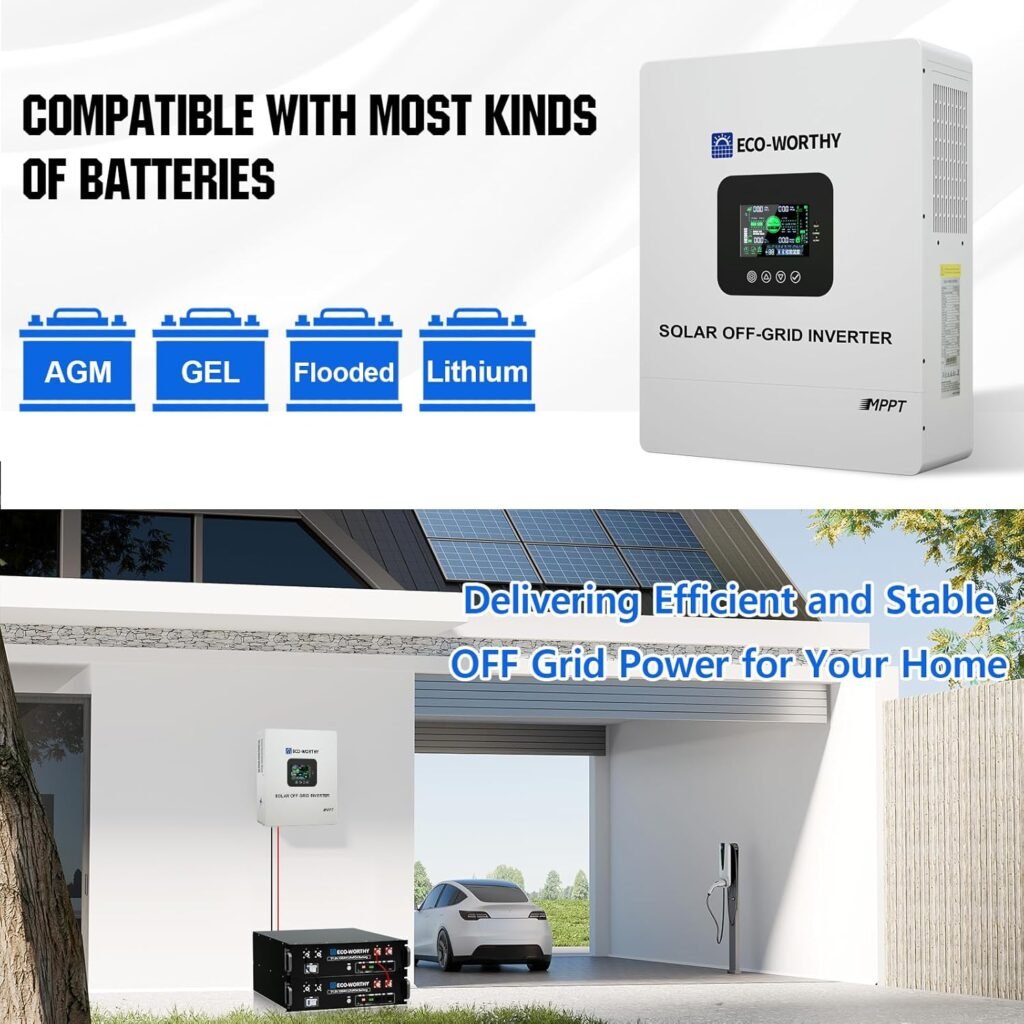
Battery flexibility is critical when designing or upgrading a solar energy system. This inverter is compatible with both lead‑acid and LiFePO4 (lithium iron phosphate) batteries.
Using Lead-Acid Batteries
Traditional 48V lead‑acid banks (AGM, GEL, flooded, etc.) can be integrated. We might choose lead‑acid when:
- We are on a tighter budget and already own a battery bank.
- We are comfortable with the maintenance and shorter cycle life.
In this case, we should:
- Set correct charge voltages and float settings via the inverter menu.
- Observe regular maintenance and monitoring of our battery health.
Using LiFePO4 Batteries
LiFePO4 batteries are often a better match for intensive daily cycling because they:
- Offer longer cycle life.
- Have deeper usable capacity.
- Are more tolerant of frequent discharge and recharge cycles.
This inverter supports LiFePO4 usage, and ECO‑WORTHY even offers dedicated rack‑mount lithium batteries that are designed to integrate with it via communication cables.
When we match LiFePO4 batteries with this inverter, we benefit from:
- More efficient use of our solar production.
- More predictable backup capacity during outages.
- A cleaner, low‑maintenance battery system overall.
Installation Considerations and Practical Tips
While a professional installer is often a wise choice, it is still helpful to know what to consider before installing this inverter charger.
Electrical and Space Planning
We should plan for:
- Adequate wall space: The unit houses an inverter, MPPT, and charger, so we need enough space for safe mounting and airflow.
- Strong mounting surface: The device is sufficiently heavy and must be mounted securely.
- Clearance for cooling: Since it uses multiple fans, we should follow recommended clearance distances to ensure proper ventilation.
It is also smart to map out where our:
- Battery bank will sit.
- Main breaker panel or sub‑panel is located.
- Solar array wiring will enter.
- AC input (grid or generator) will connect.
Wiring and Safety Standards
Because the inverter is rated up to 5000W with high‑voltage PV input (120–500V), we must:
- Use correctly sized wires and breakers according to local codes.
- Ensure all terminations are secure and properly torqued.
- Respect polarity and voltage limits to avoid damaging equipment.
Adhering to UL1741 compliance standards and local electrical codes is crucial. For most homes, working with a licensed electrician or solar installer is the safest way to go.
Day-to-Day Use: What Living With It Feels Like
Owning a powerful piece of equipment is one thing; living with it day‑to‑day is another. This inverter is designed to streamline our interaction with our solar power system.
Everyday Operation
Once configured, the inverter generally runs automatically:
- It switches between modes according to our settings.
- It charges batteries when needed.
- It responds to outages and surges.
- It keeps us updated via the LCD and WiFi app.
Most of us will only occasionally adjust things, for example:
- Tweaking time‑of‑use schedules.
- Changing priority modes with seasonal shifts.
- Checking in on system performance.
Noise and Heat
Because the unit uses multiple cooling fans, we should expect some fan noise, especially under heavier loads or high ambient temperatures. As a result:
- It is best placed in a utility room, garage, or dedicated power closet.
- We probably do not want it mounted on a wall directly shared with a bedroom or quiet office space.
Proper ventilation also helps reduce fan run time because cooler operating temperatures mean fans do not need to spin at maximum speed constantly.
Pros and Cons of the ECO-WORTHY 5000W Inverter Charger
To make our decision easier, it helps to weigh the strengths of this product against its potential drawbacks.
Advantages
We can summarize the major benefits like this:
- All‑in‑one convenience: Inverter, charger, and MPPT controller in a single unit.
- High power capability: 5000W continuous, 10000W peak, pure sine wave.
- Scalability: Parallel up to 6 units for up to 30kW, with single or split phase.
- Wide PV voltage range: 120–500V DC allows flexible string configurations.
- Flexible modes: Multiple output and charging modes to tailor energy use.
- Time‑based scheduling: Helps us manage cost and efficiency with time‑of‑use rates.
- UPS functionality: Provides reliable backup with near‑seamless switching.
- Robust protections: Over‑voltage, current limiting, reverse current, and thermal protections.
- Battery compatibility: Works with both lead‑acid and LiFePO4.
- WiFi monitoring: Allows remote observation and tuning of our system.
These features combine to make it a strong candidate for anyone who wants a serious home backup and solar solution without building everything from scratch out of separate components.
Potential Drawbacks
We should also be aware of some practical limitations that might affect us:
- Complexity for beginners: With many modes and settings, there can be a learning curve.
- Noise: Cooling fans may be noticeable under load if the unit is installed in living spaces.
- High‑voltage PV requirement: The 120–500V DC PV input range means our array must be wired in relatively high‑voltage strings; this is efficient but requires careful design.
- Separate communication cable: If we use ECO‑WORTHY rack batteries, we must wait for or plan around the separately shipped cable.
- Physical size and weight: Combining all functions makes the unit substantial, so installation location matters.
For most users willing to either learn the system or work with an installer, these drawbacks are manageable, but we should weigh them against the benefits.
Ideal Use Cases: Who Is This Inverter Best For?
This inverter is not just for one type of user; it supports a variety of scenarios. Still, certain situations are especially well‑matched.
Home Backup and Hybrid Systems
If we want reliable backup for frequent or occasional outages, combined with solar, this unit fits well because:
- It functions as a UPS.
- It can prioritize battery or solar use according to our needs.
- It works with grid power and can use it strategically.
We can back up anything from a critical loads panel up to a whole house, depending on whether we use a single inverter or multiple units in parallel.
Off-Grid or Remote Properties
For cabins, remote homes, or workshops without reliable grid access, this inverter provides:
- Integrated solar charging.
- Inverter power for AC loads.
- Support for generator input through its AC charger.
In such scenarios, high‑voltage solar strings and strong MPPT capabilities are a big advantage, especially over long cable runs from the array to the building.
Upgradable Systems
Because we can run up to six units in parallel, we can start with something modest and grow over time:
- Begin with one 5000W inverter and a small battery bank.
- Add more solar panels and batteries later.
- Add additional inverters if our loads increase.
This staged approach helps us spread costs out and customize according to evolving energy needs.
Our Overall Take on the ECO-WORTHY UL1741 5000W 48V Solar Inverter Charger
Looking at the full feature set, we see a unit clearly designed to be a central pillar of a modern home energy system. It is more than just an inverter; it is a power management hub that coordinates solar, grid, and batteries in a thoughtful and flexible way.
We appreciate most:
- The all‑in‑one design that avoids juggling multiple boxes.
- The generous 5000W rating and ability to parallel up to 30kW.
- The emphasis on configurable modes and schedules.
- The integration of safety features and WiFi monitoring.
We do need to be ready for the technical side: choosing correct settings, designing a high‑voltage PV array safely, and ensuring proper installation. For those of us unfamiliar with solar or high‑power electrical work, partnering with a professional installer is advisable.
Still, if our goal is to:
- Reduce reliance on the grid,
- Protect our home from outages,
- Use solar power more intelligently,
then the ECO‑WORTHY UL1741 5000W 48V Solar Inverter Charger with WiFi offers a robust foundation. With its 3‑in‑1 architecture, parallel expandability, multiple operating modes, and strong protection features, it provides a capable, friendly‑to‑live‑with solution for serious home backup and hybrid solar systems.
Disclosure: As an Amazon Associate, I earn from qualifying purchases.