Ready to cut our electric bills and keep our lights on during outages?
When we start looking for a serious home or cabin solar setup, we usually want more than just a few panels and a small battery. We want a system that can actually power our everyday life, shrink our dependence on the grid, and keep things running when the power company goes down. That’s exactly where the ExpertPower 30KWH 7560W 48V Solar Power System Kit aims to fit in.
In this review, we walk through the strengths, trade-offs, and real-world scenarios for this kit so we can decide if it matches our needs, budget, and home setup.

What is the ExpertPower 30KWH 7560W 48V Solar Power System Kit?
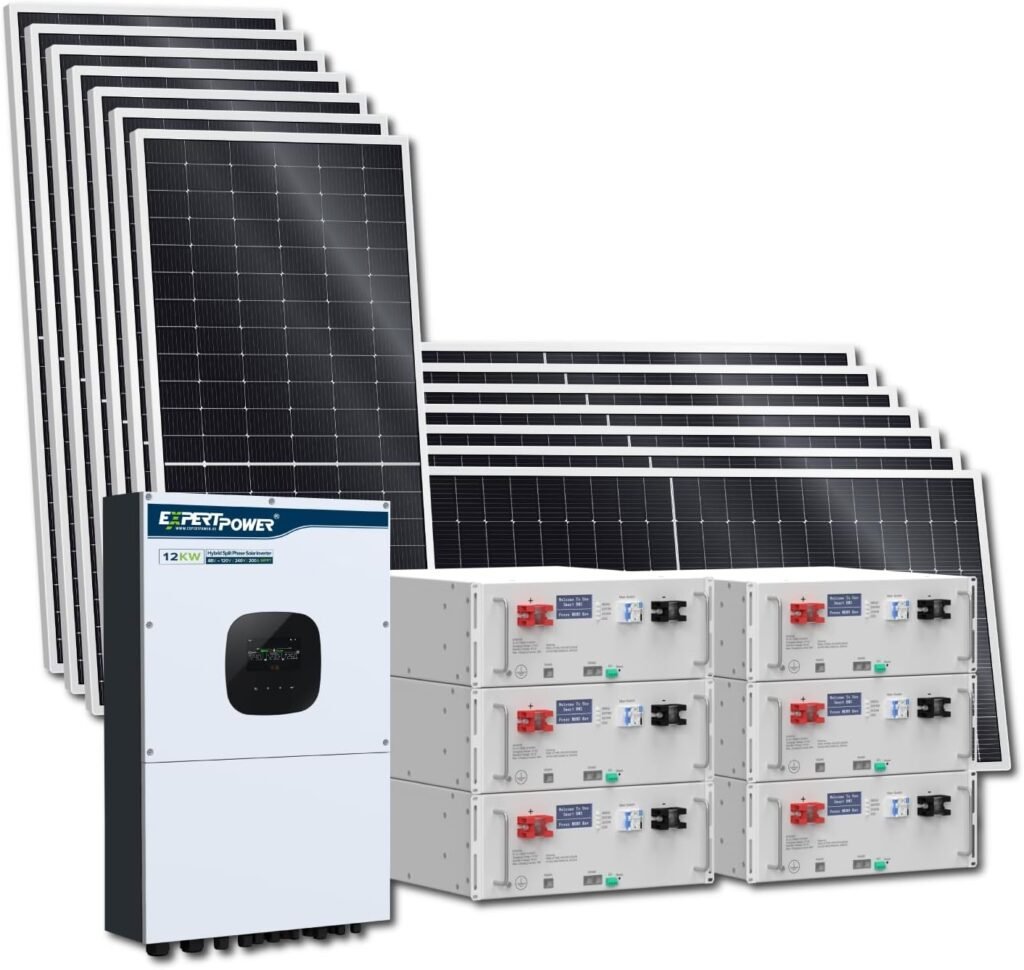
This kit is a complete off-grid and hybrid solar power solution built around a large 48V LiFePO4 battery bank, a 10kW hybrid solar inverter, and a sizable array of high-wattage solar panels. It is designed for serious home backup, remote cabins, small businesses, and anyone wanting significant energy independence.
We get enough capacity here to run a typical household’s essentials, support many high-demand appliances, and keep going through outages. It is not just a “backup” product; it is a system that can handle daily loads if configured correctly.
Key Components at a Glance
To understand what this kit really delivers, we need to look at each major component. Let’s break the system into its three core parts: solar panels, battery bank, and inverter/charger.
Solar Panels: 7560W of Array Power
The kit includes fourteen 540W solar panels, giving us a total of 7,560 watts (7.56 kW) of solar generating capacity. That is a serious array, suitable for real-world home loads, especially when we have good sun exposure.
With that much solar, we can realistically produce a strong amount of energy each day, especially in sunny regions. This can cover many of our daily needs while also charging the battery bank for overnight use.
Battery Bank: 48V 600Ah LiFePO4 (About 30 kWh)
The battery bank uses six 48V 100Ah LiFePO4 batteries, combined to provide 48V 600Ah, which equals roughly 30 kWh of stored energy. That is enough to power a typical home’s critical loads for a full day or more, depending on how we manage usage.
LiFePO4 (Lithium Iron Phosphate) chemistry is known for safety, long cycle life, and stability. This is a major advantage over older lead-acid solutions, especially when we want long-term daily cycling.
Inverter: 10kW Hybrid Inverter with Dual 100A MPPT Controllers
The heart of the system is a 10kW hybrid solar inverter that includes two 100A MPPT solar charge controllers. This single unit handles:
- Solar charging
- Battery charging and discharging
- AC output in several voltage configurations
- Interaction with the grid (grid-tied) or fully off-grid operation
Hybrid inverters give us the flexibility to both connect to the grid and operate independently. That means we can use the grid as backup, or treat it as secondary and lean on our solar and batteries first.
Quick Specs Breakdown
Sometimes it helps to see everything in one place. Here is a simplified overview of what we get with this kit.
| Component | Specification |
|---|---|
| System Type | Off-Grid / Hybrid (Grid-Tie + Off-Grid) |
| Solar Panels | 14 × 540W panels (total 7,560W) |
| Battery Bank | 6 × 48V 100Ah LiFePO4 (total 48V 600Ah ≈ 30 kWh) |
| Battery Chemistry | LiFePO4 (Lithium Iron Phosphate), 16-cell configuration |
| Battery Lifespan | Approx. 2,500–7,000 cycles (around 10 years with proper use) |
| Inverter Power | 10,000W (10kW) Hybrid Solar Inverter |
| Charge Controllers | Dual 100A MPPT controllers built into inverter |
| Output Waveform | Pure sine wave |
| Output Voltages | 120V, Split-phase 120V/240V, or 3-phase 208V |
| Standards | Meets UL1741 and IEEE1547 guidelines |
| Protection Rating | IP65 (dust- and water-resistant enclosure) |
| Safety Features | Over-voltage, over-charge, low-voltage, deep discharge, over-temp, etc. |
| Compatibility | Supports grid-tied, off-grid, and even battery-less operation |
This overview tells us we are looking at a robust, high-capacity system that can work in different environments and configurations.
How Much Power and Energy Do We Really Get?
It is one thing to see numbers on paper; it is another to imagine what they actually mean in daily use. Let’s translate the ratings into more practical terms.
Daily Energy from the 7,560W Solar Array
In real-world conditions, the energy we produce depends on sunlight hours and location. If we assume 4–6 hours of good sun per day:
- At 4 hours: 7.56 kW × 4 = ~30.2 kWh/day
- At 6 hours: 7.56 kW × 6 = ~45.4 kWh/day
We need to factor in efficiency losses (inverter, wiring, temperature), so actual usable energy may be somewhat lower. Still, we can expect a solid amount of daily energy, often enough to handle a moderate household’s daily usage when combined with smart load management.
Battery Storage: What Can 30 kWh Actually Run?
The 48V 600Ah battery bank provides about 30 kWh of usable energy. LiFePO4 batteries are usually safe to discharge deeply, but many of us like to keep a bit of buffer for long-term health.
Some approximate examples:
- A fridge + freezer + lights + router + small electronics might use 3–5 kWh/day
- Add a well pump, TV, computer, and moderate use of kitchen appliances: 8–12 kWh/day
- A more typical full electric lifestyle with AC or heavy heating might easily exceed 20–30 kWh/day
With 30 kWh available, we can often support:
- A full day of essential loads for an average home
- Possibly 1–2 days of reduced or critical-only loads
If we are careful with high-consumption devices (like electric water heaters, resistance heaters, and some AC units), this system can comfortably carry us during outages.

Why LiFePO4 Matters for This System
One of the defining features here is the use of LiFePO4 batteries instead of lead-acid. This changes the whole ownership experience and the system’s long-term cost.
Long Cycle Life and Stable Performance
The battery is rated for 2,500 to 7,000 cycles over about 10 years. If we use the battery daily:
- 2,500 cycles ≈ roughly 7 years (using deeper discharges)
- 7,000 cycles ≈ close to 19 years (with lighter discharges, under ideal conditions)
Real life will be somewhere in the middle, but it is still far better than lead-acid alternatives. We get:
- More usable capacity per cycle
- More total lifetime energy
- Less degradation under normal operating conditions
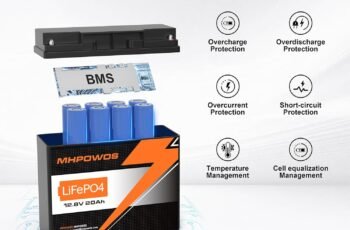
Built-In Battery Management System (BMS)
The integrated advanced BMS protects the batteries from:
- Overcharging
- Deep discharging
- Overloads
- Overheating
- Short circuits
- Low-temperature cut-off
- Excess self-discharge
This built-in protection helps us avoid the most common ways batteries are damaged, especially in off-grid and backup systems where loads and conditions can fluctuate.
We do not have to constantly micromanage charging and discharging, because the BMS and inverter work together to keep the batteries within safe operating limits.
Hybrid Inverter Flexibility: Off-Grid and Grid-Tied in One
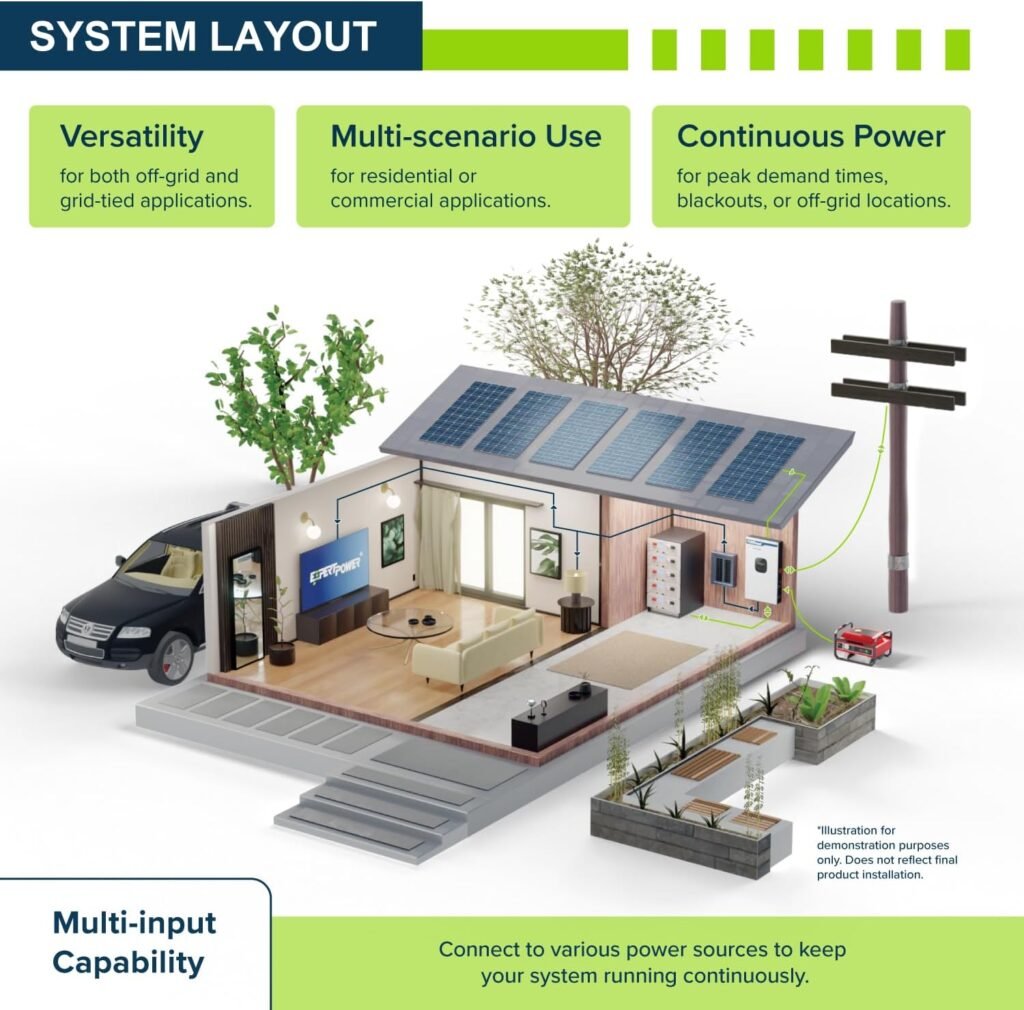
One of the most powerful parts of this kit is the 10kW hybrid inverter. Instead of forcing us to choose fully off-grid or grid-tied, it supports both. That flexibility can be a big deal for long-term plans.
Off-Grid Mode: Perfect for Cabins, Remote Homes, and Unreliable Grids
In off-grid mode, the system uses:
- Solar panels to power loads and charge batteries
- Batteries to run our home when solar is not producing
- The inverter to produce clean pure sine wave AC power
This is ideal for:
- Remote cabins and farmhouses
- Areas with frequent or long power outages
- Homes where grid connection is unreliable or expensive
In fully off-grid setups, careful load planning and good energy habits can make this kit a true primary power source, not just a backup.
Grid-Tied Operation: Save on Bills and Provide Backup
When grid-tied, the hybrid inverter can:
- Use solar to offset grid usage
- Charge batteries during the day
- Automatically supply power during blackouts
This gives us both savings and resilience. We can reduce energy costs by using solar first and possibly also using battery power during peak-rate periods if our utility allows that type of configuration.
During blackouts, the system swings into backup mode, keeping our home (or selected circuits) running without interruption. That combination of cost reduction plus backup power is what makes hybrid systems attractive for many households.
Output Options: Single-Phase, Split-Phase, and 3-Phase
A big advantage of this inverter is its output flexibility. It can deliver:
- 120V single-phase – For typical US-style household outlets
- Split-phase 120V/240V – To run both standard outlets and heavy appliances (like some well pumps, electric dryers, some AC units)
- 3-phase 208V – Useful for certain commercial setups or specific industrial loads
This means the system is not just for small, simple setups. We can support a broader array of home and light commercial equipment, which makes the investment more versatile over time.
Safety and Reliability: Built for Real-World Conditions
When we are relying on a solar power system for essential loads, safety and resilience are non-negotiable. This kit is designed with that in mind.
Standards and Certifications
The inverter adheres to:
- UL1741
- IEEE1547
These standards relate to grid-interactive inverters and ensure the system behaves properly when connected to the grid. That includes how it synchronizes, disconnects, and handles fault conditions.
If we are planning on grid connection, these standards are important for code compliance and, in some regions, for utility approval.
IP65 Protection Rating
The inverter is rated IP65, which means it is:
- Dust-tight
- Protected against water jets
In simple terms, the enclosure can handle outdoor environments like rain, dust, and general weather exposure, as long as it is installed correctly. We still want to mount it in a shaded, well-ventilated location to limit heat stress, but we are not forced to find a perfectly clean indoor location.
This is especially handy for cabins, garages, exterior walls, or utility sheds.
Smart Inverter Features and Battery Flexibility
The inverter is not just a basic power conversion box. It offers some intelligent features that give us more options over the life of the system.
Works Even with BMS-Less or Battery-Less Setups
While the provided LiFePO4 batteries include a BMS, the inverter is designed to also work:
- With some batteries that do not have a BMS
- In battery-less mode, converting solar power directly into AC
In practice, this means:
- If we ever want to add or experiment with other battery banks, the inverter has its own protective logic to avoid severely damaging batteries
- In battery-less mode, we can use solar panels to feed AC loads directly when the sun is shining, even if we have not yet added batteries
The internal protections include:
- Over-voltage protection
- Over-charge protection
- Low-voltage protection
- Deep discharge safeguards
- Over-temperature compensation
This makes the system more adaptable and future-friendly.
Dual 100A MPPT Controllers
The built-in MPPT (Maximum Power Point Tracking) controllers, each rated at 100A, help extract maximum power from our solar panels across varying conditions. With dual MPPTs:
- We can split arrays across different roof orientations or tilt angles
- We can get more consistent production when part of our array is shaded
Better MPPT behavior translates into more usable energy over time, especially in less-than-perfect installation conditions.
Realistic Use Cases: Where This Kit Shines
We can better judge a system when we imagine how we would actually use it. Here are some scenarios where this ExpertPower kit fits well.
1. Full Home Backup with Bill Reduction
For a typical detached home, we can:
- Install the panels on roof or ground mounts
- Connect the inverter to a subpanel or whole-house system
- Configure the system to use solar + battery first, grid as backup
In daily life, solar covers a large part of daytime consumption, while the batteries pick up evening and nighttime loads. The grid is there for extreme usage days, long cloudy periods, or just as backup.
During an outage:
- Our critical loads (and possibly most of the house) keep running
- The system recharges from solar when the sun comes up
- We maintain refrigeration, internet, lighting, and some comfort appliances
2. Off-Grid Cabin or Rural Home
If we are building or upgrading an off-grid cabin:
- The 30 kWh battery bank is often enough for a couple of days of moderate use
- The 7.56 kW array can recharge quickly in decent sun
- The inverter supports multiple load types, even 240V pumps or tools
This can make a cabin feel much closer to a standard home in terms of power availability, as long as we manage high-demand appliances wisely.
3. Small Business or Workshop
For small commercial spaces, a 10kW inverter and 30 kWh of storage can:
- Keep computers, POS systems, lighting, and modest machinery running
- Cut peak demand from the grid
- Provide emergency backup to avoid downtime during outages
The 3-phase 208V support is especially helpful when equipment needs that format.
What’s Not Included: Additional Hardware We Need
The kit gives us the core power components, but it does not include everything necessary to make a code-compliant, safe installation. Specifically, it does not include:
- Wiring cables (AC and DC)
- Fuses and breakers
- Connectors and junction boxes
- Grounding hardware
- Mounting hardware (racking) for panels, unless explicitly bundled by a seller
We either need to purchase these separately or work with an installer who supplies them. This is normal for many “kit” systems but it is important to budget for these items.
Installation Considerations
Setting up a system like this is not trivial. We should think carefully about planning, permits, and who will handle the work.
Professional vs. DIY Installation
While some of us are comfortable with DIY solar projects, a 10kW hybrid system with grid-tie capabilities and 48V battery bank is not a beginner project. We need to handle:
- High DC voltage from the solar array
- Substantial AC currents for household loads
- Proper grounding and surge protection
- Compliance with local electrical and building codes
We strongly recommend:
- At least consulting with a licensed electrician
- Checking local requirements for grid-connected systems
- Verifying inspection and permit rules before purchasing
For off-grid only cabins, regulations might be looser, but safety and proper design are still crucial.
Placement and Ventilation
For long-term performance and safety:
- Mount the inverter in a dry, well-ventilated location
- Avoid direct sunlight and extreme heat
- Allow adequate clearance around the inverter and batteries
LiFePO4 batteries are more tolerant than some chemistries, but they still prefer moderate temperature ranges. Extreme heat or deep cold can reduce performance and shorten lifespan.
Performance Expectations and Load Planning
To really get the most out of this kit, we should think about our loads and how we plan to use them.
Matching Our Loads to the System Capacity
The inverter can output up to 10,000W continuously, which covers a lot of typical household devices. But if we run several large appliances at once, we may bump against that limit.
Some individual appliances that draw heavy loads:
- Electric water heaters (3,000–4,500W)
- Electric ovens and stoves
- Large air conditioners or heat pumps
- Electric dryers
If we run several of these at the same time, we can quickly push past 10kW. Good load management means:
- Staggering big energy uses
- Avoiding simultaneous heavy loads
- Using more efficient alternatives where possible (heat pump water heaters, efficient mini-split systems, etc.)
Battery Management for Longer Life
Even though LiFePO4 is robust, we can extend life by:
- Avoiding very frequent 0–100% full-depth cycles
- Keeping average state of charge between roughly 20% and 90% when possible
- Maintaining reasonable operating temperatures
The BMS and inverter help a lot, but our usage patterns still play a role.
Pros and Cons of the ExpertPower 30KWH 7560W Kit
To keep our decision grounded, let’s outline the main benefits and potential downsides.
Main Advantages
- Significant Energy Storage: About 30 kWh of battery capacity, suitable for real household backup and daily use.
- High Solar Input: 7,560W of panels can support robust daily production in good sun.
- Hybrid Flexibility: Works both off-grid and grid-tied, allowing us to shift strategies over time.
- LiFePO4 Durability: Long cycle life and safer chemistry compared to older battery types.
- Versatile Output: 120V, 120/240V split-phase, and 3-phase 208V options.
- Strong Safety Features: Over-charge, deep discharge, temperature protections, and reliable BMS.
- Weather-Resistant Inverter: IP65 rating allows for flexible mounting options.
- Smart Inverter Options: Can function even with BMS-less batteries and in battery-less mode if needed.
Potential Drawbacks or Trade-Offs
- Installation Complexity: Not ideal for first-time DIYers without electrical experience.
- Additional Parts Needed: Cables, breakers, fuses, racking, and connectors are not included.
- Upfront Cost: A system of this size requires a serious budget, even though it can save money over time.
- Space Requirements: We need physical space for panels, batteries, and inverter with proper clearances.
- Local Code/Utility Constraints: Grid-tied use may require permits and approvals that vary by region.
None of these are deal-breakers for many users, but it helps to go in with clear expectations.
Who Is This System Best Suited For?
This ExpertPower kit is not for everyone. It is designed for people who:
- Want substantial energy independence, not just a small backup unit
- Have or can access enough roof or ground area for a ~7.5 kW panel array
- Are comfortable investing in a long-term solution, not just a short-term fix
- Either live off-grid or have frequent outages and high electric bills
- Are willing to plan loads and possibly work with a professional installer
If we just want to power a few lights and charge phones during emergencies, this system is probably more than we need. But if we want to keep our home or cabin running in a way that feels close to “normal,” this type of kit can make that possible.
Practical Tips for Getting the Most from This Kit
Before wrapping up, we want to share a few practical ideas that can help us extract the best performance and value from a system like this.
1. Start with a Load Audit
Before installing, it helps to:
- List our major appliances and devices
- Note their wattage and average hours of use
- Calculate our typical daily kWh usage
This gives us a realistic picture of what we can run comfortably and what we may need to adjust.
2. Prioritize Energy Efficiency
We can stretch our 30 kWh battery and 7.56 kW solar array much further if we:
- Swap older bulbs for LEDs
- Upgrade old refrigerators or freezers to efficient models
- Consider efficient heat pumps instead of resistance heaters
- Use smart thermostats and timers to control larger loads
Every watt we save on consumption is a watt we can use somewhere else or store for later.
3. Plan Panel Layout Carefully
For best solar performance:
- Aim panels south-facing (in the northern hemisphere) with an optimal tilt
- Minimize shading from trees, chimneys, or other buildings
- Use the dual MPPT inputs to separate arrays with different orientations if necessary
A well-planned array will produce more over the life of the system than a poorly sited one, even if the rated wattage is the same.
4. Consider Future Expansion
We may want to:
- Add more loads (EV charger, workshop tools, etc.)
- Adjust the system for changing living patterns
When working with installers, it can help to:
- Oversize conduits for possible future wiring
- Plan for possible additional battery racks
- Position equipment in a way that allows easier expansion
While this kit is already substantial, a bit of foresight can keep our options open down the road.
Final Thoughts: Is the ExpertPower 30KWH 7560W 48V Kit Worth It?
This ExpertPower 30KWH 7560W 48V Solar Power System Kit sits in the category of serious residential and off-grid power systems. It is not a small portable solution and not just a basic emergency battery. It is a comprehensive, high-capacity system built around:
- A large 48V LiFePO4 battery bank (30 kWh)
- A 7.56 kW solar array
- A robust 10kW hybrid inverter with smart MPPT controllers
For households, cabins, or small businesses that want true resilience and meaningful energy independence, this kit offers a compelling balance of capacity, flexibility, and long-term reliability. When we pair it with a well-thought-out installation and sensible load planning, it can support a modern lifestyle even when the grid is unreliable or completely unavailable.
If our goal is to meaningfully reduce our grid dependence, keep our essentials running through outages, and invest in a system with long life and robust safety protections, this ExpertPower kit is a strong contender worth serious consideration.
Disclosure: As an Amazon Associate, I earn from qualifying purchases.