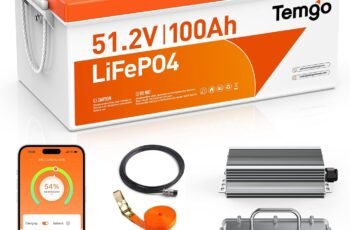
Have we ever wished our DIY battery projects felt less like guesswork and more like a reliable, professional system?

What Is the JK Active Balance BMS (JK-B1A20S15P)?
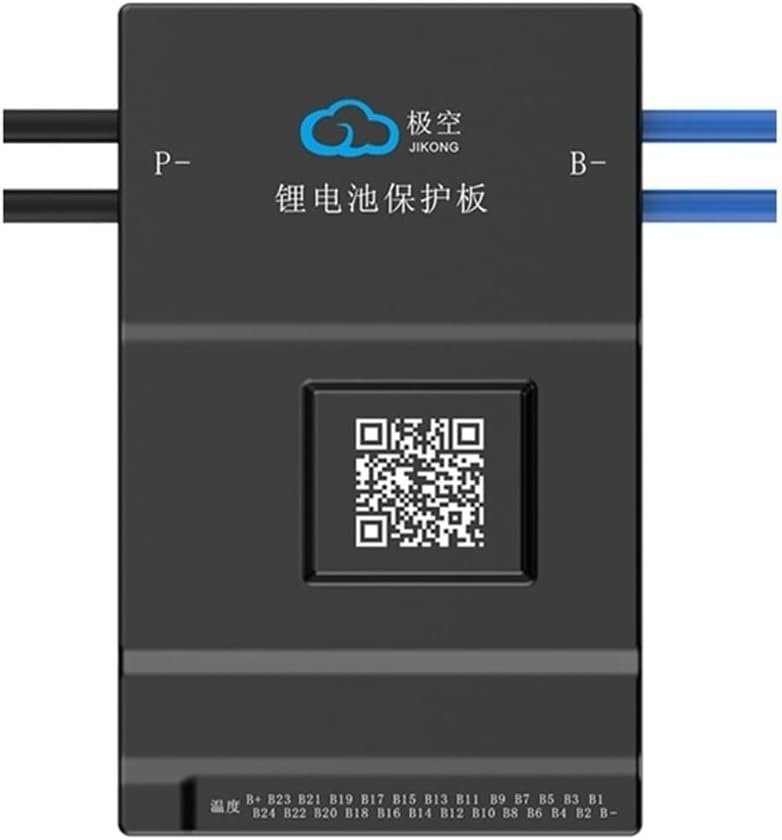
When we talk about getting the most out of our battery packs, a robust BMS is the heart of the system. The JK Active Balance BMS 8S 10S 12S 16S 17S 20S 24S, 60A 100A 150A 200A Lifepo4 Li-Ion Lto Battery (JK-B1A20S15P) is designed for serious DIY builders and off‑grid users who need control, safety, and efficiency. It is not just a protection board; it is an intelligent, actively balancing, app‑connected manager for our battery pack.
This BMS works with multiple chemistries (LiFePO4, Li-ion, LTO) and a wide range of series counts, giving us a flexible solution for 12V up to 72V systems and beyond. With active balancing, Bluetooth monitoring, and extensive protections, it aims to make our packs both powerful and long‑lasting.
Key Features at a Glance
Before we unpack each aspect, it helps to see how the main specs line up. This BMS stands out because it brings together features that usually belong in premium, industrial‑grade systems.
Here is a summary of the core elements we get with this model:
| Feature Category | What We Get | Why It Matters |
|---|---|---|
| Cell Support | 8S / 10S / 12S / 16S / 17S / 20S / 24S | Flexible for many pack voltages (12V, 24V, 48V, 72V and variations) |
| Max Current Options | 60A, 100A, 150A, 200A (JK-B1A20S15P series) | Suits small, medium, and large battery builds |
| Battery Chemistry | LiFePO4, Li-ion, LTO | Works with the most common DIY and off‑grid chemistries |
| Balancing Type | Active balancing, 0.6–2A balance current | Faster, more efficient balancing than basic passive BMS units |
| Protection Functions | Over‑charge, over‑discharge, over‑current, short circuit, low‑temperature charge cutoff | Safeguards cells and extends battery life |
| App & Connectivity | JK dedicated app, Bluetooth communication | Live monitoring and configuration from our phone |
| Efficiency Claim | Up to 99% battery usage efficiency | Better capacity utilization and reduced capacity loss |
| Typical System Voltage | 12V/4S, 24V/8S, 48V/16S, 72V/24S (and related variants) | Fits common solar, RV, and backup power setups |
| Intended Use | DIY systems, off‑grid solar, RV, e‑bike, energy storage, custom power projects | Ideal for builders who want control and customization |
This table only scratches the surface, but it highlights how the JK BMS is positioned as a serious tool for demanding battery builds, rather than a basic budget board.
Active Balancing: How It Actually Helps Our Battery Pack
Active balancing is the standout feature of this BMS. Many cheaper BMS boards only offer passive balancing, which simply bleeds off excess energy from higher‑voltage cells as heat. While that works to a degree, it is slow and wastes power.
With the JK Active Balance BMS, the system uses active balancing, moving charge from higher‑voltage cells to lower‑voltage ones. That difference in method has significant real‑world effects on our battery pack.
What Active Balancing Does for Us
When cells in a pack drift apart in voltage, we lose usable capacity because the weakest or lowest‑voltage cell limits the whole pack. The JK active balancing approach:
- Transfers energy from stronger cells to weaker ones instead of burning it off.
- Reduces imbalance faster, thanks to the 0.6–2A balancing current.
- Improves usable capacity, since all cells can reach similar state of charge.
- Extends overall pack life, as no cell is consistently overstressed or deeply discharged.
By boosting efficiency up to around 99%, as advertised, we effectively get more Ah from the same hardware. Over time, this can be a big deal in off‑grid or high‑demand applications where every amp-hour counts.
Why 0.6–2A Balancing Current Matters
Many low‑end BMS units have balancing currents in the dozens of milliamps. That might slowly correct minor drift, but in large capacity packs, this can take an extremely long time. The JK BMS’s balancing current (0.6–2A active balance) means:
- Faster equalization on large capacity cells (like 100Ah, 200Ah, or higher).
- Less time absorbing packs at top voltage for balancing.
- A better chance of keeping packs tightly matched even after many cycles.
For DIY powerwall builders and off‑grid enthusiasts, this is a strong argument in favor of JK’s active balancing design.
JK’s Own App and Bluetooth Control
We often end up guessing what is going on inside our battery pack when we use a basic BMS. The JK own development app, together with Bluetooth, turns our phone into a live dashboard and tuning tool for the battery.
Real‑Time Monitoring
Through the JK app, we can see:
- Individual cell voltages
- Total pack voltage
- Charge and discharge current
- State of charge estimates (depending on configuration)
- Temperature sensor readings
- Alarm or fault status
Having this in real time not only makes it easier to optimize our system, but it also helps us quickly identify issues like a weak cell, a loose connection, or misconfigured thresholds.
Configuration and Fine‑Tuning
Beyond monitoring, the app allows us to adjust many parameters without needing a PC interface or messing with tiny dip switches. Depending on the model and firmware, we can usually:
- Set over‑charge and over‑discharge thresholds
- Configure charge and discharge current limits
- Adjust temperature protection points
- Enable or tweak balancing behavior
- View logs and fault histories
This is particularly valuable for those of us adapting the BMS to different chemistry types (LiFePO4 vs. Li-ion vs. LTO) or fine‑tuning pack behavior for solar charging, inverter configurations, or EV controllers.

Protection Features: Keeping Cells Safe and Healthy
A BMS lives or dies based on how well it protects the pack. JK has included a full set of safety mechanisms that serve as a shield between our cells and the outside world.
Over‑Charge and Over‑Discharge Protection
Allowing cells to go above or below their safe voltage range is one of the fastest ways to ruin them. The JK BMS provides:
- Over‑charge protection: Cuts off charging when cells reach a safe maximum.
- Over‑discharge protection: Cuts off load when cells fall to the set minimum.
These are configurable within safe ranges depending on chemistry. For example, we might set LiFePO4 cells to charge up to around 3.45–3.55V per cell and stop discharge at around 2.8–3.0V. With this, we preserve the cycle life of our pack over thousands of cycles.
Over‑Current and Short Circuit Protection
High current surges can damage cells, wiring, and connected devices, or even cause dangerous events. JK’s BMS offers:
- Over‑current protection: If current exceeds the configured limit (based on the model rating: 60A, 100A, 150A, or 200A), it shuts down charge or discharge.
- Short circuit protection: In an actual short, this triggers nearly instantly, saving the pack from catastrophic damage.
We still need properly rated fuses and wiring, but the BMS adds another layer of protection and intelligence to the system.
Low‑Temperature Charge Cutoff
Charging lithium chemistry at low temperatures can permanently harm the cells. This BMS includes low temperature charging cut off, which:
- Uses temperature sensor(s) to monitor pack conditions.
- Stops charging automatically below a set temperature threshold.
This is extremely valuable for cabins, RVs, or outdoor systems that operate in winter. We can safely run our pack without worrying that a cold morning charge will silently degrade our investment.
Design, Build Quality, and Safety Considerations
JK describes the BMS as having a unique design and emphasizes the importance of selecting the correct board. From a builder’s perspective, both mechanical and electrical design matter.
Unique Design and Usability
While details vary by model, the JK BMS typically includes:
- Clearly labeled connection points for cells and main terminals.
- Pluggable balance harnesses for cleaner installation.
- Mounting points or cases that make it easier to secure the BMS.
This is important for us because an easy‑to‑install BMS reduces the chances of wiring mistakes, which are one of the most common causes of problems in DIY builds. A tidy layout also simplifies maintenance and troubleshooting.
Safety and Correct Sizing
Choosing the right JK BMS model is critical:
- Match series count (S): 8S, 10S, 12S, 16S, 17S, 20S, or 24S depending on our pack.
- Match current rating (A): 60A, 100A, 150A, 200A according to our expected load and charge rates.
- Match chemistry: Ensure we use settings appropriate for LiFePO4, Li-ion, or LTO.
If our system uses an inverter that can surge above 200A, for example, we might need the higher‑rated option or a different configuration. Correct sizing ensures the BMS operates within its design envelope, which is vital for both performance and longevity.
Compatibility: Cell Counts, Voltages, and Chemistries
The JK Active Balance BMS stands out by working across multiple common system setups. For those of us building more than one pack or upgrading later, this flexibility is valuable.
Supported Series Configurations
This BMS can be configured for:
- 8S – Common for some 24V LiFePO4 setups
- 10S / 12S – Used in some Li-ion configurations (e-bike, etc.)
- 16S – Very common for 48V LiFePO4 solar and powerwall systems
- 17S – Some specialized Li-ion setups
- 20S – Higher voltage applications
- 24S – Often around the 72V range, used in certain EV and high‑power designs
For typical off-grid solar installs, we might use:
- 4S LiFePO4 (12V nominal) – via a JK model supporting lower S ranges
- 8S LiFePO4 (24V nominal)
- 16S LiFePO4 (48V nominal)
- 24S LiFePO4 (72V nominal)
Having all these options in one product family means we can standardize on JK for multiple builds.
Supported Battery Chemistries
The BMS supports:
- LiFePO4 (LFP) – The go‑to for off‑grid solar, RV, and stationary storage
- Li-ion (NMC/NCA, etc.) – Common in e‑bike and light EV applications
- LTO (Lithium Titanate) – For specialty cases that demand extremely high cycle life and power
Each chemistry has its own voltage profile and safety window, and the JK app and settings framework are designed to adapt to those differences. We do need to configure it correctly, but we are not locked into one specific chemistry.
Wide Current Range: 60A up to 200A
Current rating is one of the first specs we check when choosing a BMS. The JK-B1A20S15P product line offers multiple versions ranging from 60A to 200A.
Matching Current Rating to Our Use Case
We would typically choose:
- 60A model for small portable packs, light solar setups, or lower‑power systems.
- 100A model for mid‑size RV systems, moderate inverters, or e‑bike style builds.
- 150A model for heavier off‑grid household systems with larger inverters.
- 200A model for high‑power inverters, power tools, or EV‑style performance.
We need to consider both continuous current and peak/surge current. Inverters, for example, can draw much more than their rated wattage for a short time when motors start or compressors kick on. Our BMS should comfortably handle these peaks without nuisance trips, while still protecting the cells.
Real-World Use: Where This BMS Fits Best
This JK BMS is marketed as being widely used across a variety of battery systems. From what we can see, it is best suited for more serious and technically inclined users.
Ideal Applications
Here are some common scenarios where this BMS can shine:
- Off‑grid solar systems (48V or 24V LiFePO4 packs powering inverters and loads)
- Home powerwalls built from prismatic LiFePO4 cells or reclaimed modules
- RV and camper builds needing reliable 12V/24V storage with protection and monitoring
- E‑bike or light EV projects using Li-ion or LiFePO4 configurations
- Backup power systems for home offices, servers, or workshops
- DIY stationary storage to shave peak loads or store cheaper off‑peak electricity
Because of its app connectivity and active balancing, this BMS is particularly attractive for long‑term stationary systems where we want maximum efficiency and visibility.
When It Might Be Overkill
For very simple or tiny projects—like a small 12V pack for LED lighting, or a few Ah of capacity—the advanced active balancing and app features might be more than we really need. In those cases, a basic BMS could suffice.
But if we are dealing with large capacities, multiple kWh of energy, higher voltages, or expensive cells, the extra intelligence from JK can pay off in reliability and battery longevity.
Installation Experience and Learning Curve
Any BMS with this many features will require careful installation. That is not a flaw; it is a consequence of the flexibility and control it offers.
Wiring and Setup
When we install the JK BMS, we can expect to:
- Connect balance leads to each cell tap in the correct order.
- Hook up main charge and discharge terminals with appropriately sized cable and fusing.
- Mount temperature sensors to representative cell locations.
- Secure the BMS physically to avoid vibration or movement.
- Power up and pair the app, then configure the correct cell count and chemistry.
Because there are many possible configurations, we should read the manual carefully and double‑check each connection. Reversing cell sense lines or shorting taps can easily damage any BMS, not just this one.
Configuration via the JK App
Once powered, we use the JK app to:
- Confirm that all cell voltages appear correctly and in the right order.
- Set over‑charge and over‑discharge thresholds.
- Define maximum current limits for charge and discharge.
- Configure temperature cutoffs and balancing behavior.
The interface is friendlier than command‑line tools and PC‑only configuration typical of some industrial BMS units, but it still assumes we understand basic battery parameters. For those of us new to lithium batteries, we might want to research recommended values for our specific cells before changing anything.
Performance and Efficiency in Daily Use
Performance with a BMS like this is measured less in raw speed and more in stability, reliability, and capacity retention over time.
Balancing and Capacity Utilization
In actual day‑to‑day use, we notice:
- Cells remain closely matched over many charge/discharge cycles.
- We do not need to hold the pack at top voltage for hours just to balance.
- Capacity stays closer to the pack’s theoretical rating, especially as the pack ages.
Over months and years, this better balance translates into fewer surprises, fewer premature cutoffs, and more predictable runtime from our system.
Protection and Fault Handling
We also benefit from intelligent fault handling:
- If a parameter is exceeded, the BMS cuts off charge or discharge and logs an error.
- We can quickly see in the app what went wrong (over‑voltage, under‑voltage, over‑current, temperature issue, etc.).
- After addressing the root cause, we can resume normal operation, often without needing to dismantle anything.
This is much less frustrating than using a “black box” BMS where the only symptom is the power suddenly going off with no clue why.
Pros and Cons of the JK Active Balance BMS
To get a balanced view, it helps to list where this BMS shines and where we might feel some trade‑offs.
Advantages
- Active balancing (0.6–2A) significantly improves efficiency and cell health compared to passive designs.
- Dedicated app and Bluetooth provide real‑time monitoring and configurable parameters.
- Wide range of supported cells (8S to 24S) covers most common voltages and system sizes.
- Works with multiple chemistries: LiFePO4, Li-ion, LTO.
- Comprehensive protections: over‑charge, over‑discharge, over‑current, short circuit, and low‑temperature charge cutoff.
- Suitable for DIY while still offering professional‑grade features and control.
- Scalable current ratings (60A–200A) for various project sizes.
Possible Drawbacks
- More complex to set up than simple “plug and play” BMS boards. We must pay attention to configuration.
- Requires a smartphone and app for full functionality; not ideal if we prefer a totally offline system.
- Learning curve for those new to lithium chemistry and advanced BMS parameters.
- Physical size and wiring complexity may be greater than ultra‑basic, low‑power BMS units.
If we are comfortable with these trade‑offs, the strengths of the JK BMS outweigh the drawbacks, especially for larger or more valuable battery packs.
How It Compares to Basic Passive BMS Units
Many of us may be wondering whether it is worth upgrading from a cheap passive BMS. Comparing them side‑by‑side clarifies the benefits.
| Aspect | Basic Passive BMS | JK Active Balance BMS (JK-B1A20S15P) |
|---|---|---|
| Balancing Type | Passive (bleeds energy as heat) | Active (transfers energy between cells) |
| Balancing Current | Typically 30–100mA | 0.6–2A |
| Efficiency | Lower; wastes energy during balancing | Up to ~99% battery usage efficiency |
| Monitoring | Often none or very limited | Full app‑based real‑time monitoring via Bluetooth |
| Configuration | Fixed or minimal settings | Wide configuration range through app |
| Protection Features | Basic over/under voltage, sometimes over‑current | Full suite including temp‑based low‑temp charge cutoff |
| Use Cases | Small packs, low‑cost projects | Medium to large DIY builds, off‑grid, higher‑value packs |
| Long‑Term Cell Health | Adequate if pack stays well matched | Better maintenance of balance and reduced stress on cells |
For small and inexpensive packs, passive BMS can be enough. For large capacity packs, especially those used daily for solar or critical backup, the JK’s advanced features are a significant upgrade.
Practical Tips for Getting the Most from This BMS
To truly leverage what the JK Active Balance BMS offers, we should follow some reasonable best practices.
Choose the Right Model and Settings
We should:
- Carefully match the BMS series count to our exact cell configuration.
- Select a current rating that exceeds our expected continuous and surge demands.
- Configure voltage and temperature thresholds based on manufacturer data for our cells.
- Start with conservative settings if unsure, then fine‑tune after monitoring behavior.
Keep Wiring Neat and Safe
We benefit from:
- Using appropriately rated cables, lugs, and fuses for our maximum currents.
- Keeping balance wires tidy, secured, and clearly labeled.
- Avoiding excessive bending or tension on connectors.
- Mounting the BMS in a location protected from moisture, dust, and mechanical impact.
A careful physical installation reduces the chance of intermittent faults and simplifies any future repairs or upgrades.
Use the App as a Diagnostic Tool
Rather than thinking of the app only as a fancy display, we can treat it as a diagnostic ally:
- Periodically check cell voltage spread to catch drifting cells early.
- Watch temperature readings under heavy load or fast charging.
- Check for repeated alarms that might indicate an inverter or charger misconfiguration.
- Keep an eye on trends over time to spot gradual changes in pack behavior.
This proactive use of monitoring helps extend the working life of our battery and reduces surprises.
Who Will Benefit Most from the JK Active Balance BMS?
This product is clearly aimed at a certain type of user. Knowing whether we fit that profile helps us decide if it belongs in our next project.
Ideal Users
We are likely to benefit a lot if:
- We are building or upgrading a medium to large battery pack (hundreds of Ah or multiple kWh).
- We want good visibility and control rather than treating the pack as a sealed box.
- We have invested in quality cells (LiFePO4, Li-ion, LTO) and want to protect that investment.
- We do not mind spending time configuring and understanding the system.
- We plan to use the pack daily, such as in off‑grid or partial grid‑tie solar setups.
In those cases, the JK BMS can add years of useful life and a lot of peace of mind.
Who Might Want Something Simpler
We might prefer a simpler BMS if:
- Our project is very small or strictly budget‑constrained.
- We are building something disposable or for short‑term use.
- We do not care about monitoring or balancing performance, as long as it mostly works.
For such situations, a basic passive BMS could be enough, and we might see the JK’s advanced features as unnecessary complexity.
Our Overall Impression and Verdict
The JK Active Balance BMS 8S 10S 12S 16S 17S 20S 24S, 60A 100A 150A 200A Lifepo4 Li-Ion Lto Battery (JK-B1A20S15P) positions itself as a sophisticated, highly configurable brain for our battery system. Instead of just protecting cells from extremes, it actively works to maximize usable capacity, keep cells in balance, and provide detailed insight into what is happening.
We appreciate that it:
- Offers genuine active balancing with substantial balance current.
- Includes a fully featured app and Bluetooth link.
- Supports a wide range of series counts, currents, and chemistries.
- Integrates robust protections, including low‑temperature charge cutoff.
In exchange, we accept that:
- Setup requires more thought and care than ultra‑basic BMS units.
- We need a compatible smartphone and the willingness to configure key parameters.
For serious DIY builders, off‑grid enthusiasts, RV power users, and anyone assembling substantial lithium packs, this BMS feels much closer to professional, industrial gear than to hobby‑grade hardware. When we are dealing with expensive cells and valuable energy storage, that difference matters.
If our goal is to build a battery system that is efficient, intelligent, and built for the long term, the JK Active Balance BMS is a strong candidate and, in our view, a very worthwhile upgrade over simpler passive solutions.
Disclosure: As an Amazon Associate, I earn from qualifying purchases.