?Are we looking for a feature-rich battery management system that supports many series counts and includes active balancing and Bluetooth monitoring?
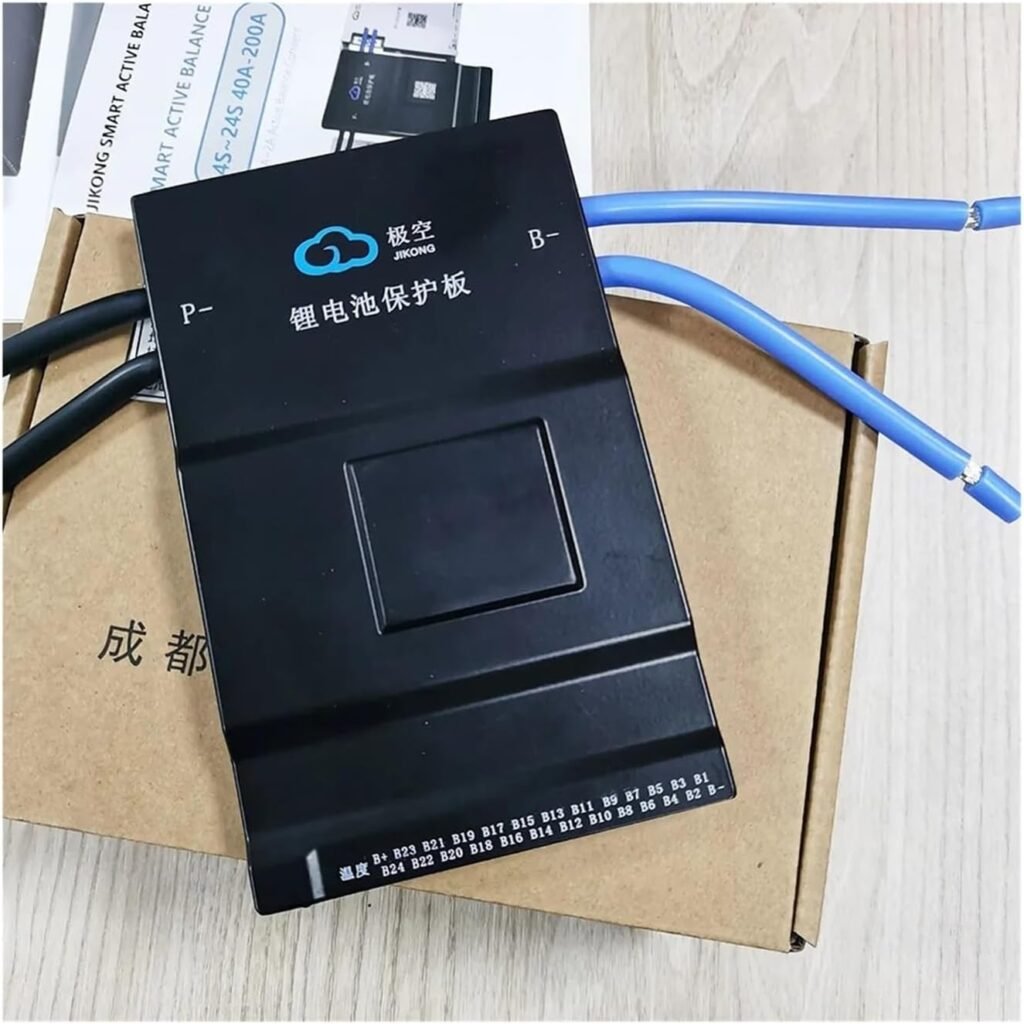

Overview of JK BMS 3S 4S 8S 12S 13S 14S 16S 17S 20S 24S Smart BMS 40A 60A 80A 100A 150A 200A Active Balance 1A/2A Lifepo4 Li-Ion Lto(JK-B2A24S20P)
We want a clear picture of what this BMS offers and whether it suits our battery project. The JK BMS (full product name above) is a multi-series, multi-current smart battery management system designed for LiFePO4, Li-Ion, and LTO chemistries. It emphasizes active balancing, app control, and a wide range of application scenarios for DIY and small-to-medium systems.
What this product aims to solve
We often face uneven cell voltages, limited battery lifespan, and unclear system status without good monitoring. This BMS aims to equalize cells actively to improve usable capacity and prolong life, while the Bluetooth app gives real-time visibility and configuration options. It also provides protection against common electrical faults to help safeguard our packs.
Key features summary
We like concise highlights, so here’s a quick list of the main selling points. The product advertises active balance with 0.6–2A balancing currents, models from 3S up to 24S, multiple continuous current ratings up to 200A, and its own app for Bluetooth monitoring. It also lists full protection functions (over-charge, over-discharge, over-current, short circuit, and low-temperature charge cutoff).

Technical specifications
We find a technical breakdown helps us match the BMS to our system requirements. Below is a table summarizing the principal specifications, which we can use to quickly compare models and pick the right one for our setup.
| Parameter | Details |
|---|---|
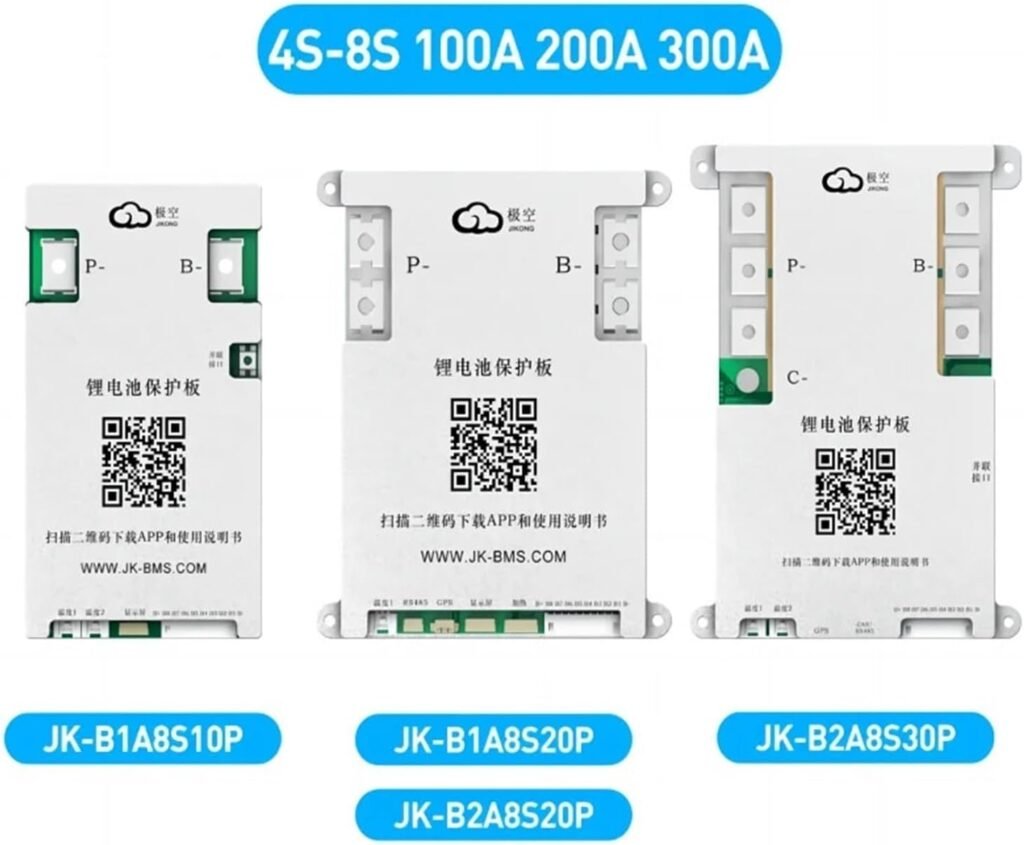
| Supported series (S) | 3S, 4S, 8S, 12S, 13S, 14S, 16S, 17S, 20S, 24S |
| Supported chemistries | LiFePO4 (LFP), Li-Ion, LTO |
| Continuous current ratings | 40A, 60A, 80A, 100A, 150A, 200A |
| Active balance current | 0.6A – 2A (model-dependent), advertised “Active Balance 1A/2A” |
| Max charge/discharge protections | Over-charge, Over-discharge, Over-current, Short circuit |
| Temperature protections | Low temperature charging cutoff |
| Communication | Bluetooth (BT) with JK proprietary APP |
| Active balance advantage | Claims up to 99% cell usage efficiency |
| Typical use-case voltages | 12V (4S), 24V (8S), 48V (16S), 72V (24S) configurations |
| Model code (example) | JK-B2A24S20P |
| Physical features | Protection board format for series cell connections, sensing leads |
| Compatibility | DIY battery systems, small-scale energy storage, EV conversions, e-bikes, UPS |
How active balancing works and why it matters
We often choose between passive and active balancing. Passive balancing burns off excess energy as heat from higher-voltage cells to equalize them, which works but wastes energy. Active balancing transfers charge between cells, improving energy retention and extending usable capacity.
The JK Active Balance system claims to raise battery usage efficiency to 99%, which suggests minimal wasted capacity. For applications where every amp-hour matters, such as off-grid systems or electric vehicles, active balancing can meaningfully increase range or usable energy. We should note that actual efficiency gains depend on cell mismatch and system usage patterns, but active balancing is generally advantageous for longevity and usable capacity.
JK’s app and Bluetooth connectivity
We appreciate systems that give real-time feedback and configuration. JK BMS provides a proprietary app with Bluetooth communication so we can monitor cell voltages, pack voltage, current, and temperature in real time. The app also allows for parameter adjustments and logging.
Ease of use for the app matters: pairing should be straightforward, data refresh should be stable, and the interface should present key metrics clearly. If we want remote monitoring beyond Bluetooth range, we may need additional telemetry hardware, but for local setup and diagnostics the Bluetooth app is convenient.
App functionality and user experience
In practice, the app should let us view individual cell voltages, BMS hall/charge/discharge states, historical data if available, and various alarm thresholds. We expect settings for balance thresholds, charge/discharge cutoffs, and temperature limits. The ability to tune these values helps us optimize for specific cell chemistries or custom pack designs.
We should check whether the app allows firmware updates over Bluetooth. Firmware updates can add features and fix bugs, so it’s a valuable capability if present.
Protection features and safety
We consider safety critical when selecting a BMS. This JK model advertises full protection suite: over-charge protection, over-discharge protection, over-current protection, short circuit protection, and low-temperature charging cutoff. Together these protections help prevent dangerous conditions and prolong cell life.
Over-charge and over-discharge protection
We expect the BMS to disconnect or limit charging above the upper voltage threshold and prevent further discharge below the lower threshold. Configurable thresholds enable us to set cutoffs suitable for LiFePO4 (LFP) or other chemistries.
Over-current and short circuit protections
Over-current protection should act quickly to prevent wire or cell damage during high load events. Short circuit protection must be fast and robust; some BMS designs use MOSFETs and fuses to handle fault currents. We should confirm the specified response times and whether the BMS requires external fuse protection for catastrophic faults.
Low-temperature charging cutoff
Charging at low temperatures can damage LFP cells, so a low-temperature cutoff is important. The JK unit includes this function, which should prevent charging below the safe temperature threshold until the pack warms up.
Compatibility and model selection
We need to choose the correct model for our pack. The JK BMS series covers a wide range of cell counts and current ratings, so matching the BMS to our battery configuration is crucial.
How to pick the right series (S) count
Count the number of cells in series in our pack and select the BMS that matches that series count exactly. Using a mismatched series count will not work safely, so double-checking is essential.
How to pick the right current rating
Select a continuous current rating equal to or greater than the maximum continuous discharge current we expect. For peak loads or motors, consider both continuous and peak surge currents; choose a model with sufficient headroom, and use appropriately sized wiring and fuses.
Installation and wiring considerations
We prefer clear wiring instructions since poor installation can cause issues. The JK BMS typically mounts near the pack with series sense leads to each cell group. Properly routing and labeling sense wires is key to accurate monitoring.
Sense wire routing and common mistakes
Sense leads must connect to the correct cell taps in order; reversing one lead or skipping a tap will give incorrect readings and may cause poor balancing or false alarms. We should route sense wires away from high-current cables to avoid induced noise. Tight, clean connections and secure mounting will reduce the chance of intermittent faults.
Power wiring and MOSFET placement
The power wires for charge and discharge should be sized to handle peak currents, and fuses or circuit breakers should be used according to best practices. If we plan to use the BMS in an EV or high-power inverter setup, we should add an appropriately rated main fuse between the pack and the load.
Performance expectations: balancing speed and efficiency
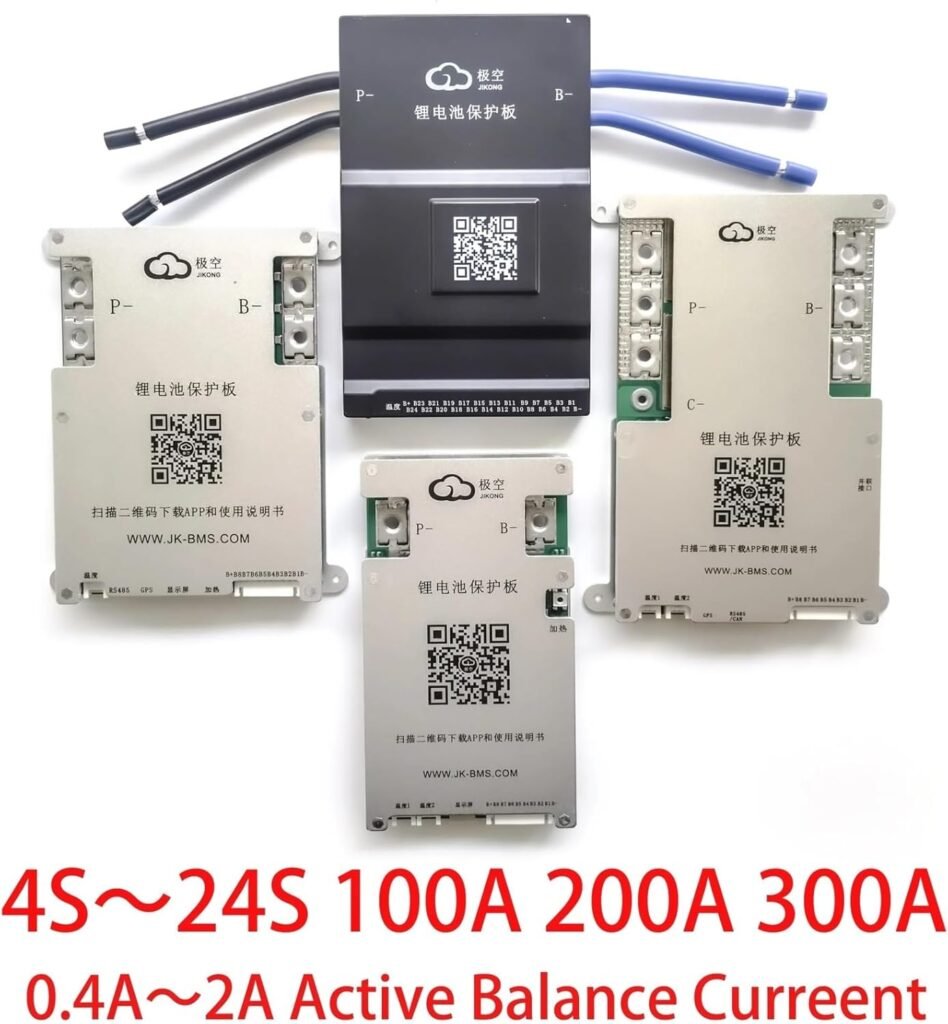
Active balancing performance depends on the balance current and the initial imbalance. The JK unit lists active balance currents around 1A or 2A depending on model, and a general range of 0.6–2A.
Typical balancing scenarios
If cells are only slightly mismatched, a 1A balancer can equalize the pack over several hours of charging cycles. For larger imbalances, active balancing will take correspondingly longer. We should plan for initial balancing after pack assembly and regular maintenance charging cycles to maintain balance.
Real-world gains in usable capacity
With active balancing, we can extract more usable capacity when cells age at different rates. The claim of 99% usage efficiency is optimistic and depends on cell matching, but active balancing typically yields noticeably better pack utilization than passive methods in practice.
Build quality and components
We look for robust build quality, solid soldering or crimped connections, and durable insulation on wires. The JK BMS has been designed as a protection board with multiple connection points and should be handled carefully during installation.
Thermal considerations
Active balancing generates some heat in the balancing circuitry. The board should have adequate heat dissipation, and we should avoid enclosing it in a tight, unventilated space without thermal management. For high-current models, heat from MOSFETs during heavy operation also needs to be managed.
Use cases and ideal applications
We like to assess where this BMS fits best. The JK Smart BMS suits a variety of applications, particularly:
- DIY home energy storage systems using LiFePO4 packs
- Off-grid solar battery banks
- Electric vehicle retrofits with matched series cell counts
- E-bikes and light electric vehicles with appropriate current ratings
- UPS systems and telecom backup where cell balance and monitoring matter
- Hobby and experimental packs where app-based monitoring is convenient
Not ideal for some specialized uses
We should avoid using it in extreme industrial environments without further ruggedization or in large-scale commercial energy storage systems that require redundant safety measures and grid-grade certification. Also, if we require long-distance remote monitoring beyond Bluetooth, additional telemetry is necessary.
Pros and cons
We prefer a balanced view before buying. Below are the main advantages and limitations we identify.
Pros
- Wide range of supported series counts (3S–24S), making the product versatile for many systems.
- Active balancing can significantly improve usable capacity and cell life.
- Proprietary app with Bluetooth provides real-time monitoring and configurability.
- Full safety feature set (over/under voltage, over-current, short circuit, low-temp cutoff).
- Multiple current ratings up to 200A to suit different load demands.
- Useful for DIY and small commercial setups.
Cons
- Bluetooth range is limited to local monitoring; no built-in long-range telemetry.
- Active balancing current (0.6–2A) may be slow for severely mismatched packs.
- Installation requires care with sense wires; mistakes can lead to poor performance.
- Firmware and app quality can vary; we should check user feedback for stability.
- Not a substitute for redundant safety systems in high-stakes commercial environments.
Table comparing models and typical applications
A short comparison table helps us match model families to common uses.
| Model Series | Typical Max Current | Active Balance Current | Typical Application |
|---|---|---|---|
| 3S–4S (40A–80A) | 40A–80A | ~0.6–1A | Small e-bikes, portable packs, DIY 12V systems |
| 8S–12S (60A–100A) | 60A–100A | ~1A | 24V–48V battery banks, small EVs, off-grid solar |
| 13S–17S (80A–150A) | 80A–150A | ~1–2A | Mid-power EV conversions, larger storage packs |
| 20S–24S (100A–200A) | 100A–200A | ~1–2A | High-voltage systems, larger energy storage, heavy loads |
Comparison with other BMS types
We like to know how this stacks against competitors. Compared to passive-balancing BMSs, JK’s active balancing offers better energy retention and longer pack life. Against some high-end commercial BMS units, JK may lack advanced features like CAN bus integration, cloud telemetry, or IEC certifications, but it strikes a good balance for DIY and semi-professional setups.
When to choose JK BMS over competitors
If active balancing, Bluetooth monitoring, and a wide range of series options are key priorities for our project, the JK BMS is a strong candidate. For hobbyists and small businesses building custom battery systems, it offers features that are difficult to find at similar price points.
When to consider alternatives
If we need industrial-grade certification, integrated CAN communication, or built-in long-range telemetry, we should evaluate higher-end options from established industrial suppliers. For very high-power applications, we might prefer modular commercial BMS solutions with redundancy.
Setup checklist before installation
We prefer to prepare thoroughly. Use this checklist to help ensure a smooth install:
- Confirm cell chemistry and choose the appropriate JK BMS chemistry settings.
- Count series cells precisely and select the correct S model.
- Choose a BMS current rating equal to or above expected continuous currents.
- Acquire correct wire gauge, fuses, and connectors for the planned current.
- Label and map all sense wires before connection.
- Ensure battery pack is partially charged but below max voltage when connecting for first time (follow manufacturer guidance).
- Install temperature sensor(s) in recommended locations.
- Test cell voltages individually before final connection.
- Check app connectivity and verify cell readings match physical measurements.
- Keep firmware updated if updates are available.
Troubleshooting common issues
We find that many issues are installation-related. Here are common problems and fixes:
- Incorrect cell voltages in app: confirm sense wire order and connections; check for breaks or shorts in sense leads.
- BMS refuses to charge: verify low-temperature cutoff state, check pack voltage, confirm charging source is within allowed voltage/current limits.
- Excessive heat on balance board: ensure ventilation, verify balancing isn’t compensating for a large initial mismatch, and confirm board current ratings.
- Bluetooth connection unstable: reduce electromagnetic interference, keep phone close to BMS during setup, restart app and BMS power cycle.
Maintenance tips
We want our BMS to last, so we recommend periodic checks:
- Inspect sense wire connections for corrosion or looseness every few months.
- Monitor balance performance; if imbalance worsens quickly, test cells individually for degradation.
- Keep firmware and app updated to obtain bug fixes and improvements.
- Make sure the pack’s mechanical mounting prevents vibration or stress on the BMS board.
Real-world performance expectations
In real installations, we expect:
- Improved usable capacity over time compared to passive balancing—especially helpful in aging packs.
- Stable monitoring via Bluetooth for local diagnostics.
- Reliable protection against common faults if installed correctly and used within specified ratings.
- Balancing that takes hours to days depending on imbalance magnitude and balance current, so patience is important during initial conditioning.
Price and value proposition
We look at price relative to features. The JK BMS typically sits in a competitive price bracket for active-balancing BMSs that include app monitoring. For DIYers and small businesses, it tends to represent good value because active balancing and Bluetooth features often cost more in alternative products.
Environmental and regulatory notes
We should handle battery packs and BMS units according to local regulations for electronic waste and battery disposal. This BMS may not have specific industrial certifications in all regions; check local compliance requirements if deploying in regulated installations.
Frequently asked questions (FAQ)
Q: Can we use the JK BMS for different cell chemistries? A: The unit is intended for LiFePO4, Li-Ion, and LTO; always set the correct chemistry in the app and confirm voltage thresholds match cell specifications.
Q: What happens if a sense wire fails? A: A broken or miswired sense lead can lead to incorrect cell readings and improper balance behavior; the app should show anomalies and the BMS may refuse to operate until corrected.
Q: Is the Bluetooth app required for operation? A: The BMS will perform protection and balancing functions without the app, but the app is useful for monitoring, configuration, and diagnostics.
Q: Can the BMS handle regenerative braking or charging sources with high surge currents? A: Verify the selected model’s peak charge or discharge ratings and incorporate appropriate fuses. For high surge environments, add external hardware to manage surges.
Q: How fast will active balancing equalize a pack? A: That depends on imbalance severity and the model’s balance current; expect hours to days for typical mismatches.
Final verdict
We find that the JK BMS 3S 4S 8S 12S 13S 14S 16S 17S 20S 24S Smart BMS 40A 60A 80A 100A 150A 200A Active Balance 1A/2A Lifepo4 Li-Ion Lto(JK-B2A24S20P) presents a compelling option for DIYers and small-to-medium battery system builders. Its active balancing, app-based monitoring, and wide range of configurations make it versatile and practical. We recommend it for projects where increased usable capacity, cell longevity, and local monitoring are priorities.
We advise careful model selection, precise wiring, and attention to thermal and current management during installation. For larger commercial or highly regulated systems, evaluate higher-tier industrial solutions, but for most hobbyist and small professional builds, this JK BMS offers a strong balance of features and affordability.
If we want, we can also provide a step-by-step installation guide tailored to our specific series count and current rating, check compatibility with a particular inverter or charger, or review user feedback related to app stability and firmware updates.
Disclosure: As an Amazon Associate, I earn from qualifying purchases.