Have we ever planned the perfect off-grid trip, only to worry that our power might not last as long as our adventure?

What Is the Litime 12V 200Ah LiFePO4 Battery?
The Litime 12V 200Ah Lithium LiFePO4 Battery (4 Packs) is a set of four deep-cycle lithium batteries designed for RVs, travel trailers, boats, off-grid cabins, and home backup. Together, these batteries aim to give us a powerful, long-lasting, and low-maintenance energy solution.
Instead of wrestling with heavy lead-acid batteries and worrying about early failure, we get a lighter, more efficient system with a lifespan measured in thousands of cycles, not hundreds.
Key Specifications at a Glance
Before we get into real-world use, it helps to see the basics laid out clearly. This gives us a better feel for what we are actually getting with this battery set.
| Feature | Specification / Description |
|---|---|
| Battery Type | LiFePO4 (Lithium Iron Phosphate) |
| Nominal Voltage | 12V |
| Capacity (per battery) | 200Ah |
| Energy (per battery) | 2560Wh |
| Number of Batteries in Pack | 4 |
| Total Capacity (4 batteries, 12V) | 800Ah |
| Total Energy (4 batteries, 12V) | 10,240Wh (10.24kWh) |
| Cycle Life | 4000+ cycles at 100% Depth of Discharge (DOD) |
| Energy Density | 56Wh per pound |
| Weight vs Lead-Acid | Around 1/3 the weight of comparable lead-acid batteries |
| Expansion Capability | Up to 16 batteries (4P4S) for a 48V 800Ah system |
| Max System Energy (expanded) | 40.96kWh |
| Max Load (expanded system) | 20.48kW |
| Protection Features | 20+ BMS protections, including over/under voltage, overcurrent, short circuit |
| Environmental Protection | IP65 dustproof & waterproof, salt spray resistant |
| Warranty / Service | 5-year service and support, 24-hour online assistance |
| Typical Uses | RV, travel trailer, marine, off-grid, home backup power |
This set is effectively a modular power system. We can run it as four individual 12V batteries, or configure and expand it into larger, more capable systems as our needs grow.
Design and Build Quality
The first thing we notice with this battery set is how compact and clean everything feels. LiFePO4 batteries already tend to be lighter and more manageable than old-school lead-acid, and this product continues that trend.
The shell and terminals feel robust, giving us confidence that the batteries can be installed and removed several times without issues. The casing is rated IP65, which means decent resistance against dust and water jets—good news for outdoor adventures and slightly messy storage compartments in RVs or boats.
We get the sense that these batteries are built for real-world conditions: RV compartments, marine environments, and off-grid sheds rarely stay perfectly clean and dry. The added salt spray resistance is especially reassuring for marine users.
EV-Grade LiFePO4 Cells: Why That Matters
The manufacturer highlights that the batteries use EV-grade A LiFePO4 cells. That might sound like jargon, but it actually matters quite a bit.
In practical terms, “EV-grade A cells” usually means:
- Consistent quality control
- Stable performance over many cycles
- Better tolerance to regular deep discharges
- Lower risk of early cell failure
For us, this translates into a battery bank that we can count on for years of use rather than wondering if we will lose capacity within a season or two. LiFePO4 chemistry is already known for stability and safety, and pairing that with high-grade cells gives us solid peace of mind.
Capacity and Energy: How Much Power Do We Really Get?
One of the main questions we usually have is: How long will this actually run our stuff?
Each battery is 12V, 200Ah, giving 2560Wh (12.8V nominal × 200Ah). With 4 batteries, we have:
- Total capacity: 800Ah at 12V
- Total energy: 10,240Wh or 10.24kWh
To put this into context, here are some approximate runtimes using the full 4-battery setup, assuming about 90% usable energy (which is realistic for LiFePO4):
| Device / Load | Approx Power Draw | Estimated Runtime with 4 Batteries (10.24kWh) |
|---|---|---|
| 12V fridge (50W avg) | 50W | ~180–190 hours (7–8 days) |
| LED lighting (40W total) | 40W | ~220–230 hours (9–10 days) |
| Laptop (charging + use) | 60W | ~145–155 hours |
| CPAP machine (without heater) | 40W | ~220–230 hours |
| Small 120V TV (through inverter) | 80W | ~100–110 hours |
| 1000W inverter load (microwave) | 1000W | ~9–10 hours (total runtime, not continuous) |
| 1500W space heater (not advised) | 1500W | ~6 hours (total; will drain bank quickly) |
Of course, our real usage will usually be a mix of loads coming on and off throughout the day. But with over 10kWh available, we have enough energy for multi-day boondocking, especially if paired with solar panels.
Comparing Lithium vs Lead-Acid in Real Use
One of the biggest benefits of this battery set is that it replaces older, heavier technologies. Let us quickly compare what we actually gain with LiFePO4 versus traditional lead-acid.
Usable Capacity
Lead-acid batteries generally recommend using only about 50% of capacity to avoid quickly shortening their lifespan. LiFePO4 can regularly go to 80–100% DOD without the same penalty.
So, a bank of four 12V 200Ah lead-acid batteries would be rated similarly on paper (800Ah), but in practice, we might safely use only half of that: around 4–5kWh of usable energy. With LiFePO4, we can typically use close to the full 10kWh comfortably.
Weight and Portability
The product states a density of 56Wh per pound and about 1/3 the weight of lead-acid. That means:
- Easier installation
- Less stress on RV axles and vehicle suspensions
- Simpler handling for marine and off-grid setups
If we have ever tried lifting a big lead-acid battery into a cramped compartment, we know how valuable lighter batteries can be.
Cycle Life
With 4000+ cycles at 100% DOD, these batteries are designed for long-term use. If we discharge and recharge once a day, 4000 cycles equals roughly:
- Over 10 years of daily cycling at full depth of discharge
Lead-acid batteries often manage only a few hundred deep cycles before losing a significant portion of capacity. Over the lifespan of this battery set, we could have replaced traditional batteries multiple times.


Realistic Use Cases for RV Owners
For RV owners, this battery pack fits nicely into both full-time and weekend usage patterns.
Boondocking and Off-Grid Camping
If we enjoy dry camping, we want enough power for:
- Lights
- Water pump
- Fridge
- Phone and laptop charging
- Occasional microwave use
- Vent fans
With 10.24kWh from this 4-pack, we can run a typical RV electrical system for several days without shore power, especially if we are mindful about high-wattage loads. Adding solar (for instance, 400–800W on the roof) can extend that almost indefinitely during sunny conditions.
Reducing Generator Dependence
Generators are useful, but noisy and fuel-hungry. With a battery bank of this size, we can:
- Run quiet at night and early morning
- Use a generator only to top up during heavy usage or cloudy days
- Save on fuel and reduce noise pollution at campsites
We likely will not run air conditioning for long off batteries alone, but everything else in the RV becomes much more manageable and quiet.
Using the Batteries in Travel Trailers
Travel trailers often have limited space and weight capacity. The fact that these batteries are about a third of the weight of lead-acid is a major advantage for:
- Tongue weight management
- Overall trailer towing efficiency
- Easier installation in small compartments
We can place batteries closer to the trailer’s center of gravity or in storage bays that were not suitable for heavier banks. That flexibility gives us more control over how we balance weight and performance.
Marine and Boat Applications
On boats, reliability and safety become even more critical. Here, the IP65 rating and salt spray resistance play a significant role.
We get:
- Better protection from humidity and splashes
- Greater confidence when mounted in less-than-perfectly-sealed lockers
- A chemistry (LiFePO4) that is thermally more stable than many other lithium types
Paired with a proper marine-grade charger and installation, this set can provide days of power for navigation electronics, lighting, refrigeration, and entertainment systems, all while surviving the harsher marine environment.
Home Backup and Off-Grid Cabins
Many of us also want a reliable backup for home or cabin use. With solar and an inverter, these batteries can act as a compact power bank for:
- Essential circuits (fridge, modem, lights, small electronics)
- Remote off-grid cabins
- Tiny homes or backyard offices
With 10.24kWh available in the 4-pack, we can realistically cover essentials for:
- A day or two of light-to-moderate home use
- Several days of very conservative essential-only usage
If we choose to expand the system (up to 16 batteries for 40.96kWh), we move into a territory where we can sustain a small home or large cabin for multiple days without grid power, especially when combined with solar input.
Expansion: Building Up to 40.96kWh
One of the strongest selling points is the expandability. These batteries can be configured:
- In parallel and series up to 4P4S (4 in parallel, then 4 of those strings in series)
- Resulting in a 48V 800Ah system
- With a total energy of 40.96kWh and a maximum load of 20.48kW
This means we can start small with the 4-pack and expand later as our energy needs grow, such as:
- Moving from occasional RV use to a full off-grid cabin
- Scaling up from backup-only to full-time off-grid living
- Powering workshops, larger inverters, or heavier loads (well pumps, tools, etc.)
We have a path that takes us from “weekend trip” battery to a serious home-scale battery bank without changing brands or chemistry.
Battery Management System (BMS) and Safety Features
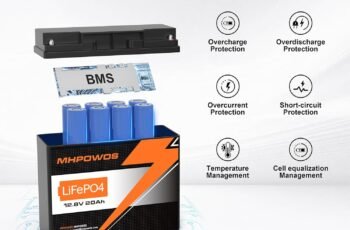
The product mentions 20+ BMS protections, which are essential for safe operation. While not every protection is listed in the description, typical BMS features for a battery in this class usually include:
- Overcharge protection
- Over-discharge protection
- Overcurrent / short-circuit protection
- High-temperature cut-off
- Low-temperature charging cut-off (or limitation, depending on model)
- Cell balancing
The BMS is the “brain” that helps keep the battery operating within safe parameters. For us as users, that means:
- We are less likely to damage the battery accidentally
- The system can shut down under dangerous conditions
- Cells stay balanced, leading to longer life and better performance
Partnered with LiFePO4’s inherently stable chemistry, this makes the pack a solid choice where safety is prioritized, like in RVs and bedrooms or close quarters.

Efficiency and Self-Discharge
LiFePO4 batteries are known for low self-discharge, typically around 2–3% per month or less. That means:
- We can store the batteries for a while without losing much charge
- Seasonal users (winter storage of RVs or boats) will not return to completely dead batteries
- Standby use for backup power is feasible without constant top-up charges
We still want to follow manufacturer recommendations for long-term storage (usually partial charge and cool temperature), but the chemistry itself is much kinder than lead-acid when sitting idle.
Charging: What We Need to Know
To get the most out of this battery set, we should pair it with a compatible charger or solar charge controller designed for LiFePO4. Key points we want to consider:
- Correct charging voltage for 12V LiFePO4 (typically around 14.4V absorption, but we should check Litime’s exact recommendation)
- No long-term trickle charging or float at high voltage (LiFePO4 does not need it the same way lead-acid does)
- A smart charger or MPPT solar controller with a LiFePO4 profile is ideal
If we are upgrading from lead-acid, we might need to:
- Adjust the charger settings, or
- Replace an older charger that cannot support lithium-specific profiles
Once correctly set up, charging becomes straightforward, and we benefit from high charge efficiency—more of our solar or generator power actually ends up in the battery.
Performance in Harsh Environments
The IP65 rating and salt spray resistance are more than just marketing terms; they directly affect how and where we can place the batteries.
This design is especially helpful if:
- We have an exterior battery compartment on the RV
- Our installation area sometimes collects dust or road debris
- We live in coastal areas, where salt in the air is more common
- Our off-grid shed is not perfectly sealed
While we would still avoid submerging the batteries or placing them where they can be waterlogged, occasional splashes, dust, and moisture are far less of a concern.
Longevity: What 4000+ Cycles Means for Us
With 4000+ cycles at 100% DOD, the lifespan story is compelling. We can think of a “cycle” as one full use from fully charged to fully discharged and back again.
If we do:
- One full cycle per day: over 10 years of life
- One cycle every 2–3 days (typical for weekenders or moderate users): we can stretch that much longer
In reality, many of our cycles will not be full 100% discharges, which can further extend effective lifespan. Over time, this tends to lower the cost per kWh delivered by the battery, even if the upfront cost feels higher than traditional batteries.
Practical Pros and Cons
To help us quickly judge if this set fits our needs, we can summarize the main advantages and potential drawbacks from a user standpoint.
Advantages
- High usable capacity: 10.24kWh in the 4-pack, most of it truly usable
- Long life: 4000+ cycles, excellent for serious off-grid or frequent RV use
- Lightweight: About 1/3 the weight of a similar lead-acid bank
- Expandable: Up to 40.96kWh and 48V 800Ah for larger systems
- Safe chemistry: LiFePO4 is stable, non-toxic, and less prone to thermal runaway
- Robust protection: 20+ BMS protections and IP65 rating
- Good for tough environments: Dust, water spray, and salt resistance
- Low maintenance: No watering, no worrying about sulfation, low self-discharge
Potential Drawbacks
- Upfront cost: Higher initial expense compared to lead-acid banks (though usually cheaper per cycle over time)
- Charger compatibility: May require updating our charger or solar controller to lithium-compatible settings
- Cold-weather limitations: Like other LiFePO4 batteries, charging at very low temperatures may be restricted (we should check and plan for this if we camp or store in cold climates)
- Inverter and wiring needs: To fully use higher capacity or power, we might need appropriately sized inverters and cables
None of these are unique to this specific product, but they are practical considerations when stepping up to a modern lithium system.
Ease of Installation and Setup
From an installation standpoint, these batteries are relatively straightforward for anyone familiar with RV or off-grid wiring:
- Standard 12V nominal configuration
- Familiar positive/negative terminals
- Modular setup that lets us wire 12V, 24V, or 48V banks depending on our needs
We still want to:
- Use properly sized cables for the current we expect
- Install appropriate fuses or breakers
- Follow correct series/parallel wiring practices
- Ensure good ventilation and secure mounting
Thanks to the lower weight, physically getting them into place is easier than wrestling with equivalent lead-acid units.
Everyday User Experience
In day-to-day use, the main differences we tend to notice with a system like this are:
- More consistent voltage as the battery discharges, especially under load
- Less voltage sag when starting a load like a microwave or water pump
- Reduced anxiety about going too low on battery capacity
- A quieter overall camping or boating experience if we can reduce generator time
We can watch a movie, run LED lights, keep our fridge cold, and still have headroom for a CPAP or laptop charging overnight without worrying about waking up to a dead system.
Customer Support and Warranty
The product includes:
- A 5-year service and support commitment
- Professional technical support
- 24-hour online service
For those of us investing in a long-term power solution, knowing there is a multi-year support window is reassuring. Off-grid and mobile power systems can be complex, and having access to responsive assistance can make installation and troubleshooting far smoother.
Who Is This Battery Set Best For?
We can narrow down who would benefit most from the Litime 12V 200Ah LiFePO4 Battery, 4 Packs:
- Frequent RV travelers and full-timers who want reliable power for boondocking
- Off-grid cabin owners building a flexible, scalable battery bank
- Boat and marine users who need robust, salt-resistant, and safe batteries
- Homeowners wanting a modular backup power system that can grow over time
- DIY solar enthusiasts ready to move on from lead-acid and step into long-life lithium
If we only camp once or twice a year with hookups every time, this system might be more power than we strictly need. But if we regularly go off-grid or want future-proof flexibility, the investment can pay off in convenience and reduced replacement costs down the road.
Tips for Getting the Most Out of These Batteries
To maximize the value and lifespan of this set, we can follow a few practical habits:
-
Use a LiFePO4-compatible charger or solar controller
Configure correct voltages and avoid long-term overcharging. -
Avoid extreme temperatures when possible
Especially very low temperatures while charging; consider insulated battery boxes or heated compartments in freezing climates. -
Size our inverter and wiring appropriately
Take advantage of the high capacity with safe, robust electrical infrastructure. -
Monitor the system
A battery monitor or shunt-based meter can give us accurate state-of-charge readings, so we understand our actual usage. -
Plan for future expansion
If we know we might go from RV-only to an off-grid cabin later, we can wire and design with expandability in mind.
Final Thoughts: Is the Litime 12V 200Ah LiFePO4 4-Pack Worth It?
When we look at the full picture—capacity, lifespan, safety, expandability, and environmental resilience—the Litime 12V 200Ah LiFePO4 Battery, 4 Packs stands out as a powerful backbone for modern off-grid and mobile power systems.
We gain:
- A substantial 10.24kWh battery bank right away
- The option to build up to a serious 40.96kWh system later
- Long-term durability with 4000+ cycles at 100% DOD
- Lighter weight and less hassle compared to lead-acid
- Protection from harsh conditions, backed with a 5-year support commitment
If our goal is to confidently run an RV, travel trailer, marine setup, or small off-grid/home backup system without constantly worrying about power, this product offers a compelling balance of performance, safety, and scalability that fits both current needs and future growth.
Disclosure: As an Amazon Associate, I earn from qualifying purchases.