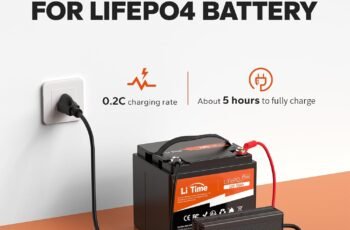
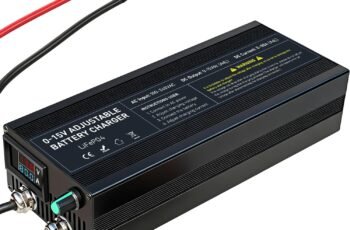
Have we ever wished our RV or off-grid setup could charge faster, run safer, and just work without us constantly babysitting the batteries?

What Is the LiTime 12V 60A DC to DC Charger?
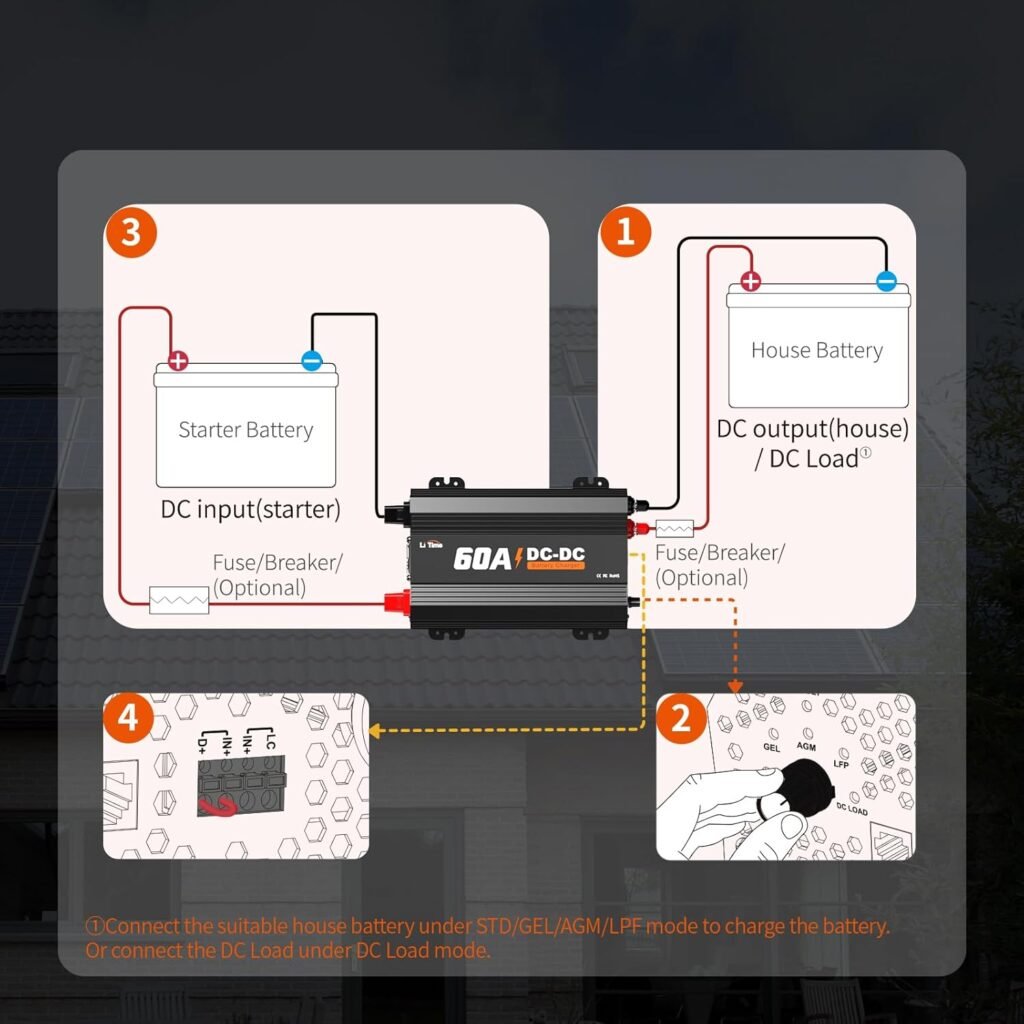
When we look at the LiTime 12V 60A DC to DC Charger, we are essentially looking at the “charging brain” for our 12V battery system. It manages how power flows from a source battery (like our vehicle’s starter battery or another DC source) to our house or service battery bank.
This particular unit is designed for modern lithium batteries as well as traditional lead-acid types. It helps us charge quickly, safely, and correctly, which is critical if we rely on our batteries for RVs, campers, trailers, solar systems, home backup, or other off-grid setups.
Who Is This Charger For?
We find this charger especially useful if we run a mobile or off-grid lifestyle and want dependable power. It’s ideal for those of us tired of slow charging, undercharged batteries, or damaged batteries from improper charging.
If we own an RV, camper, trailer, cabin, van, or small home backup system that runs on 12V batteries, this unit might be exactly what we have been looking for. It is not marine-rated, so it is not for boats or other wet, salty environments.
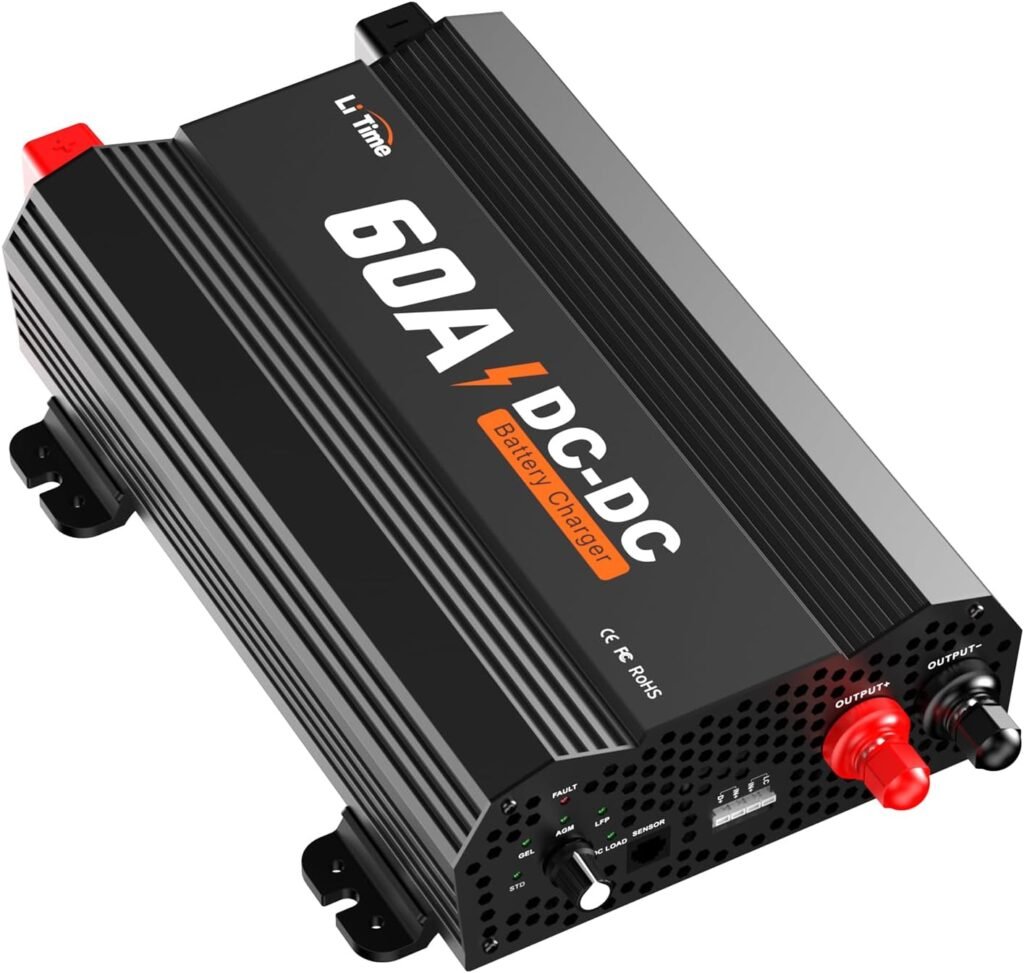

Key Features at a Glance
To get a quick understanding of what this charger offers, it helps to see the essentials laid out plainly. We can then decide if it fits our current or future system plans.
| Feature | Details |
|---|---|
| Product Name | LiTime 12V 60A DC to DC Charger |
| Supported Battery Types | LiFePO4, AGM, Gel, SLA, Calcium |
| Charging Stages | 2-stage (CC/CV) for LiFePO4; 3-stage (Bulk/Absorption/Float) for lead-acid |
| Max Output Current | 60A (with option to limit to 30A via low-current port) |
| Output Voltage for LiFePO4 | 14.6V (optimized for lithium) |
| Input / Output Voltage | 12V DC to 12V/14.6V DC |
| Primary Use Cases | RVs, campers, trailers, solar, home backup, off-grid systems |
| Safety Protections | Over-voltage, low-voltage, short-circuit, reverse polarity, over-temperature |
| Certifications | FCC, CE, RoHS |
| Waterproof Rating | Not waterproof; not suitable for marine use |
| Extra Function | Can reactivate LiFePO4 batteries after BMS shutdown |
We see right away that this unit is all about compatibility, safety, and speed, blended into a compact package.
Compatibility With Different Battery Types
One of the biggest strengths of this charger is its ability to work with multiple battery chemistries. Many of us run mixed systems or upgrade from lead-acid to lithium over time, and having a charger that can handle both is incredibly practical.
Works Seamlessly With 12V LiFePO4 Batteries
If we are running LiFePO4 batteries, we know they need a specific profile to charge properly and safely. This LiTime charger gives us a dedicated 2-stage charging profile: Constant Current (CC) and Constant Voltage (CV), set to 14.6V for LiFePO4.
This approach optimizes charging speed while protecting battery cells. It helps us get the most out of our lithium pack in terms of cycle life and usable capacity without the risk of overcharging, which is especially critical for LiFePO4 chemistry.
Supports AGM, Gel, SLA, and Calcium Batteries
Not everyone has moved to lithium yet, and many of us still run AGM or Gel batteries. This charger fully supports lead-acid variants, including:
- AGM (Absorbent Glass Mat)
- Gel
- Sealed Lead Acid (SLA)
- Calcium-based lead-acid batteries
For these chemistries, the charger uses a 3-stage charging method: Bulk, Absorption, and Float. This is the classic approach that keeps our lead-acid batteries topped off without overcharging them, while also ensuring we restore capacity efficiently.
Perfect for Mixed Systems and Future Upgrades
Some of us are in transition: we may start with AGM and later switch to LiFePO4. With this charger, we do not need to replace the charger when we upgrade the battery bank. We just adjust the charging profile to match the new battery type.
That flexibility means we can think long-term with our system design instead of locking ourselves into a single battery chemistry.
Smart Multi-Stage Charging Explained
We often hear terms like “multi-stage charging,” but understanding what they mean helps us appreciate what this unit actually does for our batteries over years of use.
2-Stage Charging for LiFePO4 (CC and CV)
For LiFePO4, the LiTime charger uses:
- Constant Current (CC) – The charger pushes a steady current (up to 60A, unless we limit it) into the battery until it reaches the target voltage, which is 14.6V for LiFePO4.
- Constant Voltage (CV) – Once the battery hits that voltage, the charger holds the voltage steady and gradually reduces current as the battery fills up toward 100%.
This method is efficient and aligns perfectly with what LiFePO4 batteries need. We get fast charging without floating the battery at high voltages that could stress the cells over time.
3-Stage Charging for Lead-Acid (Bulk, Absorption, Float)
For lead-acid batteries, including AGM and Gel, the charger follows the classic 3-stage smart profile:
- Bulk – This is the heavy lifting phase where the battery receives the maximum safe current until it reaches a certain voltage threshold.
- Absorption – The charger holds the voltage at a set level and gradually tapers the current as the battery nears full capacity.
- Float – Once the battery is essentially full, the charger drops to a lower maintenance voltage to keep the battery topped off without overcharging.
By using this pattern, the LiTime charger reduces sulfation risk and extends the life of lead-acid batteries. This is especially important if our setup often stays plugged in or charged for long periods, like an RV in storage or a home backup system.
Automatic Adjustment Based on Battery Type
The beauty of this charger is that we do not need to manually manage each stage. Once we have set the correct battery type, the charger automatically handles the transitions between stages.
That automation protects us from user error and gives us confidence that our expensive battery bank is being charged the way it should be, every single cycle.
60A Output for Faster Charging
Charging speed is one of the main reasons many of us start looking at DC to DC chargers. The LiTime model stands out with a substantial 60A output.
Why 60A Matters in Real Use
At 60A, this charger can restore a significant amount of capacity in a relatively short amount of time, assuming our source can supply enough power. For example:
- If we have a 200Ah LiFePO4 battery bank at 50% state of charge (100Ah to refill), a 60A charger, in ideal conditions, might bring us close to full in under two hours.
- In real-world conditions, with some tapering and inefficiencies, it still means we are topping up far faster than a small 10A or 20A charger.
In an RV or camper, that can translate into shorter engine run times, fewer generator hours, and more usable energy during the day.
Optional 30A Low-Current Port
Not every system can or should charge at 60A. Maybe our alternator is smaller, or our wiring is not designed for sustained high currents. LiTime gives us flexibility through a low-current port that limits the charger to 30A.
This feature lets us:
- Protect a smaller alternator from overload
- Match the charger output to thinner wiring or smaller battery banks
- Reduce heat and stress in compact installations
We can think of it as “tuning” the charger to our system’s capabilities instead of forcing everything to handle maximum current all the time.
Can Also Power DC Loads Directly
Another useful aspect is that this charger does not just charge batteries; it can also directly power DC loads from the input source while charging service batteries. That is especially handy in mobile systems where we want to run DC appliances while the engine is on or while another DC source is active.
In practical terms, we can keep the fridge running, power lights, or operate inverters while the charger manages what goes to the battery versus what goes directly to loads.
Multi-Protection for Safer Operation
Safety is non-negotiable when we are dealing with high currents and expensive batteries. LiTime has built in several layers of protection designed to defend both our system and the charger itself.
Over-Voltage and Low-Voltage Protection
Over-voltage protection helps prevent damage if the input or output voltage rises beyond safe limits, which could otherwise harm our batteries or devices. Low-voltage protection stops the charger from excessively draining our source battery, such as the starter battery in our vehicle.
This is particularly important when we rely on our vehicle battery to start the engine. We want to charge our house battery, but we do not want to end up with a dead engine battery in the process.
Short-Circuit and Reverse Polarity Protection
Accidents happen, especially during initial installation or when we modify our setup. Short-circuit protection helps safeguard the charger and wiring if positive and negative accidentally connect in a way they should not.
Reverse polarity protection is equally critical. If we mistakenly swap positive and negative leads while wiring, the charger is designed to protect itself instead of instantly failing. That layer of forgiveness can save us a lot of frustration and money.
Over-Temperature Protection
High current charging can generate heat. Over-temperature protection allows the LiTime charger to monitor its internal temperature and react when it gets too hot, often by reducing output or temporarily shutting down to cool off.
In tight compartments or high ambient temperatures, this function is vital. It helps preserve internal components and prevents heat-related damage or hazards.
Reactivates LiFePO4 Batteries After BMS Shutdown
Many LiFePO4 batteries include a built-in Battery Management System (BMS) that can shut down the battery to protect it from over-discharge, over-current, or other faults. When that happens, some chargers cannot “see” the battery anymore and refuse to start charging.
The LiTime 60A DC to DC Charger can send the appropriate signal to reactivate a protected LiFePO4 battery after a BMS shutdown. That can spare us from having to use special recovery chargers or manual jumper methods to wake a battery back up.
Compact and Rugged Design
When we build mobile or off-grid power systems, space and durability are always top of mind. This charger addresses both considerations thoughtfully.
Space-Saving for Tight Installations
The charger’s compact footprint makes it easier for us to tuck it into existing electrical bays, under seats, or behind panels, especially in RVs, vans, and trailers where every inch matters.
We can integrate it into complex setups with inverters, solar controllers, and distribution panels without needing a huge dedicated compartment just for the charger.
Built for Mobile and Off-Grid Environments
While it is not waterproof, the unit is designed to handle the vibrations, bumps, and temperature swings common in mobile applications. It is well-suited for:
- RV house battery compartments
- Camper or trailer electrical cabinets
- Vehicle-based overlanding rigs
- Indoor off-grid setups such as cabins or home backup systems
As long as we keep it dry and within the specified temperature range, it is intended to provide reliable service over the long haul.
Certified for Safety and Environmental Standards
The LiTime DC to DC charger carries FCC, CE, and RoHS certifications. That tells us it has passed standard tests for electromagnetic interference, safety, and environmental compliance.
While certifications are not everything, they give us more confidence that we are installing a device that meets recognized standards rather than an unknown product with no testing history.
Major Use Cases: Where This Charger Shines
Understanding where this charger really fits helps us decide if it aligns with our own use case. It is designed for a fairly broad range of applications that share one thing in common: a 12V DC battery system.
RVs and Campers
For those of us living part-time or full-time in an RV or camper, this charger can act as the bridge between our engine alternator and our house batteries. It allows us to:
- Efficiently charge house LiFePO4 or AGM batteries while driving
- Protect the starter battery from over-discharge
- Control the charging current to match alternator capacity
- Manage mixed battery chemistries effectively
Instead of relying solely on shore power or solar, we can turn driving time into reliable charging time.
Trailers and Toy Haulers
Many trailers do not have their own engine alternator, but they do often connect to a tow vehicle’s electrical system. A DC to DC charger here can ensure the trailer’s battery receives a proper, controlled charge from the tow vehicle without overloading the vehicle’s circuits.
It essentially upgrades the simple 7-pin connector system into a more sophisticated charging arrangement that helps keep the trailer’s batteries at healthy levels.
Off-Grid Solar and Hybrid Systems
If we run solar panels and also have a vehicle or alternate DC source, the LiTime charger can complement a solar charge controller nicely. We can:
- Use solar as our primary charging method
- Use the DC to DC charger as a backup from another 12V source
- Keep batteries topped off even during long stretches of poor sun
In cabins or remote tiny homes, this combination can provide a robust, resilient power setup.
Home Backup Power Systems
Some of us use 12V battery banks for basic home backup, often paired with inverters. If we can feed these batteries from a 12V DC source, the LiTime charger can manage the charging profile.
This might be part of a broader backup plan that includes solar, generators, or even vehicles used as power sources during extended outages.
Not Suitable for Marine Environments
We should pay close attention to LiTime’s clear warning: this charger is not waterproof and is not intended for marine use.
Why It Should Not Be Used on Boats or Yachts
Boats, ships, and yachts present harsh environments: constant moisture, salt air, and sometimes direct exposure to water spray or splashing. Electronics that are not waterproof or at least water-resistant can corrode quickly or fail outright in such conditions.
Using this unit with trolling motors or in other open marine areas would risk damage or failure. For those applications, we should be looking for a specifically marine-rated DC to DC charger with appropriate ingress protection (like IP67 or similar).
Where We Can Safely Install It
As long as we keep the charger inside a dry, protected environment—such as an interior compartment, under a bed, or in a sealed utility bay—we should be within its intended use. Ventilation is still important, but exposure to rain, direct spray, or bilge water is not acceptable for this device.
Installation Considerations
Even though exact wiring diagrams come from the manufacturer, it helps to think through some general installation points so we can plan our setup intelligently.
Proper Wiring and Fuse Sizing
Since we are dealing with up to 60A of current, we need appropriately sized cables and fuses on both the input and output sides. Undersized wiring can overheat and become a serious safety risk.
We should:
- Use cable gauge that matches or exceeds the current rating and run length
- Place fuses or breakers close to the power source and near the charger
- Follow LiTime’s specific recommendations for wire gauge and fuse sizes
Good wiring practices not only prevent issues but also ensure we get the full benefit of that 60A capability.
Adequate Ventilation and Mounting
The charger will generate heat, especially at higher currents. Mounting it in a cramped, sealed space without airflow can cause frequent thermal throttling or shutdowns.
We want to:
- Mount on a solid surface, following orientation guidelines
- Ensure some airflow around the unit
- Keep it away from direct heat sources or flammable materials
A clean, orderly wiring layout also makes troubleshooting easier if something needs attention later.
Setting the Correct Battery Type
The most crucial configuration step is selecting the correct battery type in the charger’s settings. Choosing a LiFePO4 profile for a lead-acid battery (or vice versa) can lead to undercharging or overcharging and shorten battery life.
Once we set it correctly to match our battery bank—LiFePO4, AGM, Gel, SLA, or Calcium—it can operate largely on autopilot.
Real-World Benefits for Different Users
Different users will appreciate different strengths of this charger. It helps to picture how it fits into our daily or weekly routine.
For Full-Time RV Travelers
When we live on the road, power reliability can make or break our comfort. With a 60A DC to DC charger:
- We can regain a big chunk of our battery capacity during a normal driving day.
- We rely less on campgrounds, shore power, or noisy generators.
- We have a predictable pattern of charging that makes planning easier.
Pair this with a decent solar array and we might find that our batteries are almost always near full.
For Weekend Campers and Road Trippers
If we go out for shorter trips, we may not want to invest in a huge solar setup. In those cases, this charger can be the main way we top off our batteries while driving.
We can arrive at the campsite with a full battery, run lights and fridge for the weekend, and then refill the pack on the way home without thinking too much about it.
For Off-Grid and Home Backup Users
In an off-grid or backup context, this charger can be one component of a larger power strategy. We might use:
- Solar as the primary charging source
- A generator and AC charger as a backup
- The LiTime DC to DC charger as a third option from a vehicle or another DC source
That layered approach gives us resilience. If one charging method is unavailable—cloudy days, generator trouble—we still have ways to rejuvenate the battery bank.
Pros and Cons Overview
To get a balanced view, it is helpful for us to consider this unit’s strengths and limitations side by side.
Advantages
- High 60A output for fast charging of large battery banks
- Supports multiple chemistries: LiFePO4, AGM, Gel, SLA, Calcium
- Smart multi-stage charging tailored to each battery type
- Optional 30A limit for smaller systems or alternators
- Comprehensive protections including over-voltage, low-voltage, short-circuit, reverse polarity, and over-temperature
- Can reactivate LiFePO4 batteries after BMS shutdown
- Compact, rugged design suitable for RV and off-grid environments
- Certified (FCC, CE, RoHS) for added peace of mind
Limitations
- Not waterproof, so not suitable for marine or wet environments
- Restricted to 12V systems, not for 24V or higher without additional equipment
- Requires careful installation, especially regarding wiring size and fusing
- Charging speed depends on input source; a weak alternator or limited DC source will bottleneck performance
By weighing these points, we can decide if its strengths align with our needs and if any of the limitations are deal-breakers for our specific situation.
How It Compares to Simpler Charging Methods
We might be wondering how this charger stacks up against just connecting our house batteries directly to an alternator or using a basic isolator.
Versus Simple Battery Isolators
Traditional battery isolators allow us to charge a secondary battery from the alternator while keeping it electrically separate when the engine is off. However, they do not manage charging voltage or current in any smart way.
The advantages of upgrading to a DC to DC charger like this LiTime unit include:
- Proper charging voltage tailored to our specific battery chemistry
- Controlled current to protect alternators and wiring
- Multi-stage charging profiles to extend battery life
It is simply a more advanced and battery-friendly way to handle charging than a basic isolator.
Versus Direct Alternator Connections
Some older setups just run the alternator output straight to the house batteries. While this might “work” in a basic sense, it often leads to:
- Undercharging of LiFePO4 batteries due to insufficient voltage
- Overcharging or uneven charging of lead-acid batteries
- Unpredictable alternator loads, risking premature wear
With the LiTime charger, we effectively regulate that alternator output and turn it into a controlled, optimized charge for our particular batteries.
Long-Term Value and Battery Health
We invest a significant amount in our battery bank, especially with LiFePO4 packs. A good DC to DC charger is less of a luxury and more of an insurance policy for that investment.
Extending Battery Lifespan
By using the correct voltage levels and stage transitions, this charger helps:
- Reduce stress on battery cells
- Minimize sulfation in lead-acid batteries
- Avoid chronic undercharging or overcharging
Over years of use, those benefits add up. We may get more cycles and better overall performance from our batteries, meaning fewer replacements and lower long-term costs.
Improving System Reliability
A reliable charger means fewer surprises. We are less likely to show up at a campsite with unexpectedly depleted batteries or face outages during critical times.
That reliability is especially important if we depend on our system for medical devices, refrigeration, remote work, or other essential activities.
Is the LiTime 12V 60A DC to DC Charger Right for Us?
When we step back and look at this charger as a whole, we see a device that aims to give us:
- Faster charging with 60A output and a flexible 30A limit option
- Smart, battery-specific charging profiles
- Robust protections and safety features
- Wide compatibility across popular 12V battery chemistries
- A compact and rugged form factor suited to RVs, campers, trailers, and off-grid setups
It is not intended for marine use or higher-voltage systems, and it does require us to install it correctly with appropriate wiring and ventilation. But within its target scenarios, it stands out as a strong, thoughtful solution.
If we are building or upgrading a 12V power system and want our batteries to charge quickly and safely from a DC source such as a vehicle alternator, the LiTime 12V 60A DC to DC Charger for 14.6V LiFePO4 Lithium Lead Acid AGM Gel Batteries gives us a capable, modern tool to manage that energy reliably for the long term.
Disclosure: As an Amazon Associate, I earn from qualifying purchases.