Have we ever wished charging our LiFePO4 batteries could be both faster and safer, without needing a degree in electrical engineering to make it all work?

What Is the LiTime 12V 60A Lithium Battery Charger?
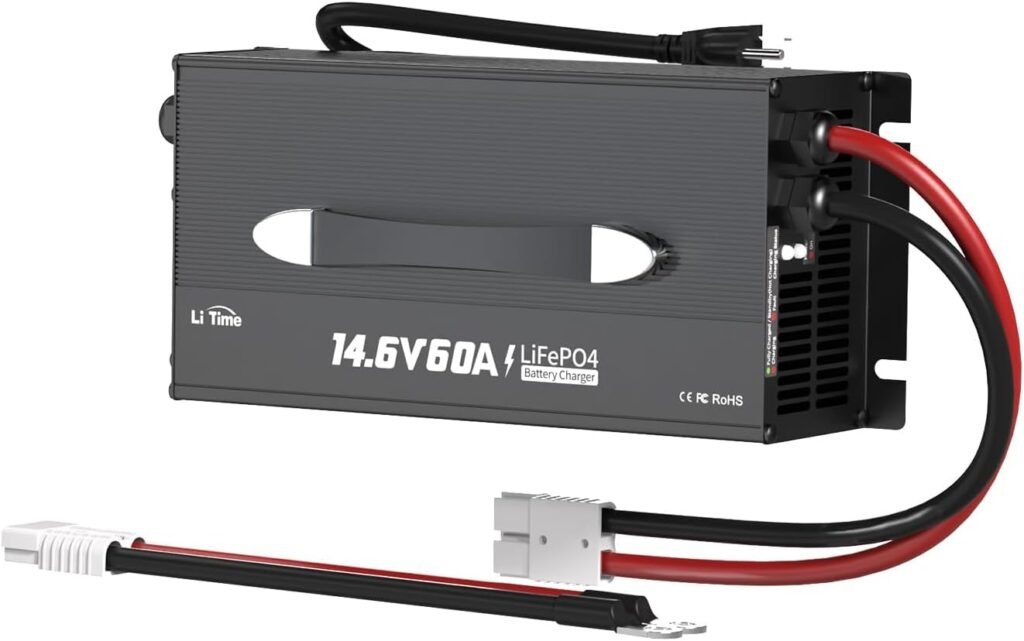
This LiTime 12V 60A Lithium Battery Charger is a 14.6V smart LiFePO4 charger designed specifically for 12V LiFePO4 batteries. It is built around fast, high-current charging and smart protections, making it a strong fit for home backup systems, RVs, off‑grid setups, and solar storage.
We are looking at a unit aimed at serious power users: 60 amps of charging current, a 3‑stage charging profile tuned for LiFePO4, and a rugged aluminum body with cooling and LED status indicators.
Key Specifications at a Glance
To ground ourselves, we find it useful to see the main specs summarized and then walk through what they mean in practice.
| Feature | Specification / Description |
|---|---|
| Product Name | LiTime 12V 60A Lithium Battery Charger |
| Battery Type Supported | 12V LiFePO4 (Lithium Iron Phosphate) |
| Output Voltage | 14.6V (optimized for LiFePO4 full charge) |
| Max Output Current | 60A |
| Charging Stages | 3-Stage: Pre-charge, Constant Current (CC), Constant Voltage (CV) |
| Special Function | 0V battery activation (for deeply discharged / BMS‑protected batteries) |
| Protections | Over-temperature, over-voltage, short-circuit, over-current, low-voltage, reverse polarity |
| Certifications | CE / FCC / RoHS tested |
| Housing Material | Aluminum alloy with cooling fan |
| Status Indicators | LED charging indicators |
| Typical Applications | RVs, off‑grid systems, home backup, solar energy storage |
| Warranty | 2-year warranty |
| Support | Phone support and online support, response typically within 24 hours |
| Waterproof Rating | Not waterproof; not suitable for marine environments |
This overview shows that we are dealing with a purpose-built LiFePO4 charger, not a generic 12V charger that just happens to work with lithium.
Build Quality and Design
The first thing we tend to check with a charger this powerful is how solid it feels and how well it manages heat. A 60A charger is moving a lot of energy, so design matters just as much as raw specs.
Rugged Aluminum Alloy Housing
The charger uses an aluminum alloy enclosure, which adds both durability and heat dissipation. Aluminum naturally helps spread and shed heat, which is important during high-current charging.
We like this choice for off‑grid or RV environments where equipment may be bumped, moved, or stored in less‑than‑perfect conditions. It feels more like a serious power tool than a fragile electronic gadget.
Built-In Cooling Fan
Because the charger can output up to 60 amps, heat management is critical. The built-in cooling fan works in tandem with the aluminum housing to keep temperatures in check.
We appreciate that this is not just a passive brick; active cooling gives us confidence that the charger is designed to handle prolonged high-current sessions, such as charging a large LiFePO4 bank after a deep discharge.
LED Indicators for Easy Monitoring
LED charging indicators give us at‑a‑glance status: whether it is charging, in a particular stage, or if an error condition is present. We do not have to guess what the charger is doing or constantly measure with a multimeter.
This feature helps make the whole system more approachable for those of us who want a simple visual confirmation without dealing with complex displays or menus.

Charging Performance: 60A of Power
Performance is where this charger really aims to stand out. A 60A output on a 12V LiFePO4 battery is substantial and can represent a major time saver.
Fast Charging for Larger Battery Banks
At 60 amps, this charger can restore a significant amount of energy in a relatively short time. For example, with a 12V 200Ah LiFePO4 battery:
- Theoretical ideal charge rate at 60A:
200Ah ÷ 60A ≈ 3.3 hours (ignoring tapering and real-world losses).
In practice, because of the 3-stage charging profile, the bulk (CC) stage will be fast, and then current tapers in the CV step. We will not usually hit the pure theoretical time, but compared with lower-amp chargers, we save a meaningful amount of time.
For those of us with larger battery banks in an RV or an off‑grid home, faster charging can make the difference between a quick top‑up and waiting most of the day.
Suitable for Home, Solar, and Off‑Grid Systems
The 60A output makes this charger particularly well-suited for:
- Home backup battery systems (such as a bank of LiFePO4 batteries used during grid outages).
- Solar storage setups where we may want to top off batteries with AC power on cloudy days.
- Off‑grid cabins or tiny homes that rely on battery storage plus periodic generator or shore power charging.
- RV usage when we plug into shore power or run a generator and want our batteries recharged efficiently.
We see this as a central charging unit for serious LiFePO4 setups, not a small “just in case” charger.
3-Stage Smart Charging Explained
Smart charging is not just a marketing term; it is what makes the difference between good battery health and shortened lifespan. LiTime implements a 3-stage charging algorithm tailored to LiFePO4 chemistry.
Stage 1: Pre-Charge
Pre-charge is the initial, gentle stage used when a battery is deeply discharged or has been sitting at a low state of charge. The charger starts at a reduced current to slowly bring the battery voltage up to a safer level.
We see this as a protective first step that reduces stress on the cells when they are at their most vulnerable. Not all chargers bother with this stage, but for longevity and safety, we like having it.
Stage 2: Constant Current (CC)
Once the battery is within a safe voltage range, the charger enters the Constant Current stage. Here, it delivers up to the rated 60A current, pushing energy into the battery as quickly as its design allows.
This is the “bulk” stage where we regain most of our capacity. In this phase, the charger focuses on current, and the battery voltage gradually rises toward the target 14.6V.
Stage 3: Constant Voltage (CV)
As the battery approaches full, the charger switches to Constant Voltage at 14.6V and gradually reduces the current. This helps top off the battery while avoiding overcharging.
We like that the charger targets 14.6V, which is a standard full charge voltage for 12V LiFePO4 batteries. This helps ensure we get a full charge without pushing the cells beyond what the chemistry is designed to handle.
0V Battery Activation: Reviving Protected Packs
One standout feature is the 0V battery activation. We sometimes face a situation where a LiFePO4 battery with a built-in BMS has shut itself off to protect against over-discharge, and a standard charger does not “see” it.
What 0V Activation Does for Us
0V activation means the charger can attempt to wake up and recharge batteries whose BMS has cut output, effectively appearing as 0V to typical chargers. The LiTime unit can send a controlled charge to re‑activate that BMS and begin regular charging.
This feature can be a real lifesaver for:
- Batteries accidentally run down too far in RVs or off‑grid cabins.
- Packs stored too long without maintenance charging.
- Systems where we did not have a low-voltage cutoff in place.
We still want to avoid repeatedly over-discharging our batteries, but when it happens, this charger gives us a good chance to bring them back.
Extending Battery Life Through Proper Recovery
By safely waking up BMS‑protected lithium batteries instead of forcing them or attempting risky “jump start” workarounds, we reduce the risk of damage to the pack.
We appreciate that the charger is designed with this scenario in mind, as it aligns with LiFePO4 best practices and can help our battery investments last longer.
Safety Features and Protections
High-current lithium charging demands robust safety features. The LiTime charger includes multiple layers of protection, along with compliance testing to recognized standards.
Built-In Electrical Protections
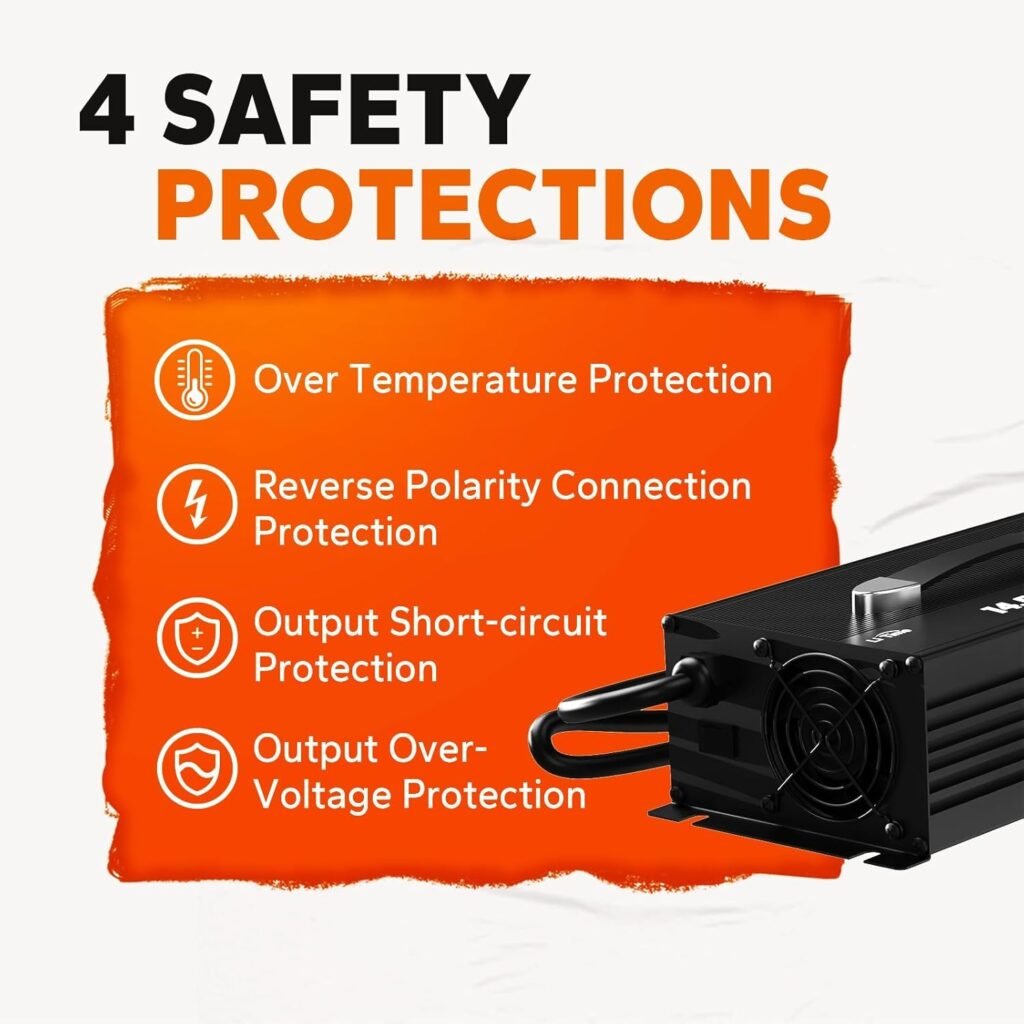
The charger integrates protections against:
- Over-temperature: Prevents damage if the charger becomes too hot.
- Over-voltage: Avoids pushing the battery above safe voltage limits.
- Short-circuit: Cuts off output if there is a short on the battery side.
- Over-current: Prevents the charger from exceeding its intended output.
- Low-voltage: Helps manage charging behavior with extremely depleted batteries.
- Reverse polarity: Protects if we accidentally connect the leads backward.
We like seeing this full protection suite, especially since many of us may use this in less controlled environments (RVs, workshops, off‑grid sheds).
CE, FCC, and RoHS Testing
LiTime notes that the charger has been tested to CE, FCC, and RoHS standards. While certification specifics can vary by region, these designations generally indicate:
- CE: Compliance with certain European safety, health, and environmental requirements.
- FCC: Compliance with US regulations on electromagnetic interference.
- RoHS: Restriction of certain hazardous substances in electronic equipment.
We see these as positive indicators that the charger has undergone more than just basic internal testing.
Use Cases: Where This Charger Fits Best
A 12V, 60A LiFePO4 charger is not for everyone. It is most beneficial when we have larger battery capacity and need serious charging throughput.
RV and Camper Van Setups
For RV owners with 12V LiFePO4 house batteries, 60A charging can drastically reduce generator run time or shore power charging time. Instead of idling a generator for many hours, we can get closer to a quick “run and done” session.
We also find it appealing for camper vans with solar systems that sometimes need backup charging from an AC source, especially in winter or in shaded campgrounds.
Off-Grid Cabins and Tiny Homes
In off‑grid settings, we often combine solar with a generator or grid connection when available. This charger fits well as the AC charging piece, delivering high current to multiple 12V LiFePO4 batteries wired in parallel (within the limits of the system design).
We can integrate it into a broader power system, letting solar handle day-to-day replenishment, while this charger steps in for fast, reliable backup charging.
Home Backup Power and Solar Storage
For homes using LiFePO4 batteries as backup power or energy storage, recharging quickly between outages or during off-peak utility hours can be valuable.
We see this charger working alongside inverters and battery management systems in such setups, particularly when someone prefers a modular, build-it-ourselves energy system instead of an all-in-one proprietary unit.
Installation and Setup Experience
Ease of installation matters, especially for those of us who are comfortable with basic wiring but do not want a long, complex configuration process.
Connection Basics
The charger is designed to connect directly to a 12V LiFePO4 battery or bank, observing proper polarity and wiring practices. Typically, this involves:
- Connecting positive output to battery positive.
- Connecting negative output to battery negative.
- Ensuring cable gauge is appropriate for 60A.
- Securing connections firmly to avoid loose contacts or overheating.
We want to mount the charger in a dry, well-ventilated space, away from flammable materials and with sufficient clearance for the cooling fan.
Simple LED Status Feedback
With LED indicators rather than a complex screen-based interface, we get a simple read on charging progress and any fault conditions. This keeps setup and day-to-day usage straightforward.
We find this simplicity beneficial for users who prefer a reliable, “set it and forget it” charger without a learning curve.
Everyday Usability
Beyond the technical specs, we care about how this charger feels to use day after day in real situations.
Plug-In and Charge Routine
Our typical use might look like this:
- Confirm battery connections are correct and secure.
- Plug the charger into AC power.
- Observe LED indicators confirming charging has started.
- Let the charger manage the stages automatically.
- Unplug or disconnect when charging is complete, depending on our setup.
The charger manages the 3-stage process by itself, so we are not constantly fiddling with settings.
Noise and Heat Considerations
With an active cooling fan, we should expect some fan noise, especially under heavy load. This is normal for a 60A charger and part of what allows continuous, high-current operation.
We will want to place the charger where fan noise will not be annoying, such as a utility compartment, battery closet, or equipment room, rather than right in our living space.
Compatibility and Limitations
No charger is universal. It is important to clarify where this LiTime unit fits and where it does not.
Designed for 12V LiFePO4 Only
The charger is specifically tuned for 12V LiFePO4 batteries with a nominal voltage around 12.8V and a full charge voltage of 14.6V. It is not intended for:
- Lead-acid, AGM, or gel batteries.
- Other lithium chemistries with different voltage profiles.
- 24V, 36V, or 48V battery systems.
We should only use it with compatible LiFePO4 batteries to avoid improper charging or damage.
Not Waterproof and Not Marine-Safe
One clear limitation is that the charger is not waterproof and the manufacturer explicitly warns against marine use. That means we should not use it for:
- Boats, ships, or yachts.
- Trolling motors or other on‑water applications.
- Any environment where it can be splashed or exposed to high humidity or salt spray.
We need a dry indoor or protected location for safe, long‑term use. For marine situations, we would want a charger rated specifically for that environment.
Pros and Cons Overview
To summarize our impressions in a balanced way, we find it useful to list out the main strengths and tradeoffs.
Advantages We Appreciate
We see the following as key positives:
-
High 60A Output
Fast charging for larger 12V LiFePO4 banks, reducing generator or shore power time. -
LiFePO4-Optimized 14.6V Profile
Charging tailored to this chemistry’s voltage requirements. -
3-Stage Smart Charging
Gentle start, efficient bulk charge, and controlled top‑off to support battery health. -
0V Battery Activation
Ability to wake and recharge BMS‑protected batteries that other chargers may not detect. -
Strong Safety Suite
Over-temp, over-voltage, short-circuit, over-current, low-voltage, and reverse polarity protection. -
Rugged Build and Cooling
Aluminum housing and fan for durability and thermal management. -
Clear LED Indicators
Simple status monitoring without complicated interfaces. -
2-Year Warranty and Support
Backed by a warranty and professional technical assistance with 24‑hour response claims.
Limitations and Things to Keep in Mind
We also acknowledge some constraints:
-
Not Waterproof / Not for Marine Use
Strictly for dry, non-marine environments. -
Single Chemistry Focus
Only for 12V LiFePO4, so no flexibility for mixed battery types. -
Requires Appropriate Wiring and Ventilation
60A charging demands proper cable gauge and installation practices.
We do not see these as defects, but as important boundaries we need to respect when planning our system.
Ideal User Profiles
To help decide if this charger fits our needs, we can think in terms of who will get the most benefit.
For the RV Traveler
If we run a sizable LiFePO4 house battery bank in an RV or camper van and often camp off‑grid but have periods of shore power or generator access, this charger aligns well with our needs.
We can top up quickly, minimize generator noise and fuel use, and maintain healthier batteries thanks to the smart charging and 0V activation.
For the Off-Grid Homeowner
If we live in or manage an off‑grid property with a 12V LiFePO4 battery bank, this charger provides robust AC charging support alongside solar. It can act as our main AC power charger, especially useful when solar is limited.
We gain a mix of speed, safety, and longevity features that suit long-term off‑grid living.
For the Home Backup Enthusiast
If we have a 12V LiFePO4 system acting as a backup for critical loads in our home, this charger can keep that bank ready. With fast charging and a LiFePO4-optimized curve, we can reliably refill the batteries when grid power is available.
We would particularly value the 0V activation if we ever push the system too far during extended outages.
Long-Term Reliability and Support
With energy equipment, we are not just buying specs; we are also buying support and longevity.
Durability from Materials and Design
The combination of aluminum housing and active cooling suggests the charger is built with sustained use in mind. Active fan cooling indicates expectations of long operating periods rather than short bursts.
We still want to install it in a location with decent airflow and avoid dust or contamination buildup, but the physical design gives us confidence for long-term service.
Warranty and Customer Service
The 2-year quality warranty shows a reasonable level of manufacturer confidence. The commitment to provide phone and online technical support with feedback within 24 hours is especially useful for those of us assembling or maintaining our own power systems.
We value having a path to assistance if we run into compatibility questions, odd behavior, or installation uncertainties.
Practical Tips for Getting the Most Out of This Charger
To make the best use of this LiTime 12V 60A Lithium Battery Charger, we can keep a few best practices in mind.
Match Charger Output to Battery Capacity
Although many LiFePO4 batteries can technically accept 0.5C or even 1C charge rates, we should respect the manufacturer’s recommendations. For example:
- A 12V 100Ah LiFePO4 battery might have a recommended max charge current around 50A (0.5C).
- A 12V 200Ah battery is more appropriate for a 60A charge rate.
If we have a smaller battery, we should confirm that 60A does not exceed its recommended charging current, or plan to use multiple batteries in parallel to spread the load.
Ensure Correct Cable Gauge and Connections
At 60A, cable sizing matters. We want to:
- Use appropriately thick cables (for 60A and the length of the run).
- Keep cable runs as short as practical.
- Use quality lugs, terminals, and secure connections.
This reduces voltage drop, improves efficiency, and helps avoid hot spots at connection points.
Provide Adequate Ventilation
We want to mount the charger in an area where:
- The fan can move air freely (intake and exhaust are not blocked).
- Ambient temperature remains within the charger’s rated limits.
- There is no risk of moisture or condensation.
This helps the charger maintain its performance and prolongs lifespan.
Respect Environmental Limits
Because the charger is not waterproof, we should avoid:
- Outdoor mounting without full weather protection.
- Damp basements or unsealed compartments exposed to water ingress.
- Any area where saltwater, spray, or heavy condensation is likely.
Keeping the charger dry is critical for safety and longevity.
How This Charger Fits Into a Complete Power System
When we look at our entire energy setup, this charger plays one specific but important role.
In a Solar-First System
In a solar-dominated system:
- Solar panels and a solar charge controller handle day-to-day charging.
- This LiTime charger serves as an AC backup, connected to grid power or a generator.
- We use it when solar is not enough, or when we need fast recovery from a deep discharge.
This strategy gives us redundancy, which is crucial for off‑grid reliability.
In a Generator-Assisted System
In generator-based setups:
- The generator produces AC power.
- The LiTime charger converts that AC into DC at 60A to fast-charge the battery bank.
- The inverter draws from the batteries to power AC loads as needed.
We conserve fuel cost and noise by reducing total generator runtime, because higher charging current shortens the time the generator needs to run.
Our Overall Assessment
Looking at the full picture, we see the LiTime 12V 60A Lithium Battery Charger as a strong, focused solution for charging 12V LiFePO4 systems that are more than just small hobby setups.
We appreciate:
- The substantial 60A output for fast charging.
- The LiFePO4-specific 14.6V 3‑stage algorithm.
- The 0V activation feature for rescuing deeply discharged batteries.
- The comprehensive safety protections and tested standards.
- The rugged build with aluminum housing and fan cooling.
- The practical LED status indicators and straightforward use.
We remain mindful of:
- The non-waterproof design and unsuitability for marine environments.
- The chemistry and voltage limitations (12V LiFePO4 only).
- The need for proper wiring practices to handle 60A safely.
For RVs, off‑grid cabins, home backup battery banks, and solar storage where we want fast, reliable, and LiFePO4‑optimized charging from an AC source, this charger fits the role very well.
If our goals include shorter generator runs, quick shore-power top‑ups, protection and revival of LiFePO4 packs, and long-term battery health, we find the LiTime 12V 60A Lithium Battery Charger to be a compelling and capable tool in our power system.
Disclosure: As an Amazon Associate, I earn from qualifying purchases.