Have we ever wished our home, cabin, or farm could keep running smoothly even when the grid goes down or electricity prices spike?

Understanding What the LiTime 5000W Solar Hybrid Inverter Charger Really Is
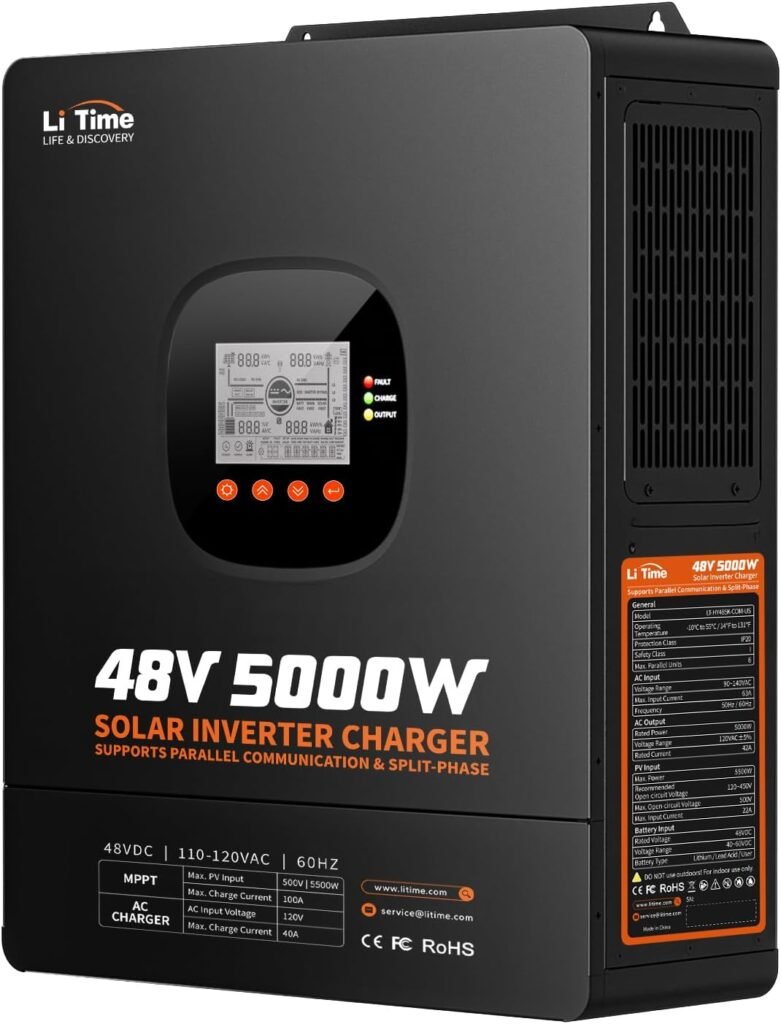
When we look at the LiTime 5000W Solar Hybrid Inverter Charger, we are not just looking at a simple inverter. We are looking at a compact power hub that combines several critical components into one unit. That means less hassle during installation and an easier time managing our off-grid or backup system day to day.
This all-in-one design is especially useful if we are building our first solar setup or upgrading from a basic inverter and separate charge controller. It reduces wiring complexity, cuts down on space, and makes the whole system feel more unified.
Key Functions Combined in a Single Unit
The LiTime hybrid inverter charger combines multiple roles that we would otherwise need separate devices for. This makes it a compelling choice for home backup, off-grid cabins, RV-style systems, and small farms.
Here is what it includes in one housing, and why this matters for us:
- 5000W pure sine wave inverter (48V DC to 120V AC)
- 100A MPPT solar charge controller
- 40A AC battery charger
- Hybrid management between solar, battery, and grid
- UPS-style automatic switchover when mains fail
By centralizing all these functions, the device helps us streamline our power system. Instead of dealing with multiple manuals, interfaces, and connection points, we get a more cohesive brain and heart for our energy setup.
Technical Specifications at a Glance
Sometimes an inverter’s spec sheet can feel overwhelming, so it helps to have the most important data in one place. We can quickly check if this model fits our current or future system plans.
| Feature | Specification |
|---|---|
| Inverter Type | 48V DC to 120V AC Pure Sine Wave Hybrid Inverter Charger |
| Continuous Output Power | 5000W |
| Peak Surge Power | Up to 10,000W |
| Output Voltage (Single Unit) | 120V AC |
| Split-Phase Capability | 120V/240V when using 2 or more units in parallel |
| Parallel Support | Up to 6 units (max 30kW total output) |
| Solar Charge Controller Type | Built-in MPPT |
| Solar Charge Controller Rating | 100A |
| Battery Charger (AC) | 40A |
| Supported Battery Types | 48V Lithium, Lead-Acid, and User-Defined Mode |
| Output Waveform | Pure Sine Wave |
| Main Modes | PV-Only, Hybrid; Inverter Priority, PV Priority, Utility Priority, Mix Load |
| Protection Features | Over-load, over-heat, short-circuit, low-voltage, over-voltage, over-current |
| Typical Applications | Home backup, off-grid systems, farms, cabins, small businesses |
Having these specs laid out clearly makes it much easier for us to plan wiring, battery bank size, and future expansion, especially if we are thinking of running multiple inverters in parallel.
All-in-One Design: Why It Matters for Our System
When we choose a solar power system, we can either piece together separate components or go for an integrated all-in-one solution. The LiTime 5000W takes the second path, building MPPT, inverter, and battery charger into one unit.
This approach gives us several practical benefits, particularly if we are not full-time solar installers or electricians.
Saving Space and Reducing Installation Complexity
By integrating a 100A MPPT solar charger and a 40A AC battery charger directly into the inverter, LiTime helps us streamline our power wall or equipment area. Instead of mounting three or four different boxes, we only need to allocate space for one primary unit.
We benefit from:
- Fewer cables across walls and between devices
- Fewer potential failure points in the wiring
- A cleaner, more compact installation, especially in small utility rooms or sheds
For many of us, especially in a cramped garage or equipment closet, this can make the difference between a messy setup and something that feels professionally organized.
One LCD Display for Real-Time System Monitoring
The built-in LCD display lets us watch our system in real time without extra meters or monitors. We can see how much power our panels are making, how much our loads are using, and what the batteries are doing.
This matters because:
- We quickly notice issues, like abnormal voltages or low battery capacity
- We can fine-tune our habits, such as running certain appliances when solar production is highest
- We become more aware of our energy use, which often leads to natural savings
Instead of checking three different devices and trying to cross-reference numbers, we just check one screen. That makes ongoing system management much more user-friendly.

Power Output and Performance for Real-World Loads
The headline number for this unit is 5000W continuous power. In practice, that figure tells us what we can run at the same time under normal conditions. But we also need to consider surge capacity and the type of output waveform.
We want our inverter to behave reliably not just under steady loads, but also when we switch on large appliances that demand a lot of power suddenly.
5000W Continuous and 10,000W Peak Surge
At 5000W continuous output, we can comfortably run a mid-sized home’s critical loads or power a small off-grid home. For example, we might power:
- A refrigerator, freezer, lights, router, and a few outlets
- A small well pump or pressure pump
- A TV, laptop, and some kitchen appliances (staggered use)
The 10,000W surge rating is especially important for motors and compressors. Many devices, like air conditioners, fridges, pumps, and some power tools, need a big burst of energy the moment they start.
With a strong surge rating, we reduce the risk of:
- The inverter shutting down when an appliance starts
- Frequent breaker trips or error codes at startup
This makes the system feel much more stable and “grid-like” when we use it.
Pure Sine Wave Output for Sensitive Electronics
The LiTime inverter outputs a pure sine wave, which closely matches the quality of power we get from a typical utility grid. This is essential if we plan to run:
- Laptops and desktops
- Modern TVs and home theater equipment
- Variable-speed motors or high-efficiency appliances
- Medical devices and sensitive instrumentation
With pure sine wave output, we reduce the risk of buzzing, overheating, or premature failure of our electronics. That gives our entire system a more professional and reliable feel.
Split-Phase and Parallel Operation: Scaling Up to 240V and Beyond
One of the standout strengths of this inverter is its flexibility when we want to scale. A single unit gives us 120V AC output, which is great for many uses. But as our needs grow, we may want 240V for larger appliances or more total capacity.
The LiTime 5000W gives us a path forward without replacing the entire system.
120V Operation with a Single Inverter
With one unit, we get:
- 120V AC output
- 5000W continuous power
- Pure sine wave, UPS-style operation
This is enough for many small homes, cabins, vans, and shops that don’t need 240V appliances. It’s also a good starting point for a system that may grow over time.
Parallel Operation for Up to 30kW Total
If we know or suspect that we will eventually expand, this inverter design gives us room to grow. We can connect up to six units in parallel, reaching:
- Up to 30,000W (30kW) total output
- Multi-unit redundancy for larger systems
We can also mix single-phase and split-phase configurations when wiring in parallel, depending on our needs. This flexibility is particularly valuable if we are building a farm or workshop system that might start small and then gradually scale.
Achieving 120V/240V Split-Phase with Multiple Units
Once we use two or more inverters in parallel, we can configure them to provide split-phase output: 120V/240V. This is crucial if we want to run:
- A 240V well pump
- An electric dryer (where used)
- Some types of shop tools
- Larger HVAC systems or mini-splits that require 240V
Being able to get 240V from a modular system means we don’t need to jump to a completely different product category when our needs grow. We can add units and reconfigure rather than overhaul everything.
Smart Energy Management Features
An inverter’s hardware matters, but its intelligence matters just as much. The LiTime unit includes several smart modes that let us choose how we want power to flow between solar, grid, batteries, and loads.
These features help us maximize solar use, preserve batteries, and save on electricity costs.
Charging Modes: PV-Only and Hybrid
There are two main charging modes built in:
-
PV-Only Mode
In this mode, the system charges our batteries and serves our loads solely from solar panels. The grid or generator doesn’t assist with charging. This is perfect when we are fully off-grid or when we want to prioritize solar and avoid drawing from the grid. -
Hybrid Mode (PV Priority)
In hybrid mode, the system prioritizes PV energy. When solar power isn’t enough—for example, during cloudy conditions or at night—it uses mains power (grid or generator) to supplement the shortfall.
This ensures that our loads are always covered and our batteries get properly charged without us constantly monitoring weather conditions.
These modes give us the flexibility to run fully solar when possible but still have backup when conditions or consumption demand it.
Output Modes: Controlling Which Power Source Feeds Our Loads
The LiTime inverter offers four different output modes. Each one changes how the system prioritizes power sources for our loads:
-
Inverter Priority Mode
Here, the inverter (and thus the battery and PV) has priority. Solar and stored battery power will be used first to power loads, with grid acting as a backup. This is useful when we want to maximize self-consumption and reduce our electricity bill. -
PV Priority Mode
In this mode, loads are primarily powered by solar. If PV availability drops, the system may switch to battery or grid depending on our configuration. It is ideal when our main goal is to use as much solar power as possible directly in real time. -
Utility Priority Mode
In this mode, the grid is used first to power loads, and the inverter takes a secondary role. This can be handy in regions where the grid is cheap and stable, and we mainly use the inverter as a backup when outages occur. -
Mix Load Mode
Mix Load mode allows both grid and inverter power to supply loads together in a coordinated way. This can help with very high demand times when our solar and battery alone may be insufficient, but we still want them to contribute and reduce grid draw.
By carefully selecting these modes, we can shape the behavior of our system to fit our goals—whether that’s bill reduction, maximum reliability, or pure off-grid operation.
UPS Function and Uninterrupted Power Supply
For many of us, one of the biggest reasons to install a solar hybrid inverter is to avoid losing power when the grid goes down. The LiTime 5000W offers a UPS-style function that keeps essential loads running seamlessly.
When the mains power is cut, the system automatically switches to battery or PV without manual intervention.
Automatic Switchover for Sensitive Loads
When the grid fails, the inverter:
- Instantly takes over powering the loads from battery and PV
- Prevents computers, routers, and other critical devices from shutting off
- Reduces the risk of data loss or equipment reset
Having this feature means we can maintain:
- Internet connectivity
- Basic lighting
- Refrigeration
- Essential electronics
even during outages, making our home or farm much more resilient.
Practical Use Cases for the UPS Feature
Some typical scenarios where the UPS function shines:
- Home offices where we cannot afford to have the power cut during meetings
- Small businesses that need continuous power to operate point-of-sale systems
- Farms where pumps or control systems should not stop unexpectedly
Instead of scrambling for candles or starting a noisy backup generator, we stay comfortably powered while the inverter handles everything silently in the background.
Time-Based Charging and Discharging for Cost Savings
One of the more advanced and money-saving features of this inverter is the ability to schedule charging and discharging based on our local electricity tariffs. If our utility has peak and off-peak pricing, this feature can be a powerful tool.
We can set our system to:
- Charge batteries from the grid during cheap off-peak hours
- Discharge batteries to support loads during expensive peak hours
This approach effectively turns our battery bank into an energy arbitrage tool.
Configuring Time Periods Around Peak and Valley Tariffs
We can define specific time windows for:
- Mains Charging — when the battery is allowed to charge from the grid
- Battery Discharging — when the battery is allowed or encouraged to support loads
By aligning these windows with the cheapest and most expensive tariff periods on our bill, we:
- Reduce the average cost per kWh consumed
- Relieve some pressure on the grid during peak hours
- Use our solar and battery investments more strategically
Over months and years, this scheduling can add up to substantial savings, especially in regions with large differences between peak and valley pricing.
Combining Solar Harvest with Smart Grid Use
Even if we have plenty of solar, weather patterns and seasonal variations mean there will be days when solar production is low. Time-based settings allow us to:
- Top up the battery at night when grid rates are low
- Save that stored energy for morning or afternoon when rates are higher
- Let solar handle as much daytime load as possible in between
This blended strategy is a smart way to increase the value of both our solar array and our battery bank.
Battery Compatibility: Lithium, Lead-Acid, and User Mode
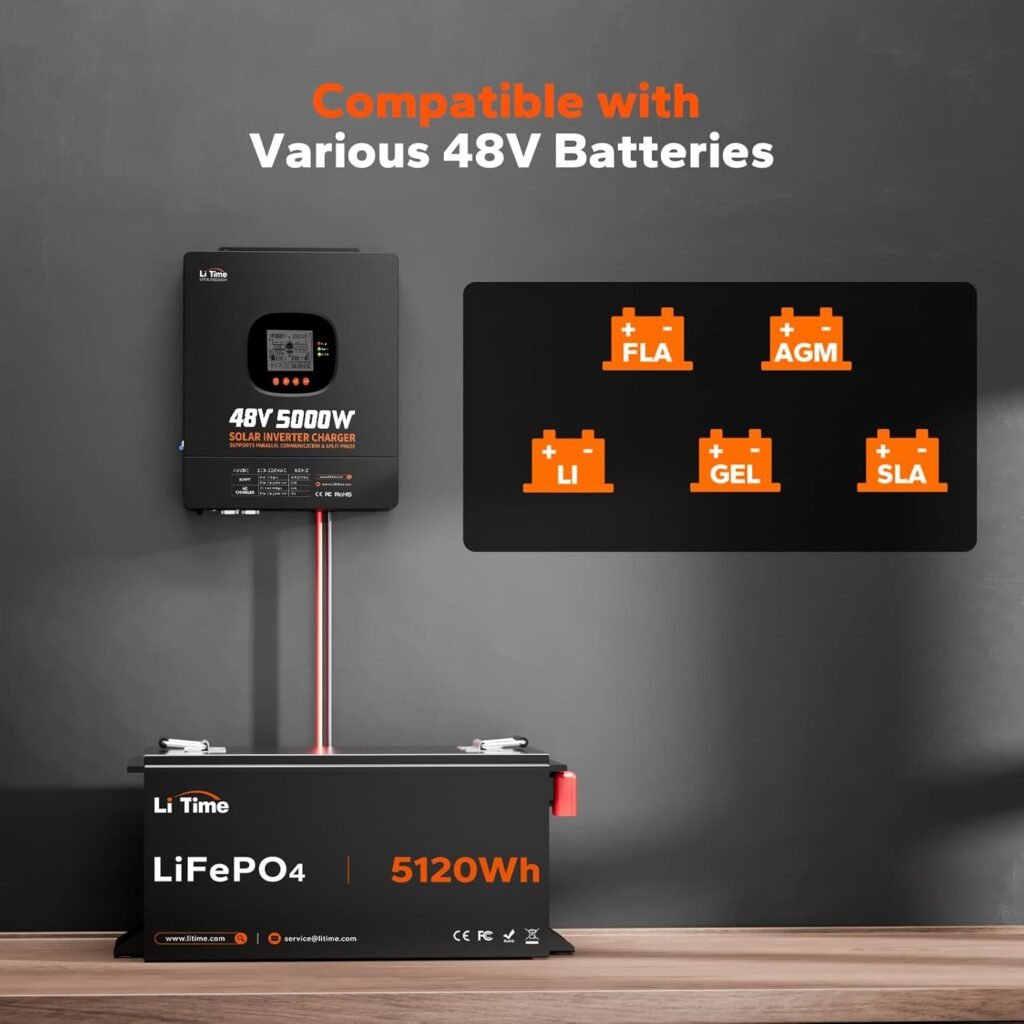
A key consideration for any inverter is which batteries it supports. The LiTime 5000W is designed to work with both 48V lithium and lead-acid batteries, as well as providing a USER mode for custom settings.
This opens up a wide range of options, whether we are starting with older batteries or planning to switch to lithium later.
48V Lithium Battery Support
With lithium batteries, we enjoy:
- Higher usable capacity (deeper discharge)
- Longer cycle life
- More stable voltage under load
The inverter is compatible with standard 48V lithium packs and can work efficiently within their voltage and charging parameters. This makes it a strong match for modern home energy storage, especially if we value performance and longevity.
Lead-Acid Compatibility for Budget or Legacy Systems
If we already have a bank of 48V lead-acid batteries, or we are building a system on a tighter budget, the LiTime inverter does not force us into a specific battery chemistry. It supports:
- Flooded lead-acid
- AGM
- Gel-type batteries (as long as they are arranged for 48V nominal)
This flexibility helps us make incremental upgrades. We can start with lead-acid and later switch to lithium without having to change the inverter.
USER Mode for Custom Battery Settings
The USER mode gives us more control over:
- Charge voltages
- Float settings
- Cut-off thresholds
This is particularly useful if we have a less common battery type or a very specific charging profile that we want to maintain. It also lets more experienced users fine-tune the system to maximize battery life.
Multiple Safety Protections for Long-Term Reliability
No matter how powerful an inverter is, it must also be safe. The LiTime hybrid inverter includes a wide set of protection mechanisms built in.
These systems work behind the scenes to protect both the inverter and everything connected to it.
Protection Mechanisms Built Into the Unit
Here are the main protections included:
- Over-load protection – Prevents damage when loads attempt to draw more power than the inverter can handle.
- Over-heat protection – Monitors internal temperature and reduces output or shuts down if levels become unsafe.
- Short-circuit protection – Protects both the inverter and wiring if a short develops in the load side.
- Low-voltage protection – Prevents batteries from being overly discharged, which extends their lifespan.
- Over-voltage protection – Shields the inverter from input voltages beyond its safe range.
- Over-current protection – Stops excessive current from flowing, which can prevent fire hazards and damage.
Every one of these layers contributes to a safer, more durable system that we can trust for years.
Why These Protections Matter for Our System
In a home or farm setting, we want peace of mind. We do not want to worry that a wiring mistake, unexpected load, or overheated room will silently destroy expensive equipment.
With comprehensive protections built in, we benefit from:
- Reduced risk of catastrophic failure
- Fewer costly repairs or replacements
- More confidence to connect a wide range of loads
This allows us to focus on using our system rather than constantly worrying about it.
Practical Applications: Where This Inverter Fits Best
The LiTime 5000W hybrid inverter is versatile enough to support several different scenarios. Whether we are fully off-grid, partially grid-tied, or just looking for a reliable backup system, this unit can adapt.
Thinking through how we might actually use it helps us decide if it’s the right fit.
Home Backup Power
In a typical home, we might use this inverter to back up:
- Critical lighting circuits
- Refrigerator and freezer
- Router, modem, and small office equipment
- Some outlets for device charging and general use
With proper wiring and a well-sized battery bank, we can ride through many outages with minimal disruption. If we live in an area with frequent storms or unreliable grid service, this peace of mind is invaluable.
Off-Grid Cabins and Remote Homes
For a fully off-grid cabin or remote home, the LiTime 5000W can be the central power hub. Combined with a suitable solar array and battery bank, it can support:
- Lighting, refrigeration, and internet
- Small tools and appliances
- Pumps, fans, and entertainment systems
As our needs grow, we can add more units in parallel or move to split-phase for 240V loads. This makes it a flexible long-term solution rather than a short-term patch.
Farm and Small Business Applications
On a farm or in a workshop, electric demands may be more varied. We might have:
- Pumps, compressors, or small machinery
- Cameras and sensors for monitoring
- Office or retail equipment
With split-phase support (using multiple units), we can handle 240V loads like well pumps or heavy-duty tools. The parallel capability also means we can scale capacity as the farm or business grows.
Everyday Usability and User Experience
Beyond raw specs and capabilities, usability matters. If we struggle to set it up or constantly fight with confusing menus, even the best hardware can feel frustrating.
The LiTime 5000W leans into a friendlier experience with an LCD and clear modes, making it easier for us to understand what is happening.
Monitoring System Status at a Glance
With the LCD, we can see at any given moment:
- Input from solar panels
- Battery charge level and voltage
- Output power to loads
- Operating mode (PV-Only, Hybrid, etc.)
This helps us quickly spot patterns, such as when solar is strongest or when our loads spike. Over time, we get an intuitive feel for our system’s behavior and learn to align our usage with its strengths.
Adjusting Settings Without Advanced Technical Skills
Because the core modes and protections are built in, we do not need to be an electrical engineer to configure this inverter. The presets for lithium and lead-acid batteries, combined with its defined charging and output modes, guide us toward reasonable defaults.
At the same time, USER mode and advanced options are still there if we want deeper control. This combination makes the unit accessible to beginners but not limiting for more advanced users.
Pros and Cons: A Balanced View
Every piece of equipment involves trade-offs. Looking at the LiTime 5000W in a balanced way helps us decide if it aligns with our needs and expectations.
Advantages We Gain with This Unit
Some of the strongest points we see are:
- All-in-one design with inverter, MPPT, and charger in one device, saving space and simplifying installation.
- 5000W continuous and 10,000W surge, suitable for many home and farm loads.
- Parallel support up to 6 units, enabling up to 30kW of total power.
- Split-phase capability with multiple units, allowing 120V/240V operation.
- Flexible charging and output modes, giving control over solar, battery, and grid use.
- Time-based charging/discharging, which can lower electricity bills in time-of-use markets.
- Compatibility with lithium, lead-acid, and custom USER battery profiles.
- Comprehensive protection features, enhancing safety and equipment longevity.
These strengths make it a solid foundation for both new installations and upgrades from simpler inverter setups.
Potential Limitations to Keep in Mind
There are a few considerations we should factor in:
- We need a 48V battery system, which might require reconfiguring existing lower-voltage setups.
- For 240V loads, we must use at least two units in parallel and configure them for split-phase.
- Advanced features like time-based scheduling may require us to spend some time learning the interface.
None of these are deal-breakers for most users, but they are important to acknowledge so our expectations align with the reality of installation and use.
How This Inverter Fits Into a Complete Solar System
To get the most out of this inverter, we need to see where it sits within the broader system. It is not a standalone magic box; it plays a central role among several other components.
Typically, our setup will include:
- Solar panels (array sized to our needs)
- A 48V battery bank
- The LiTime 5000W hybrid inverter charger
- Appropriate breakers, fuses, disconnects, and wiring
- Optional grid or generator connection
The inverter coordinates all of these elements, ensuring that power flows smoothly from where it is produced (panels, grid) and stored (batteries) to where it is consumed (loads). Choosing a robust and flexible inverter like this helps the entire system operate as a cohesive whole.
Final Thoughts: Who This Product Is Best Suited For
When we step back and consider everything—the integrated MPPT, flexible modes, strong power output, and expansion capability—the LiTime 5000W Solar Hybrid Inverter Charger stands out as a versatile and powerful central unit.
We see it best suited for:
- Homeowners seeking reliable backup and better control over energy costs
- Off-grid cabin or tiny home owners wanting a single, capable core component
- Small farms and workshops that need room to grow into 240V and higher total capacity
- Users who appreciate both simplicity (built-in modes, single LCD) and advanced customization (USER battery settings, time-based control)
With thoughtful installation and proper system sizing, this inverter can serve as a long-term backbone of our solar or hybrid power system, helping us stay powered, save money, and enjoy a greater sense of energy independence.
Disclosure: As an Amazon Associate, I earn from qualifying purchases.