Have we ever wished our RV or off-grid setup could run for days without worrying about power, while staying compact, reliable, and low-maintenance?

Why We Started Looking at the Power Queen 24V 200Ah LiFePO4 Battery
When we began comparing batteries for RVs, campers, trailers, and solar systems, we quickly realized that not all options are created equal. Traditional lead-acid batteries felt bulky, heavy, and surprisingly short-lived, especially when we factored in true usable capacity.
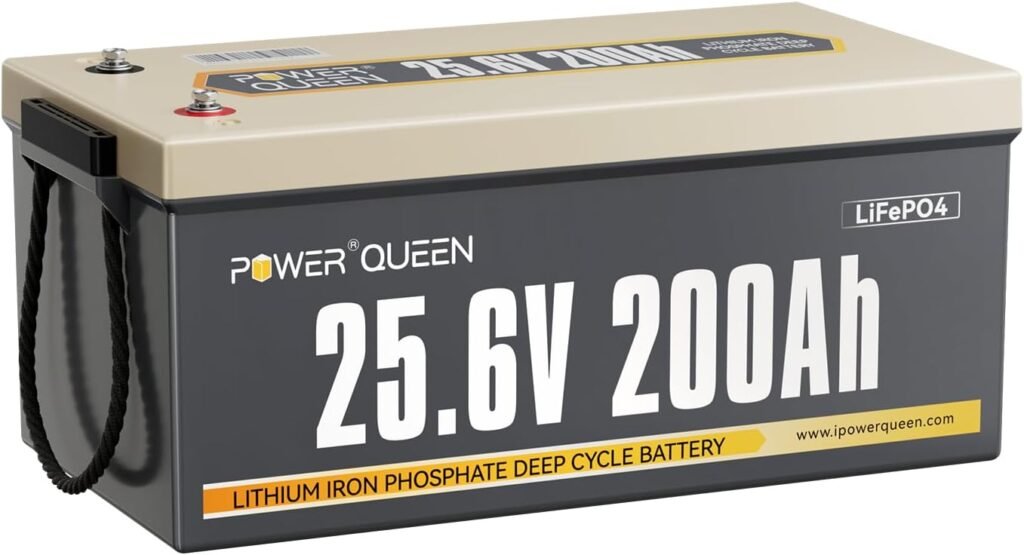
The Power Queen 24V 200Ah LiFePO4 Battery, with its 5.12kWh of energy and built‑in 200A BMS, stood out as a serious upgrade. Instead of multiple smaller batteries wired together, this single unit aims to give us more usable energy, easier installation, and much longer life. That combination made us want to understand how it actually performs in real-world scenarios.
Key Specs and What They Mean for Us
Instead of just quoting technical numbers, we like to think about what those specs mean when we are actually camping, traveling, or living off-grid. This battery is designed for those of us who want dependable power without the fuss of constant maintenance or complicated wiring.
Here is a quick breakdown of the core specs and how they show up in everyday use:
| Feature | Specification | What It Means for Us |
|---|---|---|
| Battery Type | LiFePO4 (Lithium Iron Phosphate) | Safer, longer-lasting, more usable capacity than lead-acid |
| Nominal Voltage | 25.6V (24V class) | Ideal for 24V and 48V (in series) off-grid/RV systems |
| Capacity | 200Ah | Enough to run many RV or home loads for multiple days |
| Total Energy | 5.12kWh | Roughly 5 days at 1kWh per day usage |
| BMS (Battery Management System) | 200A built-in | Supports up to ~5.12kW draw, protects against damage |
| Cycle Life | 4,000–15,000 cycles (under proper use) | Long-term investment, potentially 10+ years of use |
| Series/Parallel Support | Up to 2 in series, 4 in parallel (2S4P max) | Can scale up to 51.2V 800Ah / 40.96kWh system |
| Recommended Applications | RVs, campers, trailers, solar off-grid, home backup, sailboats | Tailored to mobile and stationary power systems |
| Not for | Engine starting, golf cart starting loads | Strictly for energy storage, not cranking motors |
We can already see from the table that this battery is designed for deep cycle energy storage, not for starting engines. That distinction is critical when we plan our system.
Capacity and Power: What 5.12kWh Really Gives Us
Understanding 5.12kWh in Real Life
Power Queen advertises this battery as 24V 200Ah with 5.12kWh of energy. On paper, that just looks like numbers, but in real situations, it translates into how long we can run our devices.
Assuming we are careful with energy use (around 1kWh per day), this battery alone can give us close to five days off-grid. For a more power-hungry setup, it might last one to two days, depending on what we plug in.
Here are rough examples of what 5.12kWh can support:
- LED lights (10–20W total): many hours per day for several days
- A 12V/24V fridge: typically 40–60Ah per 24 hours in moderate conditions
- Laptop and phone charging: negligible compared to total battery size
- TV or small entertainment system: a few hours every day across multiple days
- Water pump, vent fans, and basic electronics in an RV
We do not need to crunch exact numbers every time; we just need the sense that this is “house power” level, not just a single-device backup.
200A BMS and 5.12kW Power Draw
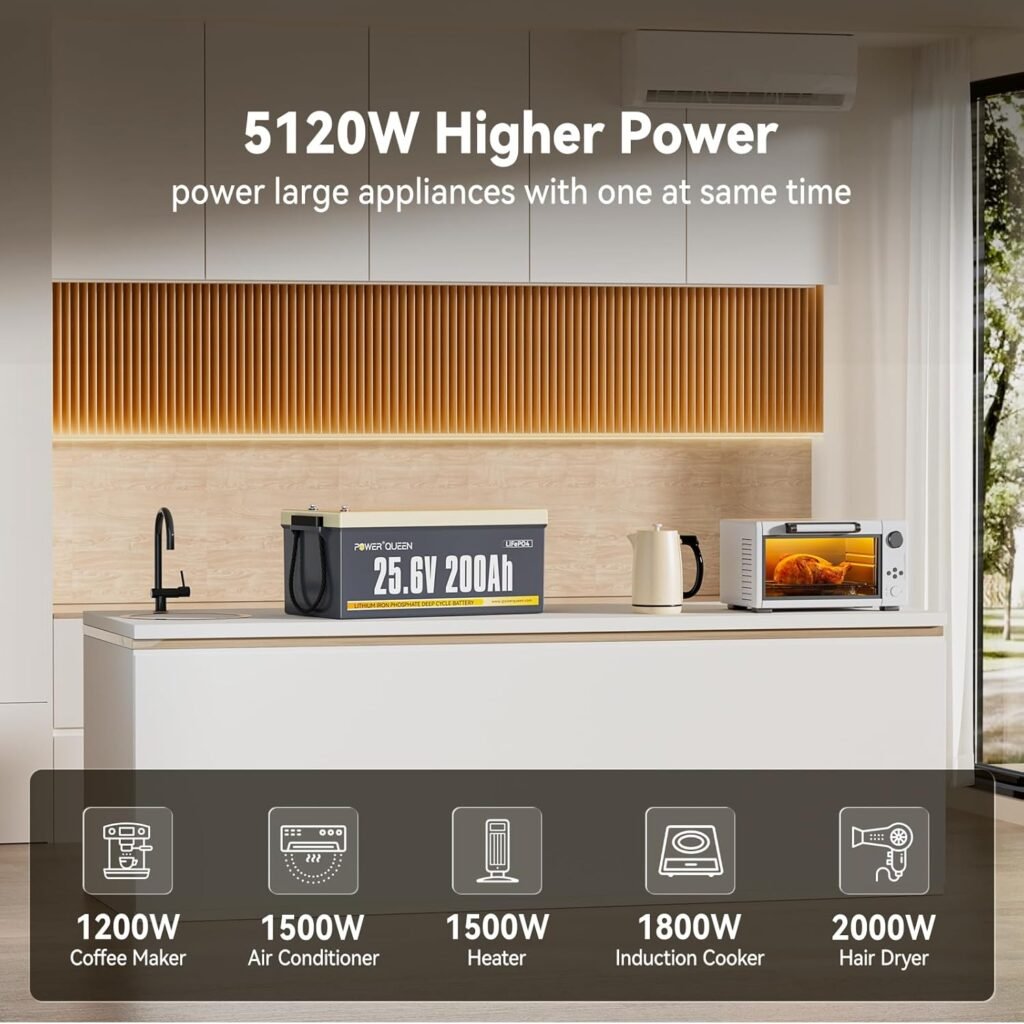
The 200A built-in Battery Management System (BMS) is one of the battery’s biggest strengths. At 25.6V, 200A translates to around 5.12kW of continuous power draw.
In practical terms, that means we can run multiple high-draw appliances simultaneously, assuming our inverter and wiring are sized correctly. We might be running:
- A 2,000–3,000W inverter
- A microwave for short periods
- Coffee maker or induction cooktop (within the power limit)
- Various smaller loads at the same time
The BMS also protects us against:
- Overcharge
- Over-discharge
- Over-current
- Short circuits
That protection is crucial. It means we are far less likely to ruin a battery by accidentally draining it too far or connecting something incorrectly.
Why a 24V 200Ah Battery Is Different from 12V Options
Equivalent to 4 x 12V 100Ah Batteries (2P2S)
Power Queen highlights that this single 24V 200Ah battery is roughly equivalent in usable capacity to four 12V 100Ah batteries wired in a 2P2S (two in parallel, then in series) configuration. That alone helps show the capacity level we are dealing with.
But the big advantage is that instead of juggling four separate batteries, we only have:
- One case
- One set of main terminals
- One integrated BMS
- Less wiring clutter
This simplification reduces the chances of wiring errors and connection failures, while helping us save time and space in our build.
Space and Weight Savings
We are often short on space in an RV, camper, or trailer. Power Queen claims approximately 40% space savings compared with using four individual 12V 100Ah batteries. While exact space savings vary by brand and case design, the logic holds: one compact high-capacity battery almost always uses less volume and fewer cables than multiple lower-capacity units.
That translates into:
- More room for storage
- Cleaner install, easier cable routing
- Less effort when we need to move or access the battery
We might not notice day one, but over time especially, we appreciate a more compact system that is easier to work with.
LiFePO4 Chemistry: Safety, Longevity, and Practical Benefits
Why We Prefer LiFePO4 Over Lead-Acid
Lithium Iron Phosphate (LiFePO4) has become the go-to chemistry for off-grid enthusiasts, and for good reason. Compared with traditional lead-acid batteries (AGM, flooded, gel), this chemistry gives us:
- Much higher usable capacity: we can use around 80–100% of the rated capacity without severe damage, unlike lead-acid, which often should not be discharged beyond 50%.
- Far longer cycle life: thousands of cycles instead of a few hundred.
- More stable voltage: devices and inverters often run more reliably.
- Lower weight for the same capacity.
All of these make our daily off-grid life easier, especially if we want to run power-hungry appliances or rely on solar.
Automotive-Grade Cells and What They Mean
Power Queen notes the use of automotive-grade LiFePO4 cells. That usually implies:
- Tighter quality control
- Better consistency between individual cells
- Improved energy density
We cannot see the cells from the outside, but the idea is that these higher-grade cells provide more reliable performance over time. For us, that means greater peace of mind that the battery will not degrade quickly or fail under normal use.

Cycle Life: 4,000 to 15,000 Cycles
Understanding the Cycle Numbers
Power Queen rates this battery at 4,000 to 15,000 cycles, depending on how deep and how frequently we discharge it. A “cycle” is one full charge and discharge.
These ranges typically mean:
- 4,000 cycles at deeper discharges (close to full use)
- 15,000 cycles at shallower discharges (for example, using only 20–30% regularly)
If we discharged the battery once per day, 4,000 cycles would represent roughly 11 years of daily use. With shallower discharges, we could easily stretch that much longer.
What This Means for Long-Term Cost
When we spread the cost of the battery across thousands of cycles, the long-term cost per kWh of stored energy becomes surprisingly reasonable, especially compared with replacing lead-acid batteries every few years.
We are essentially paying upfront for a solution that is meant to be used heavily and consistently without dramatic degradation for a long time. For full-time RVers or off-grid homeowners, that kind of durability becomes a major advantage.
Capacity Expansion: Building Up to 40.96kWh
Series and Parallel Options (2S4P)
One of the best features for those of us planning larger systems is the ability to scale. Power Queen allows up to:
- 2 batteries in series (2S) for 51.2V systems
- 4 batteries in parallel (4P)
- Maximum configuration: 2S4P = 8 batteries total
With 8 batteries, each 5.12kWh, we get:
- 51.2V 800Ah
- 40.96kWh total energy
That is enough capacity to support a small off-grid cabin, a larger RV system, or a more robust backup power setup for a home. When we connect batteries in series and parallel, we should follow manufacturer guidelines carefully, but the fact that this battery is designed for such configuration is very convenient.
Where a Large Bank Makes Sense
A big battery bank of this type can be valuable for:
- Full-time off-grid homesteads
- Larger RVs or fifth wheels with multiple heavy loads
- Tiny homes with solar arrays
- Boating or sailboat applications needing dependable house power
We might start with one or two batteries and expand later if our needs grow. That flexibility makes system planning easier.
Installation and Space Considerations
Single-Battery Simplicity
Because this one 24V 200Ah unit replaces multiple smaller batteries, the wiring is cleaner and simpler. We have fewer main connections and less chance of imbalanced cells that sometimes occur in multi-battery banks if they are not wired and maintained carefully.
We still need to:
- Use appropriate cable gauge for high current (200A potential)
- Install proper fuses or circuit breakers
- Ensure solid, corrosion-free terminal connections
But we are dealing with a more straightforward setup than a tangle of series and parallel links.
Space Saving in Tight Compartments
We often have to fit our batteries into awkward corners or underneath seats. The roughly 40% space savings compared to four 12V batteries (2P2S setup) is a big deal in:
- Smaller trailers
- Camper vans
- Compact off-grid sheds
That extra space can be used for storage, inverters, charge controllers, or simply to keep things less crowded for better ventilation and easier access.
Using the Battery in RVs, Campers, and Trailers
Ideal for RV House Power
This battery is clearly targeted at RV house power, not engine starting. That means it is set up to run:
- Interior and exterior lights
- Water pump, fans, and control electronics
- Fridge (12V or powered via inverter)
- Plug-in devices through an inverter
- Entertainment gear like TVs, sound systems, and routers
We might pair it with solar panels on the roof, a good MPPT solar charge controller, and an inverter-charger to complete the system.
Off-Grid Trips and Boondocking
If we enjoy boondocking or camping off-grid for several days at a time, a 5.12kWh battery can feel like a small power plant. Instead of rationing every amp, we have a comfortable energy budget to run what we truly need, within reason.
For many of us, the idea of a nearly five-day off-grid ability (based on 1kWh per day usage) is very appealing. It gives us flexibility when the weather is poor and solar generation is low.
Using the Battery in Solar and Home Energy Storage
Building a Simple Home Solar Battery System
If we are trying to put together a small home energy storage system, this 24V 200Ah LiFePO4 battery can be a solid building block. With an inverter and solar charge controller sized for 24V or 48V (in series), we can create:
- A backup power system for outages
- A partial off-grid setup to run essential loads
- A stable DC system to feed specialized equipment
Because the battery is lithium-based, we get higher usable capacity and faster charging compared with traditional deep cycle lead-acid.
Security, Surveillance, and Critical Loads
Power Queen also suggests usage in security or surveillance systems. That makes sense, as LiFePO4 is well-suited for:
- Continuous low-to-medium power usage
- Reliable power during outages
- Long calendar life without frequent replacement
If we have cameras, routers, and small networking gear we want online even during power cuts, this battery can handle those loads with ease, especially if combined with solar to recharge during the day.
Safety and BMS Protection
What the 200A BMS Protects Against
The built-in 200A Battery Management System is like a guardian for our battery pack. It monitors critical conditions and shuts things down or limits current when something goes wrong.
The main protections include:
- Overcharge protection: prevents damage from too high a charging voltage or current.
- Over-discharge protection: cuts off the load if the battery is too low, helping avoid cell damage.
- Over-current protection: protects against excessive current draw, which could overheat wires or cells.
- Short-circuit protection: shuts off if a direct short occurs, avoiding catastrophic damage.
We still want to design our system responsibly, but knowing the BMS is actively managing safety is very reassuring.
Temperature Considerations
While not explicitly detailed in the provided specs, LiFePO4 batteries generally have:
- Good performance in moderate temperatures
- Reduced charging capability in very cold weather (typically, we should not charge below freezing unless the battery is specifically heated or rated for that)
We should check specific manufacturer guidance for charging temperatures, but in any case, we will want to avoid cold charging without the appropriate protections or integrated heating systems.
Installation Tips and Manufacturer Warnings
Energy Storage Use Only (Not a Starter Battery)
Power Queen clearly states that this is an energy storage battery, not a starter battery. That means we should not use it for:
- Starting vehicle engines
- Powering starter-heavy golf carts
- Any application with frequent, very high short bursts of current for cranking
Starter batteries and deep-cycle storage batteries are designed differently. Using this product as a starter could stress and damage both the cells and the BMS.
Terminal and Connection Precautions
The manufacturer also warns about the specific way we attach OT terminals (ring terminals) and clamps:
- If terminals are attached directly with screws and are less than 2mm thick, we should add gaskets (washers) to ensure secure attachment.
- This helps prevent loosening and overheating at the connection.
- The same precaution applies when using clamps.
Loose or undersized connections can create heat, resistance, and in worst cases, damage or fire risk. We should always use properly sized lugs, crimp tools, and torque specifications when connecting high-current DC equipment.
Real-World Advantages We Notice Day to Day
Less Maintenance and Fewer Worries
One of the underrated benefits of a LiFePO4 battery like this is the maintenance side. Unlike flooded lead-acid batteries, we do not have to:
- Top up water levels
- Worry about acid fumes in the same way
- Regularly equalize or perform special charging procedures
As long as we use a proper lithium charging profile and sized equipment, the system mostly just works. That ease lets us focus on enjoying our trips or our off-grid life, rather than constantly babysitting the battery bank.
More Usable Capacity Without the “Voltage Sag”
LiFePO4 maintains a relatively stable voltage as it discharges, especially compared with lead-acid. That stability makes inverters happier and keeps DC equipment running more consistently.
We are less likely to experience situations where the voltage drops too low under load and things shut off early, even though there is still plenty of energy left in the battery.
Comparing This Battery to Alternatives
Versus Lead-Acid Battery Banks
If we compared the Power Queen 24V 200Ah lithium battery to an equivalent usable capacity of lead-acid, we would see:
- Comparable usable energy (5.12kWh) would demand more lead-acid batteries due to their lower usable depth of discharge.
- More weight and more volume with lead-acid for the same effective capacity.
- Shorter lifespan, often just a few hundred to maybe a thousand cycles.
- Slower charging speed and more sensitivity to being left in a partial state of charge.
Although the upfront price of LiFePO4 is higher, the combination of longer life, better performance, and less maintenance often tips the value equation in favor of lithium over the lifetime of the system.
Versus Smaller 12V Lithium Batteries
Some of us might consider buying multiple 12V lithium batteries instead. That can work, but using one larger 24V unit gives us:
- Fewer batteries to manage and match
- Simpler series/parallel wiring (or none, if we stick to 24V)
- Cleaner installation and potentially lower risk of imbalance over time
If our system is already 24V-based or we plan to build a 48V system using two in series, starting with a dedicated 24V battery is often more efficient.
Ideal Use Cases Where This Battery Shines
RVs and Camper Vans with Solar
For RV setups that include roof-mounted solar panels and a decent inverter, this battery is a sweet spot. It is large enough to power:
- Regular 12V loads all day
- Occasional high-draw AC appliances through an inverter
- Several days of boondocking when paired with solar recharging
We can build a fairly robust system around just one or two of these units, depending on how energy-hungry our lifestyle is.
Off-Grid Cabins and Tiny Homes
For remote cabins and tiny homes, a 24V or 48V bank built from one or more of these units can support:
- Lighting
- Refrigeration
- Electronics and basic appliances
- Essential tools and devices when power is needed
When matched with solar, this battery helps create a genuinely livable off-grid environment without constant generator noise and fuel costs.
Marine and Sailboat Power
Marine environments demand compact, rugged, and vibration-resistant solutions. Using a LiFePO4 pack of this type for house loads (not for engine starting) can supply:
- Navigation electronics
- Lighting and communication devices
- Refrigeration and comfort equipment
With its stable performance and deep-cycle capability, it fits well in a sailboat or cruising boat that spends significant time away from shore power.
Things We Should Keep in Mind Before Buying
Proper Matching with Chargers and Inverters
To get the most from this battery, we need:
- A charger or solar charge controller that supports LiFePO4/lithium charging profiles
- An inverter properly rated for 24V or for the system voltage we design (for instance, 48V if using 2 in series)
- Adequate wiring and fusing for up to 200A of current on the DC side
If we try to reuse old lead-acid chargers that do not support lithium settings, we risk undercharging, overcharging, or generally not taking full advantage of the battery’s capabilities.
Understanding Our Actual Power Needs
Before investing in a high-capacity battery, it is helpful to have some idea of:
- Our daily watt-hour or amp-hour usage
- Whether we plan to run energy-hungry devices like air conditioners or induction cooktops
- How much solar or charging capacity we can realistically install
A single 5.12kWh battery is substantial, but certain loads (such as large AC units) will still demand either multiple batteries or a clear plan for limited use.
Pros and Cons as We See Them
Advantages
- High usable capacity (5.12kWh) in a single compact unit
- Strong built-in 200A BMS supporting up to ~5.12kW draw
- LiFePO4 chemistry: long life, safer, and more stable
- Equivalent to four 12V 100Ah batteries, with less space and wiring complexity
- Scalability up to 40.96kWh in a 2S4P configuration
- Excellent fit for RV, camper, trailer, solar off-grid, and marine house power
- Thousands of cycles, potentially a decade or more of service life under typical use
Limitations
- Not designed for engine starting or high-burst starter loads
- Requires lithium-compatible chargers and charge controllers
- Initial cost is higher than smaller or lead-acid batteries
- We must pay attention to proper wiring and terminal thickness with washers/gaskets
None of these are deal-breakers for typical off-grid, RV, or solar users, but we should be aware of them when we design our system.
How We Would Integrate It into a Typical System
Example: 24V RV Solar Setup
For a 24V RV or van system, we might pair this battery with:
- 800–1200W of solar on the roof
- A 24V MPPT solar charge controller sized to handle the panel array
- A 24V-to-120V (or 230V) inverter, 2,000–3,000W pure sine wave
- Proper DC distribution panel and fusing
This kind of setup would allow us to live quite comfortably off-grid with:
- Fridge, lights, water pump, fans
- Laptop, phones, and chargeable gadgets
- Occasional use of a microwave or coffee maker through the inverter
The Power Queen 24V 200Ah LiFePO4 battery would serve as the energy backbone of this system.
Example: 48V Home or Cabin System (2 in Series)
If we want to step up to a 48V system for a cabin or larger installation, we could:
- Connect 2 of these in series for 51.2V 200Ah (10.24kWh)
- Use a 48V inverter-charger (5kW–6kW, for example)
- Install 2–4kW or more of solar panels
- Add more batteries in parallel later if needed (up to 2S4P total)
This approach keeps current lower on the DC side (since voltage is higher), which can simplify wiring and reduce power losses over longer cable runs.
Our Overall Impression of the Power Queen 24V 200Ah LiFePO4 Battery
When we look at everything together, this battery feels like a thoughtfully designed, high-capacity solution for serious RV and off-grid users. It condenses what would normally be a multi-battery bank into a single, powerful unit with a robust 200A BMS and automotive-grade LiFePO4 cells.
We appreciate:
- The large 5.12kWh capacity in one package
- The long cycle life that makes it more of a long-term asset than a consumable
- The simplicity of installation compared to juggling multiple smaller batteries
- The scalability for those who want to expand up to 40.96kWh someday
As long as we respect its role as an energy storage battery (not a starter), match it with the right charging and inverter equipment, and follow the installation tips on terminals and wiring, it can become the central piece of a stable and efficient off-grid or RV power system.
For those of us who want more time enjoying the road, the campsite, or the cabin—and less time worrying about whether the lights will shut off in the middle of the night—this Power Queen 24V 200Ah LiFePO4 battery offers a strong, future-ready foundation.
Disclosure: As an Amazon Associate, I earn from qualifying purchases.