Have we ever wished we could run our home or off-grid cabin with a power system that actually feels simple, reliable, and future-proof?

What Is the SUNGOLDPOWER 3KW 24V Kit?
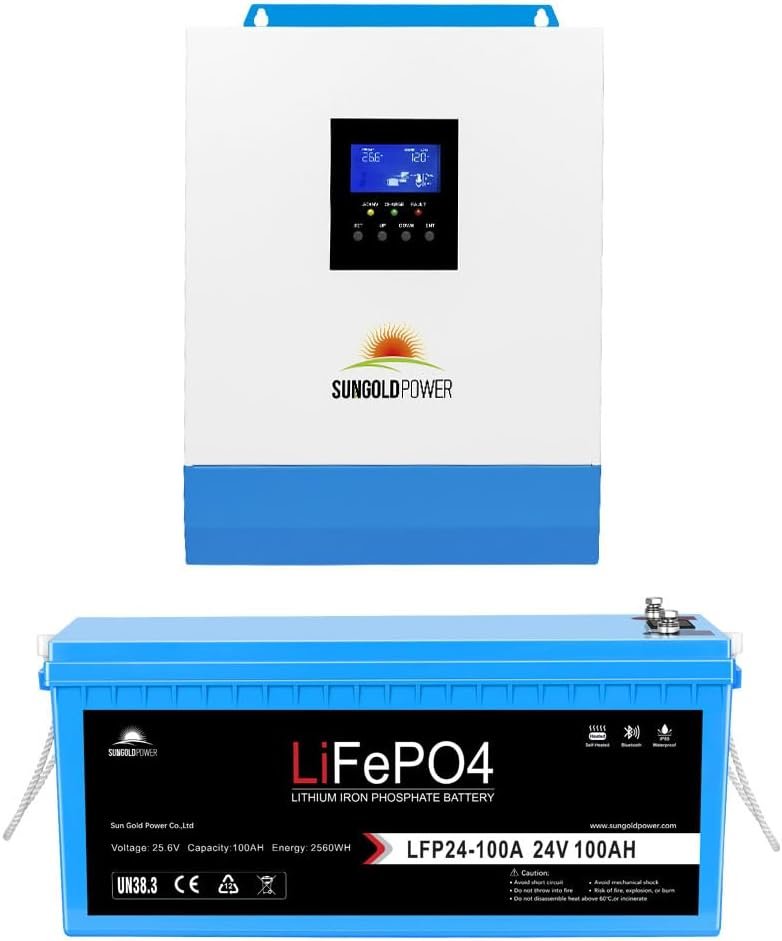
The SUNGOLDPOWER 3KW 24V Kit combines a 3000W 24VDC pure sine wave solar inverter with an integrated MPPT solar charger, an AC battery charger, and UL1973-certified 24V LiFePO4 batteries. It is designed as a complete solution for off-grid or backup systems.
We get an all-in-one power center that can take energy from solar panels, the grid, or a generator, and store it safely in high-quality lithium batteries. This makes the kit suitable for cabins, RVs, tiny homes, workshops, or home backup applications.
Key Specifications at a Glance
Sometimes it helps to see everything laid out clearly. This table gives us a quick snapshot of the core specs that define what the kit can actually do.
| Feature | Specification / Description |
|---|---|
| Inverter Power | 3000W (3 kW) continuous, 24VDC pure sine wave |
| Inverter Type | Pure sine wave, high-frequency, transformer-less, compact design |
| Solar Charge Controller | 80A MPPT, advanced tracking with up to 99.9% efficiency |
| AC Battery Charger | 40A AC charger (for charging from grid or generator) |
| Battery Type | 24V 100Ah LiFePO4 battery (automotive-grade cells) |
| Battery Certifications | UL1973-rated cells for safety and reliability |
| Battery Cycle Life | 4000+ deep cycles, over 10 years expected lifetime |
| Battery Warranty | 5-year guarantee |
| Charging Modes | AC Priority, Solar Priority, Only Solar, Mains & Solar hybrid charging |
| Output Modes | Mains bypass and inverter output (uninterrupted power supply) |
| Battery Monitoring | Onboard LCD display + optional Bluetooth/WiFi module for remote monitoring |
| Self-Heating Function | Automatically heats battery below 33.8°F (1°C) and stops at 42.8°F (6°C) |
| Remote Monitoring (System) | Optional WiFi/GPRS module (extra cost) for full system monitoring |
| Generator Auto-Start | Dry contacts to send start/stop signal to compatible generators |
Even from this overview, we can see that the kit is more than just a simple inverter and battery; it is a full power management system designed to handle several energy sources intelligently.
Inverter Performance and Design
The heart of this kit is the 3000W 24V pure sine wave inverter. This is the component that turns the DC power from our batteries into AC power for our appliances.
We get a transformer-less, high-frequency design, which means it is relatively compact and efficient compared with older, heavy transformer-based inverters. This makes installation easier and helps keep our system footprint manageable, especially in smaller spaces like RVs or tiny homes.
Pure Sine Wave Output for Sensitive Electronics
Pure sine wave output matters a lot if we plan to power sensitive or high-end devices. Modified sine wave inverters can cause noise, heat, or even damage in some electronics over time.
With a pure sine wave inverter like this one, we can run:
- Laptops and desktops
- LED and LCD TVs
- Variable-speed tools
- Refrigerators and freezers
- Chargers and medical devices (where appropriate and permitted)
We can feel more confident that our appliances will behave the same way they do on standard grid power, with less humming, glitching, or random shutdowns.
3000W Capacity and Practical Loads
At 3000W, the inverter offers enough power for a moderate off-grid setup. We can comfortably run a combination of typical loads, as long as we size and manage them correctly.
For example, we might run:
- A refrigerator (150–250W average, higher on startup)
- A few LED light circuits (20–100W total)
- A laptop and TV (150–250W combined)
- A small water pump or power tools occasionally
We just need to be mindful of high surge loads (like large compressors, big microwaves, or heavy-duty tools) and avoid turning on multiple high-demand devices at once if we are near the inverter’s limit.
Solar Charging: 80A MPPT with 99.9% Efficiency
The built-in 80A MPPT (Maximum Power Point Tracking) solar charge controller is one of the strongest parts of this kit. It is responsible for extracting as much energy as possible from our solar panels and feeding it into the battery.
The manufacturer states a tracking efficiency of 99.9%, which indicates that the controller is extremely good at locking onto the optimal voltage and current from the solar array.
Why MPPT Matters for Real-World Performance
MPPT controllers can significantly outperform older PWM controllers, especially when:
- Panel voltage is much higher than battery voltage
- Temperature swings cause panel voltages to change
- We use strings of panels with varying conditions (partial shading, etc.)
By constantly adjusting to the best operating point, this 80A MPPT unit helps ensure our investment in solar panels is used efficiently. Over the life of the system, even a few percentage points of gain can add up to hundreds of kilowatt-hours.
Solar Input and System Scaling
With an 80A MPPT on a 24V battery system, we can typically support a sizable solar array. While exact limits depend on panel configuration and voltage, in practice we can usually support several hundred to over a thousand watts of solar.
This is enough for:
- A full-time off-grid cabin with good energy habits
- An RV or van with heavy electrical use
- A home backup system focusing on essentials like lights, refrigeration, and communications
By matching our panel wattage and layout to this MPPT capacity, we ensure we are not undersizing our solar side compared with the rest of the kit.
AC Charging and Generator Integration
Beyond solar, this kit also includes a 40A AC charger built into the inverter module. This allows us to charge the battery bank from the grid or from a generator when solar is not enough.
40A AC Charger for Faster Recovery
A 40A charger on a 24V system can recharge the battery relatively quickly, depending on our battery capacity and depth of discharge. For the included 24V 100Ah LiFePO4 battery, 40A represents a reasonable charging rate that balances speed and battery longevity.
This is especially helpful in situations like:
- Cloudy or winter days where solar output is low
- Emergencies where we need to refill our battery quickly
- Occasional use cabins where we arrive with partially depleted batteries
We can top up batteries overnight from grid power or run a generator for a shorter period instead of idling it for many hours.
Generator Auto-Start via Dry Contacts
One standout feature is the dry contacts for generator auto-start. This means the inverter/charger can send a signal to a compatible generator to start or stop based on battery state or load.
In practice, this can give us:
- Automatic backup when batteries get low at night
- Reduced intervention for remote cabins or off-grid sites
- Less risk of deeply discharging batteries and shortening their life
We just need a generator that supports remote start and to wire the dry contacts correctly. Once set up, our system behaves more like a small, intelligent microgrid.
Flexible Charging Modes for Different Scenarios
The SUNGOLDPOWER kit gives us four main charging modes. These let us prioritize either solar or utility power depending on our environment and goals.
AC Priority Mode
In AC Priority mode, the system prefers charging from the grid or generator first. Solar is used, but AC input is effectively the main charging source.
This mode makes sense when:
- We have reliable, cheap grid power
- We use solar as a supplement but do not depend on it
- We want batteries topped off quickly whenever AC is present
It is useful for backup systems where we just want the batteries full and ready for outages.
Solar Priority Mode
In Solar Priority mode, the system tries to use solar energy as the primary charging source. Grid or generator input steps in when solar is insufficient.
We might use this mode when:
- We want to maximize use of our solar investment
- We pay high rates for grid electricity
- We are off-grid but have a generator as backup
This mode aligns with a “solar-first” philosophy, where we let the sun handle as much as possible and only resort to AC when needed.
Only Solar Mode
Only Solar mode restricts charging to solar power alone. AC input is not used for charging, even if available.
This is ideal when:
- We are fully off-grid and rarely use generators
- We want to avoid using paid electricity at all
- We are in environments with abundant sunshine and a large array
We simply rely on sunlight and design our energy usage around the solar resource.
Mains & Solar Hybrid Charging
Hybrid charging uses both solar and AC in combination when needed. The system intelligently blends the sources to ensure batteries stay within safe and efficient operating ranges.
This can be useful when:
- We want maximum reliability in all weather conditions
- We manage critical loads that must not run out of power
- We want a balance between solar savings and guaranteed availability
All of these modes together give us flexibility. We can start with one pattern and adjust as our habits change, our loads grow, or we add more solar.
Output Modes: Mains Bypass and Inverter Output
The kit offers two output modes that determine how our loads receive power: mains bypass and inverter output. This helps the system act like an uninterruptible power supply (UPS) when grid power is present.
Mains Bypass Mode
In mains bypass mode, when grid (or generator) power is available, the system passes AC directly to our loads through an internal transfer relay, while also charging the batteries.
This has some key advantages:
- Reduces wear on the inverter when AC power is healthy
- Provides immediate switching in the event of an outage
- Keeps system efficiency high while on-grid
The inverter stands by, ready to step in if the grid fails.
Inverter Output Mode (UPS Functionality)
When grid power drops or is unavailable, the system automatically switches to inverter output mode. Our loads stay powered by the inverter drawing from the battery bank.
We get:
- Uninterrupted power transfer (UPS-like function)
- Protection for sensitive electronics from sudden power cuts
- A seamless experience during grid outages
This is one of the reasons the kit works well as both an off-grid solution and a robust backup power system.

LiFePO4 Battery Quality and Safety
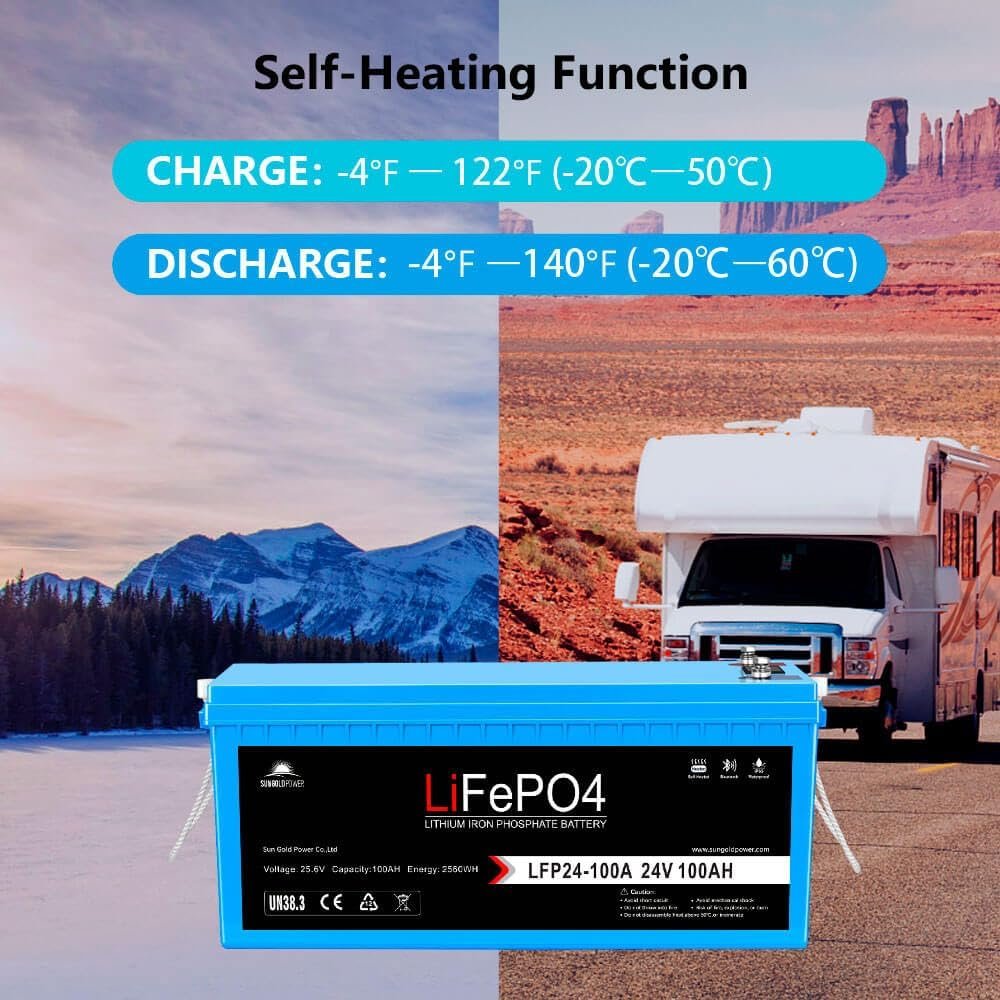
Now we come to the battery portion, which is central to the long-term performance of any solar power system. This kit includes a 24V 100Ah LiFePO4 battery using automotive-grade cells rated to UL1973 standards.
Why LiFePO4?
Lithium Iron Phosphate (LiFePO4) batteries offer several advantages over traditional lead-acid options:
- Much longer cycle life (often 4–10x)
- Higher usable capacity (we can typically use 80–90% of rated capacity)
- More stable voltage during discharge
- Lower weight for the same energy storage
- Better safety profile compared with some other lithium chemistries
For off-grid systems or frequent cycling, LiFePO4 quickly becomes cost-effective over its lifetime, even if the upfront cost is higher than lead-acid.
UL1973 Certification and Automotive-Grade Cells
The mention of UL1973 and automotive-grade cells signals a focus on safety and reliability. UL1973 covers batteries used in stationary and some mobility applications, with testing for:
- Electrical safety
- Mechanical integrity
- Environmental performance
- Fire and explosion risks
Using automotive-grade cells implies that the internal components have quality and consistency aligned with what is expected in electric vehicles and similar demanding contexts. This gives us more confidence in consistent performance and longevity.
Battery Lifespan, Warranty, and Real-World Value
The manufacturer quotes 4000+ deep cycles and more than 10 years of life, along with a 5-year guarantee. These numbers are meaningful when we consider how often we plan to cycle the battery.
Understanding 4000+ Deep Cycles
A cycle is one full charge and discharge. If we perform:
- 1 cycle per day → 4000 cycles ≈ over 10 years
- 3 cycles per week → 4000 cycles ≈ over 25 years (in theory)
In real life, we will see variation based on factors like:
- Depth of discharge (shallower cycles yield even more life)
- Temperature conditions
- Charge settings and rate
- Overall system design
Even if actual life ends up lower than the theoretical maximum, we still get a battery bank that will generally last many times longer than typical lead-acid under similar use.
5-Year Warranty for Peace of Mind
The 5-year guarantee backs up the lifespan claims. It signals that the manufacturer expects the battery to operate reliably for a significant amount of time under normal use.
This is especially important in off-grid or remote applications, where premature battery failure would be both costly and inconvenient.
Battery Monitoring and User Interface
It is not enough to simply install a battery; we also need to understand what is happening in daily use. This kit includes an LCD display and optional wireless modules for monitoring.
On-Board LCD Display
The battery’s LCD display can show us key metrics such as:
- Voltage
- State of charge (SOC)
- Some internal status indicators
This lets us quickly check on the system when we are physically near the battery. It is useful for confirming whether the battery is charging, discharging, or near full/empty.
Bluetooth and Optional WiFi/GPRS Monitoring
With the Bluetooth module, we can monitor the battery using a mobile device from a short distance. This can give us more detailed real-time information without having to open battery compartments or walk to the inverter room.
On the inverter/charger side, the optional WiFi or GPRS module (at extra cost) can provide remote monitoring capabilities. This is handy for:
- Remote cabins we only visit occasionally
- Rental properties or managed sites
- Users who want to track performance trends over time
Being able to see data from anywhere helps us adjust loads, detect issues early, and get better value from our system.
Self-Heating Function for Cold Weather
Cold temperatures are a major challenge for lithium batteries. Charging them below freezing can damage cells and reduce their lifespan. The built-in intelligent self-heating function helps address this issue.
Automatic Heating When It Gets Too Cold
The self-heating system activates when the battery’s core temperature drops below about 33.8°F (1°C). It continues until the internal temperature reaches around 42.8°F (6°C), then stops.
In practical terms, this means:
- We can still charge our battery safely in cold climates
- Winter operation becomes more reliable
- We avoid permanent damage from low-temperature charging
The heating energy is typically drawn from the charging source (solar or AC), not just from the battery itself, though system specifics matter. The goal is to bring the cells up to a safe operating temperature before actual charging current flows.
Benefits for Northern and High-Altitude Users
If we live or camp in regions that see freezing temperatures, this feature can be a game-changer. Instead of worrying about whether a sudden cold front will prevent charging, we can rely on the system to manage itself.
For high-altitude cabins, winter RV use, or garages that are not insulated, the self-heating function makes LiFePO4 more practical year-round.
LCD/LED Dynamic Display for System Status
The inverter system itself includes LCD/LED indicators that display operating data and status. This user interface is our window into how the system is behaving at any given moment.
What We Can Typically See
While specifics vary, typical data points include:
- Input and output voltages
- Load levels and inverter status
- Charging current and source (solar or AC)
- Faults, warnings, and operating modes
These indicators help us quickly diagnose issues, monitor performance, and confirm that our settings are being followed.
Helpful for New and Experienced Users Alike
For newer users, having a clear, dynamic display reduces the learning curve. We are not working blind; we can see what the system is doing.
For more advanced users, this data helps with:
- Tracking usage patterns
- Optimizing settings
- Verifying that solar and AC inputs behave as expected
Combined with remote monitoring options, the display makes the system more approachable and transparent.
Practical Applications and Use Cases
To understand if this kit fits our needs, it helps to imagine a few real-world scenarios. The SUNGOLDPOWER 3KW 24V Kit is versatile enough for several types of installations.
Off-Grid Cabin or Tiny Home
In a small cabin or tiny house, this kit can serve as the main power source, especially if we pair it with a properly sized solar array.
We can run:
- LED lighting
- A DC or efficient AC refrigerator
- Communication equipment (Wi-Fi routers, phones, laptops)
- Occasional power tools
- A small water pump
We would size our solar panels and battery usage to avoid constant generator use, but still have AC charging as backup.
RV, Van, or Mobile Workshop
For mobile applications, the compact, transformer-less design and LiFePO4 battery are big advantages. We save weight, gain cycle life, and still have robust power.
We might use this kit to:
- Power air conditioning intermittently (with careful load planning)
- Run tools for on-site jobs
- Support off-grid camping with near-home comfort levels
The battery’s self-heating feature helps maintain performance during winter travel and mountain trips.
Home Backup Power System
As a home backup system, this kit can handle critical circuits when the grid goes down. It is not meant to run an entire large house indefinitely, but we can dedicate it to:
- Refrigerator and freezer
- Key lights and outlets
- Internet equipment and communications
- Medical or work devices (as appropriate and properly sized)
Mains bypass mode keeps everything running normally when the grid is up and switches seamlessly to inverter output during outages. Solar can extend backup time significantly compared with battery-only setups.
Advantages of the SUNGOLDPOWER 3KW 24V Kit
Summarizing the strengths helps us see the value proposition more clearly. This kit packs several notable advantages into one package.
Integrated, All-in-One Solution
We get:
- Inverter
- MPPT solar charger
- AC charger
- LiFePO4 battery
All designed to work together. This simplifies:
- Sizing and compatibility questions
- Wiring and installation effort
- Troubleshooting and support
Instead of mixing brands and components, we have a coherent system from one provider.
High-Efficiency Solar Charging and Modern Battery Tech
With 99.9% MPPT tracking efficiency and LiFePO4 batteries rated for 4000+ cycles, the system is tuned for long-term energy yield and durability.
We are essentially combining one of the most efficient charging technologies with one of the most robust storage chemistries available to residential users.
Flexibility and Smart Features
Between the multiple charging modes, mains/inverter output modes, WiFi/Bluetooth options, self-heating, and generator auto-start, the kit is adaptable to many environments.
We can tailor our setup:
- For solar-first, eco-focused living
- For reliability and backup readiness
- For remote, harsh conditions where hands-off operation is crucial
This flexibility adds value over time as our needs change.
Considerations and Potential Limitations
No system is perfect for everyone. Before choosing this kit, we should think carefully about certain aspects so our expectations match reality.
System Size and Future Expansion
The included battery capacity (24V 100Ah) is a solid start but may be limited for heavy users. We need to verify whether the system supports adding more batteries in parallel and whether we plan to expand later.
We should ask ourselves:
- How many watt-hours per day do we actually use?
- Do we plan to run large loads (AC units, big pumps, heavy tools) often?
- Are we comfortable managing loads to fit within 3000W inverter output?
For light to medium usage, the kit is well-balanced. For larger households or intensive workshops, we may need multiple kits or a higher-capacity system.
Installation Skill Level
While the kit simplifies component selection, installation still requires:
- Safe DC and AC wiring practices
- Proper grounding and overcurrent protection
- Adherence to local electrical codes
Many of us will want to involve a qualified electrician, especially when tying into home circuits or working with generator auto-start wiring. This adds cost but increases safety and compliance.
Optional Features Require Extra Modules
WiFi/GPRS monitoring is not included by default; it comes at extra cost. If remote monitoring is a must-have for us, we should factor that in.
Similarly, generator auto-start relies on our generator being compatible and properly configured. We may need additional cables or interface modules depending on the generator model.
Tips for Getting the Most from the Kit
With a little planning, we can get excellent performance and longevity from this system. A few simple practices can make a big difference.
Right-Size Our Solar Array
We should match our solar array to both our energy needs and the 80A MPPT capacity. Oversizing panels dramatically beyond controller limits can waste potential, while undersizing them can leave us relying heavily on generators or grid power.
As a rough guideline:
- Estimate daily energy use in watt-hours
- Factor in local sun hours and seasonal variation
- Size the array so we can realistically recharge our batteries most days
This planning step sets the foundation for a balanced system.
Manage Loads Intelligently
Even with a robust inverter and battery, we benefit from simple load management:
- Stagger high-demand appliances
- Use energy-efficient lighting and appliances
- Avoid running large heaters or resistive loads on battery power where possible
By doing this, we extend battery life, improve system reliability, and reduce the need for generator runtime.
Monitor and Adjust Over Time
Using the LCD display and optional Bluetooth/WiFi monitoring, we can:
- Track state of charge trends
- See how often we hit low battery thresholds
- Adjust our usage or system settings accordingly
This ongoing tuning helps us get the best performance instead of treating the system as “set and forget” from day one.
Who This Kit Is Best Suited For
To decide if this kit fits us, we can look at who it serves best.
We are likely a good match if:
- We want an integrated, relatively compact off-grid or backup power system
- We value long battery life and modern LiFePO4 technology
- We have moderate power needs and are willing to manage large loads thoughtfully
- We live in a region with cold winters and appreciate a self-heating battery
- We want a system that can flex between solar, grid, and generator as needed
On the other hand, if we have a large house with central air conditioning and expect to run everything as if we were on full grid power, we would either need multiple systems or a larger, higher-voltage setup.
Final Thoughts on the SUNGOLDPOWER 3KW 24V Kit
The SUNGOLDPOWER 3KW 24V Kit: 3000W 24VDC Pure Sine Wave Solar Inverter 100A 24Vdc LiFePO4 Batteries UL1973 brings together a capable inverter, efficient MPPT charging, and a long-life LiFePO4 battery bank in one package.
We gain:
- Pure sine wave power suitable for sensitive electronics
- An advanced MPPT solar charger with high tracking efficiency
- A 40A AC charger and generator auto-start support for reliability
- A UL1973-certified LiFePO4 battery rated for 4000+ cycles and backed by a 5-year guarantee
- Self-heating capability that makes cold-weather operation far more practical
For off-grid enthusiasts, RV travelers, cabin owners, and homeowners seeking a serious backup solution, this kit offers a thoughtful blend of performance, safety, and flexibility. If we size our solar array correctly, manage loads smartly, and take advantage of the monitoring features, it can provide years of dependable, clean power with relatively little hassle.
Disclosure: As an Amazon Associate, I earn from qualifying purchases.