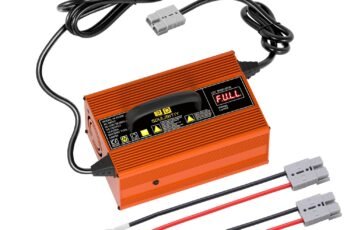
Have we ever wished one compact charger could safely handle multiple lithium batteries on our boat, RV, or backup system without fuss?
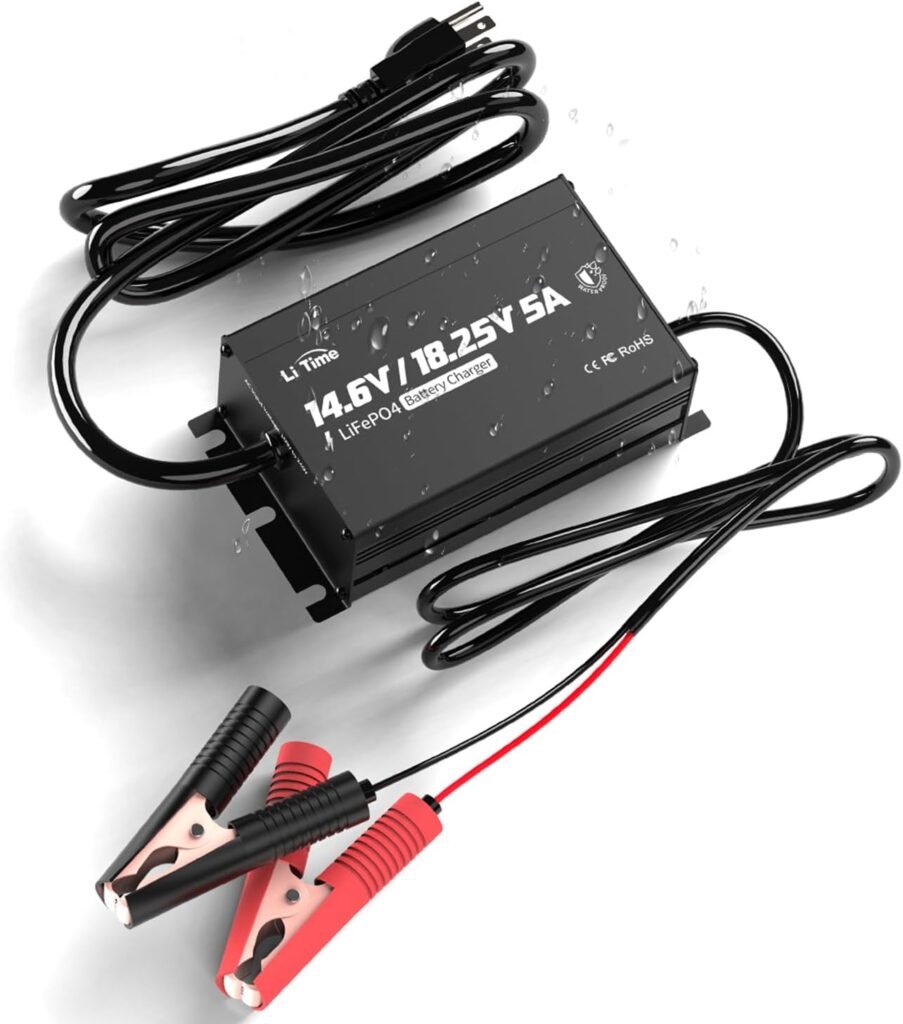

Overall Impression of the LiTime 12V 16V 5A Lithium Battery Charger
We see the LiTime 12V 16V 5A Lithium Battery Charger as a thoughtfully designed tool for anyone using LiFePO4 batteries in marine, RV, or small off‑grid setups. It targets a specific gap: safe, moderate‑current charging for smaller lithium batteries, with adjustable voltage for 12V and 16V packs.
From what we can tell, this charger prioritizes long‑term battery health, outdoor durability, and ease of use over sheer charging speed. If we’re looking for a rugged, set‑and‑forget charger that won’t abuse our LiFePO4 batteries, it fits that role quite well.
Key Features at a Glance
Before we go deeper into how it performs in different setups, it helps to see the main specs and functions side by side. This charger is small, but there’s a lot going on inside it.
| Feature | Details |
|---|---|
| Battery Type | LiFePO4 (lithium iron phosphate) |
| Output Current | 5A constant current |
| Adjustable Voltage Modes | 12V mode (14.6V charge) and 16V mode (18.25V charge) |
| Ideal Battery Capacities | Around 12V 6Ah, 10Ah, and 16V 30Ah (and similar small to mid‑size lithium packs) |
| Charging Stages | 3‑stage: pre‑charge, constant current (CC), constant voltage (CV) |
| Protection Features | Over‑temperature, over‑voltage, over‑current, low‑voltage, short‑circuit, reverse polarity |
| Waterproof Rating | IP65 (dust‑tight and water‑resistant against low‑pressure jets) |
| Use Cases | Marine, boats, trolling motors, RVs, backup power, outdoor equipment |
| Indicators | LED status lights for charging and error conditions |
| BMS Activation | Can wake up or activate lithium batteries with built‑in BMS protection circuits |
This table gives us a quick overview, but the real value appears when we match these features to how we actually use our batteries day to day.
Design and Build Quality
We appreciate when a charger feels ready for real‑world use rather than just sitting in a workshop. The LiTime 12V 16V 5A Lithium Battery Charger is clearly built with outdoor and marine environments in mind.
Rugged, Compact Housing
The casing has a tough, functional look, not flashy but clearly practical. It is compact enough to tuck near a battery bank or mount in a small locker, which is handy on boats and RVs where every inch matters.
We notice that the build focuses on being sealed and solid rather than loaded with fragile external parts. That’s a plus when we’re dealing with vibration, moisture, or limited mounting options on a vessel or camper.
IP65 Waterproof and Dustproof Rating
The IP65 rating means the charger is dust‑tight and can handle water jets from any direction. That does not mean we should submerge it, but it does mean we can be much less anxious about spray, rain, or a damp bilge environment.
For marine and outdoor use, this is a big deal. Many chargers that work fine in a garage fail quickly once they meet salt air, condensation, and splashes. With IP65, we can feel more confident mounting this near our boat’s battery compartment or in an RV storage bay that sometimes gets damp.

Voltage Flexibility: 12V and 16V in One Charger
One of the main selling points is the dual‑voltage capability. Being able to handle both 12V and 16V lithium systems with one unit can reduce cost and clutter.
One‑Button Voltage Switching
The charger lets us switch between 12V (14.6V charging) and 16V (18.25V charging) modes with a single control. This simple operation can be especially helpful if we maintain different battery packs—for instance, a 12V house battery in our RV and a 16V pack for a trolling motor or other equipment.
We only need to be disciplined about double‑checking the mode before connecting or starting a charge. When used properly, this flexibility means we don’t have to purchase multiple chargers for different systems.
Why 14.6V and 18.25V Matter for LiFePO4
For a 12V LiFePO4 pack (4 cells in series), 14.6V is a standard full‑charge voltage. It’s high enough to fully top the cells and allow the BMS to balance them, but still within the typical safe range.
For a 16V pack (usually 5 cells in series), 18.25V is similarly appropriate. Charging to the correct top‑end voltage is crucial for both performance and longevity. Using a generic or wrong‑voltage charger can undercharge, overcharge, or stress the pack.
By giving us preset lithium‑specific voltages rather than manual, adjustable knobs, this charger tries to keep things simple and safe without requiring us to be a battery engineer.
Charging Performance and Speed
We see the LiTime charger as intentionally moderate in current: 5A. That might sound low if we’re used to high‑amp automotive or bulk chargers, but for many small to mid‑size lithium batteries, it’s exactly the right level.
5A Constant Current: A Balanced Choice
For a 12V 10Ah LiFePO4 battery, 5A is a 0.5C rate, which is typically safe and speedy enough without causing noticeable stress. For a 6Ah battery, it’s closer to 0.8C, still within acceptable limits for many quality packs, especially because LiFePO4 chemistry generally tolerates higher rates than lead‑acid.
With larger batteries, charging will of course take longer. For example:
- A 12V 10Ah battery from empty to full at 5A: roughly 2–3 hours, depending on depth of discharge.
- A 12V 20Ah battery: around 4–5 hours for a significant recharge.
- A 16V 30Ah battery: we might see 6–7 hours for a deep cycle charge.
This is not a fast‑recovery powerhouse for large 100Ah+ banks, but it’s well‑matched to smaller lithium packs where safety, cycle life, and controlled charging are more important than speed.
Constant Current and Constant Voltage Behavior
During the constant current phase, the charger sends a steady 5A into the battery until the pack reaches its target voltage (14.6V or 18.25V). Once at that threshold, it transitions to constant voltage, reducing current gradually as the battery fills up.
This behavior is standard for lithium chargers and crucial for avoiding overcharge. It also reduces waste heat and protects the cells during the final phase, which can be more delicate if managed poorly.
Smart 3‑Stage Charging Profile
Not all chargers handle lithium chemistry correctly. The LiTime unit advertises a dedicated 3‑stage approach designed for LiFePO4, which gives us better confidence in its compatibility.
Stage 1: Pre‑Charge (Soft Start)
When the battery is very low, the pre‑charge phase gently supplies current at a limited level to “wake” the cells without hitting them with full power immediately. This is especially useful when a BMS has cut power due to low voltage, or when the pack has been sitting for a long time.
We like this feature because sudden high‑current charging of deeply discharged lithium cells can shorten their lifespan or trigger protective shutdowns. The soft start helps reduce those risks.
Stage 2: Constant Current (CC)
Once the battery passes the initial threshold, the charger moves into a 5A constant current phase. Here, it quickly replenishes most of the capacity. This is where we get the bulk of the charging done.
For daily use, this stage determines how quickly we can get back up and running after a day of trolling, camping, or running loads on the water or on the road.
Stage 3: Constant Voltage (CV)
As the pack nears full capacity, the charger maintains 14.6V (for 12V packs) or 18.25V (for 16V packs) while the current tapers off. This gently tops off the remaining few percent.
This stage also allows the BMS to perform cell balancing, helping keep each cell in the pack aligned. Over many cycles, that balance can make the difference between a battery that holds performance and one that drifts into reduced capacity and shorter runtime.
BMS Activation and Compatibility
Modern LiFePO4 batteries often include a built‑in Battery Management System. When the battery is deeply discharged or in protection mode, some chargers struggle to wake them up. The LiTime charger aims to address that.
Waking “Sleeping” Lithium Batteries
When the BMS cuts output due to low voltage, the pack may appear “dead” to many chargers, which then refuse to start charging because they don’t sense a normal battery. By providing a low‑voltage start and pre‑charge behavior, this charger can often send just enough current to wake the BMS and reestablish a normal connection.
This is especially important in marine or RV contexts where we may occasionally run a battery much lower than intended or leave it unused for longer periods.
Matching with LiFePO4 BMS Protection Logic
The advertised protections and charge profile are tailored to LiFePO4, not generic lithium‑ion packs that might require different voltages. When our battery manufacturer specifies a standard LiFePO4 range and BMS cut‑off/restore points, we should find that this charger aligns well.
We still need to confirm compatibility with our specific battery model, but overall, the BMS‑friendly approach is a definite plus for real‑world reliability.
Safety and Protection Features
We place a lot of importance on safety when connecting anything to expensive lithium batteries. The LiTime charger has several built‑in safeguards to protect both the charger and the battery.
Over‑Temperature and Over‑Voltage Protection
If the charger begins to overheat, it can adjust or shut down to prevent damage. Charging electronics can get warm, especially in warm climates or confined spaces, so having thermal protection is reassuring.
Over‑voltage protection helps prevent the charger from pushing beyond its designated top‑end voltage in the event of a component fault. For lithium cells, avoiding over‑voltage is critical for safety and longevity.
Over‑Current and Short‑Circuit Protection
In case of an abnormal load or a wiring mistake that causes a short, the charger is designed to limit current and cut output. This reduces the chances of sparking, melted wires, or damage to the charger itself.
For us, this means we can be more confident working in cramped battery compartments or on the dock, where accidental contact is always a risk.
Low‑Voltage and Reverse Polarity Protection
Low‑voltage protection helps ensure the charger behaves predictably when connecting to a very depleted battery or one that is not in a suitable state to accept full current.
Reverse polarity protection is simple but essential: if we accidentally connect the leads backward, the charger won’t immediately self‑destruct. It should refuse to operate and indicate a fault instead of turning that mistake into an expensive lesson.
LED Indicators and Ease of Monitoring
We appreciate simple, clear feedback when charging. The LiTime charger uses LED indicators to show what’s happening without requiring us to decode complex displays.
Reading the Charging Status
Typical LED patterns include:
- Power on / ready
- Charging in progress
- Fully charged / standby
- Error or fault conditions
By glancing at the LEDs, we can quickly tell whether the battery is still charging or has reached full voltage, and whether the charger has tripped a protection feature.
This is especially handy on boats or RVs where the charger might be mounted in a spot we access briefly. We don’t always want a complicated screen; sometimes we just want to know “is this working or not?”
Simple Operation for Non‑Experts
The combination of one‑button voltage switching and LED feedback means we don’t need to be battery specialists to use this charger effectively. As long as we know whether we’re charging a 12V or 16V pack and we connect the clips correctly, the charger handles the rest.
That ease of use lowers the barrier for friends or family members who may occasionally need to operate the charger without a detailed technical briefing.
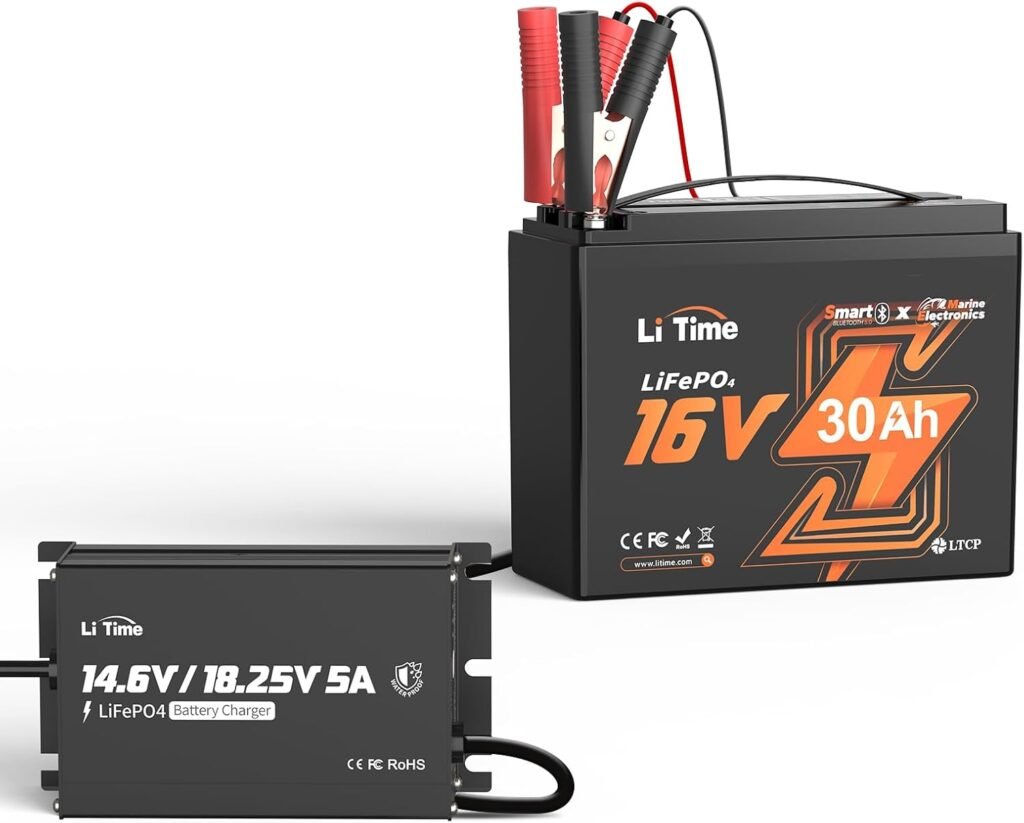
Suitability for Marine Use, Boats, and Trolling Motors
LiTime presents this charger as particularly suitable for marine and outdoor environments. We agree that its features align well with what we typically demand for gear on the water.
Handling Moisture, Vibration, and Salt Air
The IP65 rating and solid housing make it a strong candidate for mounting in a boat, near a trolling motor battery, or in a compartment that might be exposed to spray. While we’d still try to keep it out of direct flooding or standing water, the charger is clearly more robust than many indoor‑only units.
Trolling motor users often pair relatively small LiFePO4 packs—10Ah, 20Ah, 30Ah, maybe 50Ah—to reduce weight and maximize run time. For the smaller packs especially, a 5A charger is a safe and sensible choice.
Compact Solution for Boat Owners
Space on a boat is precious. Having one charger that can handle both a 12V LiFePO4 house battery and a 16V pack for a specific motor or accessory can simplify our gear. Fewer devices mean less wiring clutter and fewer failure points.
If we regularly charge at the dock on AC power, this AC‑to‑DC charger can be our main tool for bringing our lithium packs back to full charge between trips.
Use in RVs, Camping, and Backup Power
Marine users aren’t the only ones who benefit. This charger also feels highly relevant for RV owners, campers, and anyone running small lithium backup systems.
Compact and Travel‑Friendly
The form factor is small enough to pack easily for camping or to tuck into an RV cabinet. Many portable lithium packs and DIY LiFePO4 systems for camping use capacities in the 10–30Ah range, which align perfectly with the 5A rate.
If we’re running a small fridge, lights, or electronics off a 12V LiFePO4 battery during our trip, having a charger that properly matches the chemistry can prevent damaging the battery and ensure it’s ready for the next outing.
Reliable Daily Use for Backup Systems
For backup applications, we might keep a LiFePO4 battery on standby for emergencies. This charger can be used periodically to top it off and maintain its health. The smart charge profile means it won’t aggressively overcharge or bake the battery the way some unregulated or lead‑acid‑oriented chargers might.
We can incorporate it into a small home backup system or pair it with a battery in a shed or workshop that supports lights or tools. As long as we have AC power periodically available, we have a straightforward way to keep our lithium storage in good condition.
Protecting Smaller LiFePO4 Batteries
One of the standout claims is that this charger is particularly well‑suited and safe for smaller‑capacity lithium batteries, such as 6Ah or 10Ah 12V packs, and 30Ah 16V packs.
Avoiding Overcharging and Overheating
Smaller batteries are easier to damage with high‑amp chargers because the C‑rate becomes excessive. Using a large automotive charger on a 6Ah lithium battery can stress it severely, especially if that charger is not lithium‑specific.
By limiting current to 5A and controlling the voltage precisely, the LiTime charger offers a stable and predictable environment for these batteries. That might mean longer charge times compared to a brute‑force charger, but it also means less internal heating, reduced cell stress, and longer life.
Ideal Use Cases for Small Packs
If we use:
- 12V 6Ah LiFePO4 for small fish finders, lights, or electronics
- 12V 10Ah packs for kayaks, small trollers, or portable power
- 16V 30Ah for high‑performance trolling motors or specific marine electronics
this charger fits right into that ecosystem. It is designed not to overwhelm these smaller packs while still providing an efficient and complete charge.
Practical Pros and Cons
No product is perfect for every scenario, so we find it helpful to lay out where this charger shines and where it might not be the ideal tool.
Advantages We Appreciate
- Lithium‑Specific Charging: Tailored 14.6V and 18.25V voltages and 3‑stage charging are well‑suited to LiFePO4 chemistry.
- Dual‑Voltage Flexibility: One charger supporting both 12V and 16V systems saves cost and storage space.
- IP65 Waterproofing: A genuine asset for marine, outdoor, and dusty environments.
- Safe Current Level for Small Batteries: 5A is gentle enough for 6Ah–10Ah packs while still practical for 20Ah–30Ah batteries.
- Comprehensive Protections: Over‑temp, over‑voltage, over‑current, low‑voltage, short‑circuit, and reverse polarity coverage.
- BMS Activation Capability: Helpful for waking “sleeping” lithium batteries with cut‑off BMS.
- Clear LED Status Indicators: Simple visual feedback without overly complex interfaces.
Limitations to Keep in Mind
- Not a High‑Amp Charger: For very large LiFePO4 banks (like 100Ah or 200Ah packs), 5A may feel slow if we’re frequently charging from deep discharge.
- LiFePO4 Focus: It is not designed as a universal charger for lead‑acid or other lithium chemistries; it is primarily for LiFePO4.
- Manual Mode Selection: We must remember to set the correct 12V or 16V mode; using the wrong setting can harm our battery.
- Requires AC Power Source: This is not a DC‑DC charger or solar controller; it depends on mains AC input.
For the target use cases—small to mid‑size LiFePO4 packs in marine, RV, and backup environments—these tradeoffs are mostly reasonable.
Usage Tips for Best Results
To get the most from this charger and protect our batteries over the long term, a few practical habits can go a long way.
Always Confirm Voltage Mode Before Connecting
Before we clip anything onto the battery, we should check that the charger is in the right mode:
- 12V mode for four‑cell LiFePO4 packs (common “12V” batteries).
- 16V mode for five‑cell LiFePO4 packs or dedicated “16V” batteries.
This one step can avoid the most serious potential misuse.
Match the Charger to Battery Capacity
As a general guideline, we like to keep charging current between about 0.2C and 0.5C for routine use, unless the battery manufacturer allows more. At 5A, that looks like:
- 6Ah battery: ~0.8C (acceptable for many LiFePO4, but check specs).
- 10Ah battery: 0.5C (well within typical safe range).
- 20Ah battery: 0.25C.
- 30Ah battery: ~0.17C.
For much larger batteries, the charger will still work, just more slowly. As long as we manage our expectations about time, that’s perfectly viable.
Ventilation and Mounting
Even though the charger is sealed to IP65, giving it some breathing room helps dissipate heat. We’d avoid burying it under insulation or tightly wrapping it. A bulkhead, wall, or panel with a bit of airflow around it is ideal.
In a boat, mounting it in a protected, elevated spot above the bilge where splashes are less likely is a good practice. In an RV, we’d favor a compartment that stays relatively cool and dry.
Periodic Inspection and Cable Care
We rely on cables and connectors just as much as on the charger itself. Checking for:
- Frayed or pinched wires
- Corroded clamps or terminals
- Loose or heating connections
helps ensure safe, efficient charging. If the charger’s LEDs show fault conditions unexpectedly, a quick look at the wiring often reveals the culprit.
Who This Charger Is Best For
Understanding who benefits most from this specific model helps us decide whether it belongs in our kit.
Ideal Users and Scenarios
We see this charger as a strong fit if we:
- Use small to moderate LiFePO4 batteries (6Ah–30Ah) regularly.
- Own both 12V and 16V lithium packs for marine or performance applications.
- Need a charger that can withstand moisture, dust, and rougher environments.
- Prefer a safe, gentle charge that favors battery lifespan over raw speed.
- Want something simple enough for multiple family or crew members to operate.
Boat owners with a trolling motor battery and a separate house battery, kayak anglers with small lithium packs, and RV users with modest LiFePO4 banks all fall squarely into the target group.
Less Ideal Use Cases
We might want to consider a different or additional charger if we:
- Run large 100Ah+ LiFePO4 banks and regularly need fast turnarounds.
- Require multi‑chemistry support, including lead‑acid, AGM, or standard Li‑ion packs.
- Need DC‑DC or solar charging integration instead of AC power charging.
In those scenarios, this charger can still be a useful secondary tool, but it won’t cover every requirement on its own.
How It Compares Conceptually to Generic Chargers
Without naming specific competitor models, we can still compare this charger to the more generic options many of us might already own.
Compared to Lead‑Acid Chargers
Traditional lead‑acid chargers often:
- Use higher float voltages unsuitable for LiFePO4.
- Lack a proper lithium CV threshold.
- May keep “topping up” in ways that stress lithium cells.
By contrast, the LiTime charger:
- Targets 14.6V / 18.25V, which is standard for LiFePO4.
- Stops trying to float at levels that might shorten lithium lifespan.
- Incorporates protections and BMS wake‑up behavior designed for this chemistry.
If we’re moving from lead‑acid to LiFePO4, switching to a dedicated lithium charger like this is a meaningful step for battery health.
Compared to No‑Name Lithium Chargers
Generic lithium chargers can vary widely in quality. Some lack proper protections, have questionable voltage accuracy, or aren’t sealed for outdoor use.
The LiTime charger offers:
- A specific, stated IP65 rating.
- Published protection features.
- Brand support focused on lithium batteries and systems.
For people who want more confidence than a random low‑cost charger without documentation, this unit represents a more reassuring middle ground.
Longevity and Battery Life Considerations
We care not just about charging today, but about how our batteries will behave months and years from now. Charging habits and charger design both play big roles in that.
Reducing Stress on Cells
The combination of:
- Controlled 5A current
- Proper lithium voltage thresholds
- Smooth transition between CC and CV
- Over‑temp protection
means this charger aims to minimize stress on the cells. When we repeat that cycle hundreds of times, the difference accumulates into better capacity retention and more usable cycles.
Keeping Batteries Ready for Use
With small to mid‑size batteries used for trolling, camping, or backup power, we often charge them between trips rather than leaving them permanently connected. The smart 3‑stage profile helps get each charge session “right,” so we start our next outing with balanced cells, correct state of charge, and minimal risk of hidden degradation.
If we combine proper storage practices (avoiding extreme temperatures, not leaving batteries at 0% or 100% for long periods) with this appropriate charger, we are stacking the odds in favor of long service life.
Final Thoughts: Is the LiTime 12V 16V 5A Charger Worth It?
Putting it all together, we see the LiTime 12V 16V 5A Lithium Battery Charger, Waterproof AC to DC LiFePO4 Charger with Adjustable Voltage, Smart BMS Activation & LED Indicator for Marine, Boat, Trolling Motor as a well‑matched solution for a very common set of real‑world needs.
If we:
- Rely on small to mid‑size LiFePO4 batteries.
- Operate in marine, RV, or outdoor environments.
- Value reliability, safety, and battery health over maximum speed.
- Want one rugged charger for both 12V and 16V lithium packs.
then this charger offers a blend of ruggedness, chemistry‑appropriate design, and user‑friendly operation that makes a lot of sense.
We would not choose it as the only charger for very large banks where we need rapid bulk charging every day. But for boaters, campers, and anyone running compact LiFePO4 systems, it feels like a practical, thoughtful, and trustworthy tool to keep in our gear lineup.
Disclosure: As an Amazon Associate, I earn from qualifying purchases.