Imagine a fleet of electric vehicle chargers in a commercial garage suddenly failing after a severe thunderstorm. This scenario highlights how vulnerable battery chargers are to power surges and voltage fluctuations, which can cause costly damage and downtime. By understanding the mechanisms behind surge protection and power conditioning, we can explore practical solutions that not only shield sensitive components but also enhance overall charging efficiency and reliability.
Key Takeaways
- Surge protection prevents voltage spikes from damaging sensitive battery charger components, enhancing reliability and lifespan.
- Common surge protectors include MOVs, GDTs, and TVS diodes, chosen based on response time and surge energy levels.
- Power conditioning stabilizes voltage, regulates current, and filters noise to improve charging efficiency and consistency.
- Proper installation requires assessing electrical layout, grounding, and positioning surge protectors at critical points for optimal defense.
- Regular maintenance and testing detect damage or degradation, ensuring continued surge protection and preventing charger failures.
What Causes Power Surges and Voltage Fluctuations in Chargers
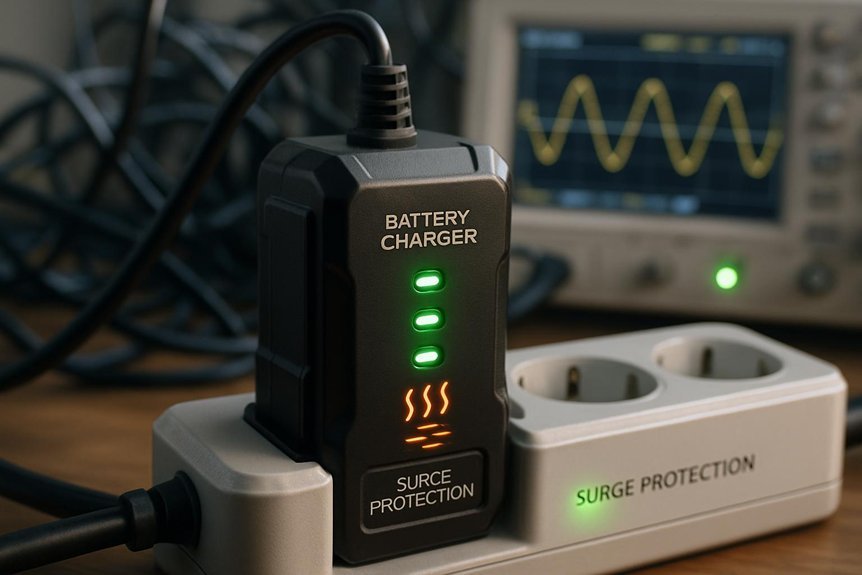
Although power surges and voltage fluctuations can seem random, they typically result from specific electrical events within the power grid or connected devices. Surge frequency often correlates with switching operations, lightning strikes, or abrupt load changes. Voltage regulation challenges arise when environmental factors, such as temperature or humidity, affect transformer performance and line impedance. Electromagnetic interference from nearby equipment can also degrade power quality, inducing transient disturbances. Additionally, variations in electrical load—especially sudden large draws—cause rapid voltage shifts impacting charger stability. The circuit design of both the supply network and the charger itself influences susceptibility; chargers with high sensitivity to voltage deviations require more stringent power conditioning. Understanding these combined effects helps us implement targeted surge protection strategies that mitigate risks and maintain reliable charger operation.
How Power Surges Damage Battery Chargers
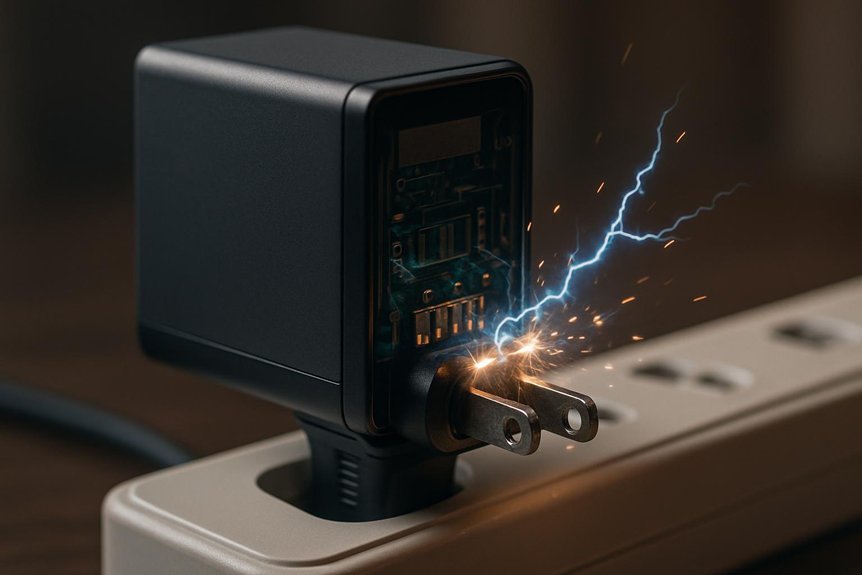
Power surges originate from sudden spikes in electrical voltage that exceed a charger’s design limits. These surges stress internal components like capacitors and semiconductors, often causing irreversible damage. We’ll examine the specific effects on charger parts and identify common signs that indicate surge-related failures.
Causes Of Power Surges
When electrical surges occur, they can instantly overwhelm the delicate circuitry within battery chargers, causing irreversible damage. Understanding the root causes helps us design better protection strategies. Power surges primarily arise from external and internal sources such as electrical storms, lightning strikes, and generator usage, or from within the system like equipment overload, faulty wiring, fluctuating demand, and appliance malfunction. These factors induce sudden voltage spikes that stress the charger components.
| Cause | Description |
|---|---|
| Electrical storms | Lightning-induced voltage spikes |
| Equipment overload | Excessive current draw |
| Faulty wiring | Poor insulation or connections |
| Power grid issues | Fluctuating demand and instability |
| Appliance malfunction | Sudden load changes or faults |
Recognizing these causes is essential for effective surge protection.
Impact On Charger Components
Understanding the causes of power surges sets the stage for examining their direct effects on battery charger components. Surges introduce voltage spikes that exceed design limits, stressing sensitive elements like capacitors, diodes, and integrated circuits. This stress accelerates degradation, reducing component reliability and increasing failure rates. Over time, repeated surges diminish the charger lifespan by causing insulation breakdown, semiconductor damage, and thermal stress. These failures compromise the charger’s ability to regulate current and voltage accurately, risking battery health and safety. To maintain peak functionality, we must consider how surge events erode component integrity and identify protective measures that preserve charger lifespan and guarantee consistent performance. Addressing these impacts is essential for designing robust systems capable of withstanding the electrical environment.
Common Surge Damage Signs
Several telltale signs indicate that a battery charger has suffered damage from a surge. Common surge indicators include erratic charging behavior, such as fluctuating output voltage or failure to initiate charging cycles. We also observe physical symptoms like burnt components, discoloration on circuit boards, or blown fuses. Additionally, unusual heat generation during operation signals internal damage. These indicators help us quickly identify compromised units before further harm occurs. Understanding these surge indicators is essential for effective damage prevention. By recognizing early signs, we can implement corrective measures, such as replacing affected components or enhancing surge protection systems, to safeguard chargers. Staying vigilant about these damage signs guarantees we maintain charger reliability and extend operational lifespan in environments prone to power surges.
The Role of Surge Protection in Safeguarding Chargers
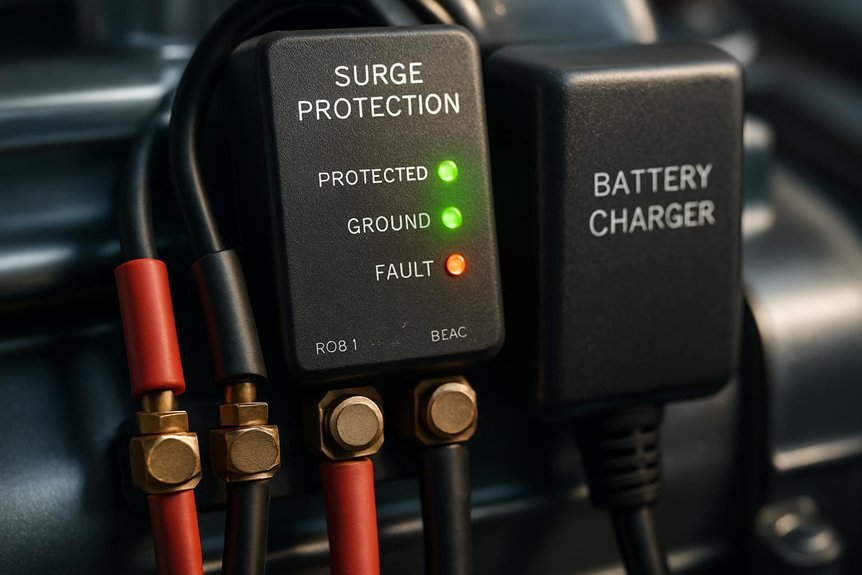
We recognize that surge protection is essential for maintaining the longevity and functionality of battery chargers. Power surges, often caused by lightning strikes, switching operations, or grid fluctuations, pose significant risks to sensitive electronic components. By implementing effective surge protection, we can minimize damage and guarantee consistent charger performance.
Importance of Surge Protection
Although battery chargers are designed to handle variable electrical loads, they remain vulnerable to voltage surges that can cause irreversible damage. Implementing surge protection is crucial to maintain voltage stability and to extend charger lifespan. The surge protection benefits include preventing component failure, reducing downtime, and guaranteeing consistent charging performance.
| Benefit | Description | Impact on Chargers |
|---|---|---|
| Voltage Stability | Maintains steady voltage levels | Prevents damage from spikes |
| Component Protection | Shields sensitive electronics | Extends operational life |
| Performance Consistency | Guarantees reliable charging output | Minimizes interruptions |
| Downtime Reduction | Limits surge-induced failures | Increases system availability |
Common Surge Risks
Understanding the types of voltage surges that threaten battery chargers helps us design more effective protection strategies. Common surge risks originate from various sources that can compromise charger functionality and longevity. Recognizing these risks enables us to implement targeted surge prevention strategies and voltage regulation techniques.
Key surge risks include:
- Lightning strikes inducing high-voltage spikes on power lines
- Switching transients caused by inductive loads cycling on/off
- Fault conditions in the power grid leading to sudden voltage surges
- Electrostatic discharge (ESD) events near sensitive charger components
Types of Surge Protectors for Battery Chargers
Since battery chargers are sensitive to voltage spikes, selecting the appropriate surge protector is essential for ensuring their longevity and performance. We must understand surge protector types and their battery charger compatibility to optimize protection. Common types include Metal Oxide Varistors (MOVs), Gas Discharge Tubes (GDTs), and Transient Voltage Suppression (TVS) diodes, each offering unique response times and clamping voltages.
| Surge Protector Type | Response Time | Ideal For Battery Chargers |
|---|---|---|
| MOV | Nanoseconds | General-purpose, cost-effective |
| GDT | Microseconds | High-energy surges, industrial |
| TVS Diode | Picoseconds | Sensitive electronics, fast spike |
Choosing the right type depends on charger sensitivity and expected surge characteristics.
What Power Conditioning Does for Battery Chargers
Surge protectors shield battery chargers from sudden voltage spikes, but power conditioning takes protection a step further by stabilizing the entire input power quality. By improving electrical stability and voltage regulation, power conditioning enhances battery performance and charger efficiency. This results in less stress on internal components, promoting equipment longevity. Additionally, consistent power quality reduces energy losses, contributing to energy savings. Power conditioners also guarantee device compatibility by filtering out noise and harmonics that could disrupt charger operation. To sum up, power conditioning delivers:
- Precise voltage regulation for stable charging currents
- Enhanced electrical stability minimizing operational interruptions
- Improved charger efficiency leading to reduced energy consumption
- Extended equipment lifespan through mitigation of power anomalies
Together, these factors optimize battery charger performance beyond basic surge protection.
Choosing the Right Surge Protector and Power Conditioner
When selecting a surge protector and power conditioner, we must evaluate key specifications such as voltage rating, response time, and energy absorption capacity to guarantee ideal battery charger protection. Surge protector features like clamping voltage and joule rating help us determine how effectively a device can suppress transients. We should also consider response time to guarantee rapid reaction to voltage spikes. On the other hand, power conditioner benefits include voltage regulation, noise filtering, and harmonic distortion reduction, which stabilize input power and enhance charger performance. By analyzing these technical parameters, we can match surge protector and power conditioner capabilities to the specific electrical environment and charger requirements. This methodical approach guarantees reliable protection, minimizes downtime, and prolongs battery charger lifespan.
Installing Surge Protection and Power Conditioning Equipment
Before we install surge protection and power conditioning equipment, we need to carefully assess the electrical layout and charger specifications to confirm proper integration. Selecting the appropriate surge protector types—such as metal oxide varistors or gas discharge tubes—depends on the system’s voltage and expected surge magnitude. Proper installation guarantees maximum protection without compromising charger performance. Power conditioner benefits, including voltage regulation and noise filtering, must align with the charger’s operational parameters.
Key installation considerations include:
- Verifying compatibility with charger input ratings
- Positioning surge protectors at critical electrical nodes
- Confirming secure grounding to optimize surge dissipation
- Configuring power conditioners to stabilize voltage fluctuations
Maintaining and Testing Surge Protection for Long-Term Safety
Although installing surge protection is vital, we must prioritize regular maintenance and testing to guarantee ongoing reliability. Regular inspections are essential to identify physical damage, corrosion, or component degradation that can compromise surge protectors’ effectiveness. We recommend establishing testing protocols that include measuring clamping voltage, response time, and continuity to ascertain devices perform within specified parameters. Documenting inspection and test results helps track trends and predict failures before they occur. Additionally, verifying connections and grounding integrity during maintenance prevents potential safety hazards. By adhering to a structured maintenance schedule and rigorous testing protocols, we ensure the surge protection system maintains its protective capabilities, safeguarding battery chargers from transient voltage events and prolonging their operational lifespan effectively.
Signs Your Battery Charger Needs Better Surge Protection
How can we tell if our battery charger’s surge protection isn’t performing adequately? Identifying signs early is critical to preserving battery charger lifespan and maximizing surge protection benefits. If surge protection is insufficient, transient voltage spikes can degrade internal components, leading to premature failure.
Key indicators include:
- Frequent charger resets or unexpected shutdowns during power fluctuations
- Visible burn marks or discoloration near the charger’s input terminals
- Increased device temperature beyond normal operating range
- Noticeable reduction in charging efficiency or prolonged charging times
When these symptoms occur, it’s clear our current surge protection isn’t robust enough. Upgrading to a higher-rated surge protector or integrating power conditioning devices can greatly extend the battery charger lifespan and safeguard against damaging electrical surges.
Frequently Asked Questions
Can Surge Protectors Improve Charger Efficiency?
We believe surge protectors don’t directly improve efficiency gains but enhance charger reliability by preventing damage from voltage spikes. This protection helps maintain peak performance over time, indirectly supporting consistent charger efficiency and longevity.
Are Surge Protectors Compatible With All Battery Types?
We like to think surge protectors play well with most batteries, but battery compatibility varies with surge technology. It’s essential we analyze each battery type’s tolerance to guarantee maximum protection and avoid potential incompatibilities.
How Do Weather Conditions Affect Surge Protection Performance?
We understand storm impacts and lightning strikes drastically increase surge events, challenging protection systems. Humidity effects can degrade components, while temperature variations alter response times. Together, these factors demand robust, climate-adapted surge protection designs.
Can Surge Protectors Prevent Data Loss During Charging?
We can’t say surge protectors are magical shields preventing all data loss during charging, but they considerably reduce surge impact, helping maintain data integrity by stabilizing voltage and minimizing electrical disturbances that could corrupt your files.
What Is the Lifespan of a Surge Protector for Chargers?
We find surge protector lifespan typically ranges from 3 to 5 years, depending on usage and surge frequency. For ideal charger maintenance, we recommend regular inspections and timely replacements to guarantee consistent protection and performance.
Conclusion
We can’t afford to let power surges turn our battery chargers into expensive paperweights. By implementing robust surge protection and power conditioning, we shield sensitive components from catastrophic voltage spikes and unstable currents that could otherwise fry our devices instantly. This isn’t just about prevention—it’s about optimizing performance and extending lifespan with surgical precision. Let’s commit to vigilant maintenance and smart equipment choices to keep our chargers running flawlessly, no matter how wild the power grid gets.