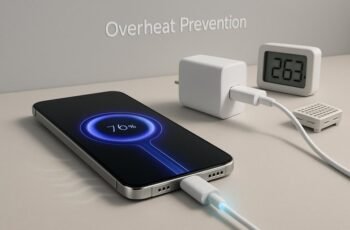
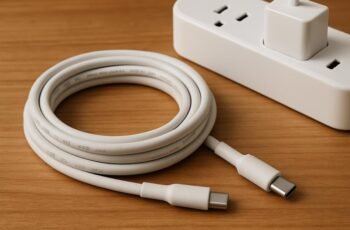
Imagine we notice our smartphone takes twice as long to charge as it did just a few months ago. This slowdown often signals a decline in charger efficiency, which can stem from voltage drops, damaged cables, or internal component wear. Identifying these early signs is essential not only for maintaining device performance but also for preventing safety risks. Let’s examine the precise indicators that can help us detect when a charger is losing its effectiveness.
Key Takeaways
- Measure output voltage and current regularly to detect deviations from original charger specifications.
- Monitor charging speed consistency to identify fluctuations indicating internal wear or voltage instability.
- Inspect cables and connectors for fraying, damage, or corrosion compromising electrical contact.
- Watch for overheating or unusual warmth near the charger as early signs of inefficiency and thermal stress.
- Compare input and output power to calculate efficiency, with drops below 85% signaling potential replacement need.
How to Know When Your Charger Is Losing Efficiency
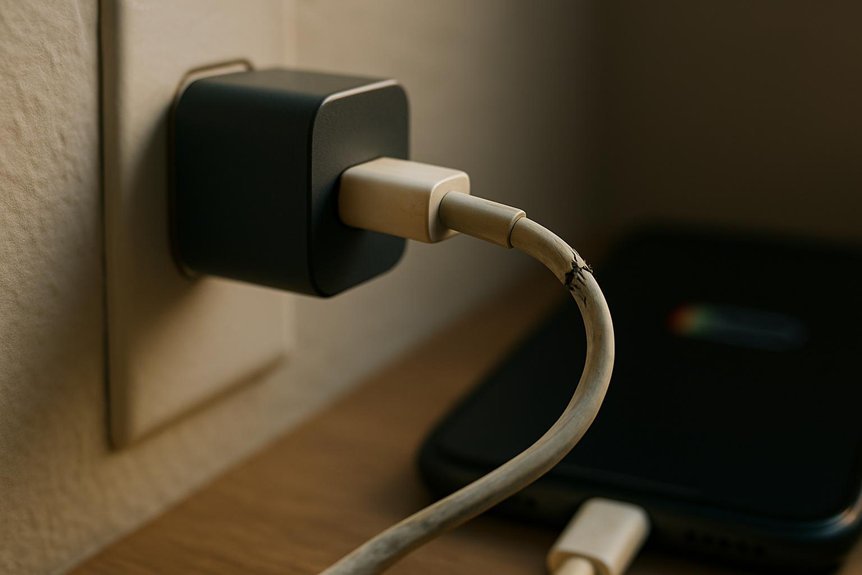
How can we tell when our charger starts losing efficiency? To accurately assess this, we must rely on systematic efficiency testing rather than guesswork. By measuring the output voltage and current under standardized conditions, we can detect deviations from the charger’s original specifications, which indicate declining performance. Over time, internal components degrade, shortening the charger lifespan and reducing its ability to convert power effectively. Tracking these quantitative changes helps us identify efficiency loss early. We should perform routine tests comparing input power versus output power to calculate efficiency percentages. When efficiency drops below a certain threshold—often around 85% of the initial value—it signals that the charger is no longer operating at peak performance, alerting us to contemplate replacement before more significant failures occur.
Common Signs of Charger Wear and Tear
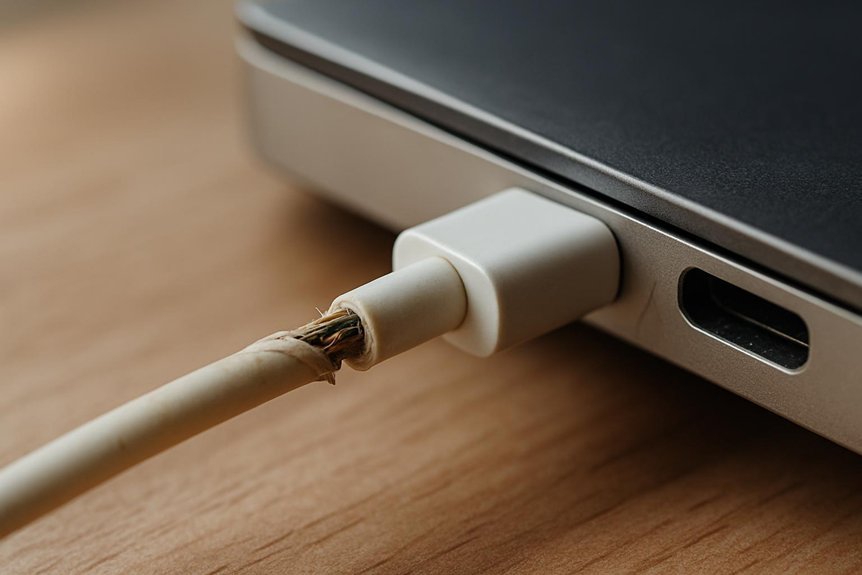
We often notice frayed cables and damaged connectors as clear indicators of charger wear. These physical deteriorations can lead to inconsistent charging speeds and reduced efficiency. Let’s analyze how these signs affect overall charger performance.
Frayed Cables And Connectors
Although charger cables and connectors are designed for daily use, they often show signs of wear that directly impact efficiency. Frayed cables result from repeated bending or abrasion, which compromises the internal wiring’s integrity, causing resistance that reduces power transfer. Similarly, damaged connectors—due to dirt, corrosion, or physical deformation—interrupt stable electrical contact, leading to energy loss and potential device damage. Regular cable maintenance is essential to detect these issues early; inspecting for exposed wires or weakened insulation can prevent further deterioration. Equally important is connector care: cleaning contacts and avoiding excessive force during insertion preserve connection quality. By prioritizing these preventive measures, we maintain charger efficiency, extend device lifespan, and avoid unexpected power failures linked to compromised cables and connectors.
Inconsistent Charging Speeds
When charging speeds fluctuate unpredictably, it signals underlying wear within the charger or its components. We need to analyze these inconsistent charging speeds by closely monitoring charging patterns and identifying irregularities. Voltage fluctuations often cause these speed variations, reflecting deteriorating internal circuitry or compromised connections. By tracking voltage stability during charging cycles, we can pinpoint inefficiencies leading to slower or erratic charging. These inconsistencies disrupt ideal power delivery, reducing overall charger performance and device battery health. It’s essential to differentiate between temporary external factors and persistent internal faults causing these fluctuations. Understanding the precise relationship between voltage instability and charging speed variance allows us to detect early signs of charger degradation. Addressing these issues promptly helps maintain efficient charging and prolongs the charger’s functional lifespan.
Why Slow Charging Indicates Charger Problems
Since slow charging directly affects device usability and battery health, it often signals underlying charger issues that demand our attention. When charging technology deteriorates, the efficiency of power transfer decreases, leading to extended charging times. This slowdown can result from internal component wear, such as degraded circuitry or connectors that increase resistance and reduce current flow. Additionally, firmware or compatibility issues between the charger and device can disrupt ideal power negotiation, causing the charger to deliver suboptimal voltage or current. By analyzing these factors, we recognize that slow charging isn’t merely inconvenient—it’s a clear indicator of compromised charger performance. Addressing these early signs helps prevent further damage and guarantees that the charging system maintains its designed efficiency and reliability over time.
Spotting Overheating and Physical Damage Early
We need to monitor chargers for excessive heat buildup, as elevated temperatures often signal internal inefficiencies or component failure. Simultaneously, inspecting for visible wear—such as frayed cables or discoloration—can reveal physical damage that impairs performance. Early identification of these signs helps prevent further efficiency loss and potential safety hazards.
Identifying Heat Buildup
Although chargers are designed to operate within specific temperature ranges, excessive heat buildup can quickly compromise their efficiency and safety. To identify this early, we need to focus on monitoring internal temperatures and evaluating heat dissipation techniques. Effective thermal monitoring methods include sensors that track temperature spikes before damage occurs. We should also examine the charger’s ventilation and material conductivity to guarantee ideal heat transfer. Key indicators to watch for include:
- Unusual warmth near connectors or casing
- Reduced charging speed linked to thermal throttling
- Fan or passive cooling failure signs
- Erratic voltage output reflecting thermal stress
Recognizing Visible Wear
Heat buildup often leaves physical traces on chargers, making visible wear an important factor to monitor early signs of overheating and damage. Through routine visual inspection, we can identify discoloration, warping, or melted components that indicate excessive heat exposure. Additionally, cracked casings or frayed cables often result from mechanical stress combined with thermal degradation. These visible cues serve as critical indicators for proactive charger maintenance, allowing us to address inefficiencies before they escalate. We should also look for corrosion on connectors and verify that ventilation openings are free of debris, as restricted airflow contributes to overheating. By systematically documenting these signs during each inspection, we can track degradation trends, optimize maintenance schedules, and ultimately extend charger lifespan while safeguarding device performance.
How Charger Cables Affect Charging Performance
Because charger cables serve as the critical link between power sources and devices, their quality directly influences charging efficiency. Variations in cable quality can cause voltage drops, increased resistance, and heat generation, all of which degrade charging performance. Additionally, compatibility with current charging technology—such as fast charging protocols—depends heavily on the cable’s internal wiring and shielding.
Consider these factors affecting charger cable performance:
- Conductor material and thickness impacting resistance
- Shielding effectiveness reducing electromagnetic interference
- Connector integrity ensuring stable electrical contact
- Support for specific charging standards (e.g., USB Power Delivery)
Testing Your Charger’s Output at Home
Before we can fully understand a charger’s efficiency, we need to accurately measure its output voltage and current at home. Using precise testing methods, we start with a reliable multimeter to conduct voltage measurement. By connecting the multimeter probes to the charger’s output terminals, we can record the voltage and compare it to the charger’s rated specifications. Next, we incorporate a USB power meter or a load tester to accurately assess current output under typical load conditions. Consistent deviations from expected values indicate efficiency loss or potential failure. It’s essential to conduct these tests on multiple occasions to rule out transient anomalies. By systematically applying these testing methods, we gain objective data, enabling us to detect early signs of charger degradation before it impacts device performance.
When to Replace Your Charger for Safety and Speed
How can we determine the ideal time to replace our charger to maintain both safety and charging speed? Charger types vary in durability and performance, so understanding replacement frequency is essential. Over time, chargers degrade, causing slower charging and potential hazards like overheating or electrical shorts. We should replace chargers when:
- Output voltage or current consistently drops below specifications
- Visible damage or frayed cables appear
- Device charging times notably increase
- Safety certifications become outdated or invalid
Monitoring these indicators allows us to act before efficiency loss escalates to safety risks. By adhering to manufacturer recommendations and evaluating charger types’ wear patterns, we can optimize replacement frequency. This proactive approach guarantees reliable, fast charging while minimizing the risk of electrical failures and device damage.
Tips to Extend Your Charger’s Lifespan
Although chargers are designed for durability, we can greatly extend their lifespan by adopting proper usage and maintenance practices. First, following charger maintenance tips such as avoiding extreme temperatures and confirming cables are not bent or frayed prevents internal damage. Using surge protectors can shield against voltage spikes, preserving the charger’s circuitry. Second, adhering to battery compatibility advice is critical; chargers optimized for specific battery chemistries and capacities reduce stress on components and enhance efficiency. We should also avoid continuous charging once the device reaches full capacity to minimize heat buildup. Regularly inspecting connectors for corrosion or debris confirms consistent contact and prevents energy loss. By applying these targeted strategies, we maintain charger performance, delay efficiency degradation, and reduce the risk of premature failure.
Frequently Asked Questions
Can Different Charger Brands Affect Device Battery Health?
Yes, different charger brands can impact battery longevity. When we prioritize charger compatibility with our devices, we guarantee peak charging efficiency, reducing stress on the battery and ultimately preserving its lifespan through precise voltage and current regulation.
How Do Wireless Chargers Compare in Efficiency Over Time?
Ever wondered how wireless chargers hold up over time? We see efficiency drops tied to evolving wireless standards and charging protocols, which can cause slower charging and heat buildup, affecting long-term performance and device battery health.
What Role Does Device Software Play in Charging Speed?
We understand device software directly controls charging speed through enhanced charging algorithms. Regular software updates refine these algorithms, enhancing efficiency and safety, so we should keep our devices updated to maintain peak charging performance consistently over time.
Are Fast Chargers More Prone to Efficiency Loss?
Fast charging technology frequently faces faster efficiency fade due to heat generation effects. We’ve found that elevated temperatures accelerate wear, causing chargers to lose performance over time. Monitoring heat helps us preserve ideal charging speeds effectively.
Can Using a Charger With Multiple Ports Impact Performance?
Yes, using chargers with multiple ports can impact performance due to port distribution and simultaneous device demands. We must consider charging protocols to guarantee efficient power allocation and avoid reduced charging speeds or increased heat generation.
Conclusion
By regularly monitoring voltage, current, and charging speed, we can detect charger efficiency loss before it worsens. Like a car showing early warning signs before a breakdown, subtle changes in performance or physical wear signal internal issues. Addressing these promptly guarantees safety and ideal charging. Let’s stay vigilant, test our chargers routinely, and replace them when necessary to maintain peak efficiency and prevent hazards, ultimately extending their useful lifespan.