Looking for a reliable charger to keep a 72V LiFePO4 golf cart battery healthy and ready for action?
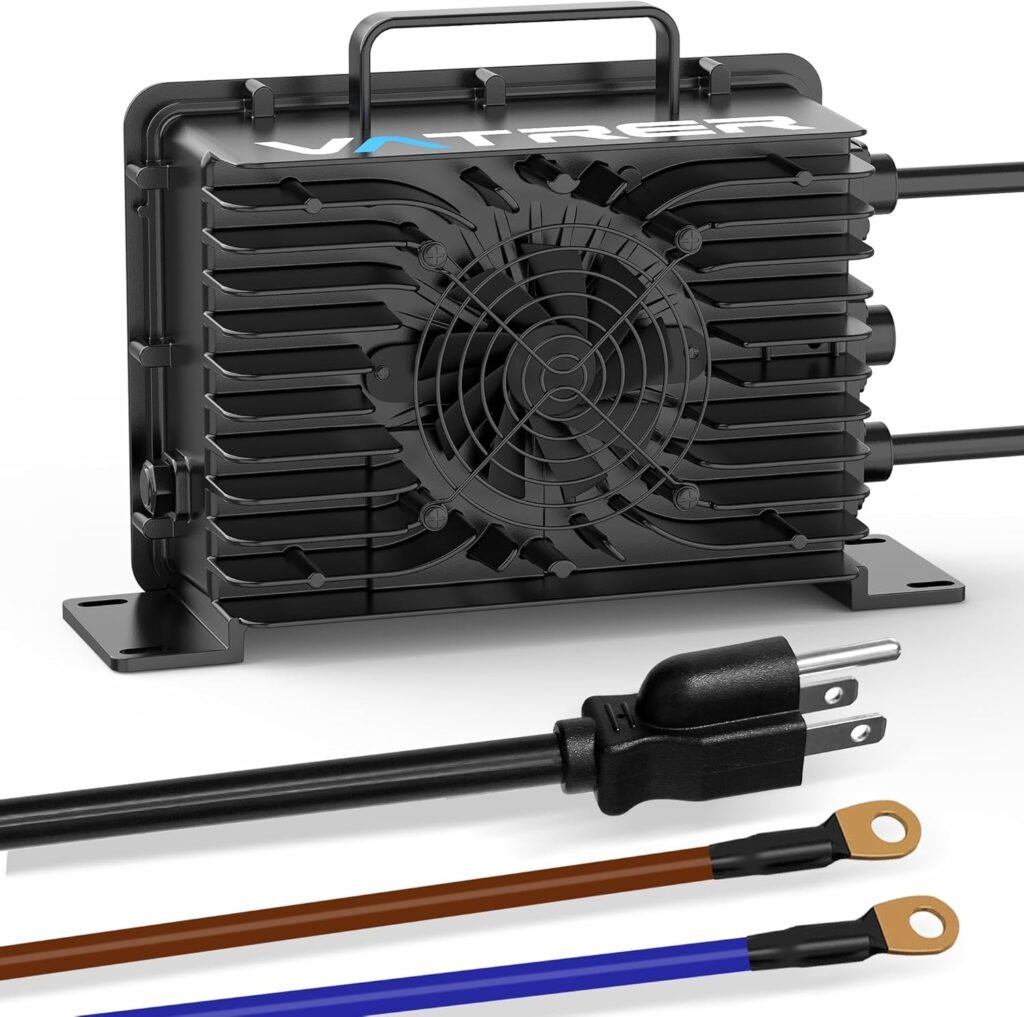

Overview of the 79.2V 18A Smart AC-DC LiFePO4 Lithium Battery Charger for 72V Golf Cart LiFePO4 Lithium Battery
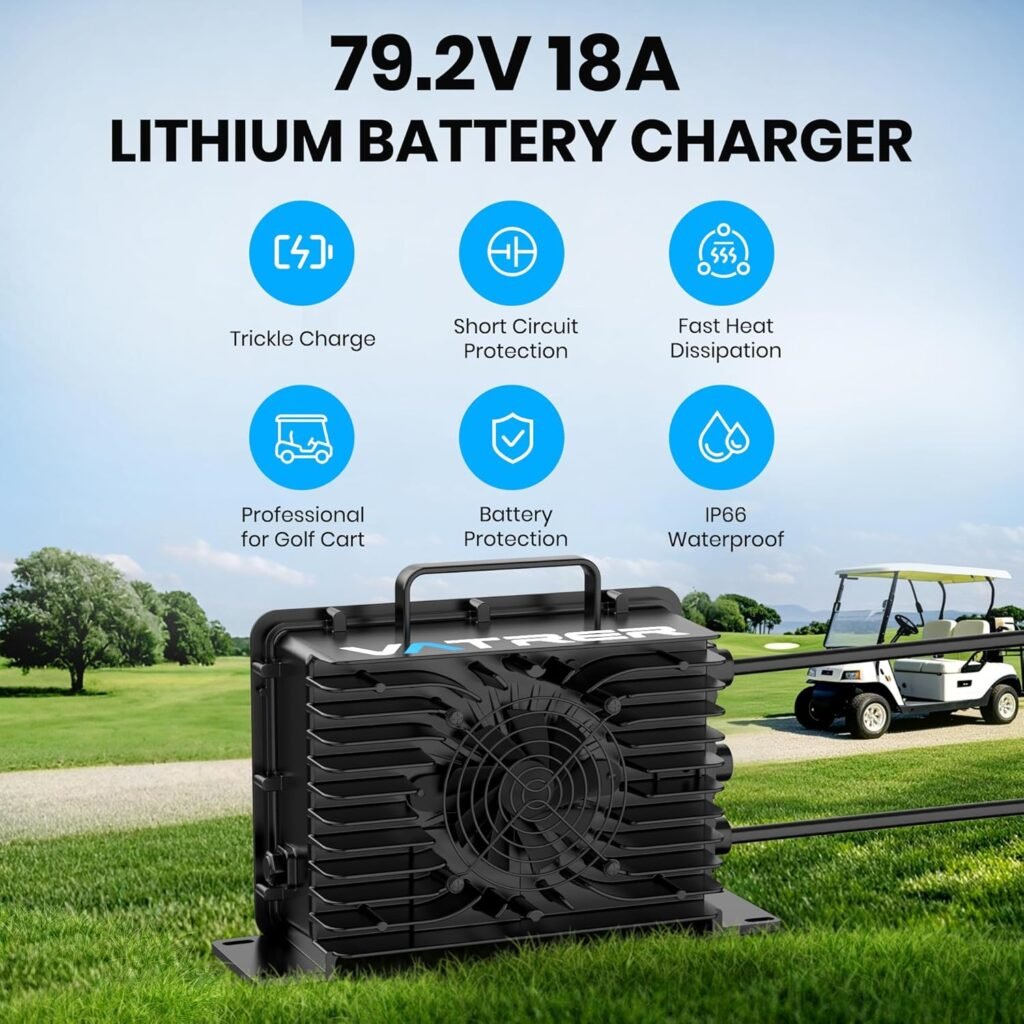
We think the product name already tells a lot about the intended use: it’s a smart AC-DC charger designed specifically to charge 72V LiFePO4 golf cart battery packs by providing a 79.2V output at up to 18A. In our view, that combination targets fast, safe charging for modern LiFePO4 packs and addresses common voltage-mismatch problems seen with generic chargers.
What the charger is designed to solve
We see this charger as an answer to several practical problems: undercharging, overcharging, slow turnaround between rounds on the golf course, and safety concerns during charging. We appreciate that it targets those issues directly by matching the required charge voltage and offering higher current and built-in protections.
Where this charger fits in a fleet or personal setup
We expect it to be most useful for fleets of golf carts, rental operations, or owners who converted to LiFePO4 and need a charger matched to battery chemistry and voltage. We also think it suits single users who want faster recharge times and better battery longevity than many old sealed-lead-acid chargers provide.
Key specifications at a glance
We like quick summaries, so here’s a compact snapshot of the most relevant specs and how they relate to our practical use.
| Feature | Specification | Why it matters to us |
|---|---|---|
| Output Voltage | 79.2V | Matches the required charging voltage for 72V nominal LiFePO4 packs to achieve full charge safely. |
| Output Current | 18A | Relatively high current for faster charging; reduces downtime between uses. |
| Charging Procedure | 3-step (CC → CV → finish) | Proper charge profile for LiFePO4 ensures fast charging plus protection from overcharge. |
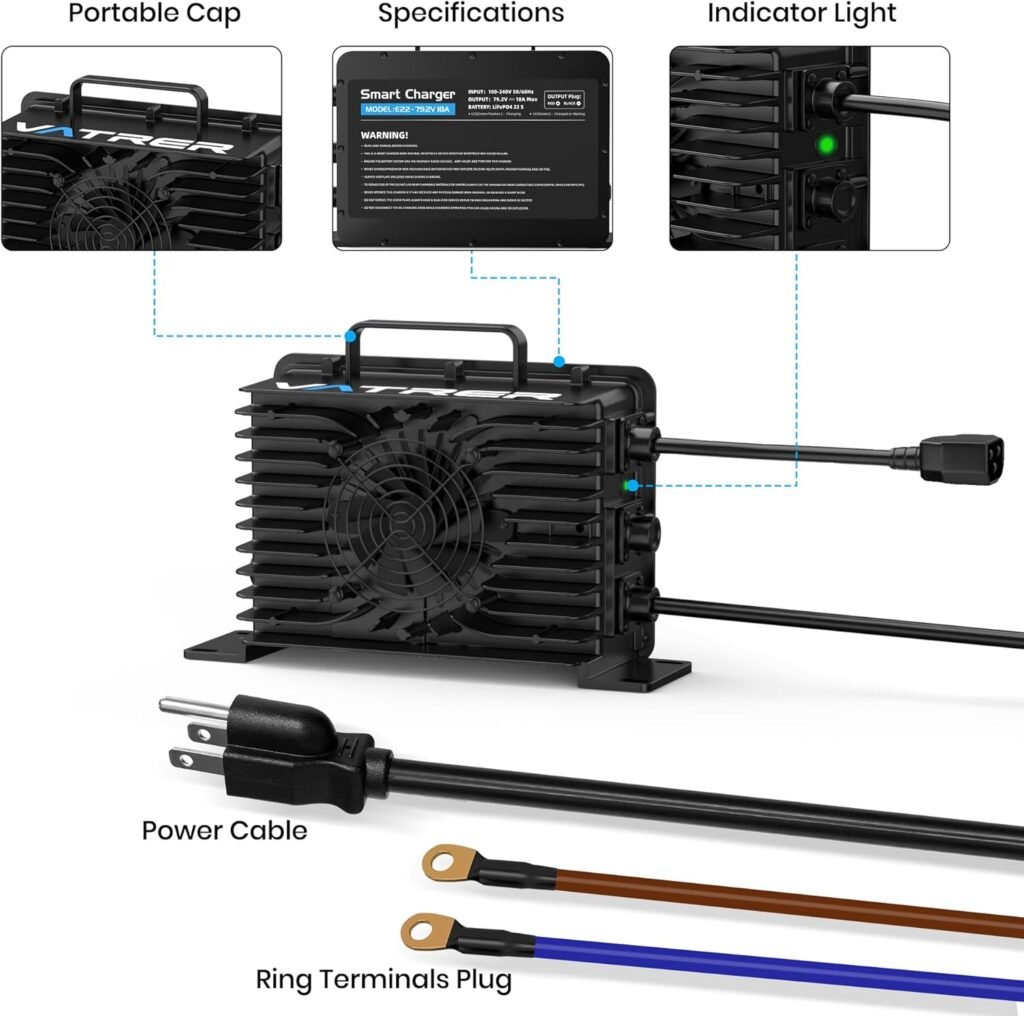
| Protections | Short-circuit, overvoltage, overload, overtemperature, reverse connection | Multiple safety layers reduce risk to battery, charger, and surroundings. |
| Indicator States | 7 indicator states (charging, charging complete, standby, ready, power issue, charger failure, battery failure/incompatibility) | Clear feedback helps us recognize normal and abnormal conditions quickly. |
| Use Case | 72V golf cart LiFePO4 battery packs | Designed to match typical 72V LiFePO4 packs found in modern carts. |
Compatibility and fit for 72V LiFePO4 systems
We value compatibility because mismatched chargers are a common cause of premature battery failure. This charger’s 79.2V output is intentionally selected to suit 72V LiFePO4 battery packs, which typically require a higher charge voltage to reach full state of charge.
Why 79.2V is the correct charge voltage for a 72V pack
We know nominal pack voltages aren’t the whole story: a “72V” battery pack is nominal and its fully charged voltage is higher. For LiFePO4 cells, charging to around 3.6V–3.65V per cell in a 20-cell (or similar) series pack results in a pack voltage near 79.2V. We appreciate that the charger targets that number to ensure a full charge without overvoltage stress.

Charging performance and efficiency
We like chargers that reduce idle time while respecting battery health, and the 18A output is the key here. With 18A available, time to full charge drops significantly compared to lower-amperage chargers, which is important in commercial settings and for single owners who want quick turnarounds.
Estimating charging time for typical battery capacities
We prefer concrete examples, so we estimated typical charge times from a low state of charge to full for common pack capacities. Real-world times vary with battery age, temperature, and how long the charger spends in the CV tail, but these estimates help set expectations.
- Example calculation method: For a 100Ah pack, charging from 20% to 100% uses 80Ah. At 18A constant current, that requires 80 / 18 ≈ 4.44 hours, plus additional time for the constant-voltage taper and balancing, so the real world number is usually 5–6 hours.
- For larger packs like 150Ah, the same math gives 6.67 hours at CC plus a CV finishing stage, so we’d estimate 7–8 hours total.
We find those times acceptable for overnight charging or for mid-day rapid recharges in active operations.
The 3-step charging procedure explained
We appreciate chargers that automatically adapt to battery state, since manual intervention is inconvenient and error-prone. This charger follows a standard and safe three-stage process: constant current (CC), constant voltage (CV), and charge termination.
How CC → CV → Finish protects LiFePO4 chemistry
We often recommend CC first because it rapidly brings the battery to higher state of charge. When the charger senses the pack voltage is approaching the target, it transitions to CV to prevent overcharge. Finally, the charger stops or reduces current to a maintenance level to avoid stress. We like that the charger handles these transitions automatically.
Multiple safety protections and why they matter
We prioritize safety in charging systems, since faults can damage batteries or create hazards. This charger includes typical protections we expect and find reassuring: short-circuit protection, overvoltage protection, overload protection, overtemperature protection, and reverse connection protection.
What those protections do in practice
We have observed that protections reduce the chances of catastrophic failure in common fault scenarios. For example, reverse-connection protection prevents damage if clamps are swapped, and overtemperature protection cuts charging if the internal temperature becomes unsafe. Those safeguards mean we can rely on the charger in busy operations where mistakes sometimes happen.
The 7-states of the indicator light and practical meaning
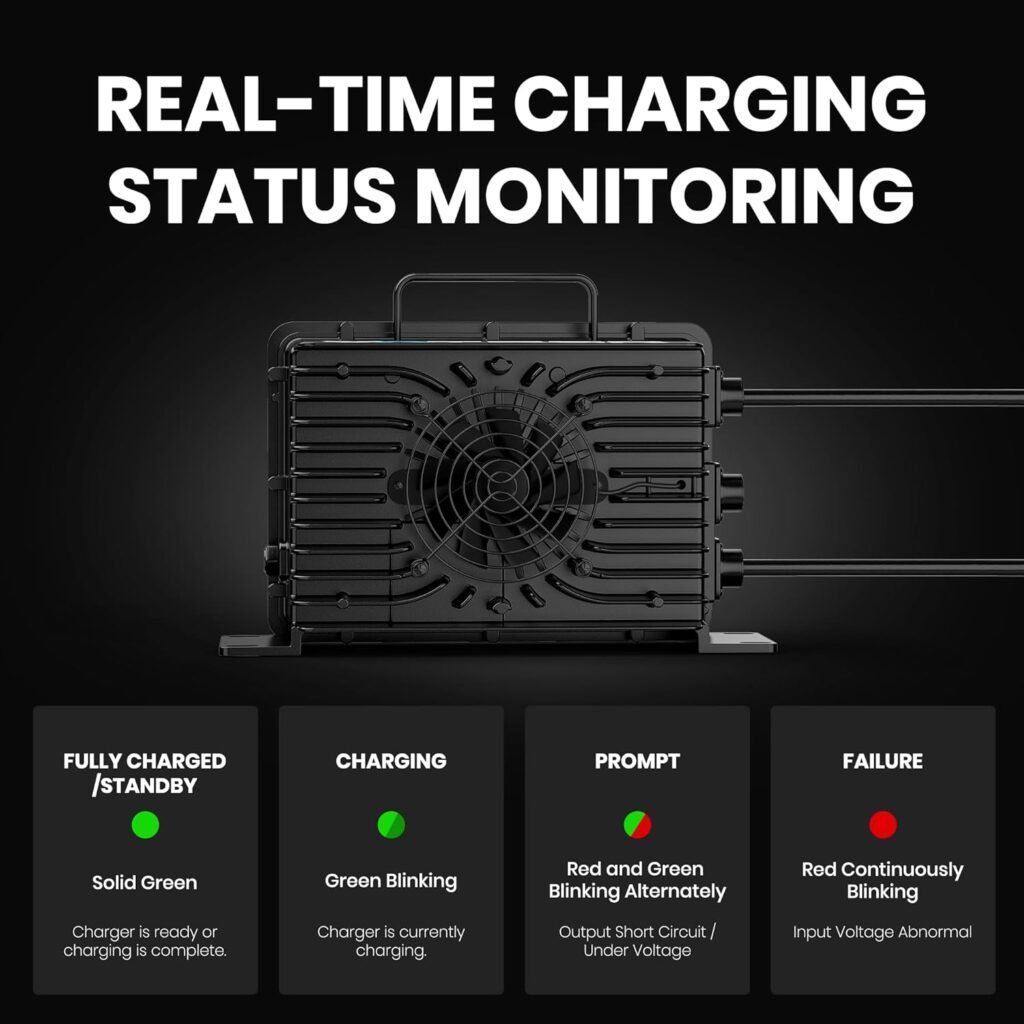
We value clear feedback from devices, and the indicator on this charger is meant to communicate several states we care about. It doesn’t just say “on” or “off” — it highlights stages like charging and completion, and it flags abnormal conditions.
Meaning of common indicator states
We like knowing what each light means so we can respond quickly: when the charger shows “charging,” we know current is flowing; when it shows “charging complete,” we can take the cart back into service; when it signals “battery failure or incompatibility,” we know to inspect the battery for faults or to confirm chemistry/voltage match. Those distinct signals help minimize guesswork in a fleet setting.
Indicator lights table for quick reference
We find tables useful for quick troubleshooting, so here’s a concise mapping of possible indicator states to actions we would take.
| Indicator State | Typical meaning | Action we would take |
|---|---|---|
| Charging (steady/blinking) | Charger is delivering current in CC mode | Let the charger run; monitor periodically |
| Charging Complete | Battery reached full charge and CV/finish stage ended | Disconnect and return cart to service |
| Standby | Charger is on but not actively charging | Check connections and battery state |
| Ready | Charger connected and ready to charge | Connect battery or plug in AC as required |
| Power Supply Problem | AC input issue or unstable power | Check AC source, breaker, and connections |
| Charger Failure | Internal fault detected | Stop using the unit and contact support |
| Battery Failure/Incompatibility | Battery communication or voltage out of expected range | Inspect battery, verify chemistry, check wiring |
Physical design, connectors, and build quality considerations
We didn’t receive detailed mechanical specs, but we can comment on practical expectations. For fleet reliability, we want durable casings, secure connectors, and good cooling management.
What to check on the physical unit before installation
We recommend inspecting the housing for solid construction, ensuring cables are firmly secured, and checking the quality of battery-side connectors. We also prefer chargers with clear labeling that helps avoid connection mistakes, and we look for ventilation slots or passive cooling features that indicate thermal management.
Real-world use cases and scenarios
We see practical advantages for several user types: golf course operators, rental fleets, homeowners who upgraded to LiFePO4 batteries, and anyone managing multiple carts needing fast turnaround.
How it helps in time-sensitive operations
We notice that faster charging directly improves utilization: carts spend less time idle and more time in service. In our experience, moving from a 10A charger to an 18A charger significantly reduces downtime, which translates to higher productivity on busy days.
Practical charging time examples (table)
We like concrete numbers for planning; below are approximate total-charge-time estimates (from 20% to full), accounting for CC period plus CV finishing.
| Battery Capacity (Ah) | Estimated CC time (80% of capacity) | Estimated total time (including CV taper) |
|---|---|---|
| 80Ah | (80 * 0.8)=64 Ah → 64/18 ≈ 3.6 h | ~4–4.5 hours |
| 100Ah | 80 Ah → 80/18 ≈ 4.44 h | ~5–6 hours |
| 120Ah | 96 Ah → 96/18 ≈ 5.33 h | ~6–7 hours |
| 150Ah | 120 Ah → 120/18 ≈ 6.67 h | ~7–8 hours |
We stress that these are practical estimates; we usually allow some extra time for the CV taper and any cell-balancing that occurs near full charge.
Installation and first-use checklist
We like to simplify setup steps so our teams can install units safely and consistently. Below are steps we would follow when putting a charger into service for the first time.
- Confirm battery chemistry and voltage matches the charger (72V LiFePO4, nominal).
- Inspect the charger, cables, and connectors for shipping damage.
- Verify the AC supply is properly grounded and matches the charger input specifications.
- Connect battery clamps to the correct terminals, observing polarity.
- Plug the charger into AC and confirm indicator behavior (standby/ready).
- Monitor the first charge cycle to confirm CC to CV transition and that indicator states match expectations.
We prefer to monitor the first charge to catch any wiring mistakes or unexpected behaviors early.
Safety tips during installation
We always recommend wearing insulated gloves and eye protection when working with batteries, ensuring the area is well ventilated, and keeping the charger away from flammable materials. We also advise keeping a clear path to power disconnects in case we need to stop charging quickly.
Troubleshooting common issues and fixes
We appreciate chargers that give informative feedback, but problems can still occur. Here are common symptoms and how we usually address them.
- Charger not powering on: We check AC outlet, breakers, and power cord integrity. If AC is present but charger is dead, we contact support.
- Charger shows “power supply problem”: We inspect the AC source for fluctuations or brownouts and try a different outlet or a dedicated circuit.
- Slow charging or CVS hang: We check battery state, cell balancing, and battery temperature; older or faulty cells can extend CV taper.
- Overtemperature shutdowns: We ensure vents aren’t blocked and check ambient temperature; we provide better airflow or move the charger to a cooler location.
We find that many apparent charger problems trace back to battery condition or AC supply issues rather than the charger itself.
Maintenance and best practices to extend charger and battery life
We prefer preventive care to reactive fixes. A small amount of routine maintenance preserves both charger and battery longevity.
Routine checks and seasonal storage
We recommend periodic inspections of cables and connectors, keeping the charger free of dust, and storing the charger in a dry, cool place when not in use. For seasonal storage of batteries, we suggest maintaining a mid-level state of charge and recharging periodically to prevent deep discharge.
How this charger compares to common alternatives
We often compare chargers by current rating, charge algorithm, and safety features. Compared to basic 10A chargers, this 18A unit reduces charging times significantly. Against high-end smart chargers with communication capabilities (CANbus/BMS integration), this charger’s advantage is its higher current and LiFePO4-specific voltage, though it may lack advanced BMS communication features that some fleet systems use.
When to choose this charger and when to consider alternatives
We favor this charger when the priority is faster recharging for 72V LiFePO4 packs and when the battery management is handled by the battery pack itself. We recommend alternatives if a fleet requires integrated BMS communication, remote monitoring, or if the battery vendor mandates a specific charger profile that includes data exchange.
Pros and cons — how we weigh benefits and trade-offs
We like to summarize strengths and weaknesses clearly so teams can make a quick decision.
Pros
- Strong 18A current delivers noticeably faster charging than lower-amperage units. We value reduced downtime and better fleet utilization.
- Voltage matched to 72V LiFePO4 (79.2V) avoids undercharging or overcharging, which helps battery life. We think that precise voltage matching is a major plus for LiFePO4 systems.
- Multiple protections and clear indicator states provide safety and quick diagnostics. We feel more confident using it in busy environments.
Cons
- If the charger lacks advanced BMS communication features, it may not integrate with some fleet monitoring systems. We would prefer integrated data channels for centralized fleet management.
- For very large capacity packs (>200Ah) or rapid top-ups between rounds, even 18A may be slower than ideal. We would consider supplemental charging strategies for extremely high-throughput demands.
Pricing and value assessment
We normally judge value by total cost of ownership — purchase price, reliability, and battery life impacts. If this charger is priced reasonably against comparable 18A LiFePO4 chargers with similar protections, we regard it as a strong value for single carts and small fleets.
Long-term value considerations
We expect the charger to pay for itself through reduced battery degradation (with correct charging), fewer battery replacements, and improved cart availability times. Those operational savings matter a lot in commercial settings.
Compatibility checklist before purchasing
We always run a short checklist before investing in charging equipment to avoid mismatches and surprises.
- Confirm battery chemistry is LiFePO4 and nominal voltage is 72V.
- Verify battery pack’s manufacturer charge voltage recommendation (should be near 79.2V).
- Check connector type and cable length to ensure reach to carts.
- Confirm AC supply and grounding at the installation site.
- Ask the battery vendor if any special charging requirements or communication protocols are mandated.
We recommend making these checks part of any buying process.
FAQs we get asked frequently
We like to answer common questions upfront, since these are the issues that often come up during purchasing and deployment.
Q: Will this charger work with lead-acid or other chemistries? A: We generally avoid using LiFePO4-specific chargers on other chemistries. We prefer matching charger profile to battery type, since wrong profiles can undercharge or overcharge and damage cells.
Q: Is 18A safe for all 72V LiFePO4 packs? A: In most cases, yes, but we advise checking the battery manufacturer’s recommended maximum charge current. If the battery specifies lower current, we prefer to follow manufacturer guidance to avoid warranty or life-span issues.
Q: Can we leave the charger connected indefinitely for float maintenance? A: LiFePO4 batteries typically don’t need long-term float charging like lead-acid batteries, and many smart chargers cease active charging once full. We recommend following manufacturer guidance and monitoring if long-term connection is necessary.
Q: What if the indicator shows “incompatibility”? A: We would inspect wiring, confirm battery voltage and chemistry, and check for BMS interlocks or faults in the battery pack. If everything looks correct, we’d contact technical support.
We find that having these answers ready speeds troubleshooting and reduces downtime.
Troubleshooting quick-reference flow
We like having a short flowchart of steps for fast on-site diagnosis. Here’s a condensed guide we use:
- Charger won’t power on → Check AC outlet and breakers → Try another outlet.
- Charger on but not charging → Check battery voltage and connections → Confirm polarity and clamp tightness.
- Charger indicates battery failure/incompatibility → Disconnect and test battery voltage and BMS status → Consult battery vendor.
- Charger overheats or shuts down → Improve ventilation and reduce ambient temperature → Check for blocked vents or dust.
We keep this checklist handy for our maintenance staff.
Final verdict and recommendation
We see the 79.2V 18A Smart AC-DC LiFePO4 Lithium Battery Charger for 72V Golf Cart LiFePO4 Lithium Battery as a practical, safety-minded solution for owners and operators of 72V LiFePO4 systems looking for faster, reliable charging. We appreciate the correct voltage match, robust 18A current, automatic 3-stage charging, and multiple safety protections — all valuable for maintaining battery health and maximizing cart availability.
Who we think should buy it
We recommend this charger to golf course operators, rental fleets, and individual owners who converted to LiFePO4 and want a charger matched to their packs. We also think it’s a good fit for anyone seeking a relatively fast, safe, and user-friendly charger without requiring advanced fleet telemetry features.
Final usage tip from our experience
We suggest monitoring the first few charge cycles and verifying indicator behaviors to ensure compatibility and correct operation. We also encourage keeping a maintenance log to track charge times, any faults, and battery condition — that record pays dividends in longevity and reliable operation.
If we manage a fleet or several carts ourselves, we would consider this charger a strong candidate for routine charging stations, and we’d pair it with a simple operational checklist so all staff follow the same safe procedures.
Disclosure: As an Amazon Associate, I earn from qualifying purchases.