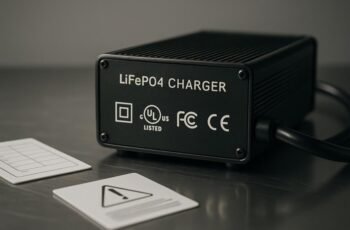
It’s no coincidence that as our devices become more powerful, chargers are now equipped with sophisticated emergency shutdown and fail-safe mechanisms to match. These systems continuously monitor for faults like overheating or short circuits, cutting power instantly to prevent damage or hazards. Understanding how these protections work can reveal why not all chargers are created equal—and why relying on basic models might put your devices and safety at risk.
Key Takeaways
- Modern chargers use emergency shutdown to stop power flow during faults like overheating, short circuits, or voltage irregularities for safety.
- Overcurrent and short-circuit protections are common fail-safe features that prevent damage by limiting current and cutting power instantly.
- Thermal sensors enable overheat protection by monitoring temperature and triggering cooling or shutdown if unsafe levels are detected.
- Surge protection components like metal oxide varistors safeguard chargers from voltage spikes with fast response and high energy absorption.
- Continuous monitoring of operational parameters ensures rapid anomaly detection, extending device lifespan and protecting users from harm.
How Emergency Shutdown Protects Your Devices and You
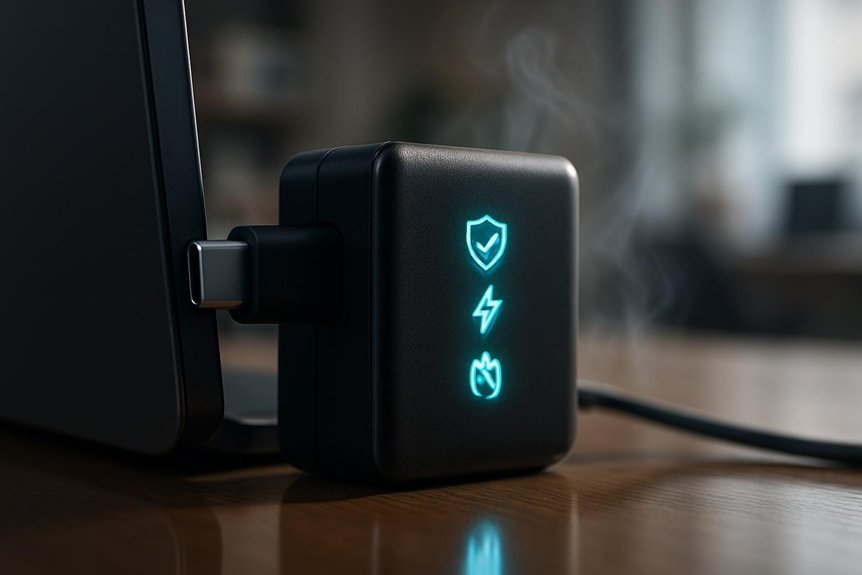
Although chargers are designed to operate safely under normal conditions, emergency shutdown mechanisms actively intervene when they detect faults such as overheating, short circuits, or voltage irregularities. These systems provide critical device protection by immediately ceasing power flow, preventing damage to internal components and preserving battery integrity. Simultaneously, they play a pivotal role in user safety by mitigating fire hazards and electrical shocks that could arise from malfunctioning chargers. By continuously monitoring operational parameters, the shutdown mechanism guarantees rapid response to anomalies, minimizing risk without requiring user intervention. This proactive approach not only extends the lifespan of connected devices but also safeguards users from potential harm, underscoring the importance of integrated emergency shutdown features in contemporary charger design.
Common Fail-Safe Features in Modern Chargers
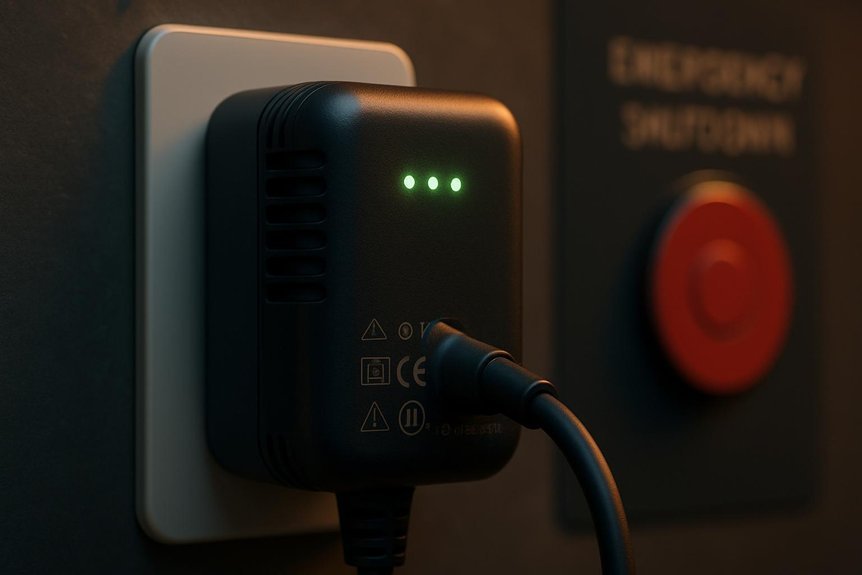
When we examine modern chargers, we find a suite of fail-safe features designed to anticipate and counteract potential hazards before they escalate. These include overcurrent protection, which automatically limits current flow to prevent damage, and short-circuit detection that instantly cuts power when anomalies arise. Wireless safety protocols guarantee devices avoid harmful electromagnetic interference and maintain secure energy transfer. Additionally, modern chargers comply with strict charger standards, such as USB-IF certification and IEC guidelines, guaranteeing consistent performance and safety across devices. Input voltage regulation also plays a vital role, maintaining stable operation despite power fluctuations. Together, these fail-safe mechanisms create a robust defense system that enhances user safety and device longevity, reflecting the technical precision embedded in contemporary charging solutions.
How Overheat Protection Works to Prevent Damage
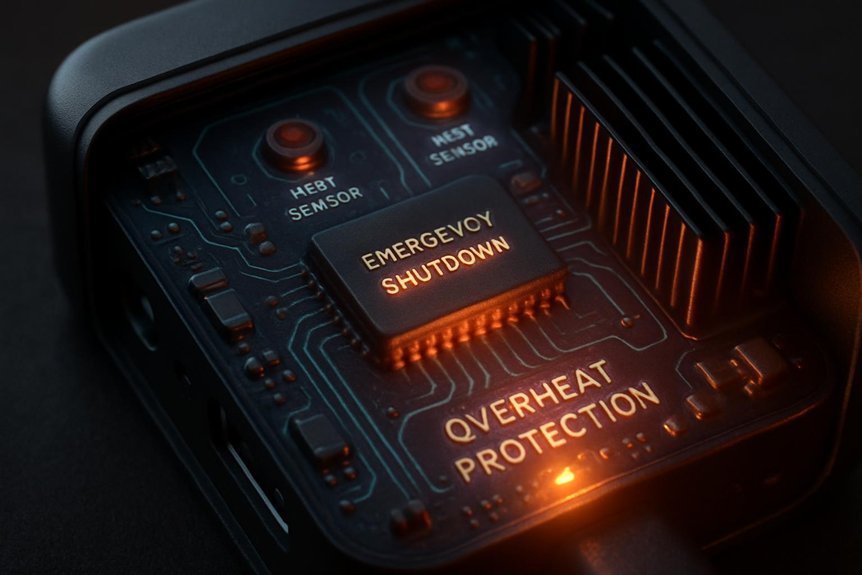
Beyond overcurrent and short-circuit protections, modern chargers incorporate sophisticated thermal management systems to prevent overheating. These systems rely on thermal sensors strategically placed to monitor temperature fluctuations continuously. When overheating indicators trigger, the charger initiates immediate corrective actions to avoid damage.
Modern chargers use advanced thermal sensors to monitor and prevent overheating, ensuring safe and reliable operation.
Key features include:
- Real-time temperature monitoring via thermal sensors
- Automatic reduction of charging current upon high temperature detection
- Activation of cooling mechanisms such as fans or heat sinks
- Emergency shutdown if temperatures exceed safe thresholds
- User alerts through LEDs or digital displays indicating overheating status
Why Surge Protection Matters for Charger Safety
We need to understand how surge protection mechanisms safeguard chargers from voltage spikes that can cause immediate or cumulative electrical damage. By integrating components like metal oxide varistors or transient voltage suppressors, chargers can detect and mitigate surges effectively. This protection is critical to maintaining device integrity and preventing failure during unexpected power fluctuations.
Surge Protection Mechanisms
Although chargers are designed to deliver steady power, unexpected voltage spikes can compromise their performance and safety. Surge protection mechanisms are critical in mitigating damage from various surge types, including lightning-induced and switching surges. These mechanisms must pass rigorous surge tests to guarantee reliability under real-world conditions. Common protective components include metal-oxide varistors (MOVs), transient voltage suppressors (TVS), gas discharge tubes (GDTs), and series inductors. By integrating these elements, chargers can detect and divert excessive voltage, preventing internal circuit failure and potential hazards. Key features of effective surge protection mechanisms are:
- Fast response time to transient surges
- High energy absorption capacity
- Compatibility with different surge types
- Durable performance across temperature variations
- Compliance with international surge test standards
Preventing Electrical Damage
Since chargers serve as the critical interface between power sources and our devices, preventing electrical damage is crucial to maintain both functionality and safety. Surge protection plays an important role in preserving circuit integrity and enhancing component durability. Without it, voltage spikes can cause irreversible damage, leading to malfunction or failure. Integrating fail-safe features guarantees chargers shut down promptly under abnormal conditions, minimizing risk.
| Aspect | Impact on Charger Safety |
|---|---|
| Circuit Integrity | Maintains stable operation |
| Component Durability | Extends lifespan of internal parts |
| Surge Protection | Guards against voltage spikes |
| Emergency Shutdown | Prevents cascading failures |
| Fail-Safe Features | Guarantees safe power interruption |
The Role of Short Circuit Detection in Chargers
Let’s examine how short circuit detection mechanisms function within modern chargers to identify abnormal current flows instantly. By accurately sensing these faults, chargers can trigger an emergency shutdown, preventing potential damage or hazards. Understanding these detection processes highlights their critical role in enhancing overall charger safety.
Short Circuit Detection Mechanisms
When a short circuit occurs, chargers must respond instantly to prevent damage to both the device and power source. We rely on advanced circuit analysis and detection technologies to identify abnormal current spikes or voltage drops swiftly. These mechanisms continuously monitor electrical parameters to differentiate between normal operation and fault conditions. Key short circuit detection methods include:
- Current sensing with shunt resistors or Hall-effect sensors
- Voltage monitoring for rapid drop detection
- Comparator circuits for threshold-based alerts
- Microcontroller-based real-time signal processing
- Integration of fault flags for immediate shutdown commands
Safety Benefits of Detection
Although short circuit detection mechanisms operate silently in the background, they play a critical role in safeguarding both chargers and connected devices from catastrophic failures. By employing advanced detection technology, modern chargers continuously monitor current flow and instantly identify anomalies indicative of short circuits. This rapid response triggers emergency shutdown protocols, preventing excessive heat generation, component damage, or fire hazards. Adhering to stringent safety standards, these detection systems guarantee chargers meet regulatory requirements while enhancing overall reliability. Integrating precise detection technology not only protects hardware but also extends charger lifespan, reducing maintenance costs. As we rely more on electronic devices, the safety benefits of short circuit detection become indispensable, making them a foundational feature in the design of robust, fail-safe charging solutions.
How Smart Chargers Extend Your Device’s Lifespan
Because excessive heat and overcharging greatly degrade battery health, smart chargers play an essential role in extending our device’s lifespan. They utilize smart technology to optimize charging cycles and maintain charge efficiency, guaranteeing power management adapts to real-time conditions. By integrating temperature regulation, these chargers prevent thermal stress that accelerates battery wear. Additionally, device compatibility guarantees that charging parameters are tailored precisely, reducing unnecessary strain on battery cells. This lifespan optimization translates into fewer replacements and sustained device performance.
Key features include:
- Adaptive charging cycles to minimize battery degradation
- Real-time temperature monitoring and control
- Intelligent power management algorithms
- Compatibility with diverse devices for tailored charging
- Enhanced charge efficiency to reduce energy loss and stress
Together, these advancements preserve battery health and extend overall device longevity.
What to Look for When Choosing a Charger With Safety Features
As we rely increasingly on chargers to power essential devices, selecting one with robust safety features becomes critical to prevent damage and hazards. We should start by examining charger specifications, ensuring compatibility with our device’s voltage and current requirements to avoid overloading. Next, verifying safety ratings from recognized testing organizations, such as UL, CE, or FCC, confirms adherence to stringent safety standards. It’s essential to look for chargers incorporating built-in protections like overcurrent, overvoltage, short circuit, and thermal shutdown mechanisms. Additionally, chargers with emergency shutdown features provide an extra layer of defense against electrical faults. Finally, reviewing manufacturer transparency about these safety elements and considering user feedback on reliability helps us make informed choices, ensuring both device longevity and personal safety.
Troubleshooting Common Charger Safety Issues
When chargers exhibit safety issues, diagnosing the root cause quickly is essential to prevent device damage or safety hazards. We must systematically identify whether the problem stems from charger compatibility issues, user error, or hardware faults. Common symptoms include overheating, intermittent charging, or unexpected shutdowns. To troubleshoot effectively, consider these steps:
Quickly diagnosing charger issues is vital to avoid damage and ensure safe, reliable device charging.
- Verify charger compatibility with the device’s voltage and current specifications
- Inspect cables and connectors for physical damage or wear
- Confirm proper user operation aligning with manufacturer instructions
- Test with alternate chargers to isolate potential unit defects
- Monitor charger temperature and response to load conditions
Frequently Asked Questions
Can Emergency Shutdown Features Drain My Device’s Battery Faster?
We don’t think emergency shutdown features drain your device’s battery faster. They optimize battery management and maintain charging efficiency by preventing overcharging or overheating, which ultimately preserves battery health rather than accelerating battery depletion.
Are Fail-Safe Features Compatible With All Device Brands?
Fail-safe features aren’t universally compatible due to charger compatibility and brand specific features. We recommend verifying your device’s specifications to guarantee these protections function correctly, as manufacturers often tailor safety protocols to their own hardware environments.
How Often Should I Test My Charger’s Fail-Safe Mechanisms?
We recommend setting a testing frequency of at least quarterly to guarantee charger reliability. Regularly verifying fail-safe mechanisms helps us detect faults early, maintaining peak performance and preventing potential hazards during everyday use.
Do Emergency Shutdowns Affect Wireless Chargers Differently?
Like a lifeguard spotting danger, emergency shutdown mechanisms in wireless chargers act swiftly to prevent harm. While principles remain consistent, wireless charger safety demands precise coil monitoring to guarantee effective, immediate shutdown without disrupting power transfer.
Can Firmware Updates Improve Charger Safety Features?
Yes, we can improve charger safety protocols through firmware enhancements. These updates allow us to analyze real-time data, refine emergency shutdown responses, and integrate advanced fail-safe mechanisms, ensuring more reliable protection against faults and hazards.
Conclusion
In today’s world, safety in charging technology is non-negotiable. By understanding emergency shutdown and fail-safe features, we protect both our devices and ourselves from electrical hazards. Remember, “an ounce of prevention is worth a pound of cure”—these advanced protections not only prevent damage but also extend device lifespan. Let’s choose chargers with robust safety mechanisms, ensuring reliability and peace of mind while powering our daily lives efficiently and securely.