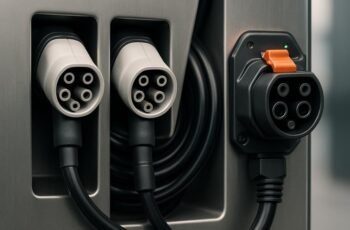
When we consider charger design, managing heat effectively is critical to both safety and performance. Chargers generate substantial heat during operation, and without proper ventilation, this can lead to component degradation or even hazardous conditions. Understanding how heat builds up and the ventilation strategies needed to dissipate it is essential. Let’s explore the key factors that influence heat management and how we can optimize ventilation to maintain reliable, safe charger operation.
Key Takeaways
- Effective heat management prevents component damage, ensures safety, and extends charger lifespan by controlling internal temperatures within safe limits.
- Heat is generated primarily through resistive losses, transformer inefficiencies, diode voltage drops, and switching transistor losses.
- Proper ventilation requires strategically placed intake vents low and exhaust vents high, promoting natural convection and unobstructed airflow.
- Fans should create directional airflow across heat sources, with balanced intake and exhaust rates to optimize cooling and minimize noise.
- Continuous temperature monitoring with sensors and alarms ensures real-time heat management and early detection of overheating risks.
Why Charger Heat Management Matters for Safety and Performance
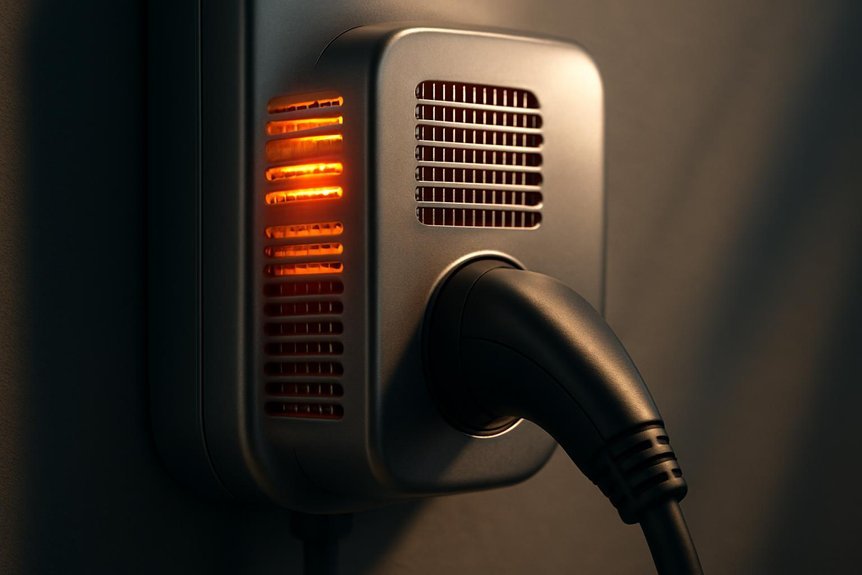
Although chargers are designed to convert electrical energy efficiently, managing the heat they generate is essential for both safety and performance. Understanding thermal dynamics allows us to assess how heat accumulates and dissipates during operation. Without proper heat management, internal components can exceed their thermal limits, risking failure or fire hazards. Compliance with established safety standards mandates effective thermal control measures to prevent such risks. Additionally, excessive heat degrades charger efficiency, reduces lifespan, and can cause voltage instability. By monitoring and regulating temperature within specified parameters, we guarantee chargers operate reliably under diverse conditions. Consequently, implementing robust heat management strategies is not merely a design preference but a critical requirement to meet both safety standards and maintain peak performance over time.
How Chargers Generate Heat During Operation
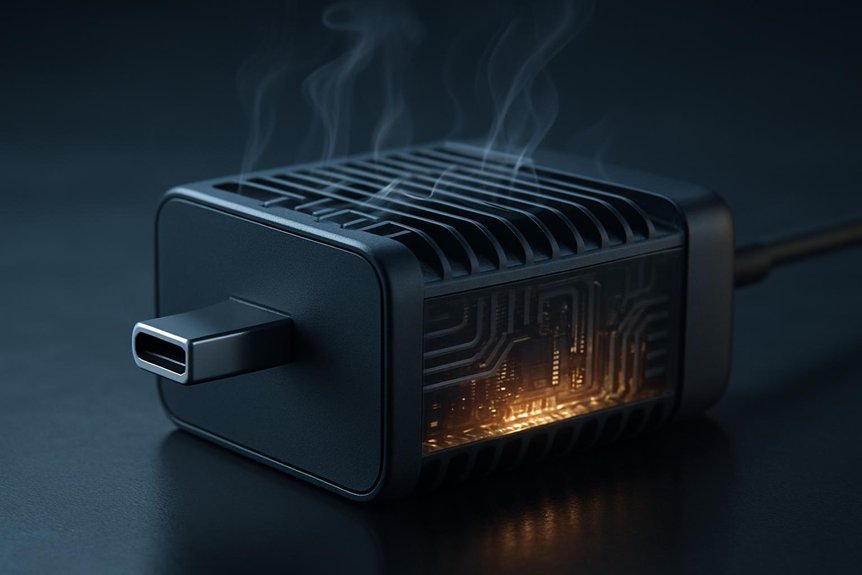
To effectively manage heat, we first need to understand how chargers generate it during operation. Heat primarily results from power losses in internal components, which reduce charger efficiency. Resistive elements and semiconductor devices convert excess electrical energy into heat. Thermal conductivity of materials impacts how quickly this heat dissipates, influencing overall temperature.
| Component | Heat Generation Mechanism |
|---|---|
| Transformer | Core losses, copper losses |
| Rectifier Diodes | Forward voltage drop |
| Switching Transistors | Switching losses, conduction losses |
| Resistive Elements | Joule heating |
| Circuit Board | Trace resistance |
Common Risks of Poor Heat Management in Chargers
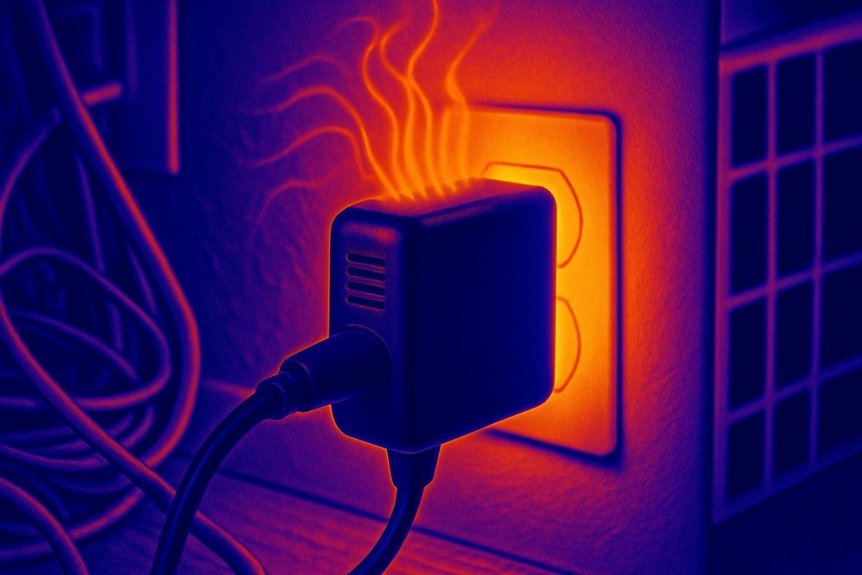
When chargers fail to dissipate heat effectively, we face several significant risks that compromise both performance and safety. Excessive temperatures accelerate insulation failure, which can lead to short circuits or complete device breakdown. Furthermore, inadequate heat management increases the likelihood of thermal runaway, a hazardous condition where rising temperatures trigger uncontrollable heat generation, potentially causing fires or explosions. These failures also degrade internal components faster, reducing the charger’s operational lifespan and reliability. Additionally, overheating may cause voltage instability, resulting in erratic charging behavior and potential damage to connected devices. By understanding these risks, we can emphasize the critical importance of maintaining ideal thermal conditions within chargers to guarantee safety, prevent catastrophic failures, and enhance overall device longevity.
What Ventilation Requirements Do Chargers Need to Stay Cool?
Since effective ventilation directly influences a charger’s ability to maintain safe operating temperatures, we must carefully consider specific airflow and design criteria. Proper ventilation requires selecting appropriate fan types—centrifugal or axial—to optimize air movement within the enclosure. Understanding airflow direction is critical; intake fans should introduce cool air at low points, while exhaust fans expel hot air at higher points, promoting natural convection and reducing hotspots. We also need to guarantee that airflow paths are unobstructed, minimizing turbulence and resistance. Maintaining a balanced airflow rate prevents heat accumulation without introducing excessive noise or energy consumption. By integrating these ventilation requirements, we can enhance thermal dissipation, prolong charger lifespan, and guarantee consistent performance under varying load conditions.
How to Design Effective Ventilation for Charger Enclosures
Let’s focus on how to position ventilation openings to promote efficient heat dissipation within charger enclosures. We’ll analyze airflow paths to minimize hotspots and enhance convective cooling. By optimizing these factors, we can maintain stable operating temperatures and improve charger reliability.
Ventilation Placement Strategies
Although charger enclosures vary in size and complexity, strategically placing ventilation openings remains critical to maintaining ideal thermal conditions. Effective ventilation design begins with understanding airflow direction—intake vents should be positioned low and away from heat sources, while exhaust placement must be high to facilitate natural convection and passive cooling. We must consider ambient temperature and enclosure size to optimize intake filters, which prevent contaminants without restricting airflow. Thermal barriers inside the enclosure can direct heat away from sensitive components toward exhaust vents, enhancing cooling efficiency. Properly balancing intake and exhaust locations guarantees steady airflow, prevents hotspots, and minimizes overheating risks. By integrating these ventilation placement strategies, we can maintain stable internal temperatures and improve charger reliability without relying heavily on active cooling systems.
Airflow Optimization Techniques
When we design effective ventilation for charger enclosures, we must carefully optimize airflow to maximize heat dissipation while minimizing pressure drop. Understanding airflow patterns is vital; directing cool air across high-heat components guarantees efficient thermal exchange. We analyze thermal dynamics within the enclosure to identify hotspots and stagnation zones, then adjust vent placement and size accordingly. Incorporating computational fluid dynamics (CFD) simulations allows us to predict airflow behavior and optimize vent geometry to maintain laminar flow, reducing turbulence that hampers cooling efficiency. Additionally, balancing intake and exhaust vents prevents pressure imbalances, sustaining consistent airflow rates. By integrating these techniques, we enhance convective heat transfer, improve reliability, and extend charger lifespan without increasing fan power or noise levels. Effective airflow optimization is foundational to robust charger thermal management.
Materials and Components That Help Reduce Charger Heat
Several key materials and components play essential roles in reducing charger heat by improving thermal conductivity and minimizing energy loss. Heat resistant materials such as ceramics and specialized polymers withstand elevated temperatures without degrading, ensuring charger integrity under continuous operation. Thermal management components—like heat sinks, thermal interface materials (TIMs), and phase change materials—facilitate efficient heat dissipation from critical circuitry. For instance, aluminum and copper heat sinks rapidly transfer heat away, while TIMs reduce thermal resistance between surfaces. Additionally, components with low electrical resistance decrease joule heating, enhancing overall efficiency. Integrating these materials strategically within charger design allows us to maintain ideal operating temperatures, prolong device lifespan, and improve safety. Understanding these materials and components is fundamental to effective charger heat management before addressing ventilation techniques.
Practical Tips to Improve Ventilation in Your Charging Setup
How can we enhance ventilation to effectively reduce heat buildup in our charging setups? Proper fan placement is critical; positioning fans to promote consistent airflow prevents stagnant hot zones. We must identify and eliminate airflow barriers—any objects or surfaces that obstruct air circulation. Elevating chargers or using stands can boost natural convection. Incorporating vented enclosures with strategically placed intake and exhaust vents guarantees efficient heat dissipation. Finally, maintaining unobstructed clearance around chargers supports ideal airflow dynamics.
Enhance ventilation by optimizing fan placement, removing airflow barriers, elevating chargers, and ensuring vented enclosures with clear airflow paths.
- Position fans to create directional airflow across heat-generating components
- Remove or rearrange objects causing airflow barriers
- Use stands or mounts to elevate chargers for better air circulation
- Design enclosures with balanced intake and exhaust venting
- Maintain minimum clearance distances to avoid restricted airflow
Implementing these steps improves ventilation, reducing thermal stress on chargers.
How to Monitor Charger Temperature for Early Problem Detection
Although proper ventilation greatly reduces heat buildup, actively monitoring charger temperature provides an essential layer of protection by enabling early detection of thermal anomalies. We use temperature sensors integrated within the charger to perform continuous thermal monitoring, ensuring real-time data on heat levels relative to established heat thresholds. Alarm systems trigger immediate alerts when temperatures exceed safe limits, allowing prompt intervention. Data logging supports detailed heat mapping and analysis of performance metrics, identifying patterns that may indicate emerging issues. Incorporating these insights into safety protocols and maintenance schedules enhances system reliability and longevity. Additionally, monitoring results guide adjustments to cooling solutions, optimizing heat dissipation. By systematically tracking temperature, we maintain operational integrity and prevent damage before it escalates, safeguarding both equipment and users.
Troubleshooting Overheating Issues in Chargers
When chargers overheat despite proper monitoring and ventilation, we must methodically identify the root causes to prevent damage and guarantee safety. Effective troubleshooting involves analyzing thermal management components, charger layout, and environmental factors. We need to verify cooling solutions such as heat sinks and thermal sensors are functioning correctly. Evaluating airflow direction and ambient conditions is essential to guarantee adequate heat dissipation. Additionally, we examine insulation materials and design considerations that may impede heat transfer.
Identifying root causes and verifying cooling components are crucial when chargers overheat despite proper ventilation.
Key troubleshooting steps include:
- Inspecting thermal sensors for accuracy and responsiveness
- Evaluating heat sink integrity and placement
- Checking airflow direction and ventilation paths
- Reviewing insulation materials for thermal resistance
- Considering ambient conditions and environmental factors affecting performance
This approach helps us isolate issues and optimize charger heat management efficiently.
Frequently Asked Questions
Can Charger Heat Affect Battery Lifespan?
Yes, charger heat can reduce battery lifespan by lowering charger efficiency and causing insufficient thermal dissipation. We must optimize heat management to maintain performance and extend battery life through better ventilation and cooling strategies.
Are All Chargers Equally Prone to Overheating?
Not all chargers are equally prone to overheating; charger design, heat dissipation efficiency, cooling solutions, and charger materials greatly influence temperature control. We must evaluate these factors to guarantee ideal thermal performance and longevity.
Does Ambient Room Temperature Impact Charger Heat?
Like how a car engine overheats on hot days, ambient temperature effects impact charger efficiency greatly. Higher room temperatures raise internal heat, reducing performance and increasing risk of thermal shutdown, so we must monitor and control charger environments carefully.
Can Software Updates Improve Charger Heat Management?
Yes, we can improve charger heat management through software optimization that leverages thermal sensors data. This precise control adjusts charging rates dynamically, reducing heat generation and enhancing overall thermal efficiency during operation.
Is It Safe to Use Chargers in Enclosed Spaces?
Back in the days of quill and parchment, we’d say using chargers in enclosed spaces risks overheating. For charger safety, we must guarantee proper heat dissipation and adopt effective ventilation strategies to prevent damage and hazards.
Conclusion
As we’ve seen, neglecting charger heat management can quietly undermine safety and performance, while smart ventilation design actively safeguards them. Balancing efficient airflow with advanced materials isn’t just a technical choice—it’s a necessary strategy to prevent costly failures and hazards. By monitoring temperature and optimizing enclosure design, we turn potential overheating risks into controlled, manageable conditions. Together, these measures guarantee chargers operate reliably, extending their lifespan and protecting both users and equipment.