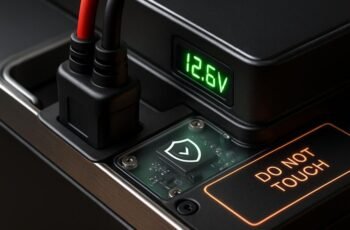
We question whether emergency shutdowns truly prevent cascading faults in modern chargers. We systematically examine triggers like thermal overruns, shorts, and insulation faults, then map how layered hardware and firmware respond with rapid disengagement and safe modes. Our focus stays risk-driven, verifiable, and auditable, with clear recovery steps. If you want confidence in certification-aligned safety, we’ll show how to evaluate safeguards and validate responses under real-world conditions.
Key Takeaways
- Immediate anomaly detection and layered safeguards disconnect power when thresholds are exceeded to prevent damage.
- Fault types include overcurrent, short-circuit, thermal excursions, and insulation faults triggering rapid isolation.
- Real-time sensor data and multi-signal correlation enable confident fault state determination, reducing false shutdowns.
- Safe modes and recovery sequences isolate faults, reduce power, and validate integrity before resuming operation.
- Documentation, testing, and certification ensure repeatable, auditable results for emergency shutdown reliability.
What Triggers Emergency Shutdown in Chargers
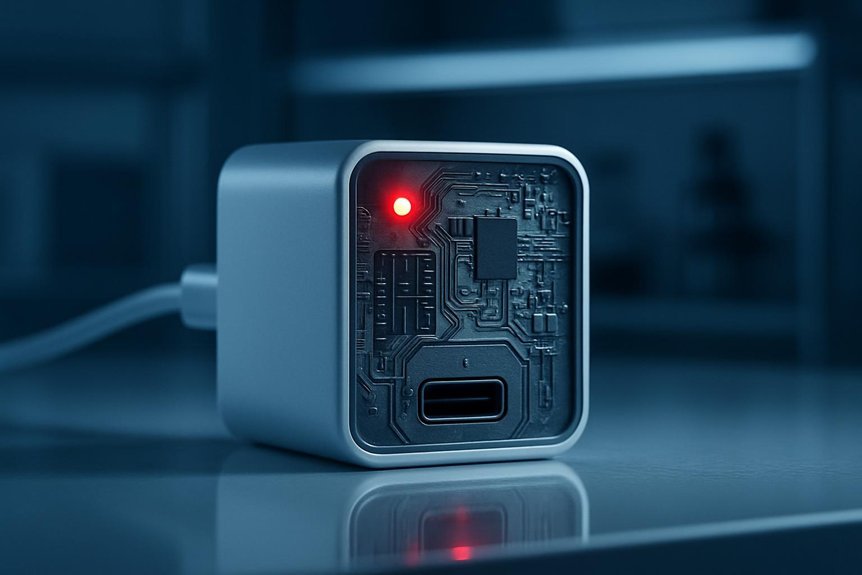
What triggers emergency shutdown in chargers? We outline specific, verifiable conditions that compel a halt to operation. First, thermal anomalies exceed safe limits, prompting rapid current reduction and device isolation to prevent heat-induced damage or fire. Second, short-circuit signals create high fault currents, triggering immediate isolation of the energy path and alerting operators. Third, overvoltage or undervoltage conditions breach acceptable tolerances, initiating fail safe mechanisms to protect internal components and connected load. Fourth, insulation or grounding faults compromise safety margins, causing automatic shutdown to avert shock hazards. Fifth, abnormal charging cycles or sensor dissonance prompt self-tests and, if unresolved, a precautionary cutoff. In all cases, emergency shutdown is deliberate, controlled, and designed to preserve safety and system integrity.
The Fault Types That Safety Systems Guard Against
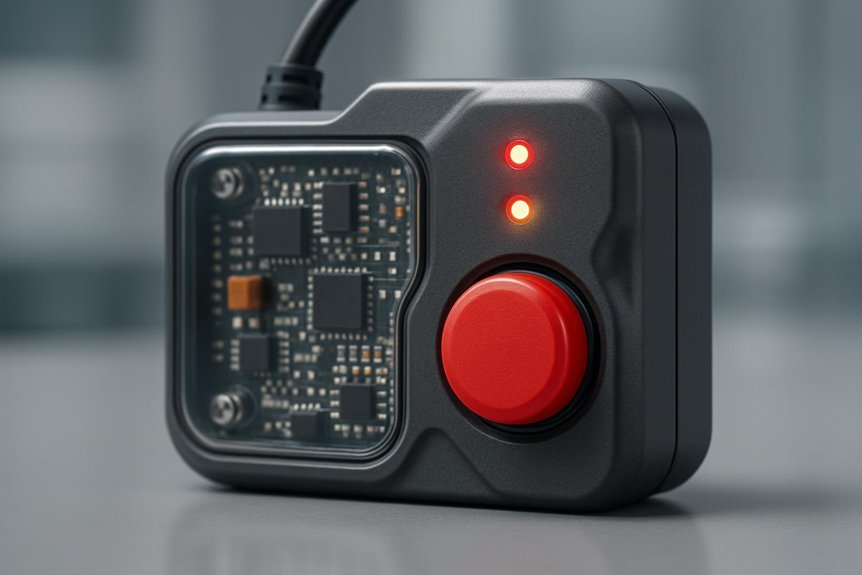
There are several fault types safety systems guard against, each with distinct consequences and appropriate responses. We address them with a disciplined, risk-focused lens, aligning actions to tested protocols and fault categories we’ve validated through rigorous testing methodologies. Our aim is rapid detection, correct isolation, and safe shutdown when needed.
1) Overcurrent and short-circuit events that threaten cable insulation and components.
2) Thermal excursions that indicate cooling inefficiency or hotspot development.
3) Faulty sensors or communication failures that compromise control accuracy.
4) Power-supply irregularities or arcing risks that could precede more serious faults.
We prioritize early-warning signals, verified by reproducible tests, and documented recovery procedures. This approach minimizes exposure, supports dependable operation, and informs ongoing safety improvements.
How Protective Hardware Keeps Chargers Safe
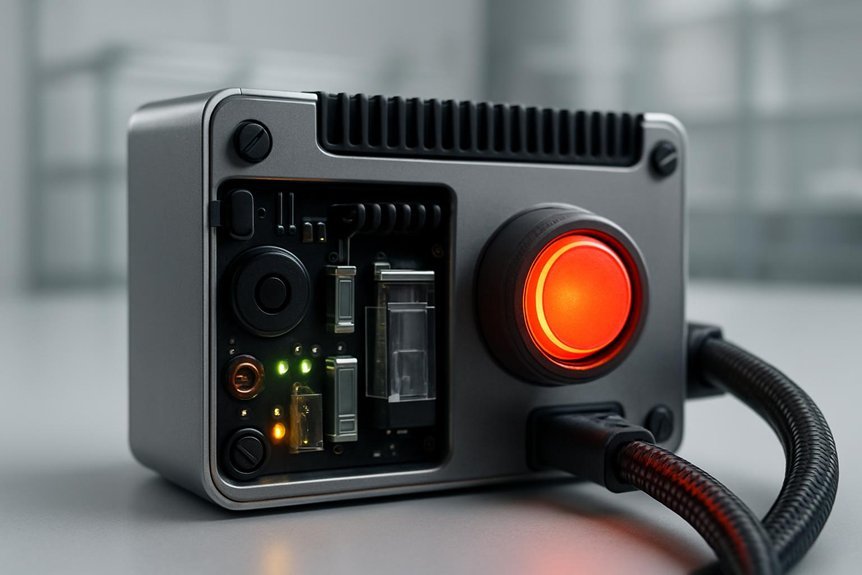
Protective hardware in modern chargers acts as the first line of defense, immediately detecting anomalies and containing them before they escalate. We implement layered safeguards that interrupt power flow the moment parameters exceed safe thresholds. Our approach emphasizes fault isolation, quickly separating affected circuits to prevent propagation to the supply or load. We design each path with independent protection, so a fault in one segment doesn’t compromise the whole unit. Thermal sensors, overcurrent clamps, and short-circuit detectors trigger rapid disengagement, preserving components and reducing risk to users. We verify responses under worst-case conditions, ensuring predictable behavior and repeatable outcomes. By prioritizing robust fault containment, we minimize damage, shorten recovery time, and support safe operation across diverse charging scenarios.
How Firmware Monitors Faults and Makes Decisions
We monitor fault signals with rigorous detection logic to distinguish transient glitches from real hazards. When faults are detected, we follow safe decision protocols that prioritize shutdown or isolation while preserving user safety. This discussion outlines the fault detection logic and the decision frameworks that drive quick, deterministic responses.
Fault Detection Logic
Fault detection logic is the brain of the firmware: it continuously monitors voltage, current, temperature, and communication signals to spot anomalies before they escalate. We describe how this logic evaluates trends, thresholds, and fault signatures to act decisively. By design, it prioritizes safety, resetting or limiting power when risks exceed defined boundaries.
- We verify real-time measurements against calibrated limits to confirm faults.
- We correlate multiple signals to reduce false positives and confirm a fault state.
- We apply hysteresis to prevent flicker shutdowns during transient events.
- We trigger predefined responses, from warning indicators to safe shutdown, based on severity.
Fault detection drives decisions, ensuring reliable protection and predictable recovery paths.
Safe Decision Protocols
How does the firmware decide, in real time, when a fault requires action and what form that action should take? We monitor sensors continuously, applying deterministic thresholds and anomaly checks, then validate results through fault progression models. When safeguards trigger, we choose the least invasive, most reliable path to preserve safety and operability. Decisions are staged: verify fault severity, assess propagation risk, and select an action—soft shutdown, controlled ramp to safe state, or full halt—based on predefined priority criteria. All steps are logged for traceability, with fail-safe overrides if calibration drift or communication loss occurs. We implement emergency procedures and redundancy checks to prevent single-point failures. We emphasize user training so operators understand responses, limits, and escalation, ensuring consistent, predictable behavior under fault conditions.
Safe Modes and How Recovery Works After a Fault
Safe modes are designed to isolate faults quickly and prevent propagation, so when a fault is detected, the charger switches to a controlled state that limits power, blocks unsafe operations, and preserves critical functions. We explain how recovery proceeds in a disciplined sequence, prioritizing fault tolerance and clear user warnings. Recovery aims to restore normal operation without repeating the fault, while logging root causes for technicians.
1) Detect and classify the fault type to guide response.
2) Reduce power and isolate affected modules while maintaining essential safety channels.
3) Validate system integrity before re-enabling full operation.
4) Notify the user with actionable warnings and recommended next steps.
How to Evaluate Charger Safety and Certifications
We assess charger safety by confirming Certification Requirements and Standards upfront, then verifying Safety Certifications and Marks on the product. We explain how Compliance Testing Methods validate performance, safety margins, and fault tolerance under realistic conditions. Our approach is methodical and risk-focused, guiding you to read labels, test reports, and third-party validations before purchase.
Certification Requirements and Standards
Certification requirements and standards are our first line of defense against unsafe charging. We guide you through how to evaluate chargers with a clear, risk-focused lens, pinpointing certification gaps and performing a rigorous risk assessment. Our approach is methodical: verify applicable standards, confirm test data, and corroborate independent certifications.
- Identify governing bodies and applicable standards for your region.
- Check for third-party tests, lab reports, and verifiable certificates.
- Look for documented safety margins, thermal limits, and failure indicators.
- Confirm ongoing conformity through post-market surveillance and updates.
Safety Certifications and Marks
From the certifications and standards we’ve reviewed, we now assess safety markings and certification evidence with the same rigor. We begin by identifying the issuing bodies and scope of the mark, then verify the validity and version date. We cross-check model numbers, serials, and lot codes to ensure traceability. We require clear indications of emergency shutdown capabilities and documented fail safe features, with accompanying performance data and test results. We look for safety symbols, polarity indicators, and input/output ratings that align with the intended use and environment. We assess whether label language is unambiguous, language is consistent across manuals, and warnings reflect real hazards. We document gaps, request corrective actions, and prioritize verification of ongoing compliance through annual or periodic renewal.
Compliance Testing Methods
How can we guarantee charger safety and certifications stand up to real-world use? We approach compliance testing methodically, focusing on reproducible results and clear pass/fail criteria. We assess device behavior under controlled fault types to reveal weak points before deployment. Our testing plan prioritizes risk areas, documenting every deviation and its significance. We ensure procedures align with recognized standards and provide transparent, auditable evidence.
1) Define fault types and simulate them across operating ranges.
2) Measure response time and reliability under peak loads.
3) Verify isolation, insulation, and protection circuitry with calibrated equipment.
4) Document results, thresholds, and retest criteria for certification audits.
Frequently Asked Questions
How Can Users Manually Test Emergency Shutdowns Safely?
We test emergency shutdowns only via predefined procedures, using manual testing under strict safety procedures, with our team coordinating to minimize risk, verify interlocks, and document results before re-enabling normal operation.
Do Chargers Have Audible or Visual Fault Indicators?
Audible indicators and visual indicators exist on many chargers. We’ll guide you with clear, methodical steps, discussing risks, placement, and maintenance to ensure reliable fault signaling, while we weave a brief analogy to keep you engaged.
What Is the Typical Recovery Time After a Fault?
Recovery time varies by system, but typically minutes to hours depending on fault severity and cooling. We monitor fault indicators continuously, then verify safe conditions before resuming. We document downtime, perform root cause analysis, and validate recovery readiness.
Are There Differences in Safety Standards by Region?
Indeed, regional safety standards vary, and certification requirements differ by region. We, as researchers, compare frameworks, align tests, and document gaps, ensuring compliance. To readers: we’ll methodically assess risk, harmonize codes, and minimize regional blind spots.
Can Firmware Updates Affect Emergency Shutdown Behavior?
Firmware updates can alter emergency behavior, sometimes improving response or delaying shutdown if poorly tested. We rigorously validate changes, assess risk, and monitor post-deploy performance to ensure safety remains paramount and predictable for every user.
Conclusion
We’ve outlined how emergency shutdowns and fail-safes protect chargers, from triggers to recovery. Our approach is methodical, risk-focused, and verifiable, with layered hardware and firmware that act in concert. When faults occur—overcurrent, thermal runaway, insulation breaches, or supply irregularities—they’re isolated, diagnosed, and logged, with deterministic safe-mode responses. Think of it as a shield that snaps into place the moment danger appears, guiding us back to safe operation and auditable evidence of proper handling.