We often assume charging LiFePO4 batteries indoors is straightforward, but ignoring specific safety protocols can lead to serious hazards like overheating or off-gassing. To prevent these risks, we need to carefully select chargers with precise voltage controls and implement strict monitoring systems. Understanding how to set up and manage a safe indoor charging environment is essential—especially when small mistakes can compromise both safety and battery lifespan. Let’s explore how to get this right.
Key Takeaways
- Use a CC/CV charger with precise voltage (14.6V) and current matching battery capacity for safe indoor LiFePO4 charging.
- Set up charging in a dry, well-ventilated area on a non-conductive surface to prevent heat buildup and gas accumulation.
- Employ chargers with built-in safety features like overcharge protection, thermal cutoffs, and reverse polarity safeguards.
- Monitor voltage, current, and temperature continuously to detect anomalies and prevent overheating or electrical faults.
- Follow local electrical codes, ensure proper grounding, and maintain battery and charger compatibility to enhance indoor charging safety.
Why Indoor LiFePO4 Battery Charging Needs Special Care
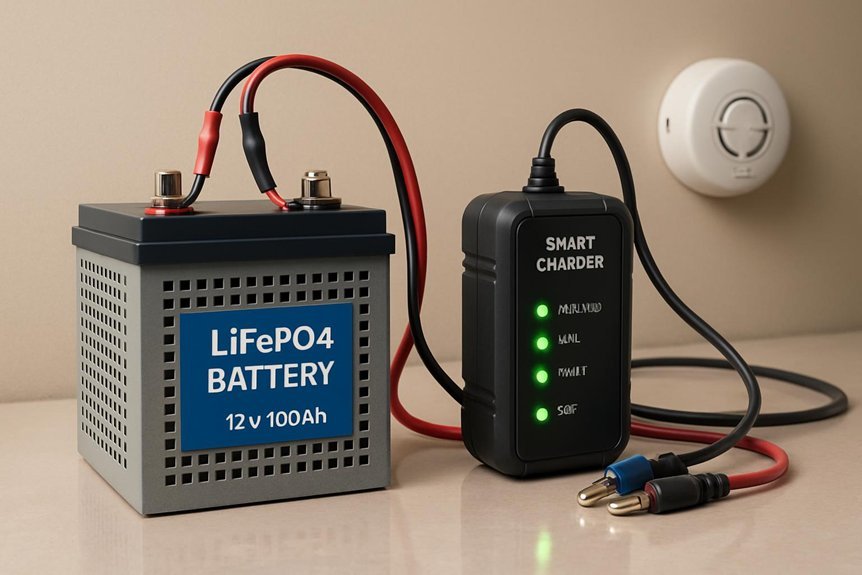
Although LiFePO4 batteries are known for their safety and stability compared to other lithium-ion chemistries, charging them indoors requires special care due to potential risks like heat buildup, off-gassing, and electrical hazards. The battery chemistry inherently reduces thermal runaway risk, yet improper charging can still generate excessive heat, posing fire hazards in confined spaces. Indoor hazards also include limited ventilation, which can trap any gases emitted during charging, potentially creating a hazardous atmosphere. Electrical hazards arise from incorrect wiring or faulty equipment, increasing the risk of short circuits or sparks. To mitigate these risks, understanding the specific thermal and chemical behavior of LiFePO4 cells under charge is essential. We must implement controlled charging protocols and guarantee adequate ventilation to maintain safety during indoor battery charging.
How to Choose the Right Charger for Indoor LiFePO4 Batteries
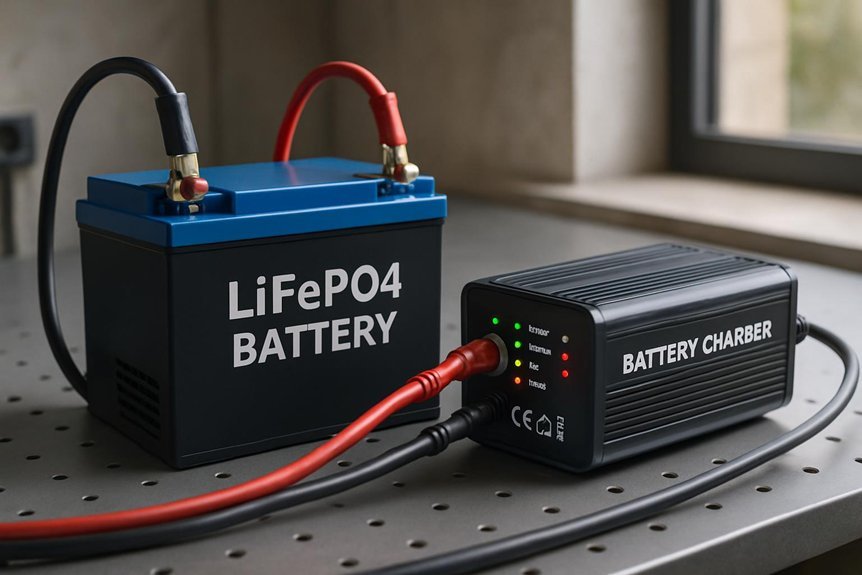
When selecting a charger for indoor LiFePO4 batteries, we must guarantee compatibility with the battery’s voltage and chemistry. It’s critical to verify the charger’s voltage and current ratings align precisely with the battery specifications to prevent damage. Additionally, we should prioritize chargers equipped with safety features like overcharge protection and temperature monitoring to maintain safe operation.
Charger Compatibility Essentials
Since selecting the right charger directly impacts the performance and lifespan of indoor LiFePO4 batteries, we need to understand the key compatibility factors. First, we must analyze charger types—constant current/constant voltage (CC/CV) chargers designed specifically for LiFePO4 chemistry are essential to prevent overcharging and thermal stress. Generic chargers often lack precise control algorithms, risking battery damage. Next, compatibility testing is critical; we should verify that the charger’s voltage thresholds and communication protocols align with the battery management system (BMS). This guarantees safe operation and accurate state-of-charge monitoring. By rigorously evaluating charger types and performing compatibility testing, we optimize charging efficiency and extend battery longevity, reducing risks inherent in mismatched or unregulated charging systems in indoor environments.
Charging Voltage and Current
Understanding charger compatibility sets the foundation, but selecting the correct charging voltage and current is what ultimately guarantees peak performance and safety for indoor LiFePO4 batteries. Precise voltage regulation guarantees the battery reaches full charge without overvoltage, optimizing charging efficiency and extending battery life. Meanwhile, current selection impacts thermal management and charging speed.
| Battery Capacity (Ah) | Recommended Voltage (V) | Recommended Current (A) |
|---|---|---|
| 10 | 14.6 | 5 |
| 50 | 14.6 | 25 |
| 100 | 14.6 | 50 |
| 200 | 14.6 | 100 |
Matching charger output to these parameters maximizes efficiency and prevents stress on battery cells, securing reliable indoor operation.
Safety Features to Consider
Although selecting the correct voltage and current is critical, prioritizing safety features in chargers designed for indoor LiFePO4 batteries guarantees long-term reliability and protects both the user and equipment. We need chargers with integrated battery management systems that monitor cell balance, temperature, and state of charge to prevent overcharging or deep discharge. Precise voltage regulation is essential to maintain stable output within the narrow voltage window LiFePO4 chemistry requires. Overvoltage protection safeguards cells from damage, while short-circuit and reverse polarity protections reduce risk during installation or faults. Additionally, chargers with thermal cutoffs and automatic shutoff functions enhance indoor safety by minimizing fire hazards. By focusing on these safety features, we secure efficient, safe charging that extends battery lifespan and maintains operational integrity in indoor environments.
Setting Up a Safe Charging Station Indoors
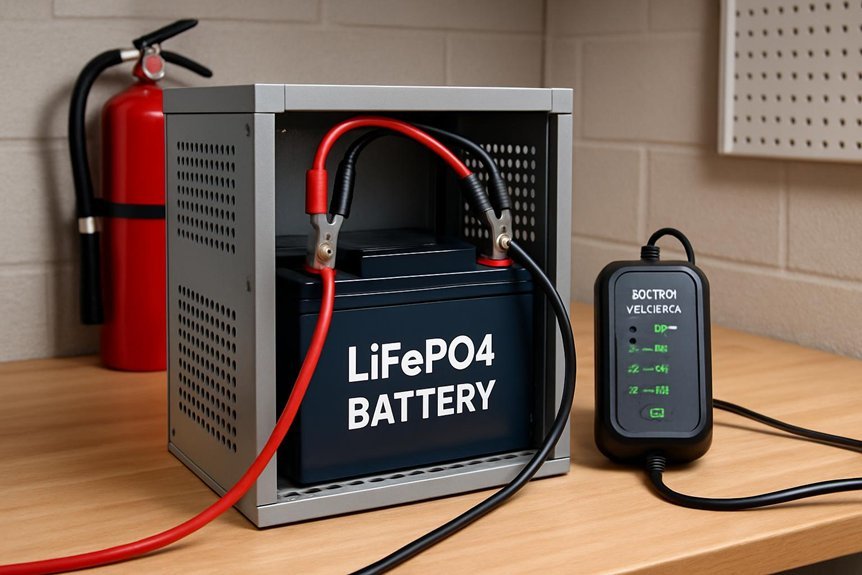
When we set up a charging station indoors, we must carefully consider ventilation, temperature control, and electrical safety to prevent hazards. Selecting an appropriate charging location is essential; it should be a dry, well-ventilated area away from flammable materials. Meeting ventilation requirements guarantees that any off-gassing or heat generated during charging dissipates efficiently. We recommend placing the station near a window or installing mechanical ventilation if natural airflow is insufficient. Additionally, the charging surface must be non-conductive and stable to avoid physical damage to the battery. Electrical connections should comply with local codes, including proper grounding and use of dedicated circuits. By adhering to these parameters, we minimize risks and create a controlled environment that supports safe, efficient indoor LiFePO4 battery charging.
Best Practices to Prevent Overheating and Short Circuits
To prevent overheating and short circuits in LiFePO4 batteries, we must implement accurate temperature monitoring techniques that provide real-time data during charging. Integrating circuit protection methods like fuses, BMS (Battery Management Systems), and thermal cutoffs is essential to interrupt abnormal current flows promptly. Let’s examine how these strategies work together to maintain safe operating conditions.
Temperature Monitoring Techniques
Since temperature fluctuations directly impact the safety and performance of LiFePO4 batteries, we must implement accurate monitoring techniques to detect overheating risks early. Integrating temperature sensors at critical points within the battery pack allows for real-time data collection, enabling precise thermal profiling during charging cycles. These sensors provide continuous feedback to the battery management system, facilitating immediate response to abnormal temperature rises. Additionally, employing thermal imaging periodically offers a non-invasive method to identify hotspots or uneven heat distribution that sensors might miss. Combining both approaches enhances our ability to maintain ideal thermal conditions, reduce thermal runaway risks, and extend battery lifespan. By rigorously applying temperature sensors and thermal imaging, we create a robust monitoring framework essential for safe indoor LiFePO4 battery charging operations.
Circuit Protection Methods
Accurate temperature monitoring lays the groundwork for preventing battery failures, but it’s just one layer of defense. To guarantee safe indoor LiFePO4 battery installations, we must implement robust circuit protection methods. Proper fuse selection and circuit breakers provide essential overload protection, interrupting current flow before overheating occurs. Incorporating surge protectors guards against voltage spikes that could damage cells. Adhering to strict wiring standards minimizes risks of ground faults, which can lead to dangerous short circuits. Battery disconnects and safety relays offer controlled isolation during maintenance or fault conditions, further enhancing safety. By integrating these components thoughtfully, we establish a thorough system that detects and mitigates electrical hazards promptly, greatly reducing the risk of thermal runaway and guaranteeing reliable, safe battery operation indoors.
Monitoring Your LiFePO4 Battery During Charging
While charging our LiFePO4 batteries, we need to continuously monitor key parameters such as voltage, current, and temperature to prevent damage and secure peak performance. Precise voltage monitoring guarantees we stay within the recommended charge limits, protecting battery health and avoiding overvoltage stress. Tracking current flow helps maintain consistent charging cycles, which directly affect the battery’s lifespan. Temperature sensors are vital; elevated temperatures can accelerate degradation or trigger safety cutoffs. Integrating real-time monitoring systems lets us analyze these variables simultaneously, enabling prompt adjustments and early detection of anomalies. By rigorously observing these metrics, we optimize charging efficiency and extend the battery’s operational life, ensuring reliable performance in indoor installations. Consistent monitoring is fundamental to safeguarding both the battery and the charging infrastructure.
Troubleshooting Common Indoor Charging Issues for LiFePO4 Batteries
Keeping a close eye on voltage, current, and temperature during charging helps us spot potential problems early, but issues can still arise with LiFePO4 batteries in indoor settings. Common mistakes like using an incompatible charger or neglecting proper ventilation can cause overheating or incomplete charging cycles. When voltage readings fluctuate beyond recommended thresholds, we should verify charger output and wiring integrity. Temperature anomalies often indicate poor battery maintenance or environmental control failures, which we must address promptly to prevent degradation. If charging current remains abnormally low, inspecting connectors and ensuring firmware is up to date can resolve communication errors. By systematically analyzing these parameters and avoiding typical errors, we can maintain peak battery performance, extend lifespan, and uphold safety standards during indoor LiFePO4 battery charging.
Frequently Asked Questions
Can Lifepo4 Batteries Be Charged Outdoors Safely?
Yes, we can charge LiFePO4 batteries outdoors safely by following strict safety precautions like avoiding extreme temperatures, ensuring waterproof connections, and using proper chargers to prevent overcharging and thermal runaway during outdoor charging situations.
How Long Do Lifepo4 Batteries Typically Last?
LiFePO4 batteries typically last 2,000 to 5,000 cycles, considerably extending battery lifespan. We recommend maintenance tips like avoiding deep discharges and high temperatures to optimize performance and guarantee maximum longevity for your batteries.
Are Lifepo4 Batteries Recyclable?
Yes, over 95% of LiFePO4 battery materials can be recovered through LiFePO4 recycling. We must prioritize proper battery disposal to minimize environmental impact and reclaim valuable metals like lithium, iron, and phosphate efficiently.
What Are the Environmental Impacts of Lifepo4 Batteries?
We find LiFePO4 batteries have a favorable environmental impact due to high energy efficiency and extended lifecycle. Lifecycle assessment shows lower toxic material use and emissions compared to other chemistries, reducing overall ecological footprint considerably.
Can Lifepo4 Batteries Be Used in Extreme Temperatures?
Oh sure, let’s all live on the sun! But seriously, LiFePO4 batteries handle temperature effects well, maintaining performance stability in moderate extremes, though extreme cold or heat still degrade efficiency and lifespan, demanding careful thermal management.
Conclusion
Just like tending a delicate flame, charging our indoor LiFePO4 batteries demands steady care and precise control. By choosing the right charger, setting up a safe station, and vigilantly monitoring voltage, current, and temperature, we keep that flame steady—preventing sparks, overheating, and off-gassing. Together, these practices form a protective circle, ensuring safety and extending battery life. Let’s treat our batteries as we would a crucial pulse, with discipline and respect.