Have we ever wished our 36V battery charger could handle rain, dust, and long-term storage without us worrying about it failing at the worst moment?
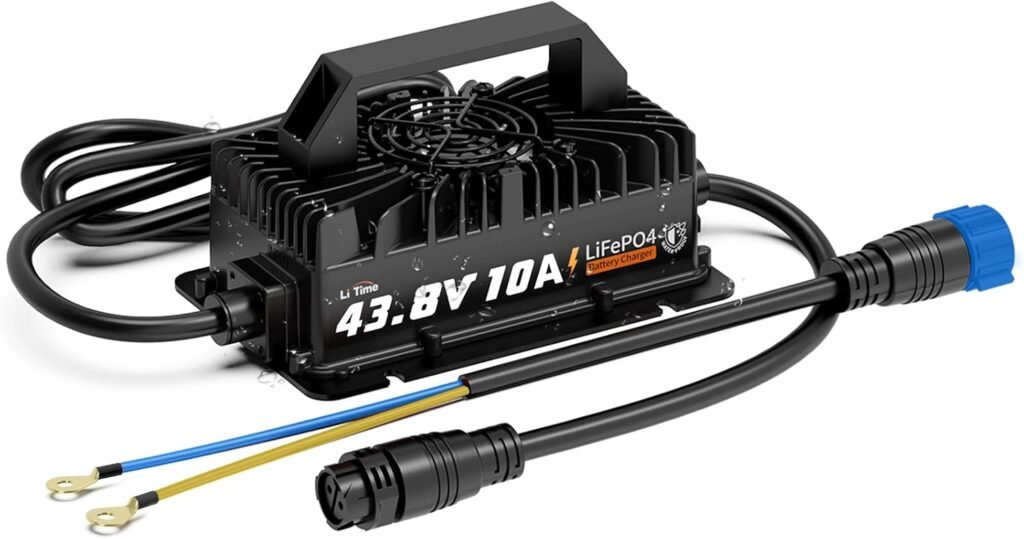

What Is the LiTime 36V (43.8V) 10A Lithium Battery Charger?
This LiTime charger is a 36V (43.8V output) 10A smart charger specifically designed for LiFePO4 batteries. It focuses on outdoor reliability, safety, and extending battery life, making it ideal for golf carts, RVs, boats, and 36V trolling motors.
We see it as a “set-it-and-trust-it” charger for lithium setups. It’s not just a power brick; it brings waterproof protection, 0V wake-up, and intelligent charging logic that suits modern lithium battery systems.
Key Features at a Glance
To get a quick sense of what we’re dealing with, here’s a summary of the major features and what they mean in practical use.
| Feature | What It Means for Us |
|---|---|
| 36V (43.8V) 10A Output | Proper voltage and current for 36V LiFePO4 battery banks |
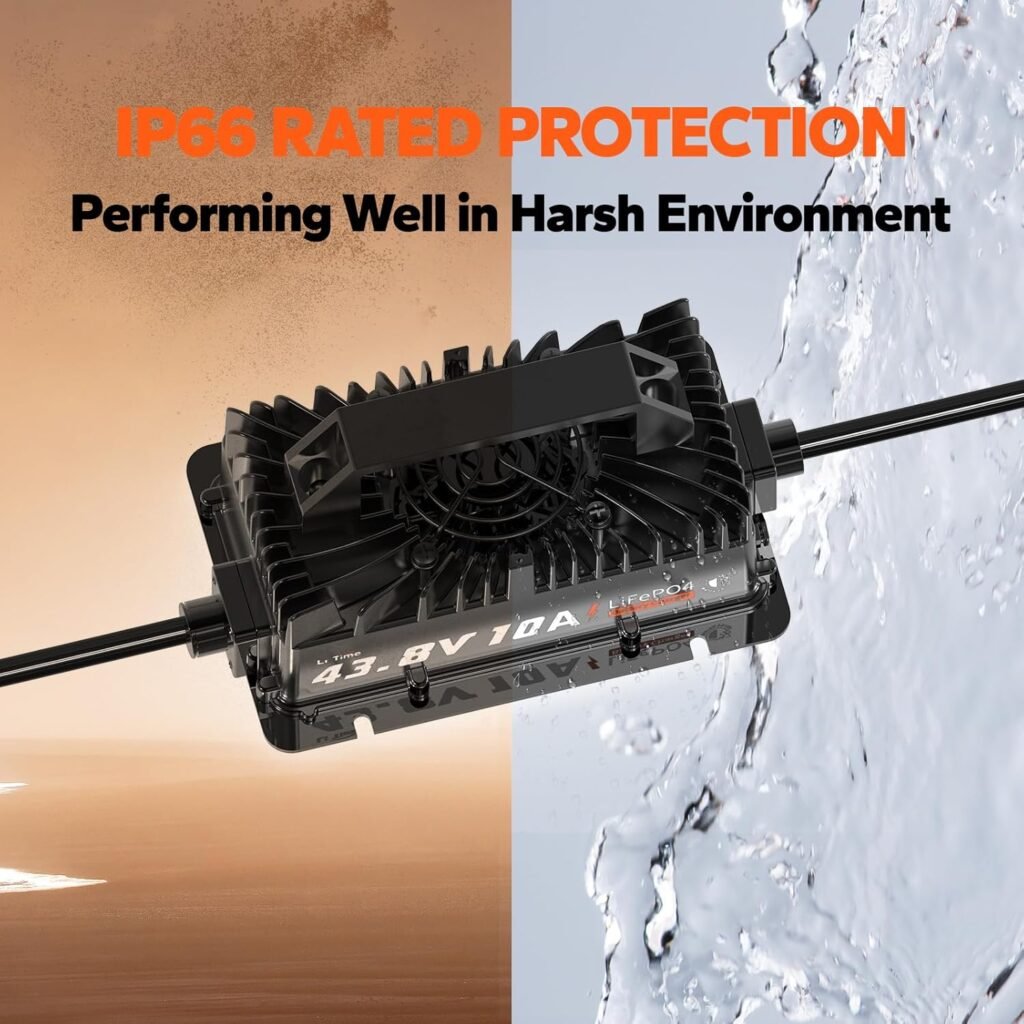
| IP66 Waterproof & Dustproof | Resistant to heavy splashes and dust; suitable for outdoor and damp environments |
| 0V Wake Up Mode | Can revive LiFePO4 batteries after BMS cutoff or deep discharge |
| Intelligent 3-Stage Charging | Pre-charge, Constant Current (CC), Constant Voltage (CV) for safer, longer battery life |
| 8 Safety Protections | Short circuit, over/under voltage, reverse polarity, over-temp, over-current, etc. |
| Trickle Charging Support | Maintains charge without overcharging, ideal for storage |
| Wide AC Input (90V–260V) | Works across a broad range of grid voltages and regions |
| Carry Handle & Mounting Holes | Portable and also easy to mount permanently |
| Plug-and-Play Waterproof Connectors | Simple, fast, and secure connections without fuss |
| Cable Length: 2m AC, 1.2m DC | Flexible enough for most installations |
We like how this charger brings together ruggedness and intelligence. It feels purpose-built for real-world outdoor use rather than just laboratory conditions.
Design and Build Quality
The physical build matters a lot for chargers that might live in garages, boat docks, RV compartments, or golf cart sheds. Here’s how this one stacks up.
Rugged IP66 Waterproof and Dustproof Housing
The IP66 rating means the casing is dust-tight and protected against powerful water jets. That tells us it’s designed to handle wet, dirty, and rough environments with confidence.
We can leave it in a damp garage, near a dock, or under an RV without worrying about a bit of rain or splashing ruining it. It’s not meant to be submerged, but for everyday outdoor use, it’s more than up to the job.
Self-Locking Waterproof Connector
The output side uses a self-locking waterproof connector, which helps prevent accidental disconnections and keeps moisture out of the electrical contact points.
We appreciate this detail because traditional open terminals or loose clip-on connectors often corrode or get knocked free, especially in marine or mobile applications.
Carry Handle and Mounting Options
The built-in carry handle makes it easy to move the charger between our golf cart, boat, or battery bank in the garage. At the same time, the mounting holes let us install it permanently in a fixed position.
We can go fully mobile or commit to a semi-permanent setup. Both options are supported out of the box without needing extra brackets.
Charging Technology and Performance
The main reason we choose a charger like this is to charge our LiFePO4 batteries efficiently, safely, and reliably.
Correct Voltage for 36V LiFePO4 (43.8V Output)
This charger is designed for 36V LiFePO4 batteries, with a charging voltage of 43.8V DC. That’s the typical full-charge voltage for a 36V lithium iron phosphate pack (made of 12 cells in series).
We like that it’s not a generic charger. It targets LiFePO4 chemistry specifically, which helps prevent undercharging, overcharging, or mismatched profiles that can shorten battery life.
10A Output Current: Balance of Speed and Battery Health
With 10A output current, the charger provides a good balance between charge speed and longevity. For example:
- A 36V 50Ah LiFePO4 pack would take roughly 5–7 hours from low to full, depending on state of charge and BMS behavior.
- Larger banks take longer, but 10A is still reasonable as a routine charger rather than a “fast charge” unit.
We see it as a charger meant for daily or regular charging, not emergency fast charging, which is better for battery health over the long term.
Intelligent 3-Stage Charging: Pre-Charge, CC, CV
The charger uses a 3-stage intelligent charging process:
-
Pre-Charge
At very low voltage, it applies a gentler current to protect the cells and reduce stress. -
Constant Current (CC)
Once the battery reaches a safer voltage, the charger delivers a steady 10A, quickly bringing the battery up to around its target voltage. -
Constant Voltage (CV)
At the top of the charge, the charger holds a steady 43.8V and tapers the current down. This final top-off ensures a complete charge without pushing the battery too hard.
We like this system because it respects the battery’s health. Instead of blasting full current all the way, it adjusts based on the battery’s state, which supports longer cycle life.
Trickle and Maintenance Charging
The unit functions as a smart, maintenance-friendly charger. After the main charging phase, it slows down and maintains the battery rather than continually forcing high current.
That means we can keep the battery topped up for storage—especially helpful for RVs, boats, and golf carts that might sit for weeks without use—without worrying about overcharging.

0V Wake Up and BMS Compatibility
One of the standout capabilities of this charger is how it interacts with BMS-protected lithium batteries.
Why 0V Wake Up Matters
LiFePO4 batteries often include a Battery Management System (BMS) that shuts the pack off for protection if:
- The voltage drops too low (over-discharge)
- Something triggers a safety cutoff
From our perspective, this can look like a “dead” battery—some chargers will refuse to start because they can’t detect a valid voltage. That’s where 0V wake up comes in.
Resetting and Repairing After BMS Cutoff
This charger includes a 0V wake-up charging mode designed to:
- Re-activate a BMS that has cut off due to low voltage
- Slowly bring back the pack to a normal operating voltage
- Restore use of batteries that might otherwise seem unusable
We find this extremely valuable in real-world situations, especially when a battery has sat unused for a long time or a device has accidentally drained it too far.
Fast BMS Jump-Start in 3 Seconds
The charger can jump-start BMS-protected batteries in about 3 seconds, according to the specs. That means we don’t need a second charger, an external power source, or a manual reset routine.
We just connect the charger, give it a moment, and let it handle the activation. That’s a huge convenience factor for less technical users and a time-saver even for experienced ones.
Safety Protections and Reliability
When dealing with lithium batteries, safety isn’t optional. This charger builds in multiple layers of protection.
8 Layers of Safety Protection
The charger includes protections such as:
- Short circuit protection – Prevents damage if the output is shorted
- Over-voltage protection – Stops charging if voltage rises beyond a safe range
- Under-voltage protection – Prevents operation outside acceptable limits
- Reverse polarity protection – Guards against accidental reversed connections
- Over-current protection – Limits current if something goes wrong
- Over-temperature protection – Shuts down or reduces output if the unit overheats
We appreciate how these add up to a much safer charging environment. Instead of relying on us to constantly monitor things, the charger itself is watching for problems.
Thermal Management and High-Temp Protection
The charger is also equipped with high-temperature protection. If internal components get too hot (due to high ambient temperature, restricted airflow, or prolonged use), it reduces risk by adjusting or cutting output.
We value this especially for locations like RV compartments, marine cabinets, or hot garages where airflow isn’t always ideal and temperatures can climb.
Compatibility and Use Cases
This charger is clearly tuned for LiFePO4 chemistry and 36V nominal systems, but within that niche it’s very versatile.
Designed for 36V LiFePO4 Batteries Only
We must stress: this is not a universal charger for all battery types. It’s for 36V LiFePO4 only. That’s a positive point in terms of precision, but we should avoid mixing it with lead-acid or other chemistries.
We get a charger that speaks “LiFePO4” fluently—better performance and safer operation—at the cost of reduced versatility across chemistries.
Ideal Applications
The manufacturer highlights several typical uses:
- Golf carts – 36V lithium-converted or factory LiFePO4 setups
- 36V trolling motors – Fishing boats or small vessels using 36V lithium banks
- RVs and camper vans – For 36V battery banks used in larger off-grid systems
- Home energy storage – 36V packs for backup power or solar storage
We like that it supports both mobile and stationary setups. If we’re running a 36V LiFePO4 bank in any of these scenarios, this charger is a strong candidate.
Wide Input Voltage (90V–260V AC)
The charger accepts an input voltage from 90V to 260V AC, at 47–63Hz. That range covers:
- Standard North American 120V
- European and many international 220–240V supplies
- Areas with unstable grid voltage
We can take this charger on the road or overseas with much less worry about compatibility, as long as we have the correct plug adapter when necessary.
Installation and Everyday Use
Having strong specs is one thing; being easy to live with is just as important.
Simple Plug-and-Play Setup
The process is straightforward:
- Connect the DC output to our battery using the waterproof plug-and-play connector.
- Plug the AC side into a wall outlet or shore power.
- Let the charger assess the battery and begin its charging cycle automatically.
We don’t have to fiddle with complicated settings or modes. The charger detects what’s needed and runs its charging stages accordingly.
Cable Lengths: 2m AC and 1.2m DC
The charger includes:
- 2m AC cable – Enough reach from a wall plug or extension to the charger location
- 1.2m DC cable – Reasonable distance from charger to battery compartment
In many setups, this is enough to place the charger in a safe, accessible location while reaching both power and battery terminals. If we need more distance, high-quality extension cords or repositioning are options.
Portable or Permanently Mounted
We can:
- Use it as a portable unit – Ideal if we swap between multiple batteries or vehicles
- Mount it on a wall, in an RV compartment, or in a boat locker using the integrated mounting holes
This flexibility lets us start simple—just using it on the floor of a garage—and later move to a cleaner, more permanent installation if we want.
Real-World Scenarios Where It Shines
To understand how this charger fits into our routine, it helps to imagine a few typical use cases.
Golf Cart in a Humid or Coastal Area
If our golf cart lives in a carport or shed where humidity is high and dust is common, the IP66 rating really matters.
We can mount the charger near the cart, leave it plugged into shore power, and trust that splashes or dust storms won’t destroy it. The 0V wake-up mode also reassures us that if someone forgets and drains the pack deeply, we still have a good chance of bringing it back.
Trolling Motor on a Fishing Boat
With a 36V LiFePO4 trolling motor battery, we likely deal with:
- Splashes of water
- Salt air in coastal areas
- Limited space in lockers or compartments
Here, the waterproof housing and self-locking waterproof connector feel like essential, not optional, features. We can mount it in a semi-exposed compartment and charge between trips without fussing over corrosion or accidental disconnection.
RV or Off-Grid Cabin Battery Bank
For an RV or off-grid building using a 36V LiFePO4 bank—perhaps in combination with solar—this charger serves as a reliable AC backup.
On cloudy days or during the offseason, we:
- Plug the charger into shore power or a generator
- Let it top off and maintain the battery bank
- Rely on the intelligent 3-stage process and safety protections to avoid damage
We can mount it near the battery bank and know it’s ready whenever solar alone isn’t enough.
Advantages We Appreciate Most
Several aspects of this charger stand out in everyday use and decision-making.
Strong Environmental Protection
The IP66 waterproof and dustproof rating, plus sealed connectors, make this unit feel purpose-built for real, messy environments instead of clean, lab-style benches.
We feel more confident using it around docks, sheds, or outdoor parking areas where moisture and dirt are constant factors.
0V Wake Up and BMS-Friendly Operation
We value the ability to revive a battery that’s been cut off by its BMS. It can quite literally save us from replacing a pack that only appears “dead” to a normal charger.
We also appreciate that it works smoothly with BMS-protected packs, so we don’t have to worry about incompatibilities with modern LiFePO4 batteries.
Dedicated LiFePO4 Profile
By focusing on 36V LiFePO4 chemistry, the charger delivers the right voltage and current behavior instead of a generic catch-all profile.
That focus helps keep our batteries healthier over time, with accurate charge termination and controlled maintenance.
Multiple Safety Layers
With short circuit, over/under voltage, reverse polarity, over-temp, and over-current protection in place, we’re not flying blind.
We still use common sense and good wiring practices, but we know the charger itself is watching for critical problems.
Limitations and Considerations
No product suits every situation perfectly. Here are a few points we keep in mind.
For 36V LiFePO4 Only
This charger is not meant for:
- Lead-acid batteries (AGM, gel, flooded)
- Other lithium chemistries with different charge profiles
- 12V, 24V, or 48V systems
We need to commit to using it with 36V LiFePO4 banks only. If we run multiple voltages or battery types, we’ll likely need separate chargers.
10A May Be Modest for Very Large Banks
For very large 36V battery banks (for example, multiple 100Ah or 200Ah packs in parallel), 10A charging will work but may feel slow:
- 36V 200Ah pack at 10A could take a long time from low to full
- This is fine for overnight charges or maintenance, but not ideal if we need rapid turnaround
We should match our expectations with the battery capacity we’re running.
Requires Proper Connectors or Adapters
Because the output connector is a waterproof self-locking style, we may need matching connectors or a short adapter harness if our battery doesn’t already support that plug type.
We like the security of the system, but it can add a step compared to basic alligator clips if we’re not prepared.
Comparison With More Basic Chargers
To better understand the value here, it helps to contrast this charger with simpler, more generic options.
Generic Non-Smart Charger
A basic charger often:
- Has fixed current, no intelligent staging
- Lacks 0V wake up
- Offers minimal protection beyond a simple fuse
- Uses non-sealed connectors and housings
Using such a unit on LiFePO4 batteries risks:
- Undercharging or overcharging
- Shortened battery lifespan
- Failure to recognize or revive BMS-protected packs
We see the LiTime charger as a deliberate step up in compatibility and protection.
Lead-Acid-Only Smart Charger
Even some smart chargers are configured only for lead-acid chemistry. Those typically:
- Use higher float voltages or different charging curves
- Lack profiles tailored to LiFePO4’s lower internal resistance and flat voltage curve
That mismatch can lead to chronic undercharging or premature cell imbalance. By contrast, the LiTime charger is tuned specifically for LiFePO4, which makes it a much safer and more efficient choice for our lithium setup.
Tips for Getting the Best Results
To get the most out of this charger and extend the life of our batteries, we can follow a few best practices.
Match the Charger to the Battery Capacity
We aim for a charge rate (in amps) that’s around 0.1C to 0.3C for most LiFePO4 packs, where:
- C = battery capacity in Ah
- For a 50Ah pack, 0.2C = 10A (a good match)
- For a 100Ah pack, 0.1C = 10A (conservative but healthy)
Using 10A on packs larger than 100Ah is fine, but charging will be slower. We just plan charging windows based on that expectation.
Ensure Good Ventilation
Even though the unit is IP66 and protected, it still benefits from ventilation:
- Avoid putting it in completely sealed, tiny compartments
- Give it some space on all sides for airflow
- Keep it away from direct, intense heat sources
This helps the charger stay within its best temperature range and ensures longevity.
Periodically Inspect Connectors and Cables
Waterproof connectors still benefit from periodic checks:
- Ensure the connector is fully locked and seated
- Inspect for dirt, grit, or salt buildup
- Check cables for cuts, abrasions, or harsh bends
We like to add this to a seasonal maintenance checklist for our boat, RV, or golf cart.
Who This Charger Is Best Suited For
Based on the feature set and design, we see this charger as ideal for several types of users.
Owners of 36V LiFePO4 Golf Carts and Trolling Motors
If our primary goal is to keep a 36V LiFePO4 battery in a cart or boat in good health, this charger is a strong match. It handles environmental challenges, respects BMS protections, and charges at a sensible rate.
We can mount it near our charging point and essentially make it part of the vehicle’s support system.
RV and Off-Grid Users With 36V Packs
For RVers and off-grid homeowners running a 36V lithium bank, this charger is a reliable AC-side partner. It complements solar or DC charging systems and provides a well-regulated, safe charging source when grid or generator power is available.
We see it as an important component for year-round battery care.
Users Who Value “Set and Forget” Charging
If we prefer a straightforward process—plug in, walk away, and return to a properly charged battery—the intelligent 3-stage profile and protections provide exactly that.
We still act responsibly, but we don’t have to constantly monitor voltage and current ourselves.
Situations Where It May Not Be Ideal
There are also cases where another charger type might be more appropriate.
Mixed-Chemistry or Multi-Voltage Systems
If we frequently charge:
- 12V, 24V, and 48V batteries
- Both lead-acid and lithium chemistries
We’ll likely need a more flexible, programmable charger instead of this dedicated 36V LiFePO4 unit. It’s better to use a charger that can be customized for each battery type.
Extremely Large Battery Banks Needing Fast Turnaround
If we operate very large 36V systems (e.g., extensive storage banks) and need fast recharge times between heavy discharge cycles, a higher current charger or multiple chargers in parallel might be a better match.
We can still use this charger as a backup or maintenance tool, but it may not deliver the turnaround speed we want for intensive commercial or industrial use.
Final Thoughts: Is the LiTime 36V 10A LiFePO4 Charger Worth It?
We see the “LiTime 36V (43.8V) 10A Lithium Battery Charger, IP66 Waterproof AC-DC LiFePO4 Battery Charger Support 0V Wake Up, Overcharge & High-Temp Protection Trickle Charger for Golf Cart, RV, Boat” as a very thoughtful option for anyone running a 36V LiFePO4 system.
What stands out most to us is:
- The IP66 waterproof and dustproof construction, which gives it a real advantage in outdoor and marine environments.
- The 0V wake-up capability, which can save us from the frustration of seemingly dead batteries after BMS cutoffs or long storage.
- The intelligent 3-stage charging and multiple safety protections, which work together to protect both our charger and our batteries over many charge cycles.
If our setup is built around 36V LiFePO4 batteries—whether in a golf cart, trolling motor, RV, or home energy storage system—this charger provides a strong mix of durability, safety, and ease of use. We view it as a specialized tool that does exactly what our lithium batteries need, with extra resilience for the real-world environments where we actually use them.
Disclosure: As an Amazon Associate, I earn from qualifying purchases.