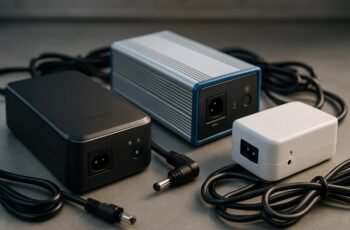
We see LiFePO4 charging evolving toward lightweight modular packs, advanced thermal management, and real-time health diagnostics that enable safe, rapid charging. Fast-charging will balance higher C-rates with multi-path cooling, impedance tracking, and adaptive taper, while bidirectional flows unlock V2G opportunities. Smart energy integration will orchestrate DR, microgrids, and virtual peering across DERs, backed by standards pilots and data-driven governance. The economics and governance framing will shape deployment strategies, yet critical questions remain about resilience and long-term cost.
Key Takeaways
- Lightweight, modular LiFePO4 packs with advanced thermal modeling enable scalable, safe rapid charging across diverse ambient conditions.
- Bidirectional charging and V2G enable grid stability, while predictive maintenance and real-time diagnostics extend cell life.
- Fast-charging strategies combine multi-path cooling, impedance tracking, and adaptive taper to optimize speed and longevity.
- Smart energy orchestration aligns DR, microgrids, and V2G with policy, market design, and DER interoperability.
- Safety, sustainability, and standards-focused governance ensure traceability, recyclability, and scalable deployment across pilots.
LiFePO4 Charging in 2030: Core Technologies and Performance

Could LiFePO4 charging in 2030 deliver the reliability and efficiency our grids and vehicles demand? We examine core technologies shaping performance, from cell chemistry to system-level integration. Our focus is on lightweight, modular pack architectures that reduce mass while preserving resilience, enabling easier deployment in off grid contexts. Thermal modeling becomes a governing discipline, guiding cooling strategies and safety margins across ambient conditions. Predictive maintenance informs asset longevity, with real-time diagnostics predicting degradation before failure. Charging algorithms optimize voltage and current profiles to balance rapid replenishment with cell health, while bidirectional power flows unlock vehicle-to-grid potential without compromising stability. As grids evolve, standardized interfaces and robust cybersecurity measures ensure interoperable, scalable, and cost-effective LiFePO4 charging for diverse fleets.
Fast-Charging for LiFePO4: Speed, Safety, and Longevity
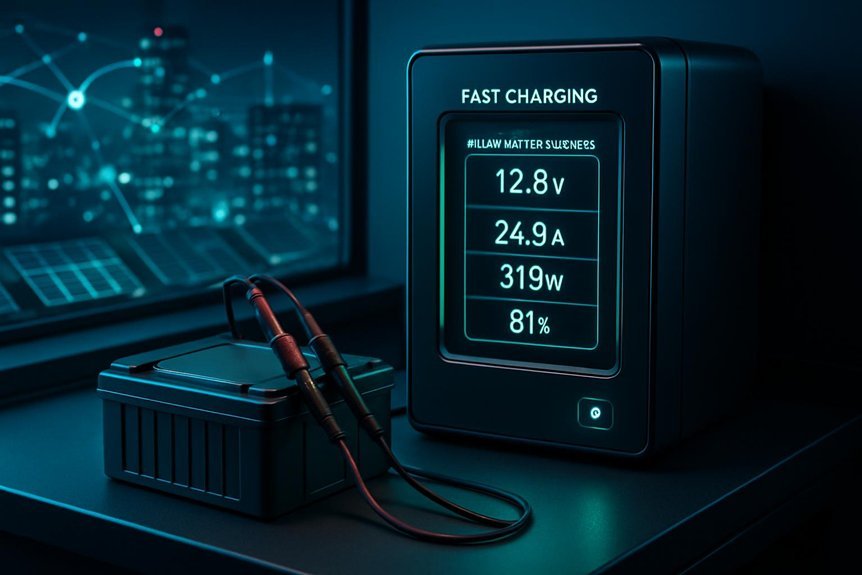
How can we push LiFePO4 fast-charging forward without compromising safety or longevity? We explore methods that balance speed with robust safeguards, using precise control of charge profiles and thermal limits. By integrating real-time impedance tracking, adaptive current taper, and predictive aging models, we can maintain performance while reducing stress on cells. Our focus on heat management ensures that elevated C-rates don’t trigger degradation pathways, enabling repeatable fast charging across climates and duty cycles. We also evaluate packaging, cooling, and firmware governance to prevent hotspots and overvoltages, ever mindful of safety margins and lifecycle costs. This forward look aligns efficiency with durability, guiding standardization and practical deployment in next-gen LiFePO4 systems.
Fast LiFePO4 charging through precise control, heat management, and real-time health monitoring.
- fast charging protocols tailored to LiFePO4 chemistry
- multi-path heat management strategies with active cooling
- real-time health and state-of-charge monitoring
- safety-first fault handling and graceful degradation strategies
Smart Energy Integration for LiFePO4: DR, V2G, and Microgrid Orchestration

Smart energy integration for LiFePO4 hinges on aligning distributed resources with grid signals and customer needs, so we can unlock value from demand response (DR), vehicle-to-grid (V2G), and microgrid orchestration without compromising safety or longevity. We analyze grid scale storage, vehicle integration, energy sharing, and retrofit challenges, mapping policy timelines to practical deployments. Our approach uses virtual peering to optimize bids, tie-ins, and orchestration logic across DERs, while maintaining reliability and longevity. Microgrid orchestration will increasingly enable local resilience and revenue streams, balancing DR, V2G, and grid support. This section models future flows, outlining constraints and opportunities for policy, control, and market design.
| Topic | Challenge | Opportunity |
|---|---|---|
| grid scale storage | interoperability | grid resilience |
| virtual peering | latency | optimized dispatch |
| microgrid orchestration | safety | autonomous operation |
Safety and Sustainability: Advanced Chemistry and Management
What safeguards and sustainable practices will define LiFePO4 chemistry as it evolves into safer, longer-lasting energy storage? We examine how advanced chemistry and management will shape resilience, reliability, and supply chain integrity. Our focus is on minimizing hazards, extending cycle life, and reducing total lifecycle impact through rigorous safety governance and disciplined materials stewardship. By integrating predictive diagnostics, safer electrolyte formulations, and robust thermal management, we curb degradation pathways and emissions while preserving performance. Data-driven oversight enables traceability from raw materials to end-of-life recycling, aligning innovation with environmental responsibility. Our approach emphasizes accountability, continuous risk assessment, and transparent reporting to stakeholders, ensuring durable energy storage that supports broader grid and mobility goals.
- Safety governance drives standardized protocols and audits
- Materials stewardship prioritizes recyclability and responsible sourcing
- Predictive diagnostics enable proactive maintenance and fault prevention
- Transparent reporting strengthens trust and continuous improvement
Economics and Deployment: Standards, Pilots, and Pathways
Standards, pilots, and deployment pathways will define how LiFePO4 technology scales from labs to grids and vehicles. We examine economic levers that shape adoption, including cost curves, lifecycle savings, and revenue streams from ancillary services. Standards pilots establish interoperability, safety, and performance benchmarks, reducing integration risk for utilities andOEMs alike. Deployment pathways translate research into scalable models, identifying regional pilots, financing mechanisms, and regulatory incentives that accelerate market entry. We emphasize total cost of ownership, charging infrastructure capital requirements, and optimization algorithms that unlock value from grid flexibility. Our forward look highlights alignment between standards development and utility planning, ensuring predictable procurement and supplier competition. By detailing milestones, we map a credible trajectory from pilot success to widespread, resilient LiFePO4 deployment.
Frequently Asked Questions
How Will Lifepo4 Cycles Affect Long-Term Battery Degradation Trends?
We anticipate degradation dynamics will slow steadily with improved phase stability, yet cycle aging remains our key uncertainty, as higher-soc cycling and faster charging could amplify wear, while optimization of depth-of-discharge mitigates long-term capacity loss.
What Governance Frameworks Will Support V2G With Lifepo4 at Scale?
We will require robust governance frameworks that standardize grid pricing and cyber risk assessments, ensuring interoperability, accountability, and transparent tariffs, so V2G with LiFePO4 scales safely and efficiently for all stakeholders, including utilities, operators, and consumers.
Can Lifepo4 Charging Adapt to Intermittent Renewable Generation Variability?
We can ride the storm: LiFePO4 charging adapts to renewable variability through smart control and demand shaping, enabling urban charging to align with grid interaction, smoothing peaks and leveraging storage flexibility for resilient, future-ready energy systems.
Which Post-Usage Recycling Methods Will Maximize Lifepo4 Sustainability?
We’ll prioritize recycling tradeoffs and toxic emissions to maximize LiFePO4 sustainability, weighing economical recovery against environmental impact, prioritizing material reuse, safe processing, and transparent lifecycle assessments for a future-focused, analytical approach we owe you.
How Will Consumer Data Privacy Be Protected in Smart-Energy Orchestration?
Absolutely, we protect privacy with strict privacy controls, data minimization, collaboration standards, and anonymization governance. We’ll forecast risks, audit rigorously, and adapt policies relentlessly, ensuring smarter energy orchestration while you can trust our data practices.
Conclusion
We’re optimistic about LiFePO4’s trajectory, where modular packs, advanced thermal management, and predictive diagnostics enable rapid, safe charging at scale. By 2030, multi-path cooling and impedance tracking will trim aging while boosting C-rate flexibility, and bidirectional flows will unlock V2G value. An eye-catching stat: battery health monitoring could reduce unplanned outages by up to 40% through real-time degradation tracking. Together, standards, pilots, and data governance will turn smarter energy integration into resilient, economical deployment.