Grounding a high-capacity charging system is like laying the foundation of a skyscraper—if it’s not solid, everything above it is at risk. We need to understand how proper grounding not only protects us from electrical hazards but also stabilizes system performance. As we explore the critical aspects of grounding and safety standards, we’ll uncover common pitfalls and best practices that can make or break your setup’s reliability.
Key Takeaways
- Grounding ensures electrical safety by providing a low-resistance path for fault currents, reducing shock and fire hazards in high-capacity charging systems.
- Compliance with NEC, UL, and IEC standards is essential for safe installation and operation of high-capacity charging equipment.
- Solid, resistance, and floating grounding methods are selected based on system voltage, environment, and regulatory requirements for optimal safety.
- Proper installation uses copper grounding rods, corrosion-resistant connectors, and resistance testing to ensure effective grounding and system stability.
- Regular maintenance and inspections prevent corrosion, loose connections, and grounding failures, preserving charger performance and safety.
What Grounding Means for High-Capacity Charging Systems
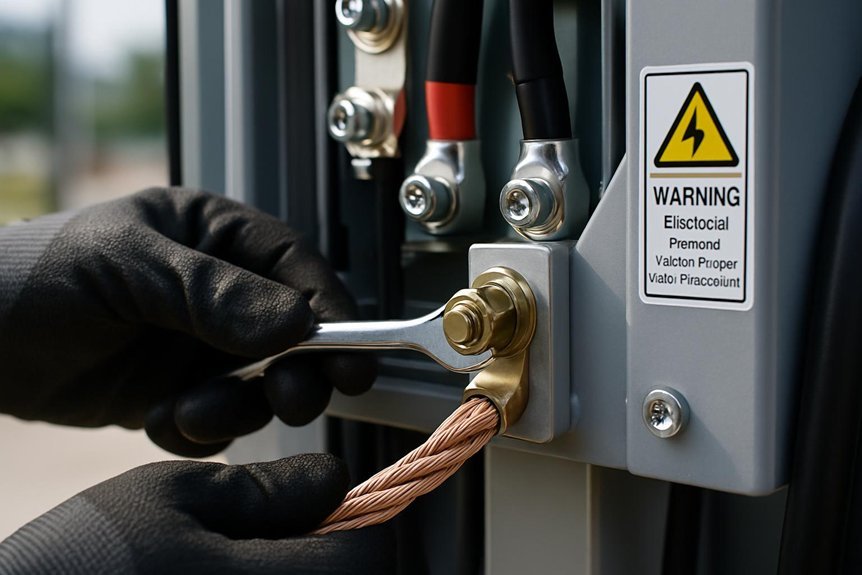
Although we often overlook it, grounding plays a critical role in high-capacity charging systems by ensuring electrical safety and system stability. Proper grounding techniques are essential to create a reliable reference point for electrical circuits, preventing voltage fluctuations and maintaining consistent performance. We must carefully select grounding materials with low resistivity, such as copper or galvanized steel, to minimize resistance and enhance conductivity. Implementing standardized grounding techniques, including grounding rods, plates, or mats, helps dissipate fault currents efficiently. Additionally, the layout and connection integrity of grounding conductors influence the system’s overall effectiveness. By analyzing grounding impedance and ensuring secure connections, we can reduce electromagnetic interference and protect sensitive components. Ultimately, understanding and applying precise grounding methods is fundamental to optimizing high-capacity charging system functionality.
Why Proper Grounding Prevents Shocks and Fires
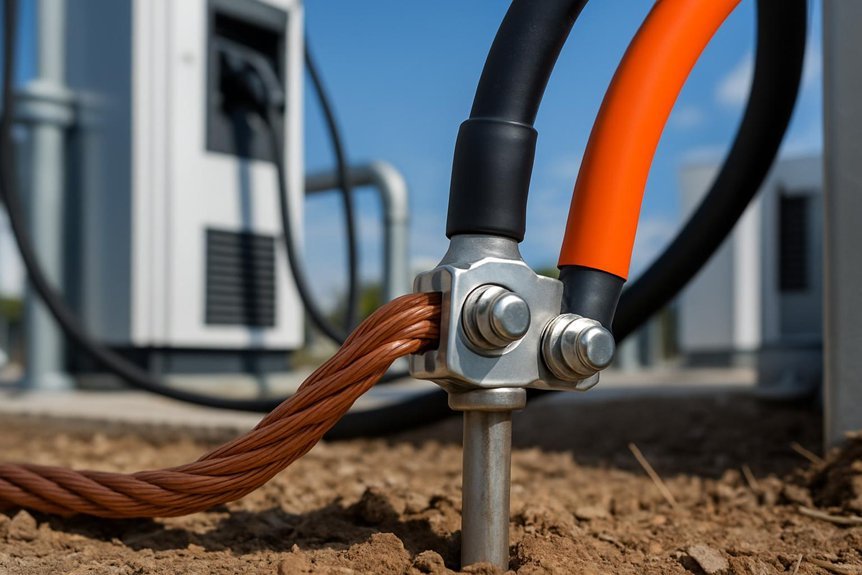
Because grounding provides a low-resistance path for fault currents, it plays an essential role in preventing electrical shocks and fires in charging systems. When a fault occurs, grounding directs excessive current safely to the earth, reducing the risk of electric shock by ensuring exposed conductive parts do not reach dangerous voltage levels. This shock prevention mechanism protects users and maintenance personnel from potentially lethal contact. Additionally, proper grounding mitigates fire hazards by preventing current flow through unintended paths, which can generate heat and ignite combustible materials. Without effective grounding, fault currents may cause arcing or overheating, leading to insulation failure and fire outbreaks. Therefore, implementing correct grounding practices is fundamental to maintaining the operational safety and reliability of high-capacity charging infrastructure.
Key Electrical Safety Standards for High-Capacity Chargers
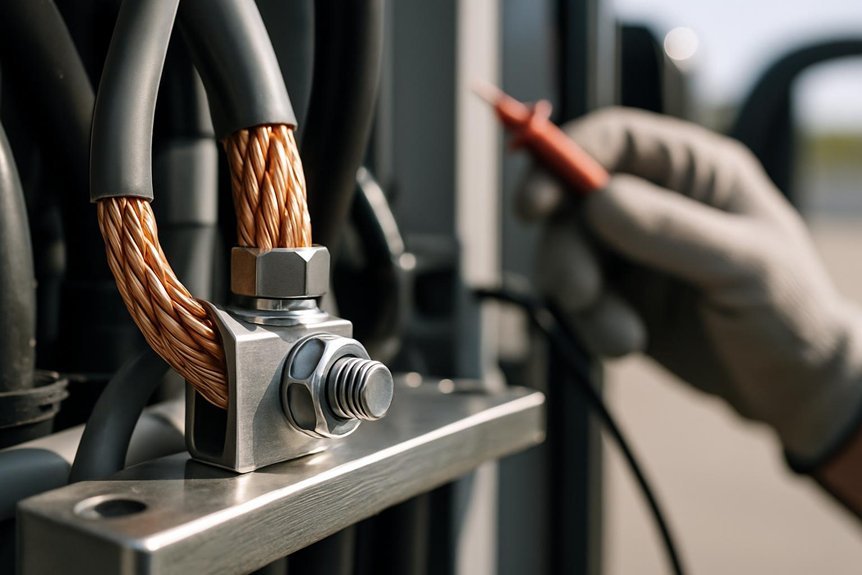
Let’s examine the critical electrical safety standards that govern high-capacity chargers, starting with the National Electrical Code, which sets extensive installation requirements. We’ll also review UL certification standards that guarantee product safety through rigorous testing protocols. Finally, we’ll analyze IEC safety standards that provide international benchmarks for electrical equipment performance and protection.
National Electrical Code
When we install high-capacity charging systems, adhering to the National Electrical Code (NEC) is essential to confirm safety and compliance. The NEC’s code updates frequently address emerging technologies and evolving risks, requiring us to stay current. Installation guidelines within the NEC provide explicit directives on grounding and wiring, but regional variations often complicate uniform compliance. We face compliance challenges stemming from enforcement issues and inconsistent safety audits across jurisdictions. Design considerations must integrate NEC mandates to guarantee system reliability and operator safety. Contractor training is critical to interpret and apply these standards correctly, reducing errors during installation. By rigorously following the NEC, we mitigate risks and uphold electrical safety, aligning with both regulatory demands and best practices in high-capacity charger deployment.
UL Certification Requirements
Three critical UL certification standards govern the electrical safety of high-capacity charging systems, confirming these devices meet stringent performance and reliability criteria. UL certification requires thorough product evaluation, including rigorous testing procedures that assess electrical standards conformity and risk assessment for potential hazards. We must adhere to detailed manufacturing guidelines to maintain consistent safety compliance throughout production. Labeling requirements are equally critical, providing clear, standardized information about voltage ratings, grounding instructions, and operational limits. This structured approach guarantees that each charging system not only functions reliably but also minimizes electrical risks to users and infrastructure. By integrating these UL mandates early in design and manufacturing, we confirm robust grounding, fault protection, and overall system integrity, fulfilling industry safety expectations and regulatory demands.
IEC Safety Standards
Although UL standards provide a strong foundation for electrical safety, we must also rigorously apply IEC safety standards to assure global compliance for high-capacity chargers. IEC compliance guarantees adherence to internationally recognized safety regulations, critical for cross-border installations. We focus on standard testing protocols to verify electrical insulation integrity, grounding techniques, and overall device performance. Thorough risk assessment under IEC frameworks guides our installation guidelines, minimizing hazard potential. Performance metrics from IEC standards enable precise evaluation of charger reliability and safety efficiency. Regular safety audits aligned with IEC standards help maintain ongoing compliance and identify potential vulnerabilities. Integrating these international standards with UL requirements creates a robust, harmonized approach that elevates the safety and reliability of high-capacity charging systems worldwide.
How to Choose the Right Grounding Method for Your Setup
To select the appropriate grounding method, we first need to understand the different types of grounding systems available, such as rod, plate, and mat grounding. Then, we must analyze factors like soil resistivity, installation environment, and system size that influence our choice. This approach guarantees we implement a grounding solution that maximizes safety and system performance.
Types of Grounding Systems
When selecting the appropriate grounding method for your charging system, we must consider factors such as system voltage, environmental conditions, and regulatory requirements. Common types of grounding systems include solid grounding, resistance grounding, and floating grounding. Each employs specific grounding techniques tailored to fault current management and system stability. For instance, solid grounding uses direct connections to grounding materials like copper rods or plates, providing low impedance paths to earth. Resistance grounding introduces resistors to limit fault currents, essential in preventing equipment damage. Floating grounding isolates the system, reducing ground fault currents but requiring careful monitoring. By understanding these types, we can choose grounding systems that optimize safety and reliability for high-capacity charging setups while complying with electrical codes and operational demands.
Factors Influencing Grounding Choice
Selecting the right grounding method hinges on a detailed assessment of several critical factors. When we choose grounding techniques, we must consider the specific electrical environment and the practical installation challenges that come with high-capacity charging systems. These factors guarantee peak safety and system reliability.
Key considerations include:
- Soil resistivity and composition affecting grounding effectiveness
- System voltage levels dictating grounding conductor size
- Proximity to existing grounding infrastructure
- Environmental conditions influencing corrosion and material selection
- Regulatory compliance and local electrical codes
Tools and Materials Needed for Safe Grounding Installation
Although proper knowledge is vital, having the right tools and materials guarantees we can execute safe grounding installations effectively. To implement reliable grounding techniques, we need precision tools like insulated wire strippers, torque wrenches, and digital earth resistance testers. Materials must include copper grounding rods, grounding clamps, and high-conductivity copper wire compliant with electrical codes. An installation checklist ensures we don’t overlook important components or steps—verifying rod length, wire gauge, and secure connections. We also require corrosion-resistant connectors to maintain long-term integrity. Using these specific tools and materials, combined with a systematic checklist, allows us to achieve consistent, code-compliant installations that minimize electrical hazards and optimize system reliability. This preparation phase is essential before moving to actual installation procedures.
Step-by-Step Guide to Grounding a Commercial Charging Station
We’ll begin by identifying the ideal grounding location for the commercial charging station, ensuring minimal resistance and compliance with local electrical codes. Next, we’ll select appropriate grounding materials—typically copper rods or plates—based on soil conditions and system requirements. Then, we’ll apply proven grounding techniques to drive rods deep enough to achieve a low-resistance path. Afterward, we’ll securely connect the grounding conductor to the station’s metal frame using corrosion-resistant clamps. Finally, we’ll test the entire setup with a ground resistance tester to verify effectiveness.
- Locate grounding point away from nearby utilities and moisture sources
- Choose copper grounding rods or plates per soil resistivity
- Drive rods to required depth for optimal conductivity
- Use proper clamps and connectors for secure bonding
- Perform resistance tests to confirm grounding integrity
Common Grounding Mistakes and How to Avoid Them
When grounding a commercial charging station, overlooking critical details can compromise safety and system performance. One common mistake is using improper grounding equipment, such as undersized conductors or corrosion-prone materials, which degrade grounding effectiveness. Another frequent error involves neglecting to verify soil resistivity before selecting grounding techniques, leading to insufficient dissipation of fault currents. Additionally, failing to maintain secure and clean connections can introduce resistance, undermining the grounding system’s integrity. To avoid these pitfalls, we must adhere strictly to industry standards, select appropriate grounding equipment, and conduct thorough inspections throughout installation. Implementing proven grounding techniques, like installing multiple ground rods or using grounding grids, guarantees robust system protection. By addressing these common errors proactively, we enhance overall electrical safety and compliance.
How Grounding Affects Charger Performance and Reliability
Proper grounding plays a critical role in optimizing charger efficiency by minimizing electrical noise and voltage fluctuations. When we guarantee a solid grounding connection, we enhance system reliability and reduce the risk of component failure. Let’s examine how these factors directly influence charger performance in real-world applications.
Grounding Impact on Efficiency
Although often overlooked, grounding plays an essential role in optimizing charger performance and ensuring system reliability. Proper implementation of grounding technologies directly impacts efficiency optimization by minimizing electrical noise and voltage fluctuations. This stability allows charging systems to operate closer to their designed capacity, reducing energy losses. Key factors influencing efficiency include:
- Reduction of electromagnetic interference through effective grounding
- Enhanced signal integrity for control and communication circuits
- Lowered resistance paths decreasing power dissipation
- Prevention of ground loops that degrade system performance
- Consistent reference potentials enabling precise voltage regulation
Reliability Through Proper Grounding
Since grounding directly influences the stability of electrical systems, we must recognize its critical role in enhancing charger performance and reliability. Proper grounding techniques mitigate transient voltages and prevent equipment malfunctions, ensuring consistent operation of high-capacity chargers. Addressing grounding challenges, such as soil resistivity and connection integrity, demands advanced grounding materials and innovations like conductive polymers. We must dispel grounding myths that underestimate these factors’ impact on system uptime. Compliance with grounding regulations guarantees safety and performance standards are met, while emerging grounding technologies improve fault detection and isolation. Effective grounding applications reduce electromagnetic interference, safeguarding sensitive electronics. By integrating these elements, we enhance charger reliability, minimize downtime, and optimize overall system performance, reinforcing the indispensable role of grounding in electrical safety and operational stability.
Inspecting and Maintaining Grounding Systems Over Time
Regularly inspecting and maintaining grounding systems assures their continued effectiveness and safety in charging installations. We must apply rigorous grounding techniques to detect corrosion, loose connections, or physical damage early. Routine inspections provide critical data to confirm grounding resistance remains within specified limits, preventing safety hazards. Key maintenance steps include:
- Measuring grounding resistance periodically
- Checking for corrosion on grounding electrodes
- Verifying tightness of all electrical connections
- Inspecting grounding conductors for wear or damage
- Testing continuity across the grounding system
When to Call a Professional for Grounding and Safety Checks?
How do we determine the right moment to involve a professional for grounding and safety checks? When we encounter complex grounding techniques beyond routine inspections or detect anomalies such as inconsistent voltage readings or corrosion, it’s critical to engage experts. Professionals conduct thorough safety audits that identify hidden faults and guarantee compliance with electrical codes. Additionally, after any system modifications or following environmental events like flooding or lightning strikes, calling a specialist secures system integrity. While regular maintenance is manageable, the precision required for high-capacity charging systems demands expert evaluation to mitigate risks. Involving professionals guarantees grounding systems function effectively, preventing hazards and equipment damage. Ultimately, timely professional intervention safeguards both infrastructure and users, reinforcing the reliability of our electrical safety measures.
Frequently Asked Questions
Can Grounding Reduce Electromagnetic Interference in Charging Stations?
Yes, by applying proper grounding techniques and electromagnetic shielding, we can greatly reduce electromagnetic interference in charging stations. These methods stabilize electrical potentials and block unwanted signals, ensuring safer, more reliable high-capacity charging performance.
How Does Grounding Impact Data Communication in Smart Chargers?
We find grounding essential for maintaining data integrity and enhancing signal reliability in smart chargers. It minimizes electrical noise and potential interference, ensuring stable communication channels and preventing data corruption during high-capacity charging operations.
Are There Environmental Regulations Affecting Grounding Installations?
Like a conductor guaranteeing harmony, we must meet environmental compliance and regulatory standards for grounding installations. These regulations safeguard ecosystems and guarantee safety, so we rigorously analyze and implement solutions aligning with evolving environmental requirements.
What Are the Cost Implications of Different Grounding Methods?
We’ve conducted a cost analysis comparing grounding techniques; while traditional rod grounding is cheaper upfront, advanced mesh or plate grounding offers long-term savings through durability and reduced maintenance, making them more cost-effective despite higher initial investment.
Can Improper Grounding Void Charger Manufacturer Warranties?
Improper grounding often voids warranty claims, yet many overlook this risk. It is understood that it directly impacts charger performance and safety. Ensuring correct grounding protects your investment and maintains the manufacturer’s warranty integrity.
Conclusion
As we’ve seen, proper grounding is the backbone of any high-capacity charging system—it’s the silent guardian that keeps shocks and fires at bay while guaranteeing peak performance. Neglecting it is like sailing without a compass; you risk instability and danger. By following standards, using the right methods, and staying diligent with inspections, we can maintain a safe, reliable system. When in doubt, calling a professional guarantees we stay on the right path.