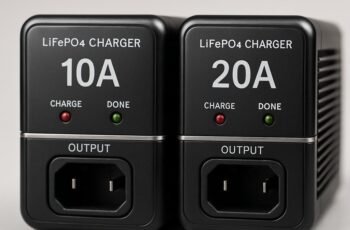
We recently evaluated a 4S LiFePO4 pack and found that charger compatibility hinges on matching voltage windows around 3.6–3.65 V per cell, correct C-rate, and proper taper behavior. We’ll compare chemistries by impedance, isolation, and temperature sensing to prevent cross-chemistry risks. If you’re designing or selecting, you’ll want IEC-aligned safety features and robust diagnostics to minimize mis-voltage events—and you’ll see why practical wiring and protection interlocks matter before we commit to a solution.
Key Takeaways
- Ensure charger voltage and current profiles match LiFePO4 cells: 3.6–3.65 V per cell max, proper C-rates, and taper termination.
- Verify compatibility with mixed chemistries via impedance, voltage windows, and strict isolation to prevent safety hazards.
- Check temperature sensing integration: calibrated sensors, 3-wire measurement, EMI-reduced wiring, and derating when thresholds exceed.
- Assess system-level features: concurrent charging capability, pack isolation, fault resilience, and adherence to IEC/manufacturer specs.
- Confirm diagnostic and protection tooling: fault codes, safe interlocks, accurate state estimation, and robust balancing and thermal management.
Lifepo4 Charging Basics: Voltage, Current, and Safe Limits
We begin with the fundamental constraints: a LiFePO4 cell has a nominal voltage around 3.2 V and a stable charging voltage near 3.6–3.65 V per cell, with a recommended maximum of about 3.65 V to ensure long cycle life. We address charging basics by focusing on voltage limits, safe current, and defined charging profiles that align with standard chemistries. Our guidance emphasizes that charging profiles must respect C-rate, termination voltage, and taper behavior to minimize polarization losses. Temperature sensing and safety are integral: include accurate cell temperature readings, derating when thresholds are exceeded, and protective interlocks. We specify safe current as a function of SOC, age, and packing strategy, avoiding overcurrent scenarios. Clear documentation ensures reproducible, rate-consistent performance across chargers and implementers.
Lifepo4 and Other Chemistries: Safe Interactions and Pitfalls
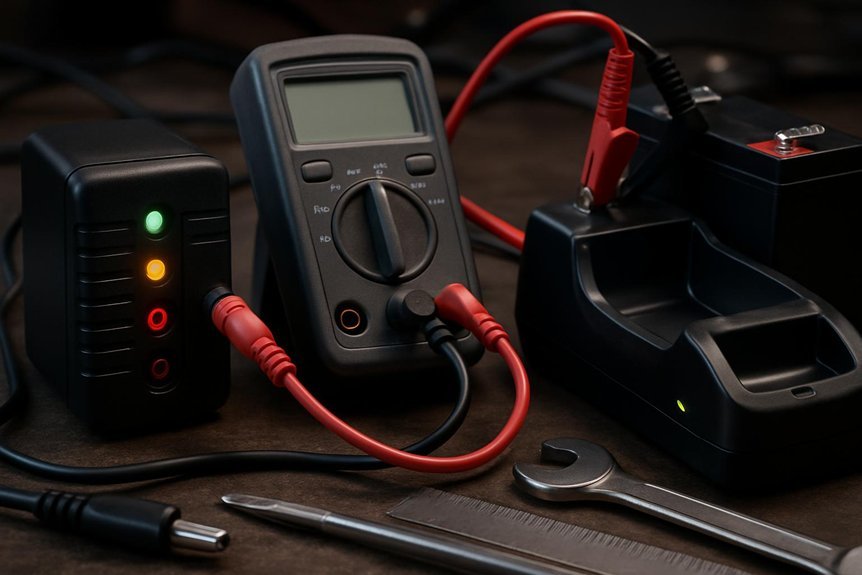
How do LiFePO4 cells interact safely with other chemistries in mixed or multi-chemistry systems? We analyze compatibility through impedance, voltage windows, and charge termination to minimize cross-chemistry risks while preserving performance. Our guidance emphasizes standardized safety margins, proper isolation, and predictable behavior under mixed-load conditions. We address lithium use cases where LiFePO4 coexists with other chemistries, highlighting failure modes such as unequal aging, parasitic reactions, and thermal coupling. Adhering to manufacturer specifications and safety standards reduces hazards and improves diagnostics in mixed environments.
LiFePO4 safety in mixed chemistries hinges on impedance, voltage windows, and strict isolation.
- Mixed chemistry risks: cross-talk, capacity imbalance, and differential aging
- Isolation and segregation requirements for safety
- Voltage window enforcement and state-of-charge tracking
- Charger logic alignment to prevent overcharging
- Monitoring strategies for early anomaly detection
Balancing, Wake-Ups, and Temperature Sensing: Practical Wiring for Lifepo4
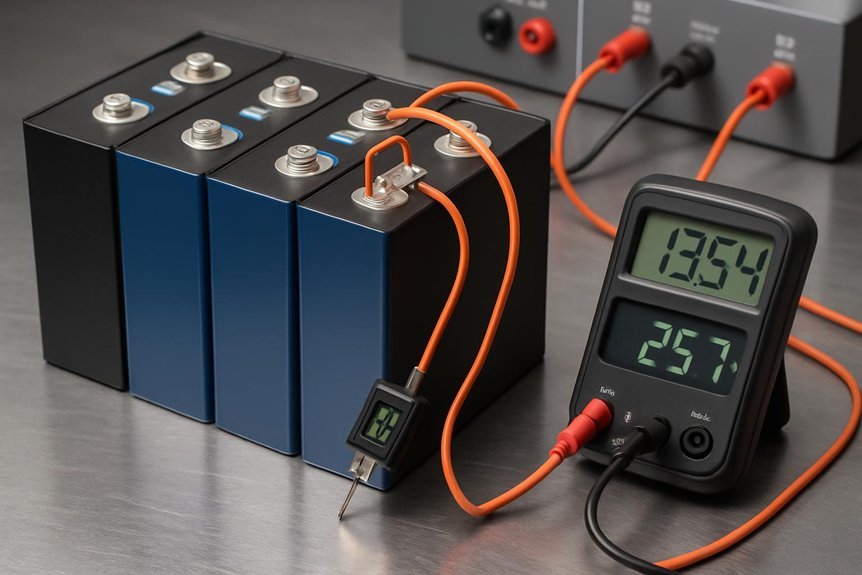
Ever wonder how to implement reliable Balancing, Wake-Ups, and Temperature Sensing for LiFePO4 packs in real circuits? We approach this with precise wiring strategies that respect cell voltage, impedance, and safety margins. Balancing wake ups occur when BMS monitors detect outliers and initiates current redistribution or passive bleed paths only after stable cell delta criteria are confirmed per IEC 62368-style safety profiles. Temperature sensing requires calibrated NTC sensors or RTDs with 3-wire measurement and proper isolation from high-current return paths. We pair sense lines with differential ADCs, reporting trends to the microcontroller on a defined sampling schedule. Interconnects use twisted pairs, short runs, and shielded conduits to minimize EMI. Ground references align with pack-negative, ensuring predictable fault behavior and reliable state estimation.
Choosing a Lifepo4 Charger: Use-Case Criteria and Pitfalls
Selecting a LiFePO4 charger hinges on explicit use-case criteria and known pitfalls that impact safety, longevity, and performance. We evaluate compatibility, charging profiles, and fault resilience to prevent overcurrent or mis-voltage events that degrade cells. Our criteria cover power supply headroom, connector standards, and enclosure suitability for concurrent charging across packs. We also flag pitfalls like mismatched chemistry prompts, insufficient cascading controls, and temperature-sensing gaps that trigger unsafe charging. By aligning charger features with our system, we ensure predictable results and robust protection.
- Concurrent charging capabilities and pack isolation
- Charger weight and mounting feasibility
- Supported end-of-charge voltages and taper behavior
- Communication protocols and safety interlocks
- Thermal management integration and fault signaling
Lifepo4 Best Practices and Troubleshooting: Maximize Lifespan and Safety
In LiFePO4 systems, maximizing lifespan and safety comes from disciplined best practices and proactive troubleshooting that build on sound charger compatibility and robust fault handling. We implement standardized monitoring, accurate state estimation, and proper balancing to minimize degradation. Our approach emphasizes clean electrical isolation, temperature-aware charging profiles, and adherence to manufacturer specifications to preserve lifepo4 safety. We verify charger- battery communication with fault codes and safety interlocks, isolating anomalies before pack damage occurs. Diagnostics focus on voltage, current, and thermal margins, enabling rapid fault isolation and corrective action. We optimize charging efficiency through profile tuning, impedance checks, and thermal management, avoiding overcurrent and unnecessary high-rate stresses. Continuous documentation and periodic validation ensure long-term reliability and safe operation.
Frequently Asked Questions
Do Chargers Support Aging or Degraded Lifepo4 Cells?
Yes, chargers can accommodate aging behavior models and degraded LiFePO4 cells, but only within specified limits; they monitor voltage, current, and impedance to minimize degradation impact, assure safety, and maintain performance per standards-driven charging algorithms.
Can I Fast-Charge Lifepo4 Without Balancing?
We can’t safely fast-charge LiFePO4 without balancing. We follow strict safety checks, monitoring cell voltages and temps, ensuring balance, and adhering to standards. For reliability, balancing remains recommended even during expedited charging sessions.
Are There Temperature Limits for Simultaneous Multi-Cell Packs?
We say yes: there are temperature limits for simultaneous packs; exceeding them accelerates aging concerns and degrades cells. We monitor thermal derating, balance in packs, and follow standards to prevent degraded cells and ensure safe operation.
How Do Chargers Handle Partial State of Charge Without Damage?
We handle partial charge safely by balancing each cell, monitoring SOCs, and applying C/-rate limits; this prevents cell degradation and avoids overcharge, ensuring uniform voltage, temperature control, and adherence to standards-driven charging profiles.
What Indicators Confirm Safe Termination of Lifepo4 Charging?
We confirm safe termination of LiFePO4 charging via precise safe termination indicators and charging termination signals, aligning with standards: negative delta V, proper voltage termination, temperature bounds, and current taper thresholds, ensuring safe termination indicators without overshoot.
Conclusion
We’ve walked through the critical engineering checkpoints, and the stakes are real: a single misstep can cascade into unsafe voltages, imbalanced packs, or degraded longevity. As we close, the question isn’t just “which charger,” but “how robustly can we enforce IEC-aligned protections, accurate temperature sensing, and proper isolation across chemistries?” Trust the standards-informed path, verify wake-up and taper behavior, and design for predictable interlocks. The outcome hinges on disciplined implementation—and the suspense is whether it’s enough.