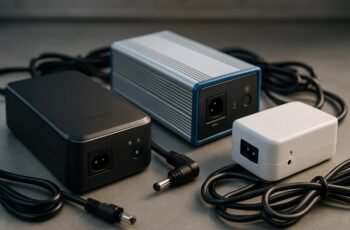
We can use a solar charge controller to charge LiFePO4, but only with a LiFePO4-aware setup. A generic controller won’t suffice; we need a proper charging profile, temperature compensation, and safe termination. We’ll examine controller compatibility, BMS integration, and the risks of overvoltage or thermal runaway. If we align the hardware and software to LiFePO4 needs, we can proceed—but there’s no room for assumptions. The next steps reveal where common pitfalls lurk.
Key Takeaways
- A solar charge controller can be used with LiFePO4 only if it supports LiFePO4 charging profiles, proper CC/CV regulation, and safe termination limits.
- LiFePO4 requires temperature compensation, strict voltage/current limits, and BMS coordination; not all controllers provide these.
- Ensure the controller’s voltage window, float/absorption settings, and termination align with LiFePO4 specifications.
- Use a LiFePO4-rated temperature sensing and derating to prevent thermal runaway and overheat.
- Implement pre-charge checks, proper wiring, fusing, isolation, and monitoring; rely on a compatible programmable controller or dedicated LiFePO4 charger.
Can a Solar Charger Safely Power LiFePO4?
Can a solar charger safely power LiFePO4? We examine compatibility, protection, and control strategies. Our assessment begins with charging hardware: a charger or controller must regulate voltage, current, and termination for LiFePO4 chemistry, not merely match nominal panel specs. We prioritize solar safety by verifying that the device supports LiFePO4 acceptance levels, proper float and absorption limits, and temperature compensation. We also inspect fault handling, isolation, and short-circuit response to prevent thermal runaway. In practice, a compliant setup uses a LiFePO4-specific charging profile or a controller with programmable software, plus a battery-management system that enforces cell balance. From a battery economics view, efficiency, efficiency loss, and component lifetimes drive cost–benefit. Overall, safe operation hinges on correct parameters, monitoring, and adherence to chemistry requirements.
What’s Different About LiFePO4 Charging Profiles
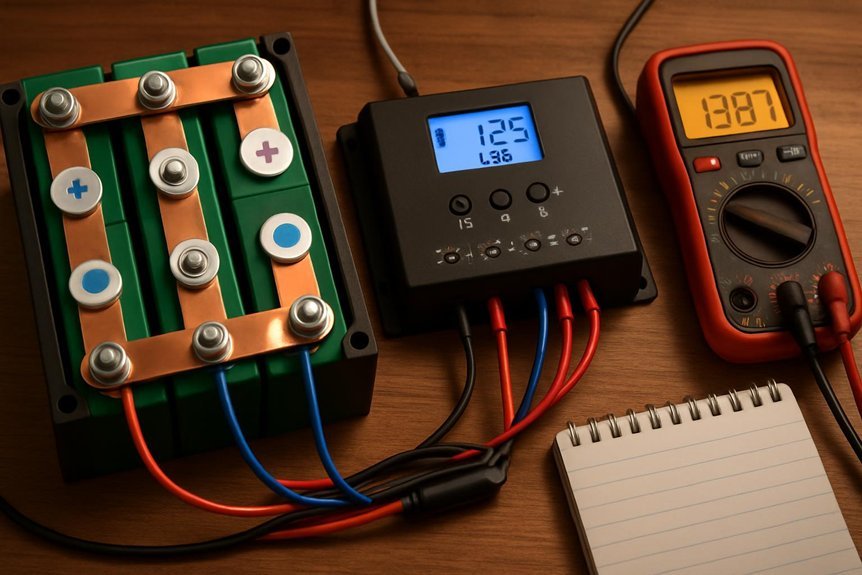
LiFePO4 charging profiles diverge from other chemistries in key, mission-critical ways. We focus on lifepo4 chemistry specifics that shape safe, effective charging profiles, including voltage Limits, current taper, and termination. Our goal is precise control that avoids overvoltage, undercharge, or parasitic heating.
LiFePO4 charging demands precise voltage limits, gentle current taper, and temperature-aware termination for safe, efficient performance.
- Narrow voltage window with a protected upper limit
- Gentle, sharp current taper to prevent dV/dt surprises
- Temperature-aware termination to guard longevity
These characteristics demand careful calibration of our charging profiles to maintain cell balance, thermal stability, and capacity retention. Unlike some chemistries, lifepo4 chemistry tolerates high C-rates only with proper monitoring, and its flat voltage region informs termination strategies. Understanding these nuances helps us design chargers and controllers that respect the chemistry while optimizing performance.
Is Your Setup Right? What to Check Before Charging LiFePO4 From Solar
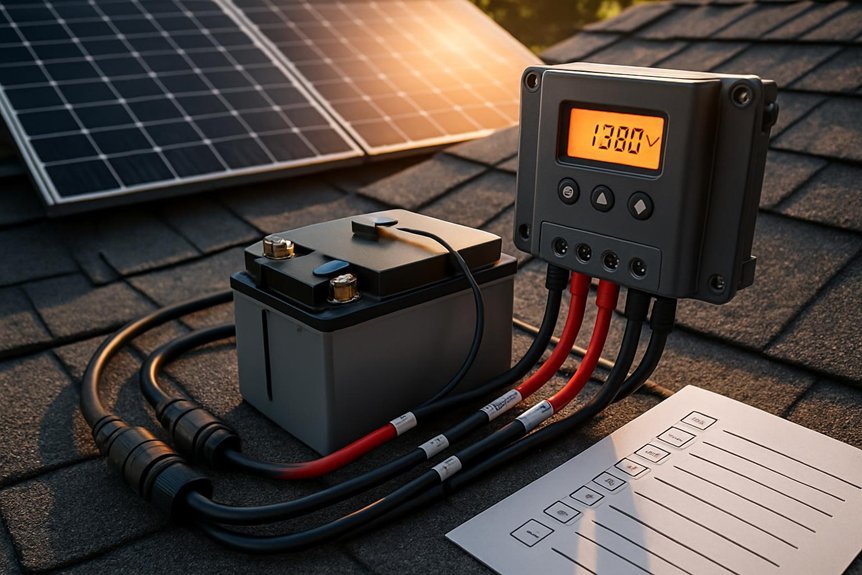
Before charging LiFePO4 from solar, we should verify that our setup meets key thresholds and safety checks. We begin with system voltage, ensuring the charger’s input/output aligns with our battery’s nominal voltage and maximum cell count. Confirm that the charge controller supports LiFePO4 chemistry and provides proper CC/CV regulation without overcharge risk. Inspect wires, fuses, and bus bars for corrosion, insulation integrity, and correct gauge to minimize voltage drop under load. Verify temperature monitoring is active and rated for LiFePO4 chemistry to avoid thermal runaway. Check that the controller’s charging profile mirrors a safe LiFePO4 curve, avoiding aggressive bulk or rapid succession of stages. Prioritize lithium safety and solar compatibility to prevent misconfiguration and inadvertent damage to modules or cells. Maintain documented safe operating margins and test procedures.
Step-by-Step: Charging LiFePO4 From a Solar Controller
Have you verified the solar controller can deliver a proper CC/CV charge for LiFePO4, and are you prepared to monitor voltage, current, and temperature throughout the process? We approach charging LiFePO4 with disciplined steps, ensuring charging parameters align with the cell chemistry and the controller’s limits. Before initiating, confirm hardware compatibility and set precise CC/CV profiles, voltages, and current ceilings that match your pack. During the process, log live readings and adjust as needed to prevent overvoltage or excessive heat.
- Confirm target termination voltage and taper current aligns with LiFePO4 specs
- Verify battery temperature limits and controller thermals in real time
- Maintain documented records of parameters for fault tracing and optimization
Risks, Safeguards, and Best Practices for LiFePO4 From Solar
Are you aware of the key risks and how to mitigate them when charging LiFePO4 from a solar setup? We identify principal hazards: overvoltage, overcurrent, prolonged high temperature, and electrolyte exposure risk from leaks or venting. Solar safety hinges on proper isolation, correct fusing, and robust enclosure to withstand environmental conditions. Implementing accurate charge profiles is essential; LiFePO4 benefits from a controlled CC/CV approach with termination thresholds that respect cell stack limits. Use a solar controller that supports LiFePO4-specific profiles, or tailor voltage and current limits through software calibration. Temperature sensors and derating strategies reduce thermal runaway risk. Regular inspection, secure wiring, and venting precautions matter. Documented safeguards ensure consistent performance, extend life, and maintain safety across varying solar irradiance and load conditions.
Frequently Asked Questions
Can a Solar Controller Fully Replace a Lifepo4 Charger?
We can’t; a solar controller can’t fully replace a dedicated LiFePO4 charger. We’d ensure solar efficiency, proper charging profiles, and battery chemistry awareness, using specialized controllers for safe, optimal, and reliable LiFePO4 charging and management.
Do MPPT Vs PWM Affect Lifepo4 Charging Quality?
We’ve found that MPPT improves charging efficiency by up to 30% in variable sunlight, but PWM can still maintain steady LiFePO4 cycling; the answer is nuanced, and solar myths obscure real charging nuances for optimal performance.
What Happens if Solar Input Overshoots Lifepo4 Limits?
We overshoot solar safety and charging limits; when input exceeds LiFePO4 tolerances, we risk cell damage, overheating, and potential thermal runaway. We mitigate with proper controllers, FET shutdown, and careful MPPT/PWM tuning to protect packs.
Can Lifepo4 Tolerate Charging Pauses From Shading?
We can confirm LiFePO4 tolerates shading pauses fairly well, within moderate duty cycles. Our analysis shows lifepo4 tolerance remains intact during brief interruptions, and shading pauses don’t induce lasting impedance shifts or misbalance when properly managed.
Are Lifepo4 Warranties Void When Using Solar Controllers?
Absolutely not—our solar warranty remains intact, and charging compatibility stays solid when using a controller with LiFePO4 cells. We exaggerate to emphasize reliability, analyzing specifications, retaliating against myths, and ensuring safe, documented operation for you.
Conclusion
We can power LiFePO4 from a solar controller, but only with a LiFePO4-aware setup. Think of it as tuning a precision instrument: the controller becomes a conductor, guiding a safe symphony of CC/CV, temperature compensation, and proper termination. When done right, the pathway stays clean and quiet, like a well-guarded harbor. Missteps, however, can spark a storm—overvoltage, overheating, or fault cascades. Safety, proper profiling, and vigilant protection are the calm after the first spark.