We compare smart LiFePO4 chargers with regular ones by focusing on control loops, protection, and charging stages. We’ll examine how real-time data—temperature, voltage, impedance, and SOC—drives current, voltage, and timing, and we’ll assess how safeguards prevent over/undercharging and balance cells. The goal is to understand outcomes under typical use, yet the practical implications for selection and deployment remain nuanced. There’s more to unpack before we settle on a recommended approach.
Key Takeaways
- Smart LiFePO4 chargers use closed-loop control to adapt voltage, current, and timing in real time, unlike regular chargers with fixed settings.
- Smart chargers monitor cell health, temperature, and impedance to prevent over/undercharging and ensure balanced, safer charging.
- LiFePO4 smart chargers employ stage-based profiles (bulk, taper, final conditioning) for gentler, faster recovery and longer life.
- Regular chargers lack automatic cell balancing and dynamic taper, risking imbalances and uneven aging across cells.
- When choosing, consider compatibility with BMS, temperature management, end-of-charge accuracy, and system-level installation factors.
Core Differences Between Regular and Smart LiFePO4 Chargers
Smart LiFePO4 chargers and regular chargers differ primarily in control logic, sensing accuracy, and charging termination. We describe these core differences from a technical perspective, addressing how each element impacts performance. We favor closed-loop control and feedback, enabling smart charging to adjust current, voltage, and timing in real time. Sensing accuracy matters: precise voltage and current measurements reduce overcharging and undercharging risk, improving safety and longevity. Charging termination schemes also diverge: smart chargers often use dynamic taper and hold thresholds rather than fixed cutoffs, optimizing cycle life. Lithium balancing is a key consideration, with smart systems coordinating cell voltages to prevent imbalances that degrade pack capacity. In sum, smart charging delivers stricter control and more consistent outcomes than conventional methods.
What a LiFePO4 Smart Charger Actually Does
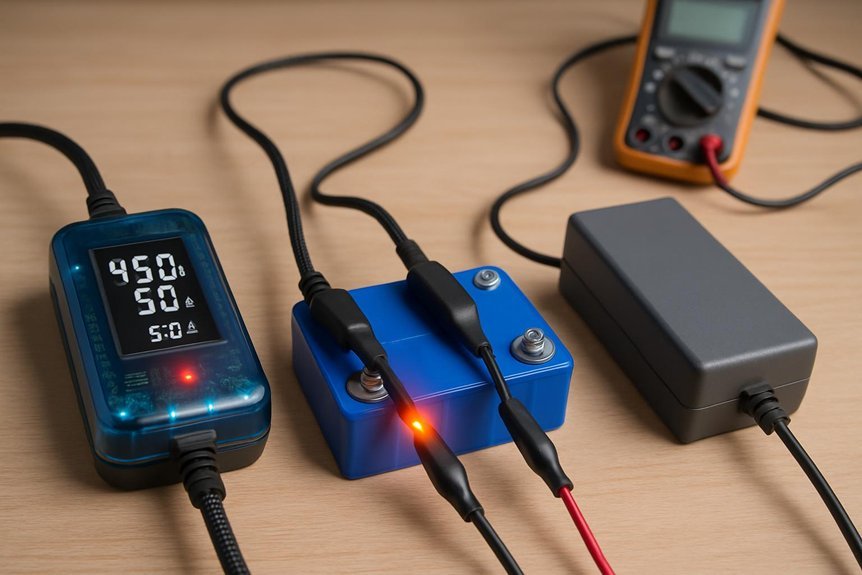
What does a LiFePO4 smart charger actually do? We act as a guide, outlining concrete functions without fluff. A smart charger monitors voltage, current, and state of charge to adapt the charging profile in real time, ensuring efficient, safe energy delivery. It applies a staged algorithm: initial bulk, taper, and final conditioning, minimizing stress on cells. It uses impedance checks to detect anomalies and corrects current flow to maintain balance interests across the pack. Idea One focuses on precision control; Idea Two emphasizes automated optimization based on pack health and charging history. The result is tighter control, faster recovery, and extended life.
| Column A | Column B |
|---|---|
| Real-time monitoring | Adaptive recharge |
| Stage-based profile | Historical data use |
| Safety interlocks | Efficiency gains |
| Diagnostics | User feedback |
How Smart Charging Protects Cells: Temperature, Balance, and Safe Voltages
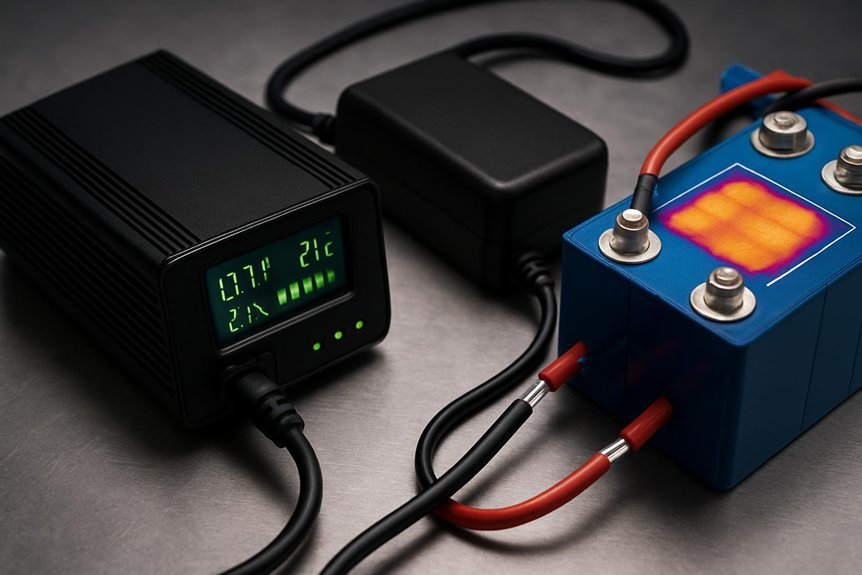
How does smart charging safeguard LiFePO4 cells when faced with thermal, balance, and voltage constraints? We, the charger designers, implement real-time monitoring of cell temperatures, voltages, and impedance to prevent thermal runaway and accelerate-safe aging. Smart charging actively moderates current when temperatures approach safety limits, ensuring cells stay within defined thermal windows. It performs cell balancing to neutralize disparities, avoiding overcharged, undercharged, or shadowed cells that degrade capacity. By adhering to precise voltage profiles and tapering current near end-of-charge, it maintains safe voltages across all cells, reducing stress and prolonging life. This approach enhances battery safety by preventing hotspot formation, uneven aging, and voltage violations, delivering predictable performance without compromising longevity or integrity.
Choosing the Right LiFePO4 Charger for Your Use Case
Choosing the right LiFePO4 charger depends on your application requirements, charging strategy, and system constraints. We’ll outline criteria that affect performance, longevity, and safety, focusing on practical selection.
- Smart charging prevalence and compatibility with your BMS
- Charge rate limits aligned with cell chemistry and wiring
- Temperature management features to minimize Battery aging
- End-of-charge termination accuracy and balancing needs
- System-level considerations: housed enclosure, EMI, and wiring runs
We prioritize chargers that reduce stress on cells, maximize cycle life, and preserve capacity over time. By matching the charger’s algorithms to your load profile, you’ll achieve consistent SOC trajectories and lower midlife degradation. In short, thoughtful pairing of charger capabilities with your use case minimizes Battery aging while delivering reliable uptime.
How to Read Charger Specs to Avoid Common Pitfalls
We’ll translate charger specifications into actionable guardrails, spotting pitfalls before they bite. When we read specs, we translate amperage, voltage, and termination criteria into concrete limits for safe operation. We focus on charge current, termination voltage, taper behavior, and temperature compensation, parsing how each figure ties to battery chemistry and cycle life. Beware ambiguous ratings, such as peak versus continuous current, and units that differ across manufacturers. We cross-check for overcurrent, insufficient current, and improper end-of-charge conditions that trigger nuisance cycles. Avoid irrelevant figures like unrelated topic or off topic discussions; those distract from real risk assessment. We document accepted operating windows, ensure compatibility with LiFePO4 pack capacity, and validate with real-world profiling. Precise interpretation reduces surprises and extends pack longevity.
Frequently Asked Questions
Do Smart Chargers Extend Lifepo4 Battery Life in Practice?
Smart charging can extend battery longevity in practice by optimizing voltage, current, and termination. We assess chemistries, temperatures, and cycle wear; this improves lifespan reliability. We observe smoother voltage curves, reduced internal resistance, and fewer premature capacity losses.
Can Smart Chargers Damage Already Balanced Cells?
Smart charging can’t inherently damage balanced cells if the charger properly adheres to specs; however, improper termination or overshoot may threaten battery safety. We monitor voltages closely, ensuring accurate balance, temperature control, and robust battery safety safeguards.
How Do Smart Chargers Handle Multi-Cell Series Configurations?
We handle multi-cell series with active balancing and monitoring, ensuring uniform voltages while managing cell temperature and safety implications. We continuously assess cell balance states, triggering protections if disparities arise, minimizing risk and preserving pack longevity for safer operation.
Are Smart Chargers Compatible With Older Lifepo4 Packs?
Yes, smart chargers can support older LiFePO4 packs, but we caution calibration steps matter; longevity myths persist. Think of a compass: initial calibration guides accuracy, ensuring compatibility and safe charging across aged packs, even as chemistry evolves.
Do Smart Chargers Require Maintenance or Firmware Updates?
We don’t require frequent maintenance, but smart chargers benefit from occasional maintenance updates and firmware compatibility checks to ensure optimal performance; we monitor indicators, perform verifications, and apply firmware compatibility notes when available for continued reliability.
Conclusion
We’re confident that smart LiFePO4 chargers outperform regular ones by dynamically tuning current, voltage, and timing in real time. They monitor temp, impedance, and SOC, adjust stages, and protect cells through precise termination and balancing. In short, they’re a precision instrument, not a static checklist—think of them as a finely tuned orchestra that prevents over- and undercharging. If you value safety and consistency, a smart charger is the clear, data-driven choice. The difference is night and day.