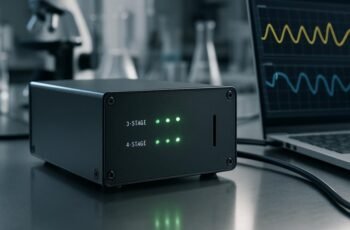
Recent data shows LiFePO4 packs tolerate high-impedance quirks better when staged charging is used. We approach multi-stage charging with a precise, data-driven methodology—bulk, absorption, and float—governed by real-time impedance, temperature, SOC, and ambient conditions. We’ll outline robust protections, correct sizing, and troubleshooting steps that hold across aging and multi-string configurations. If our targets meet those checks, the next steps reveal how to tune endpoints and verify performance under worst-case scenarios.
Key Takeaways
- Three-stage LiFePO4 charging (Bulk, Absorption, Float) optimizes speed, balance, and long-term stability with temperature- and impedance-informed transitions.
- Tailored profiles use real-time monitoring, validated thresholds, and endpoint documentation to minimize stress and maximize safety.
- Charger sizing accounts for pack chemistry, voltage, energy, worst-case ambient conditions, and robust protection features.
- Pack current limits are set by chemistry tolerance and cooling, typically capping peak currents to 0.5–1C for safety and longevity.
- Troubleshooting frameworks map symptoms to fixes, emphasize root cause analysis, and ensure robustness across aging cells and multi-string configurations.
LiFePO4 Charging 101: Why a Tailored Profile Matters
Tailoring a LiFePO4 charging profile isn’t optional—it’s essential for efficiency, longevity, and safety. We quantify effects by measuring voltage, current, and temperature responses across cycles, then translate results into actionable charging profiles. Our approach combines real-time monitoring with validated thresholds, ensuring each phase aligns with cell chemistry and pack configuration. We evaluate impedance changes, state of charge estimates, and ambient conditions to minimize stress and prevent overcharging. By documenting repeatable endpoints, we establish consistent charging profiles that maximize usable capacity while reducing degradation. Safety protocols are embedded in every step, from connector integrity to fault handling and thermal management. This data-driven method yields predictable performance, enabling informed decisions for maintenance, replacement, and operation without compromising safety or reliability.
The Three-Stage LiFePO4 Charge Explained: Bulk, Absorption, and Float
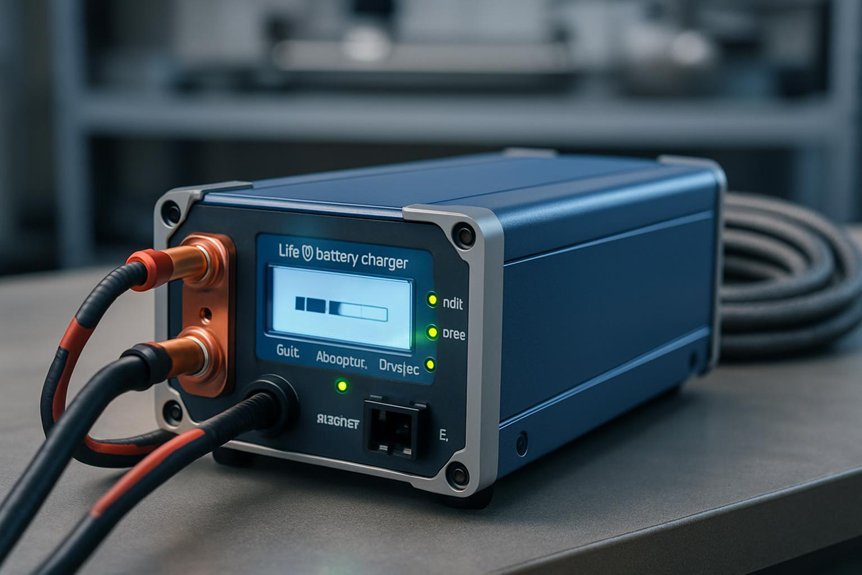
From our prior work on LiFePO4 charging, we now define the three-stage scheme—Bulk, Absorption, and Float—as a structured, data-driven approach to maximize efficiency and longevity. We present each stage with objective criteria: current limits, voltage targets, and transition thresholds derived from cell impedance and temperature sensors. Bulk delivers high current to rapidly reach the absorption setpoint while maintaining safe temperatures. Absorption holds the voltage while tapering current to complete cell balancing and reduce polarization losses. Float sustains full charge with minimal current, ensuring long-term protection against overvoltage. We monitor calibration drift and thermal consistency to keep stage boundaries aligned with real-world cell behavior, ensuring repeatable performance and predictable degradation. This discipline underpins robust, repeatable charging outcomes.
How to Size a LiFePO4 Charger for Your Pack
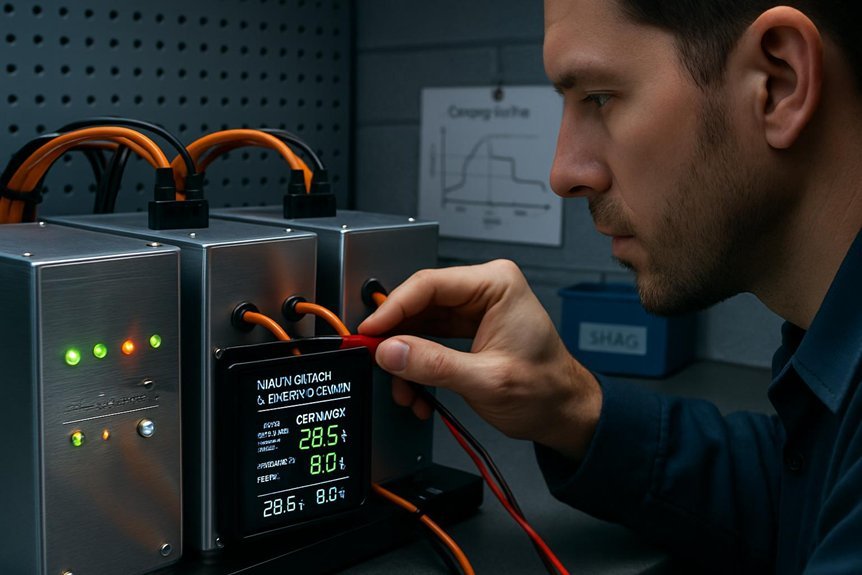
We start by outlining charger sizing rules and how pack current limits govern safe operation, then translate those rules into a repeatable sizing method. We compare charger capability to the pack’s maximum continuous discharge and charge currents, ensuring headroom for multi-stage charging. Our approach is data-driven and precise, providing a clear, repeatable path from pack specs to charger selection.
Charger Sizing Rules
How do you size a LiFePO4 charger for your pack? We approach sizing with a data-driven, methodical process. We begin by defining pack chemistry, nominal voltage, and pack energy (Wh). Then we select a charging current profile aligned with cell balance and temperature limits, typically a C-rate range that preserves longevity. We translate these choices into charger amperage, voltage clamps, and taper thresholds, ensuring the charger accommodates worst-case ambient conditions. We verify that the charger’s voltage window matches the pack’s full-charge and float targets, and that protection features—overcurrent, short-circuit, and thermal shutoffs—activate reliably. We guard against irrelevant topics and unrelated concerns that don’t influence safe charging, focusing strictly on performance, efficiency, and repeatability. Finally, we document tolerances and test each charger against the designated pack.
Pack Current Limits
Is there a practical maximum current for a LiFePO4 pack that preserves longevity while meeting performance needs? We quantify pack current limits with three factors: chemistry tolerance, heat dissipation, and age-related degradation. We anchor decisions to the pack’s current rating and thermal profile, then validate against measured cell temperatures during constant-current charging. Our method yields a conservative, data-driven rule: cap peak currents to 0.5C to 1C for typical LiFePO4 cells, adjusting by cell quality and pack cooling. We translate this into charge stages to balance speed and longevity, and we document the safety margins for pack safety. Below, table reveals representative ratings and outcomes.
| Cell rating (C) | Observed temp rise (°C) | Recommended cap (A) |
|---|---|---|
| 0.5 | 7 | 2.0 |
| 1.0 | 9 | 4.0 |
| 2.0 | 12 | 6.0 |
Fast, Safe Charging Habits That Extend LiFePO4 Life
Fast charging can be safe and effective for LiFePO4 batteries when you follow disciplined, data-driven practices. We present a methodical approach that centers on monitoring ключ indicators: temperature, voltage rise, and current taper. By maintaining tight control, we minimize thermal excursions and voltage overshoot, preserving cell integrity across cycles. We advocate charging safety as a continuous discipline: precondition packs, verify wiring integrity, and confirm ambient conditions before initiation. Our cycle optimization targets aggressiveness only within safe margins, using staged current profiles and precise termination criteria tied to voltage and temperature thresholds. We document each session, compare results against baselines, and adjust parameters to sustain capacity retention. Together, we translate measurements into actionable limits, keeping performance predictable and extending LiFePO4 life through disciplined charging.
Choosing the Right Charger: Criteria by Pack Size, Voltage, and Use
We start with a data-driven framework: match charger specifications to pack size, nominal voltage, and intended use, then validate each match with real-world testing. We outline criteria by dimension: pack size dictates current ceilings and connector standards; nominal voltage guides charging stages and safety margins; use profile determines endurance requirements and temperature tolerance. We evaluate three core deliverables: voltage compatibility, current limits, and sensing accuracy. Two word ideas, charger sizing, surface repeatedly in our notes to keep scope tight. We prefer modular, scalable units that enable cross‑compatibility across LiFePO4 packs. We quantify margins, document test results, and adjust as needed. Our method yields reproducible decisions, reduces over or under‑sizing, and aligns equipment with lifecycle expectations. This disciplined approach minimizes waste and maximizes charging reliability for diverse deployments.
Troubleshooting LiFePO4 Multi-Stage Charging: Symptoms to Fixes
Our data-driven framework helps pinpoint where multi-stage LiFePO4 charging goes off-spec in practical deployments. We map symptoms to fixes with trackable metrics, ensuring repeatable outcomes. We prioritize root cause diagnosis before adjustment, preserving safety and efficiency. We emphasize future proofing so remedies tolerate aging cells and environmental shifts, and we assess control logic for robust parallel chaining where multiple strings share stages. Here are common symptoms and fixes:
- Symptom: premature absorption or voltage drift; Fix: recalibrate stage thresholds and verify sensor integrity.
- Symptom: stalled taper; Fix: validate charge-ending criteria and purge false resistive readings.
- Symptom: oscillations around CV; Fix: stabilize loop gains, inspect cabling, and update firmware.
- Symptom: undercharge on cold startups; Fix: implement temperature-aware taping of currents.
- Symptom: inconsistent balance across packs; Fix: resequence parallel strings and monitor cell imbalances.
Frequently Asked Questions
How Do Temperature Changes Affect Multi-Stage Lifepo4 Charging Curves?
Temperature drift shifts LiFePO4 charging curves, reducing charging efficiency as ambient hot or cold alters reaction rates and impedance. We systematically monitor cell temps, adapt stages, and quantify impacts to maintain consistent efficiency and precise, data-driven profiles.
Can Multi-Stage Charging Degrade Cell Balance Over Time?
Yes, we believe multi-stage charging can contribute to degradation risk over time, though it’s typically gradual; balancing drift may occur if stages fail to maintain precise cutoffs, temperature compensation, or proper termination, underscoring data-driven monitoring and calibration.
What Is the Impact of Aging on Stage Transition Thresholds?
We see aging raises thresholds, but it doesn’t abruptly halt stage transitions; instead, aging shifts them gradually, affecting stage balance. We quantify aging thresholds, monitor drift, and adjust controls to preserve consistent, data-driven stage sequencing.
Do Different BMS Brands Affect Multi-Stage Charge Accuracy?
Yes, different BMS brands can affect multi-stage charge accuracy due to Stage transition drift; we’ve measured compatibility variance, noting BMS brand compatibility gaps. Our methodical tests quantify drift and ensure precise, data-driven recommendations for readers.
Is Integration With Solar or Wind Sources Compatible With Stages?
We answer yes, solar integration and wind integration align with stages, like a disciplined crew syncing sails. We analyze data, map fluctuations, and verify stability, ensuring real-time balancing and robust safety margins for hybrid charging accuracy.
Conclusion
We’ve mapped a data-driven path through LiFePO4 charging, showing how multi-stage control—Bulk, Absorption, and Float—optimizes efficiency, safety, and longevity. By aligning impedance, temperature, SOC, and ambient data with tailored endpoints, we guarantee repeatable, robust performance across aging and multi-string configurations. Our sizing caps peak currents to protect cells, and our troubleshooting framework preserves calibration and sensor integrity. In short, precision charging isn’t optional—it’s the silicon-sinew of durable power, a truly hyper-efficient standard.