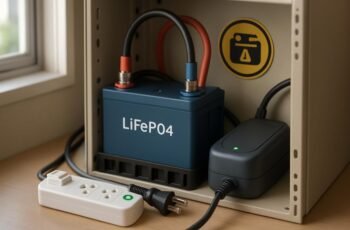
We often think that LiFePO4 charging systems require little upkeep, but neglecting preventive maintenance can lead to reduced performance and costly failures. By carefully scheduling regular inspections and tests, we can detect early signs of issues like inconsistent charging or overheating before they escalate. Understanding the critical steps and tools involved will help us maintain system reliability and extend battery life—let’s explore how to build an effective maintenance routine that keeps everything running smoothly.
Key Takeaways
- Schedule monthly visual inspections to detect battery casing damage, terminal corrosion, and label legibility for early issue identification.
- Perform quarterly battery capacity tests and monthly voltage checks to monitor internal resistance and capacity degradation.
- Evaluate charger performance regularly by measuring output voltage, current, efficiency, and connector resistance against specifications.
- Use essential tools like multimeters, battery testers, and thermal imaging, alongside safety gear, for thorough and safe maintenance.
- Maintain detailed maintenance logs with dates, actions, and anomalies, integrating tracking software for optimized scheduling and system reliability.
Why Preventive Maintenance Matters for LiFePO4 Charging Systems
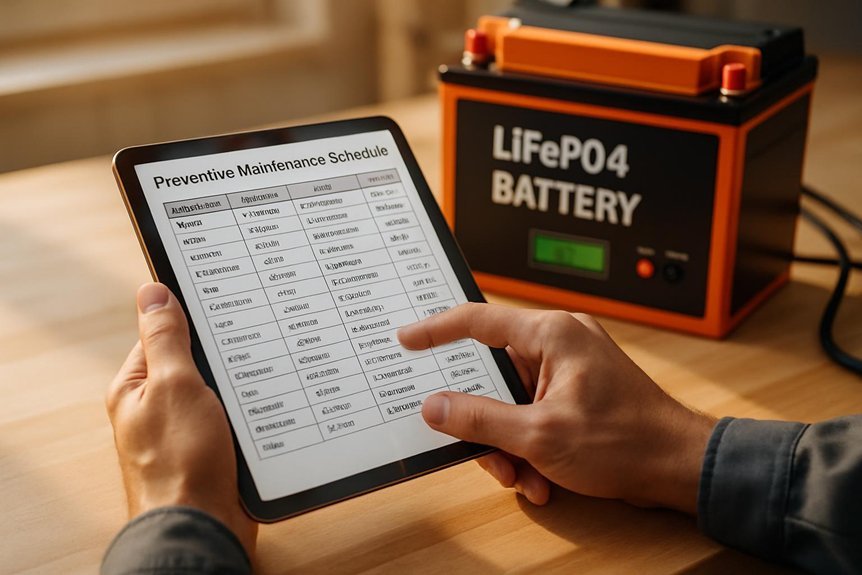
Although LiFePO4 batteries are known for their durability and safety, we must recognize that their charging systems require regular preventive maintenance to confirm peak performance and longevity. Neglecting maintenance can degrade charging efficiency, leading to incomplete or inconsistent battery cycles that reduce overall battery lifespan. By systematically inspecting and servicing chargers, we guarantee ideal current delivery and voltage regulation, preventing overcharging or undercharging conditions that stress battery cells. Maintaining charging components also minimizes heat generation and electrical resistance, both critical for preserving battery integrity. Ultimately, preventive maintenance is essential to sustain the precise parameters needed for LiFePO4 chemistry, maximizing energy retention and extending operational life. Ignoring this routine risks efficiency losses and premature battery failure, undermining the inherent advantages of LiFePO4 technology.
How to Inspect Your LiFePO4 Battery and Charger Regularly
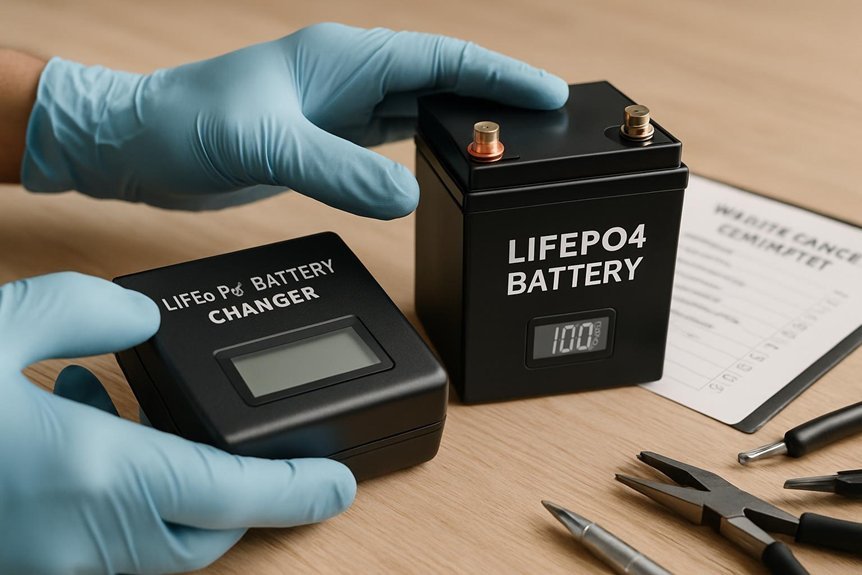
Let’s start by conducting a thorough visual inspection of the LiFePO4 battery to identify any signs of damage, swelling, or corrosion. Next, we’ll evaluate the charger’s performance by monitoring output voltage and current to guarantee it operates within specified parameters. Regularly performing these checks helps us detect potential issues before they impact system reliability.
Visual Battery Inspection
Regular visual inspections of your LiFePO4 battery and charging system are essential to identify early signs of wear, damage, or malfunction. Evaluating battery condition through visual indicators helps us maintain system reliability and safety. We recommend following a maintenance checklist with these inspection techniques:
- Examine the battery casing for cracks, swelling, corrosion, or discoloration—common issues signaling visual deterioration or battery wear.
- Inspect terminals and connectors for corrosion, loose connections, or signs of overheating, which can compromise performance.
- Verify that labels and safety markings remain legible to guarantee proper handling and compliance.
Adhering to a consistent inspection frequency—ideally monthly—allows us to detect and address problems before they escalate, optimizing battery lifespan and system efficiency.
Charger Performance Check
We begin by evaluating the charger’s output voltage and current against the manufacturer’s specifications to confirm proper operation. Measuring these values allows us to verify that the charger delivers consistent power within the acceptable tolerance range. Next, we assess charger efficiency by calculating the ratio of output power to input power, identifying any losses that could indicate internal faults. Monitoring key performance indicators such as charging time, temperature stability, and current ripple helps us detect anomalies early. Regularly checking connectors and cables for resistance changes guarantees minimal energy loss and efficient charge delivery. By systematically analyzing these parameters, we maintain peak charger performance, prolong battery life, and prevent unexpected failures in LiFePO4 charging systems. This disciplined approach is essential for reliable, long-term operation.
What Tools and Equipment You Need for Effective Maintenance
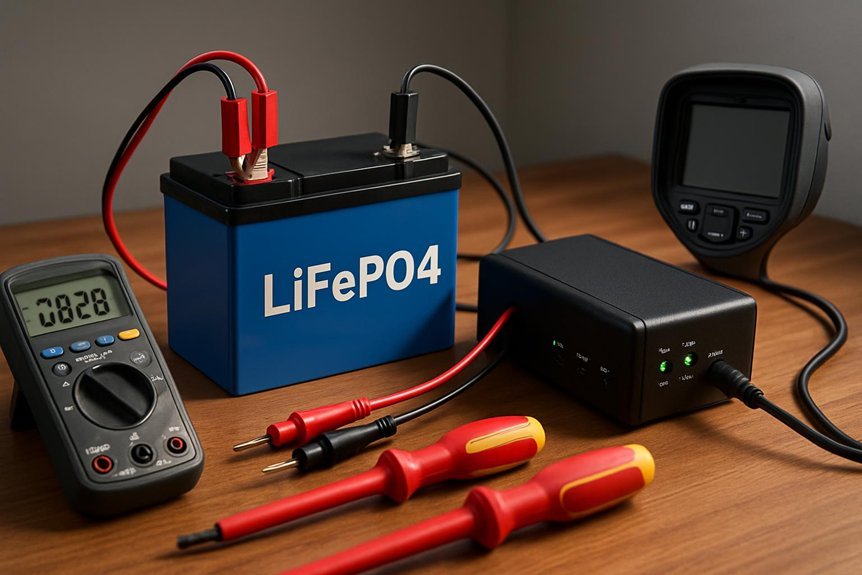
To maintain LiFePO4 charging systems effectively, we need essential diagnostic instruments like multimeters and battery analyzers to assess performance accurately. Proper cleaning and inspection tools guarantee we can identify and address physical wear or corrosion. Additionally, using appropriate safety gear protects us during maintenance and prevents accidental damage.
Essential Diagnostic Instruments
Although maintaining LiFePO4 charging systems demands a detailed understanding of their components, having the right diagnostic instruments is essential for identifying faults early and ensuring peak performance. To conduct effective preventive maintenance, we rely on specific tools that measure system health accurately and track battery status over time. These instruments enable us to analyze performance metrics precisely and detect anomalies before failures occur.
Key diagnostic instruments include:
- Battery testers – Critical for evaluating cell voltage, internal resistance, and state of charge.
- Diagnostic tools – Multimeters and specialized analyzers that capture electrical parameters and system signals.
- Maintenance software – Platforms that aggregate data, monitor performance metrics continuously, and generate actionable reports.
Using these tools systematically enhances reliability and extends the lifespan of LiFePO4 charging systems.
Cleaning And Inspection Tools
Effective cleaning and inspection tools form the foundation of preventive maintenance for LiFePO4 charging systems. To maintain peak performance, we rely on specialized brushes, lint-free cloths, and isopropyl alcohol for precise cleaning techniques that remove dust, corrosion, and residue without damaging components. For inspection, magnifying lenses and digital microscopes enable detailed visual checks, while calibrated multimeters verify electrical continuity and connection integrity. Establishing an appropriate inspection frequency is critical; we recommend routine inspections aligned with manufacturer guidelines and operational demands to detect early signs of wear or contamination. By systematically using these tools and adhering to a strict inspection frequency, we guarantee the charging system’s reliability, extend its service life, and prevent unexpected failures through timely intervention based on empirical evidence.
Safety Gear And Accessories
When performing maintenance on LiFePO4 charging systems, we must prioritize safety by equipping ourselves with the proper gear and accessories. Adhering to maintenance best practices means using personal protective equipment (PPE) designed to mitigate risks such as electrical shock or chemical exposure. Essential safety gear includes:
- Insulated gloves and safety goggles – protect against electrical hazards and electrolyte splashes.
- Fire-resistant clothing – minimizes injury in case of thermal events or sparks.
- Voltage testers and insulated tools – allow for safe handling and diagnostics without compromising system integrity.
Using this equipment guarantees we maintain a controlled environment and reduces the likelihood of accidents. Incorporating these items into our preventive maintenance schedule is critical for effective, safe servicing of LiFePO4 charging systems.
How to Clean and Protect Your Charging System Components
Since contaminants like dust, moisture, and corrosion can greatly impair the performance and lifespan of LiFePO4 charging system components, we need to adopt a systematic cleaning and protection routine. First, we carefully disconnect power and use compressed air or a soft brush to remove loose debris, avoiding abrasive materials that could damage sensitive parts. For moisture and corrosion, we apply isopropyl alcohol with lint-free cloths to clean contacts and connectors thoroughly. After cleaning, we enhance component longevity by applying thin layers of specialized protective coatings, such as dielectric grease or corrosion inhibitors, to exposed metal surfaces. This prevents oxidation and electrical resistance buildup. Maintaining a consistent cleaning schedule and using appropriate protective agents guarantees peak functionality and extends the service life of key charging system components without compromising electrical integrity or safety.
When and How to Test Battery Health and Capacity
Although LiFePO4 batteries are known for their durability, we must regularly assess their health and capacity to guarantee peak performance and safety. Battery degradation occurs gradually, so timely capacity testing is essential. We recommend testing:
- Quarterly Capacity Testing: Measure actual amp-hour output under controlled discharge to detect capacity loss early.
- Monthly Voltage and Internal Resistance Checks: Use a battery analyzer to identify increases in internal resistance, signaling degradation.
- Post-Usage Testing: After heavy cycling or extended storage, perform a full capacity test to confirm battery integrity.
How to Spot Early Signs of Charging System Problems
Monitoring battery health and capacity provides valuable insight, but maintaining the overall charging system requires vigilance for early warning signs of malfunction. We must recognize common symptoms such as inconsistent charging voltages, unusual heat generation, and erratic charging cycles. These indicators often signal underlying faults like loose connections, faulty sensors, or degraded components. Employing targeted troubleshooting techniques—including voltage measurements, thermal imaging, and diagnostic software—helps us isolate issues before they escalate. Early detection allows timely intervention, preventing system failure and extending battery life. By systematically documenting observed anomalies and correlating them with performance data, we refine our maintenance strategy and enhance system reliability. Recognizing and acting on these early signs is essential to sustaining peak operation in LiFePO4 charging systems.
How to Schedule Maintenance Tasks for Long-Term Reliability
When we establish a clear schedule for maintenance tasks, we greatly enhance the long-term reliability of LiFePO4 charging systems. Enhancing maintenance frequency is critical to balance workload and prevent system degradation, directly impacting battery longevity. To effectively schedule these tasks, we recommend:
A clear maintenance schedule boosts LiFePO4 system reliability and extends battery life by balancing workload and preventing degradation.
- Analyze manufacturer guidelines and operational data to define ideal intervals for inspections and component replacements.
- Prioritize high-impact activities such as terminal cleaning, voltage calibration, and thermal management system checks.
- Adjust schedules based on environmental conditions and system usage patterns to prevent premature wear.
Tips for Documenting and Tracking Your Maintenance Routine
Since consistent documentation forms the backbone of effective preventive maintenance, we must establish a rigorous system for recording and tracking every task performed on LiFePO4 charging systems. We recommend using detailed maintenance logs to capture dates, performed actions, component conditions, and any anomalies. Integrating tracking software enhances accuracy and accessibility, allowing real-time updates and trend analysis. By standardizing entries and employing digital tools, we reduce human error and improve data retrieval. Additionally, setting reminders within the tracking software guarantees timely inspections and repairs. Periodically reviewing these records helps us identify recurring issues and optimize the maintenance schedule. Overall, disciplined documentation and leveraging tracking software provide the analytical foundation required to maintain LiFePO4 charging systems at peak reliability and extend their operational lifespan.
Frequently Asked Questions
Can Lifepo4 Batteries Be Used in Extreme Weather Conditions?
Yes, we can use LiFePO4 batteries in extreme weather, but temperature effects impose performance limits. Low temperatures reduce capacity and charging efficiency, while high heat accelerates degradation, so monitoring conditions is essential for reliable operation.
What Are the Safety Precautions When Disposing of Lifepo4 Batteries?
We might think LiFePO4 batteries are harmless, but we must follow strict safety guidelines when disposing of them. Let’s guarantee we use approved recycling methods to prevent chemical leaks and environmental harm effectively and responsibly.
How Do Lifepo4 Batteries Compare to Other Lithium-Ion Batteries?
LiFePO4 batteries have lower energy density but considerably longer charge cycles than other lithium-ion types. We find them safer and more stable, making them ideal when longevity and thermal stability outweigh maximum energy storage.
Are There Specific Chargers Recommended for Lifepo4 Battery Types?
We once tested a universal charger that overheated LiFePO4 cells—showing charger compatibility is critical. We’ve learned that using chargers with precise battery management tailored for LiFePO4 guarantees safety, longevity, and peak performance every time.
What Is the Typical Lifespan of a Lifepo4 Battery Under Normal Use?
We find LiFePO4 battery longevity typically ranges from 2,000 to 5,000 cycles. Performance factors like temperature, depth of discharge, and charging protocols critically influence lifespan, so monitoring these optimizes battery health and extends operational life.
Conclusion
As we forge ahead with LiFePO4 charging systems, let’s remember that regular preventive maintenance isn’t just modern protocol—it’s akin to tuning a vintage clock, ensuring every gear operates flawlessly. By inspecting, testing, and documenting consistently, we can detect issues early, optimize performance, and extend battery life. Together, we build reliability and efficiency into our systems, securing energy retention and operational success well into the future.