When we charge LiFePO4 batteries, maintaining the right temperature is critical to guarantee safety and preserve battery health. Charging outside the 0°C to 45°C range can cause inefficiencies, capacity loss, or even permanent damage. Understanding how temperature impacts both the battery and charger helps us avoid these risks. Let’s explore what happens when we stray from ideal conditions and how to keep our charging process safe and effective.
Key Takeaways
- LiFePO4 batteries should be charged between 0°C and 45°C to ensure safety and efficiency.
- Chargers operate optimally within an ambient temperature range of 0°C to 45°C.
- Charging below 0°C risks lithium plating, so insulation and temperature compensation are crucial.
- Temperatures above 45°C can cause permanent battery damage and rapid lifespan reduction.
- Real-time temperature monitoring and ventilation prevent overheating and ensure safe charging conditions.
What Is the Ideal Charging Temperature for LiFePO4 Batteries?
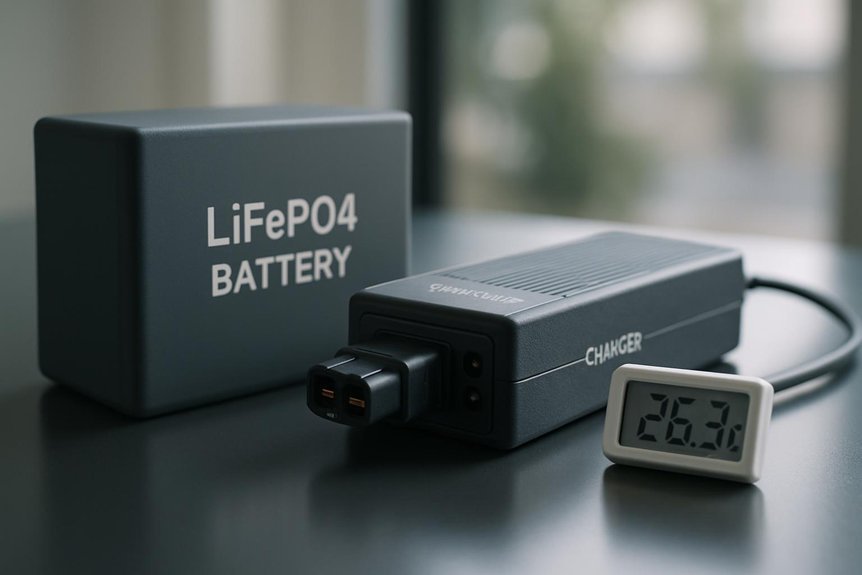
When do we recognize we’re charging LiFePO4 batteries under the safest conditions? It’s when we maintain the charging temperature within the ideal range, typically between 0°C and 45°C. Charging within this window maximizes charging efficiency by minimizing internal resistance and preventing harmful side reactions. We must emphasize precise thermal management to keep the battery temperature steady, avoiding rapid fluctuations that could compromise performance. Effective thermal management systems help dissipate heat generated during charging, ensuring safety and prolonging battery life. Charging outside this range risks reduced efficiency and potential damage, so monitoring temperature in real-time is essential. By adhering strictly to these parameters, we can enhance both the safety and performance of LiFePO4 batteries during charging cycles.
How Temperature Affects LiFePO4 Battery Performance and Lifespan
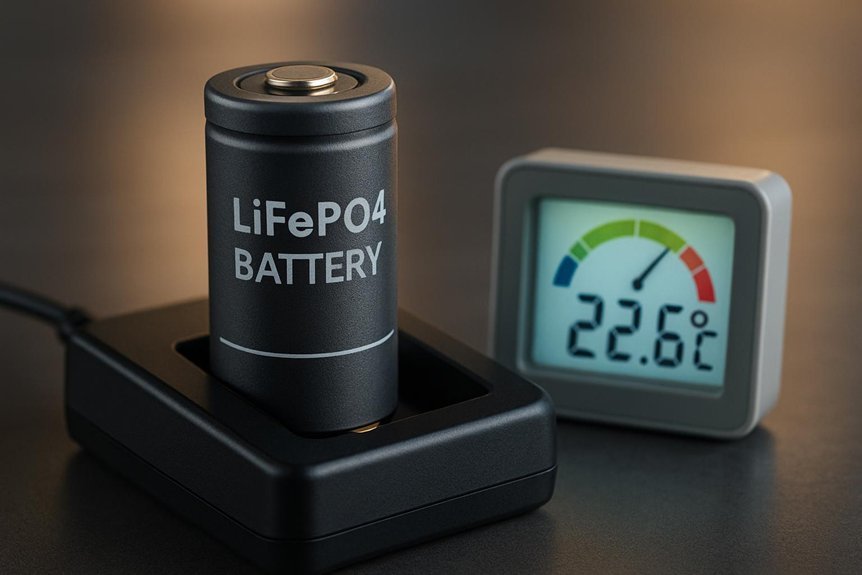
Although LiFePO4 batteries are known for their stability, temperature plays a critical role in determining both their performance and lifespan. Effective thermal management helps maintain peak battery efficiency by preventing degradation caused by extreme temperatures.
| Temperature (°C) | Effect on Battery |
|---|---|
| Below 0 | Reduced capacity, slower chemical reactions |
| 0 to 25 | Peak efficiency and lifespan |
| 25 to 45 | Slight efficiency drop, accelerated aging |
| Above 45 | Risk of permanent damage, rapid lifespan loss |
Operating outside the ideal range compromises performance and shortens battery life. Consistent monitoring and control of temperature guarantee the battery operates efficiently and safely without risking premature failure.
Recommended Temperature Ranges for LiFePO4 Battery Chargers
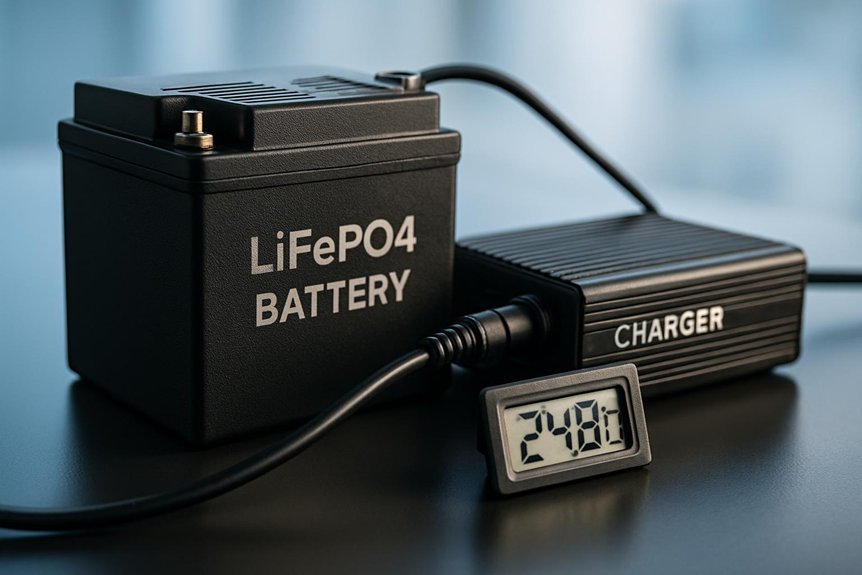
Since maintaining ideal temperature is essential for LiFePO4 battery health, we need to guarantee our chargers operate within specific temperature ranges. Most manufacturers recommend keeping charger ambient conditions between 0°C and 45°C to secure peak charger efficiency and prevent overheating. Operating outside this window can reduce charger performance, potentially leading to incomplete charging or damage to battery cells. We must also consider ventilation and avoid placing chargers in confined spaces where heat buildup occurs. Monitoring ambient temperature during charging sessions helps us maintain safe conditions and extend battery lifespan. By adhering strictly to these temperature guidelines, we minimize risks associated with thermal stress and ensure the charger delivers consistent current, safeguarding both the LiFePO4 battery and the charging equipment.
How to Safely Charge LiFePO4 Batteries in Extreme Temperatures
If we want to safely charge LiFePO4 batteries in extreme temperatures, we must adapt our charging strategies to protect battery integrity and performance. In cold environments, applying battery insulation helps maintain internal temperature, reducing capacity loss and preventing lithium plating during charging. Conversely, in high temperatures, we should minimize exposure and guarantee charging equipment operates within specified thermal limits to avoid overheating. Selecting chargers with temperature compensation and built-in safeguards is critical for stable voltage and current delivery under these conditions. Additionally, we must avoid charging batteries outside manufacturer-recommended temperature ranges, as this risks permanent damage. By integrating proper battery insulation and using certified charging equipment designed for extreme conditions, we can extend battery life and maintain safe, efficient charging regardless of ambient temperature challenges.
Tips to Monitor and Manage Battery Temperature During Charging
When charging LiFePO4 batteries, we need to continuously monitor their temperature to prevent overheating or excessive cooling, both of which can compromise battery performance and safety. Effective battery monitoring tools, such as thermal sensors and smart chargers, enable precise temperature management. Regularly checking temperature readings allows us to adjust charging rates or pause charging if thresholds are exceeded.
Here are essential tips to help manage temperature during charging:
| Tip | Benefit | Risk if Ignored |
|---|---|---|
| Use thermal sensors | Real-time battery status | Undetected overheating |
| Maintain ambient temperature | Consistent charging rates | Inconsistent battery life |
| Adjust charging current | Prevent temperature spikes | Battery damage, safety risk |
Frequently Asked Questions
Can Lifepo4 Batteries Be Charged Indoors Safely?
Yes, we can charge LiFePO4 batteries indoors safely by following strict indoor safety and charging guidelines. We should guarantee proper ventilation, monitor temperatures, and use compatible chargers to prevent overheating and maintain battery integrity during charging.
What Type of Charger Is Best for Lifepo4 Batteries?
Like a skilled conductor guiding an orchestra, we choose chargers with precise fast charging and strict charger compatibility for LiFePO4 batteries. This guarantees balanced energy flow, maximizing performance while protecting battery health with technical caution.
How Long Does It Take to Fully Charge a Lifepo4 Battery?
We estimate charging time by dividing battery capacity by charging speed, typically 3 to 6 hours. We caution against exceeding recommended rates to preserve battery health and secure ideal, safe performance during charging cycles.
Are Lifepo4 Batteries Safe for Use in Electric Vehicles?
Coincidentally, LiFePO4 advantages align perfectly with electric vehicle needs. We trust their stable chemistry and robust safety standards, making them safe. Still, we must rigorously monitor conditions to guarantee peak performance and long-term reliability.
What Are Common Signs of a Faulty Lifepo4 Charger?
We notice common signs of a faulty LiFePO4 charger include reduced charger lifespan, inconsistent charging efficiency, overheating, and failure to reach full charge. Let’s monitor these carefully to maintain ideal battery health and performance.
Conclusion
When charging LiFePO4 batteries, keeping temperatures between 0°C and 45°C is critical—we know that exceeding this range can reduce capacity by up to 20%. By closely monitoring ambient conditions and using temperature-compensated chargers, we can prevent damage and extend battery life. Let’s stay vigilant, maintain proper ventilation, and follow these guidelines to guarantee safe, efficient charging while protecting our investment and maximizing performance.