When we store LiFePO4 battery chargers, taking careful steps guarantees their longevity and safety. Disconnecting them from power and batteries is just the start. We need to take into account the ideal temperature, humidity, and protection from dust and physical damage. Neglecting these factors can lead to malfunction or hazards. Understanding how to prepare and maintain chargers during storage is essential—and there are common pitfalls we must avoid to keep them reliable.
Key Takeaways
- Fully disconnect chargers from power sources and batteries before storage to ensure safety.
- Store chargers in sealed, dust-free containers with silica gel packets to control moisture and humidity.
- Maintain storage temperature between 10°C and 30°C, avoiding extreme heat or cold.
- Coil cables loosely and use protective cases to prevent physical damage and strain on connectors.
- Perform periodic inspections and power cycles every three months to ensure charger functionality and safety.
How to Prepare LiFePO4 Battery Chargers Before Storage
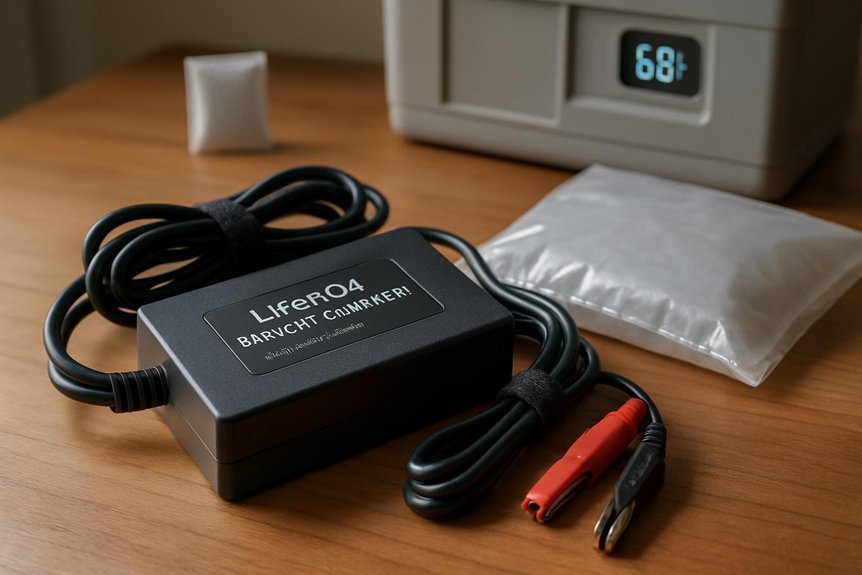
To prepare our LiFePO4 battery chargers for storage, we must first make certain they are fully disconnected from any power source and the batteries themselves. This prevents accidental discharge or electrical damage. Next, we carefully inspect the charger for any signs of wear or damage, performing routine charger maintenance such as cleaning dust from vents and connectors using a dry, soft brush. Ensuring cleanliness helps maintain peak functionality during storage. We then coil the cables neatly to prevent stress or breaks. Finally, we place the charger in appropriate storage containers that protect it from dust, moisture, and physical impact. Choosing rigid, sealable containers adds an extra layer of protection, ensuring the charger remains in optimal condition until its next use.
Best Temperature and Humidity Conditions for Storing Chargers
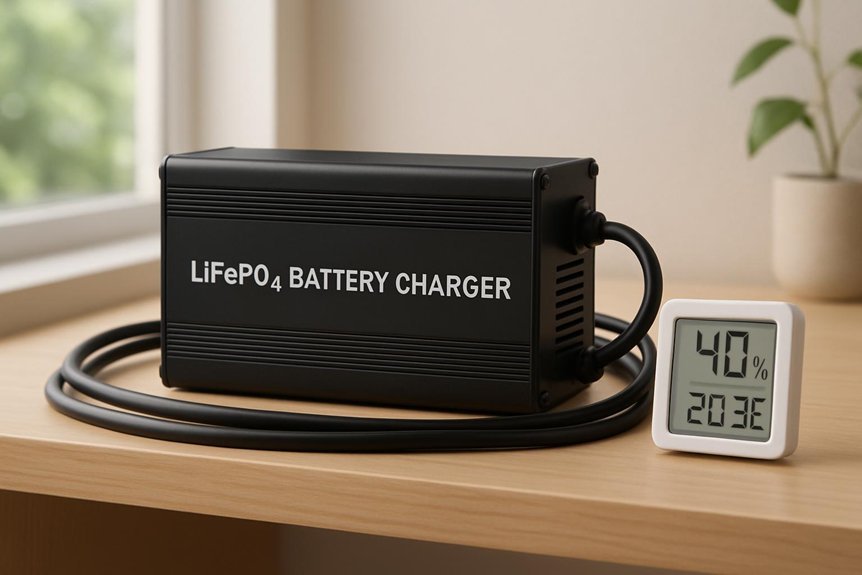
To guarantee the longevity of LiFePO4 battery chargers, we need to store them within a controlled temperature range, typically between 10°C and 30°C. Maintaining relative humidity around 40% to 60% is also essential to prevent moisture damage and corrosion. Let’s examine how these conditions impact charger performance and what measures we should take to maintain them.
Ideal Temperature Range
Maintaining LiFePO4 battery chargers within a temperature range of 10°C to 30°C guarantees peak performance and longevity. Exposure beyond this range can degrade charger efficiency and reduce battery lifespan. We must avoid extreme cold that slows chemical reactions or excessive heat causing internal damage.
| Temperature (°C) | Effect on Charger Efficiency | Impact on Battery Lifespan |
|---|---|---|
| Below 0 | Significant decrease | Severe reduction |
| 0 – 10 | Moderate decrease | Noticeable reduction |
| 10 – 30 | Ideal | Maximum |
| 30 – 40 | Slight decrease | Minor reduction |
| Above 40 | Rapid decrease | Critical damage |
Optimal Humidity Levels
Although temperature plays a critical role, controlling humidity levels is equally essential for preserving LiFePO4 battery chargers. Excessive moisture levels can lead to corrosion of internal components and degrade insulation, compromising charger safety and performance. We recommend maintaining relative humidity between 30% and 50%, which balances preventing condensation while avoiding overly dry conditions that could cause static buildup. Implementing humidity control measures, such as silica gel packets or dehumidifiers, helps maintain these ideal moisture levels in storage environments. Additionally, storing chargers in sealed, airtight containers reduces exposure to fluctuating humidity. By carefully managing humidity control alongside temperature, we can greatly extend the lifespan of LiFePO4 battery chargers and guarantee their reliable operation when needed.
How to Protect Chargers From Dust, Moisture, and Physical Damage
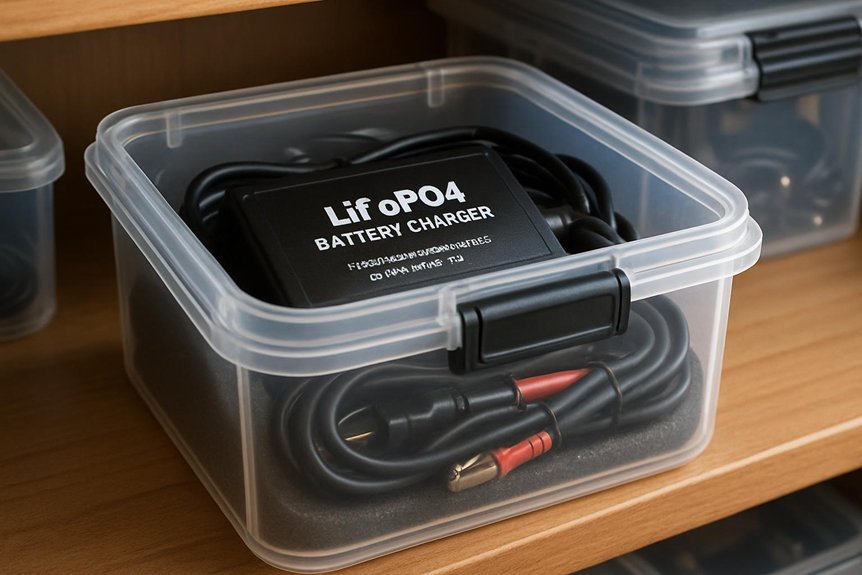
To maintain the functionality of our LiFePO4 battery chargers, we need to implement effective dust prevention techniques and moisture control measures. Proper storage solutions can minimize exposure to environmental contaminants and reduce the risk of corrosion or short circuits. Additionally, we must handle chargers carefully and use protective casings to avoid physical damage during storage and transport.
Dust Prevention Techniques
We can take several key steps to shield LiFePO4 battery chargers from dust, moisture, and physical damage. Proper dust prevention is critical to maintain charger functionality and longevity. Here are three technical measures we recommend:
- Use effective dust barriers such as sealed plastic enclosures or anti-static bags that prevent fine particles from infiltrating sensitive components.
- Select appropriate cover options like fitted silicone dust caps or custom-designed hard-shell cases that provide a secure physical shield without impeding ventilation.
- Store chargers in clean, controlled environments with minimal airborne particulates and avoid placing them near open windows or vents.
Moisture Control Tips
Since moisture can severely damage LiFePO4 battery chargers by causing corrosion and short circuits, we must implement strict control measures to keep them dry. First, storing chargers in airtight containers with moisture absorbers, such as silica gel packets, effectively reduces humidity levels. These absorbers trap excess moisture, preventing internal condensation. Additionally, placing humidity indicators inside storage containers allows us to monitor moisture levels continuously. If indicators reveal high humidity, we should replace or recharge moisture absorbers immediately. It’s essential to store chargers in a cool, dry environment away from sources of water vapor. By combining moisture absorbers with regular humidity monitoring, we minimize corrosion risk and extend charger lifespan. These precautions guarantee chargers remain functional and safe during extended storage periods.
Physical Damage Avoidance
Many factors, including dust, moisture, and physical impact, can compromise the integrity and functionality of LiFePO4 battery chargers. To safeguard our chargers, we must adopt rigorous protective measures. First, employing proper cable management prevents strain and damage to connectors and wires, reducing wear over time. Second, storing chargers in protective cases shields them from dust accumulation and physical shocks, ensuring internal components remain intact. Third, we should select storage locations that are dry, stable, and free from heavy foot traffic or risk of accidental drops. By systematically applying these steps, we maintain charger reliability and extend service life, preventing costly repairs or replacements while ensuring safety during periods of non-use.
Where to Store LiFePO4 Battery Chargers for Easy Access and Safety
Although LiFePO4 battery chargers are designed for durability, storing them properly guarantees both safety and quick accessibility when needed. Ideal storage locations should be dry, well-ventilated, and away from direct sunlight or extreme temperatures to prevent degradation. We recommend dedicated storage bins or cabinets with padded compartments to avoid physical damage. For accessibility, label chargers clearly and position frequently used units near the front. Avoid cluttered areas; instead, maintain an organized system that allows rapid retrieval without disturbing other equipment. Accessibility tips also include securing cords neatly to prevent tangling and using wall-mounted hooks or shelves when floor space is limited. By selecting appropriate storage locations and following these accessibility tips, we guarantee chargers remain safe and ready for immediate use.
How to Maintain Chargers During Long-Term Storage
When storing LiFePO4 battery chargers for extended periods, we must actively maintain their condition to guarantee reliable performance upon reuse. Proper maintenance directly impacts the charger lifespan, so following a disciplined maintenance checklist is essential.
- Disconnect and clean: Before storage, disconnect chargers from power sources and clean connectors with a dry, lint-free cloth to prevent corrosion.
- Controlled environment: Store chargers in a cool, dry place with stable temperatures between 10°C and 25°C, avoiding humidity and direct sunlight, which degrade internal components.
- Periodic power cycles: Every three months, plug chargers into a power source briefly to keep internal circuits active and prevent capacitor degradation.
Adhering to these steps assures chargers remain functional and preserves their charger lifespan during long-term storage.
Signs Your Charger Needs Inspection or Maintenance After Storage
A careful inspection of your LiFePO4 battery charger after storage helps identify potential issues before use. We should look for visible signs of charger wear, such as frayed cords, damaged plugs, or corrosion on connectors. These physical defects can compromise safety and functionality. Additionally, we must test the charger’s output to detect any performance issues, including inconsistent voltage or failure to maintain a stable charge. If the charger exhibits overheating or unusual noises during operation, it signals internal component degradation. Detecting these signs early allows us to perform necessary maintenance or replace faulty parts, ensuring reliable and safe charging performance. Prioritizing thorough inspection after storage minimizes risks and extends the lifespan of our LiFePO4 battery chargers.
Common Mistakes to Avoid When Storing LiFePO4 Battery Chargers
Since improper storage can damage LiFePO4 battery chargers and reduce their lifespan, we must avoid common mistakes that compromise their performance. To protect the charger lifespan, consider these critical points:
- Avoid moisture exposure: Never store chargers in damp environments or unsealed storage containers, as moisture accelerates corrosion and internal damage.
- Prevent physical stress: Don’t place heavy objects on chargers or coil cables tightly; physical deformation affects internal components and connections.
- Control temperature extremes: Avoid storage in areas with high heat or freezing temperatures, which can degrade electronic components and reduce charger lifespan.
Frequently Asked Questions
Can I Use a Different Charger Brand for My Lifepo4 Battery?
We can use a different charger brand for our LiFePO4 battery only if charger compatibility is confirmed. We must carefully check voltage differences to avoid damage, ensuring the charger matches the battery’s specific voltage and charging profile.
How Often Should I Replace the Charger’s Cables?
We recommend inspecting charger cables monthly for signs of cable wear and replacing them immediately if damage appears. Regular charger maintenance guarantees safety and peak performance, preventing potential failures or hazards caused by degraded cables.
Are There Specific Chargers Recommended for Fast Charging Lifepo4 Batteries?
We’d say only chargers designed explicitly for LiFePO4 batteries guarantee fast charging without damage. Charger compatibility is essential—using generic chargers risks overheating or reduced battery life. Always choose certified, LiFePO4-specific fast charging units.
Can Storing Chargers Near Other Electronics Cause Interference?
Yes, storing chargers near other electronics can increase interference risks, potentially affecting electronic safety. We recommend keeping chargers separated to minimize electromagnetic disturbances and guarantee devices function correctly without signal degradation or unexpected malfunctions.
Is It Safe to Store Chargers in a Vehicle Glove Compartment?
Think of your charger as a delicate seed; storing it in a glove compartment exposes it to heat and vibration, posing charger safety risks. We recommend avoiding glove compartment storage to protect its longevity and performance.
Conclusion
In storing LiFePO4 battery chargers, we must treat them like delicate instruments—each step matters to preserve their function and safety. By disconnecting power, cleaning connectors, and maintaining ideal temperature and humidity, we prevent damage and degradation. Proper cable handling and protective storage shield them from dust and harm. Regular inspections guarantee reliability. Avoid shortcuts, as even small mistakes can lead to failure. Together, careful storage keeps chargers ready, like a well-tuned engine waiting to perform.