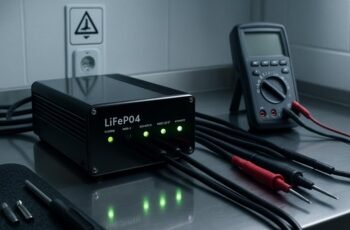
When working with LiFePO4 battery systems, preventing overcharging is critical to maintaining both safety and performance. We understand that exceeding voltage limits or allowing excessive current can cause irreversible damage and reduce battery life. By understanding how to set precise charging parameters and leveraging advanced management tools, we are able to effectively avoid these risks. But what specific measures should we prioritize to guarantee peak battery health and longevity?
Key Takeaways
- Set voltage limits between 3.6 to 3.65 volts per LiFePO4 cell and apply current limiting to prevent excessive charge flow.
- Use a Battery Management System (BMS) to monitor and regulate voltage, current, and cell balance in real time.
- Employ chargers designed for LiFePO4 chemistry with smart charging profiles that dynamically adjust voltage and current.
- Implement multi-layered protective circuits and thermal management to interrupt charging during anomalies and dissipate heat.
- Regularly monitor battery health indicators like voltage, temperature, and internal resistance to detect and prevent overcharging early.
How Overcharging Harms LiFePO4 Batteries
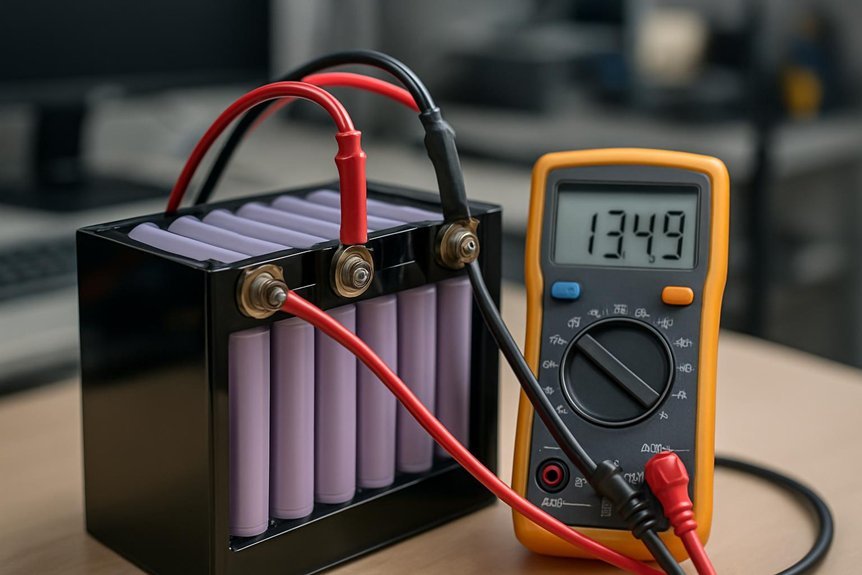
Overcharging LiFePO4 batteries triggers a series of chemical and physical changes that degrade their performance and lifespan. When voltage spikes occur beyond the recommended threshold, we observe accelerated cell degradation caused by electrolyte breakdown and structural damage within the cathode material. This degradation reduces charge retention and cycle life, directly impacting critical performance metrics such as energy density. Additionally, excessive voltage stresses increase the risk of thermal runaway, compromising safety. Over time, the combined effects of repeated overcharging diminish the battery’s ability to store and deliver energy efficiently. By understanding these mechanisms, we can better appreciate how maintaining ideal voltage levels preserves the integrity of LiFePO4 cells, ensuring sustained energy density and reliable cycle life essential for long-term application success.
Setting the Right Charging Voltage and Current Limits
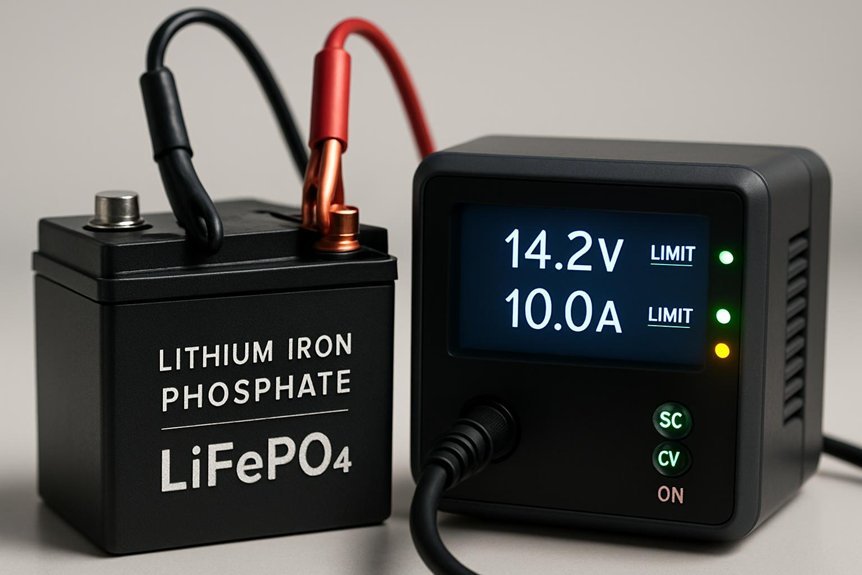
To prevent overcharging, we need to establish precise voltage thresholds tailored to LiFePO4 chemistry, typically around 3.6 to 3.65 volts per cell. Applying current limiting techniques during the charging process reduces stress and heat buildup, enhancing battery longevity. Integrating reliable battery protection mechanisms guarantees these limits are enforced consistently for safe and efficient operation.
Optimal Voltage Settings
Although LiFePO4 batteries are known for their stability, setting the correct charging voltage and current limits is vital to prevent potential damage and extend their lifespan. Precise voltage calibration is critical; overvoltage can lead to capacity loss, while undervoltage reduces charging efficiency. We recommend maintaining a maximum charge voltage around 3.6 to 3.65 V per cell, which balances full capacity utilization with battery health. Careful calibration of the charger guarantees consistent voltage application, minimizing stress on the battery. Additionally, stable voltage settings improve charging efficiency by reducing energy losses and heat generation. By monitoring voltage thresholds accurately, we can avoid overcharging while maximizing performance. Implementing these ideal voltage parameters is a fundamental step toward safeguarding LiFePO4 battery systems from premature degradation.
Current Limiting Techniques
Setting the right charging current is just as important as maintaining proper voltage levels when managing LiFePO4 batteries. To prevent overcharging, we rely on current limiters integrated within charge controllers to precisely regulate the charging current. These devices guarantee the current does not exceed the battery’s specified maximum, mitigating thermal stress and prolonging battery lifespan. Charge controllers dynamically adjust the current based on real-time feedback, optimizing charging efficiency while safeguarding the battery. By implementing accurate current limiting techniques, we avoid excessive current flow that can damage the electrode materials or cause irreversible capacity loss. Selecting charge controllers with reliable current limiter functions is critical; they must respond swiftly to changes in battery condition. This approach forms a fundamental layer of control, complementing voltage regulation to guarantee safe, efficient charging of LiFePO4 systems.
Battery Protection Mechanisms
When we manage LiFePO4 batteries, establishing accurate voltage and current limits plays an essential role in preventing overcharge conditions that can degrade battery health or cause safety hazards. Tailoring charge profiles to the specific battery chemistry guarantees maximum energy density without exceeding voltage thresholds. Protective circuits monitor voltage drop and discharge rates, enabling dynamic adjustments to maintain load balancing and prevent thermal runaway. Effective thermal management complements these safeguards by dissipating heat generated during charge cycles. Adhering to stringent safety standards, we integrate multi-layered protection mechanisms that automatically interrupt charging upon detecting anomalies. Together, these controls extend battery lifespan, enhance reliability, and maintain consistent performance by precisely regulating charging parameters aligned with the cell’s electrochemical characteristics and operational demands.
Using Battery Management Systems to Stop Overcharging
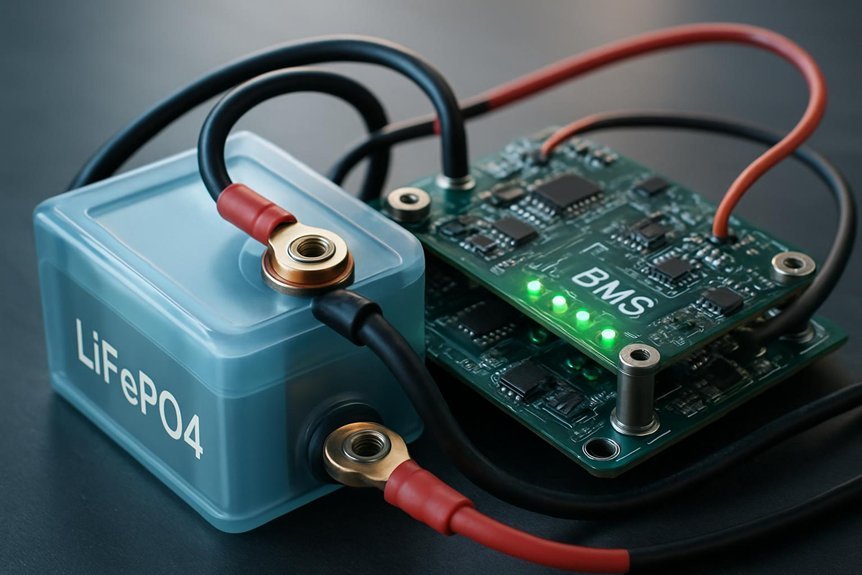
Since overcharging can severely reduce the lifespan and safety of LiFePO4 batteries, we rely on Battery Management Systems (BMS) to monitor and regulate charging parameters in real time. The BMS employs advanced charge algorithms and tailored charge profiles to maintain ideal charging efficiency throughout each battery cycle. It detects voltage drift and prevents cell imbalance by precise voltage and current monitoring, ensuring compliance with strict safety standards. Thermal management integrated within the system mitigates overheating risks, thereby preserving battery integrity. Effective system integration enhances user awareness through diagnostic feedback, enabling timely interventions. By preventing overcharging, the BMS not only extends battery cycle life but also minimizes environmental impact by reducing premature battery disposal. This analytical approach to battery management is essential for reliable and safe LiFePO4 operation.
Choosing Chargers Designed for LiFePO4 Chemistry
We need to prioritize chargers specifically engineered for LiFePO4 chemistry to guarantee ideal voltage regulation and prevent overcharging. These chargers incorporate smart charging technology that adjusts current and voltage profiles in real time. Let’s examine how compatibility and advanced features contribute to battery safety and longevity.
Charger Compatibility Importance
Although many chargers claim universal compatibility, selecting one specifically designed for LiFePO4 chemistry is critical to prevent overcharging and guarantee peak battery performance. LiFePO4 batteries require precise charging protocols that differ greatly from lead-acid or lithium-ion chemistries. Using incompatible charger types can lead to incorrect voltage thresholds, excessive current, and thermal stress, all of which accelerate degradation. Chargers tailored for LiFePO4 implement controlled constant-current/constant-voltage (CC/CV) stages optimized for this chemistry’s unique voltage profile and charge acceptance characteristics. We must evaluate charger specifications to confirm they match the recommended charge voltage and cut-off parameters for LiFePO4 cells. By prioritizing charger compatibility, we safeguard battery lifespan, enhance safety, and maintain energy efficiency—key factors in preventing overcharge-induced damage in LiFePO4 systems.
Voltage Regulation Features
When selecting chargers for LiFePO4 batteries, we must prioritize voltage regulation features specifically engineered for this chemistry. LiFePO4 cells have strict voltage thresholds—typically around 3.6 to 3.65 volts per cell—that prevent overcharging and guarantee longevity. Chargers designed for this chemistry monitor and maintain these precise voltage limits throughout the charge cycle. Additionally, effective charge balancing is essential to equalize cell voltages within the battery pack, preventing individual cells from exceeding safe voltage thresholds. Without proper voltage regulation and balancing, cells can experience stress, reducing capacity and safety. As a result, we should choose chargers with integrated voltage threshold control and active charge balancing capabilities tailored for LiFePO4 batteries to maintain peak performance and prevent damage due to overcharging.
Smart Charging Technology
Five key aspects define smart charging technology specifically designed for LiFePO4 batteries, ensuring peak performance and safety. Choosing chargers tailored to LiFePO4 chemistry offers smart charging benefits, including optimized charge cycles and extended battery lifespan. Critical to this technology are adaptive charging techniques, which adjust current and voltage dynamically based on battery state.
We prioritize three essential features:
- Precision voltage control to prevent overvoltage conditions.
- Current modulation that adapts to temperature and charge level.
- Integrated battery management system (BMS) communication for real-time monitoring.
These elements work cohesively to mitigate overcharging risks. By selecting chargers with these capabilities, we harness advanced algorithms that maintain battery integrity, reduce thermal stress, and optimize energy efficiency—crucial factors for reliable LiFePO4 battery operation.
Monitoring Battery Health to Catch Early Signs of Overcharge
Since overcharging can quickly degrade LiFePO4 batteries, monitoring their health is critical to detect early warning signs. We rely on thorough battery diagnostics to analyze parameters such as voltage, temperature, and internal resistance during each charge cycle. Tracking these metrics helps us identify anomalies indicative of overcharge conditions before they cause irreversible damage. For example, a rising internal resistance or unexpected voltage spikes during charging often signals stress on the battery’s chemistry. By integrating real-time diagnostic tools, we can continuously assess battery performance and intervene promptly. This proactive approach not only extends battery lifespan but also guarantees operational safety. Accurate monitoring during each charge cycle enables us to maintain ideal conditions, preventing subtle overcharge progression that might otherwise go unnoticed until failure occurs.
Best Practices for Safe Charging and Storage
Although LiFePO4 batteries offer enhanced stability, adhering to best practices for charging and storage is essential to maintain their performance and prevent overcharging. We must control charging environments by ensuring temperature ranges remain within manufacturer specifications, as extreme heat or cold can affect battery chemistry and charging efficiency. Equally, ideal storage conditions demand maintaining a partial state of charge (around 40-60%) and storing batteries in a cool, dry environment to minimize self-discharge and degradation. To summarize, we recommend:
- Charging only within specified temperature windows to avoid thermal stress.
- Avoiding prolonged storage at full charge or complete discharge to preserve capacity.
- Utilizing ventilated, temperature-controlled areas for both charging and storage to stabilize battery health.
Implementing these practices reduces overcharge risks and extends the operational lifespan of LiFePO4 systems.
How Firmware and Software Help Prevent Overcharging
Beyond controlling environmental factors during charging and storage, we rely heavily on firmware and software to actively manage the charging process and prevent overcharging in LiFePO4 batteries. Firmware updates refine software algorithms that adapt charge profiles dynamically, ensuring safety protocols are strictly followed. Real time monitoring and data logging enable precise error detection and system integration, providing continuous feedback. User notifications alert operators to anomalies, allowing prompt intervention. Adaptive charging adjusts parameters based on battery condition, optimizing longevity and safety.
| Function | Mechanism | Benefit |
|---|---|---|
| Firmware updates | Algorithm refinement | Enhanced charge control |
| Real time monitoring | Sensor data analysis | Immediate error detection |
| Data logging | Historical data storage | Performance tracking |
| User notifications | Alert systems | Proactive user response |
This multi-layered approach minimizes overcharge risks effectively.
Troubleshooting Common Overcharging Issues in LiFePO4 Systems
When we encounter overcharging issues in LiFePO4 systems, diagnosing the root cause quickly becomes essential to maintaining battery health and safety. We need to analyze battery indicators and recognize warning signs such as abnormal voltage spikes or extended charging cycles. To troubleshoot effectively, we focus on three key areas:
- System Design: Verify that the charging circuitry and firmware accurately regulate voltage and current to optimize charging efficiency.
- User Habits & Environmental Factors: Assess charging routines and temperature conditions, as extreme environments and improper habits can accelerate degradation.
- Maintenance Tips: Implement regular inspections and recalibrations to detect faults early, ensuring battery longevity.
Frequently Asked Questions
What Are the Environmental Impacts of Lifepo4 Battery Disposal?
We recognize LiFePO4 battery disposal impacts the environment through toxic material leakage. By adopting advanced recycling methods and adhering strictly to environmental regulations, we can minimize contamination risks and promote sustainable resource recovery effectively.
How Does Temperature Affect Lifepo4 Battery Lifespan?
Think of our LiFePO4 battery as a delicate plant: temperature effects act like sunlight—too intense or too cold, and growth slows. These temperature fluctuations are critical lifespan factors, directly impacting charge retention and cycle durability.
Can Lifepo4 Batteries Be Used in Extreme Weather Conditions?
Yes, we can use LiFePO4 batteries in extreme weather due to their excellent thermal stability. However, we must consider their reduced cold performance and implement proper thermal management to maintain efficiency and prolong lifespan under harsh conditions.
What Are the Differences Between Lifepo4 and Other Lithium-Ion Batteries?
Imagine a battery fortress: LiFePO4 boasts superior safety features and higher charging efficiency compared to other lithium-ion types. Its stable chemistry reduces thermal runaway risks, making it ideal for durable, reliable energy storage solutions we trust every day.
How Do Lifepo4 Batteries Perform in High-Drain Applications?
We find LiFePO4 batteries excel in high-drain applications due to their superior high drain efficiency and stable discharge rates. They maintain voltage consistently, ensuring reliable performance even under rapid, heavy load conditions.
Conclusion
Together, we can guard our LiFePO4 batteries like seasoned sailors charting stormy seas—setting precise voltage and current limits, relying on robust BMS systems, and choosing chargers tailored to their chemistry. By vigilantly monitoring battery health and embracing best charging practices, we avoid the hidden reefs of overcharging that erode performance and safety. With the right firmware and proactive troubleshooting, we steer confidently toward longer battery life and optimized energy efficiency.