We often assume our LiFePO4 chargers will perform consistently, but is that always the case? Irregular charging patterns, extended charge times, and unusual heat levels can signal underlying issues. These symptoms don’t just affect the charger—they may compromise your battery’s lifespan and efficiency. Understanding how to spot these signs early is essential, especially when subtle electrical or mechanical faults might be developing unnoticed.
Key Takeaways
- Irregular or incomplete charging cycles indicate potential charger failure.
- Excessive heat or unusual noises during charging signal internal damage.
- Voltage fluctuations causing inconsistent power delivery warrant inspection.
- Prolonged charging times suggest charger degradation or inefficiency.
- Persistent errors or malfunctioning indicator lights require repair or replacement.
Common Signs Your LiFePO4 Charger Is Failing
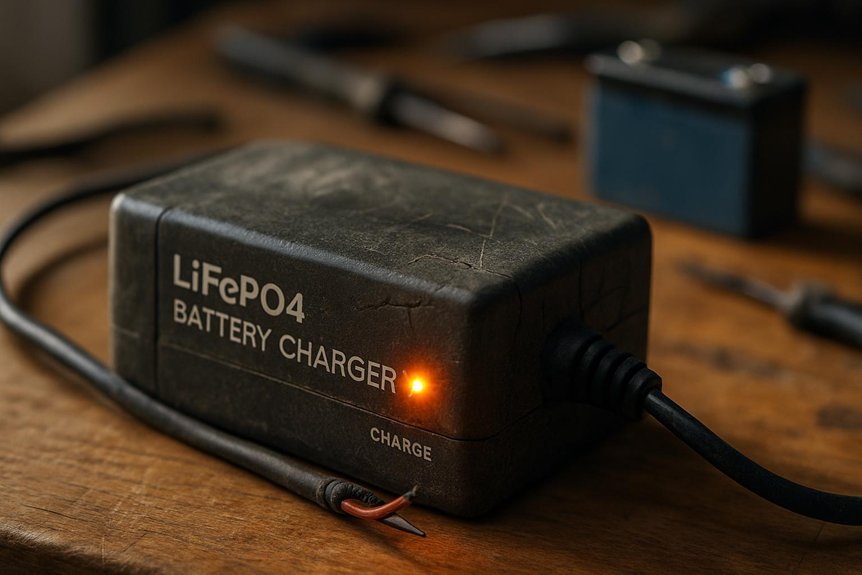
Although LiFePO4 chargers are designed for durability, we often notice specific signs indicating their failure. One primary indicator is irregularities in charging cycles—if the charger struggles to complete a full cycle or takes considerably longer, it suggests internal component degradation. Voltage fluctuations during charging are another critical warning sign; inconsistent voltage can lead to inefficient power delivery and potential damage. Additionally, excessive heat generation or unusual noises during operation can point to failing circuits or worn-out parts. We should also monitor the charger’s response time and LED indicators, as erratic behavior often signals malfunction. Identifying these symptoms early helps us decide whether repair or replacement is necessary, ensuring consistent performance and safety in our LiFePO4 battery systems.
How Charger Issues Affect Your Battery’s Health
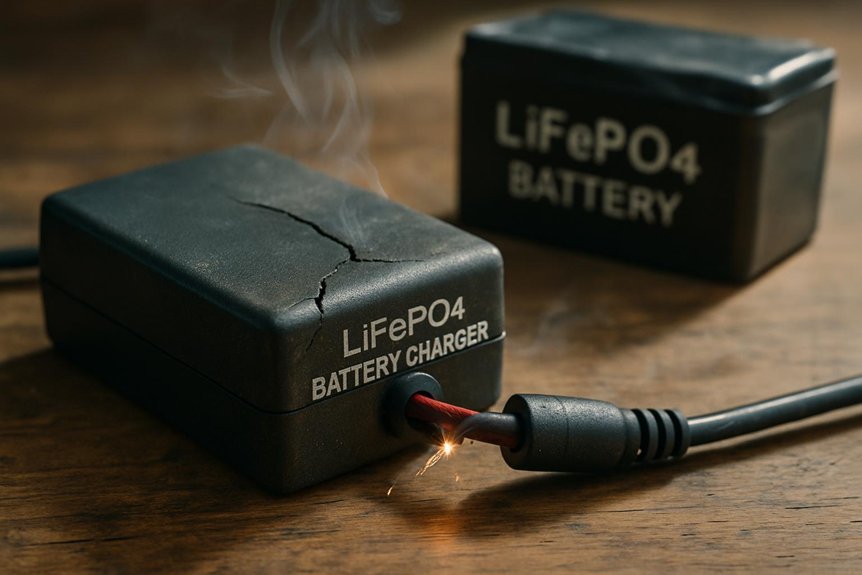
When our LiFePO4 charger malfunctions, it directly impacts the battery’s health by causing improper charging cycles that can degrade cell chemistry and reduce overall capacity. Inefficient charger operation leads to inconsistent voltage and current delivery, stressing the battery cells and accelerating deterioration. This reduces battery longevity, as repeated overcharging or undercharging disrupts the electrochemical balance essential for peak performance. Additionally, reduced charger efficiency can cause incomplete charging, leaving cells at less than ideal states of charge, which further compromises capacity and cycle life. Maintaining precise charger function guarantees stable charge profiles, safeguarding cell integrity and maximizing battery longevity. Consequently, monitoring charger performance is critical; any decline in charger efficiency should prompt immediate attention to prevent irreversible damage to our LiFePO4 batteries.
Troubleshooting Steps to Identify Charger Problems
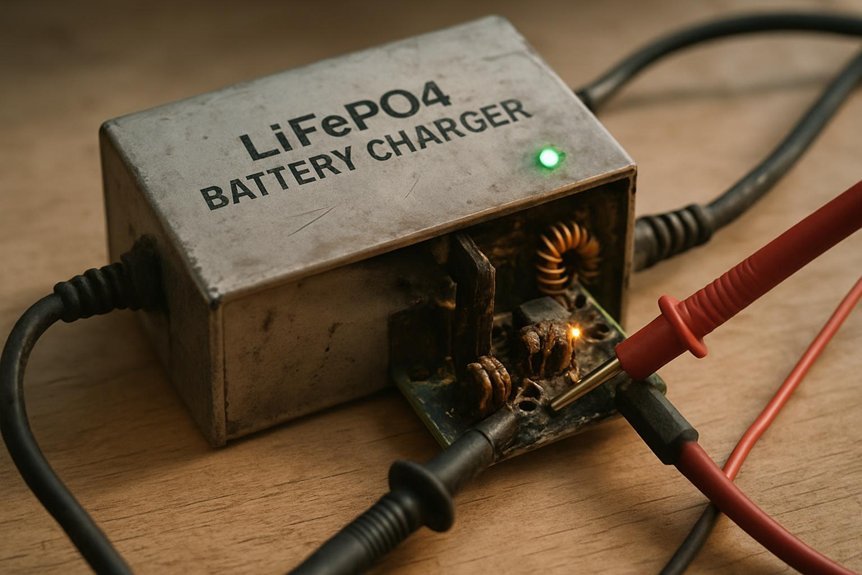
Understanding how charger issues impact our LiFePO4 battery’s health highlights the significance of promptly identifying charger faults. To troubleshoot, we first check for voltage fluctuations using a multimeter; unstable readings often indicate faulty components. Next, we inspect charger connections and cables for corrosion or damage, as poor contacts can disrupt charging. We then verify the charger’s output against manufacturer specifications to guarantee proper voltage and current levels, essential for effective charger maintenance. Additionally, we observe the charger’s indicator lights or display codes, which often signal errors or faults. Testing the charger on a known-good battery can isolate charger-specific issues. By systematically following these steps, we can accurately diagnose problems, preventing battery degradation and maintaining safe, efficient charging.
When to Repair vs. Replace Your LiFePO4 Charger
Deciding whether to repair or replace your LiFePO4 charger hinges on several critical factors, including the extent of the damage, cost-effectiveness, and the availability of replacement parts. For repair considerations, we evaluate if the fault lies in replaceable components such as fuses, connectors, or circuit boards. Minor issues often warrant repair, especially when replacement parts are accessible and labor costs remain reasonable. Replacement criteria come into play when the charger shows extensive internal damage, outdated technology, or if repair expenses approach the cost of a new unit. Additionally, persistent malfunctions after multiple repairs signal that replacement is the better option. By carefully weighing these repair considerations and replacement criteria, we guarantee peak charger performance while managing costs effectively.
Tips for Choosing a Reliable Replacement Charger
Although selecting a replacement charger might seem straightforward, we must carefully evaluate several technical specifications to guarantee compatibility and safety with our LiFePO4 batteries. First, we should verify voltage and current ratings match the battery’s requirements to prevent undercharging or overloading. Next, examining charger brands known for quality and reliability ensures durability and performance. It’s essential to take into account compatibility factors such as connector type, charging algorithm, and protection features like overcharge and short-circuit prevention. Additionally, looking for certifications like UL or CE helps confirm safety compliance. We should also review user feedback to identify common issues or strengths. Prioritizing these technical criteria enables us to select a replacement charger that maintains battery health and operational efficiency without risking damage or failure.
Frequently Asked Questions
What Is the Typical Lifespan of a Lifepo4 Charger?
We typically see LiFePO4 chargers last around 3,000 to 5,000 charging cycles. To maximize lifespan, we recommend following proper maintenance tips like avoiding extreme temperatures and regularly inspecting connectors for wear and damage.
Can Lifepo4 Chargers Be Used for Other Battery Types?
Only about 10% of chargers offer true charger compatibility across different battery chemistries. We can’t use LiFePO4 chargers for other types safely because their charging profiles and voltage limits differ considerably by battery chemistry.
How Do Environmental Conditions Affect Charger Performance?
It is understood that temperature extremes and humidity impact charger efficiency, while dust accumulation and poor ventilation raise overheating risks. Electrical interference can disrupt charging accuracy. We recommend controlling these factors to maintain ideal LiFePO4 charger performance.
Are There Safety Certifications to Look for in Chargers?
We always check for safety standards like UL, CE, and RoHS when choosing charger brands. These certifications guarantee reliable performance and protect us from electrical hazards, helping us pick chargers that meet strict safety requirements.
Can Software Updates Improve Charger Functionality?
Like tuning a finely crafted instrument, software updates bring firmware enhancements that improve charger compatibility and performance. We can rely on these updates to optimize charging efficiency, extend battery life, and fix potential software glitches precisely.
Conclusion
It’s understood that ignoring charger issues is like driving with a faulty engine—it only leads to more damage. By recognizing signs like irregular cycles, excessive heat, or voltage fluctuations early, we protect our LiFePO4 batteries from harm. Let’s stay proactive: troubleshoot promptly and decide wisely between repair or replacement. Choosing a reliable charger guarantees peak performance and battery longevity, keeping our systems running smoothly and efficiently over the long haul.