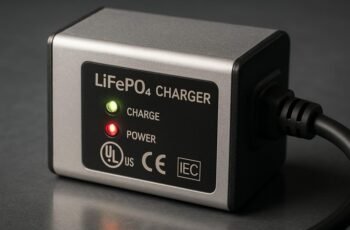
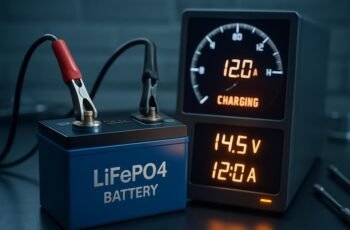
We’ll break down what IP ratings mean for LiFePO4 chargers and how those specs translate to real-world, outdoor use. You’ll learn how waterproof and weatherproof designs differ, and what guarantees actually cover rain, dust, and temperature changes. We’ll outline how we validate performance beyond lab tests and what to expect in field conditions. Stay with us as we connect ratings to practical setups, because the next steps matter for long-term reliability.
Key Takeaways
- Waterproof refers to immersion resistance, typically IP67 or higher, protecting LiFePO4 chargers when completely submerged.
- Weatherproof focuses on protection from rain, dust, and temperature changes, without guaranteed submersion resistance.
- IP ratings (e.g., IP54, IP65, IP67) guide gasket integrity, sealing strategies, and long-term durability in outdoor setups.
- Real-world endurance combines lab testing with field validation, ensuring packaging, seals, and cooling withstand moisture and particulates.
- Choosing between waterproof and weatherproof depends on environment, maintenance access, and required ingress protection and venting behavior.
Understand IP Ratings for LiFePO4 Chargers
IP ratings quantify how well LiFePO4 chargers resist dust and water ingress. We begin by defining the structure: an IP code consists of two digits, where the first denotes solid particle protection and the second liquid ingress resistance. We, as engineers, weigh both digits to determine overall suitability for specific environments. Our discussion centers on how IP ratings translate to real-world durability testing, guiding product selection and validation. We compare common ratings (IP54, IP65, IP67) and document what each implies for dust exposure, splashing, and immersion scenarios. We emphasize repeatable procedures, controlled exposure, and measurement criteria. In practice, IP ratings inform design choices, sealing strategies, and quality assurance, ensuring LiFePO4 chargers meet expected durability testing standards without overengineering.
Will Your Charger Hold Up Outdoors? Rain, Dust, and Temperature
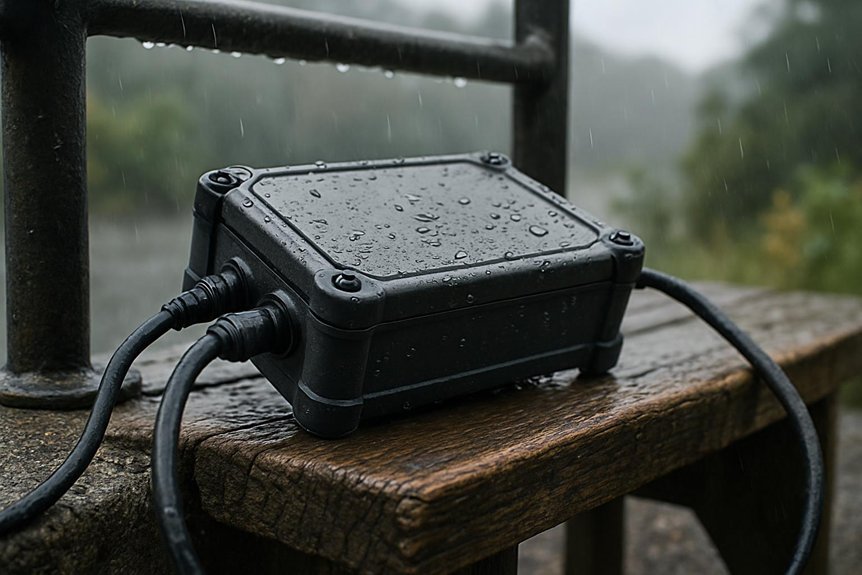
Will your charger survive outdoor use when rain, dust, and temperature swing come into play? We assess outdoor endurance by real-world exposure, not ideal lab conditions. Our review focuses on how packaging, seals, and electronics respond to moisture, particulates, and thermal cycling. We prioritize materials with proven moisture resilience and dependable insulation, ensuring safe operation across fluctuating ambient temps. Design here means rated ingress protection, gasket integrity, and thermal management that prevents hot spots. We translate ratings into actionable expectations for field use, maintenance, and fault prevention. Expect clear guidance on mounting, surface treatment, and windborne dust resistance, plus diagnostic steps if moisture ingress occurs. Your setup gains reliability through thoughtful placement, ventilation, and condition monitoring.
Outdoor endurance is evaluated in real-world conditions, focusing on moisture, dust, and thermal cycles.
- Outdoor endurance indicators you should monitor
- Moisture resilience tests and what they mean for real use
- How seals, gaskets, and housings protect electronics
- Practical maintenance that extends service life
Waterproof vs Weatherproof: Which Do You Really Need?
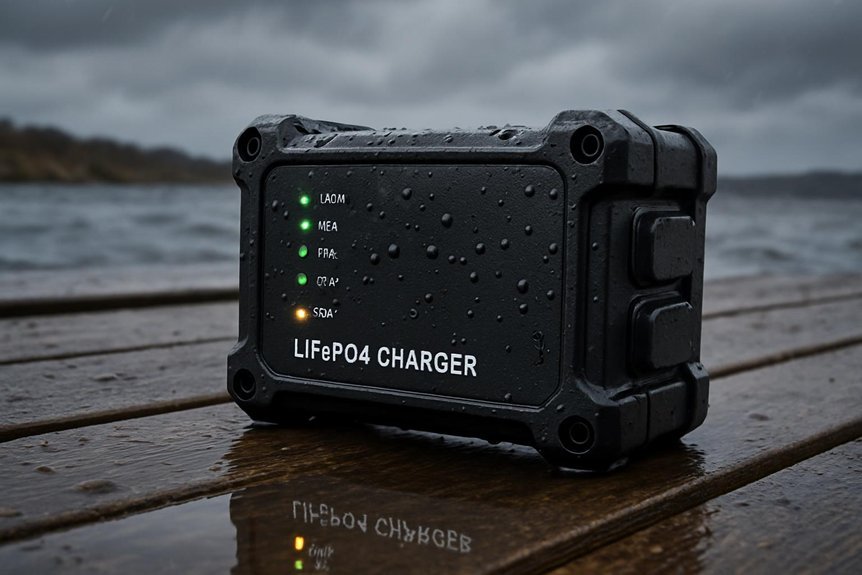
Waterproof and weatherproof aren’t the same, and choosing the right level hinges on how you’ll deploy and maintain the charger. We compare waterproof vs weatherproof to help you determine protection needs for LiFePO4 systems. Waterproof implies immersion resistance, often IP ratings of 67 or higher, which matters if chargers outdoors face submersion or heavy spray. Weatherproof focuses on exposure to rain, dust, and temperature swings, with seals that deter ingress but aren’t rated for submersion. For chargers outdoors in periodic weather, weatherproof protection may suffice; for flooded or hose-directed sources, waterproofing is prudent. Consider operating environment, duty cycle, and maintenance access. We balance enclosure integrity, venting behavior, and cable ingress. In ambiguous scenarios, specify higher protection to reduce field failures and extend service life.
How We Validate Performance: Testing and Certification
We validate performance through a rigorous, end-to-end testing regimen that reflects real-world conditions for LiFePO4 chargers. Our approach combines controlled lab tests with field validations to ensure reliability, safety, and long-term stability. We document each step through defined testing protocols and track results against performance criteria, enabling transparent assessment of durability, insulation integrity, and thermal behavior. Certification processes are aligned with industry standards, enabling consistent verification across models and batches. We emphasize reproducibility, traceability, and risk mitigation to support consistent quality while meeting regulatory expectations. Our methodology supports rapid design iteration and independent verification. By publishing clear criteria, we help you gauge fidelity between spec sheets and actual performance. You’ll get actionable data, not marketing fluff.
Rigorous, real-world validation ensures durable, safe LiFePO4 charger performance.
- Testing protocols and parameters
- Durability and thermal testing
- Safety and insulation verification
- Certification processes alignment
Outdoor Setup Checklist for Safe LiFePO4 Charging
Are you prepared to set up LiFePO4 charging outdoors with safety as the top priority? We outline a strict outdoor setup checklist to minimize risk and maximize reliability. We cover secure mounting, enclosure integrity, and proactive moisture management. Our approach emphasizes correct outdoor mounting, weatherproofing methods, and system diagnostics before power is applied. Components are positioned to shed water, avoid snow accumulation, and minimize pinch points. We verify conductors, glands, and seals meet IP ratings, then document anti-corrosion measures and thermal management. Regular inspections ensure fast fault isolation and safe disconnection. Use this table as a quick reference for critical steps and verification tasks.
| Step | Requirement | Verification |
|---|---|---|
| Mounting | Outdoor mounting with firm, level surface | Torque and level check |
| Enclosure | Weatherproof enclosure rated for outdoor use | Seal integrity test |
| Cable | Water-tight, UV-resistant cables | Gland and strain relief check |
| Drainage | Proper rain/condensation runoff | Visual and drip test |
| Maintenance | Scheduled inspections | Log updates |
Frequently Asked Questions
Do IP Ratings Apply to All Lifepo4 Charger Models?
IP ratings do not universally apply to all LiFePO4 charger models. We assess IP applicability per model, considering Charger material durability and enclosure sealing, ensuring field-use reliability for specific conditions. We, however, recommend checking each product’s spec sheet.
Can Heat Affect Charging Efficiency Beyond IP Rating Effects?
We answer yes: heat impact on charging efficiency occurs beyond IP effects, and temperature management challenges arise. We monitor, regulate, and optimize heat, manage ambient temps, thermal throttling, and charging profiles to maintain performance and safety for LiFePO4 packs.
Are Portable Chargers Covered by Outdoor Rain Warranties?
Portable chargers aren’t automatically covered; warranties vary by brand and model. We review terms for outdoor rain exposure, noting portable charging devices may or may not qualify. If outdoor rain damages, check the warranty’s rain/water ingress clauses directly.
How Do Chargers Handle Freezing Temperatures During Operation?
We answer: chargers tolerate freezing, but charging temperature matters; we monitor lithium safety and thermal limits. Like a frost chart, we keep heat in bounds, preventing lithium stress while maintaining efficient, safe operation under cold conditions.
Do Weatherproof Ratings Impact Charging Speed or Compatibility?
Weatherproof ratings don’t boost charging speed or broad compatibility; they govern protection. We’ll note solar charging considerations and wireless charging compatibility, ensuring environmental seals align with input/output specs while maintaining safe, reliable operation in varied conditions.
Conclusion
We know the drill is simple in theory: seal, shield, survive. Yet in practice, waterproof means immersion-ready; weatherproof handles rain and temp swings. So, do we need both? Of course not—we need what our site guarantees: clear IP targets, robust seals, and proven field endurance. We’ll test, certify, and document. If the setup looks tidy—level mount, drainage, sealed cables—we’ve not only met specs, we’ve earned trust. Irony aside, reliability wins when maintenance follows.