Heat management in chargers hinges on tracing every heat source and the paths heat takes through converters, regulators, and heatsinks. We’ll map thermal routes, size ventilation, and set real-time sensor monitors to catch hotspots early. Our approach is methodical: evaluate vent placement, ducting, and fan response to sustain efficiency under peak loads. If we identify bottlenecks and optimize airflow, we can prevent thermal impedance from eroding performance—but the next steps reveal where those bottlenecks appear.
Key Takeaways
- Identify and measure all heat sources (electrical losses, transients, environmental loads) to map hotspots and guide cooling improvements.
- Design ventilation to align heat exit paths with entries, minimize bottlenecks, and ensure controllable, turbulence-minimized airflow.
- Document sensor layouts and collect time-weighted temperature and airflow data for repeatable thermal performance verification.
- Evaluate chargers on peak-load heat handling, focusing on materials, heatsinks, venting, and fan response for stability.
- Use iterative diagnostics to pinpoint obstructions, reseat fans, seal gaps, and verify temperature reductions under identical loads.
Identify Heat Sources and Cooling in Chargers
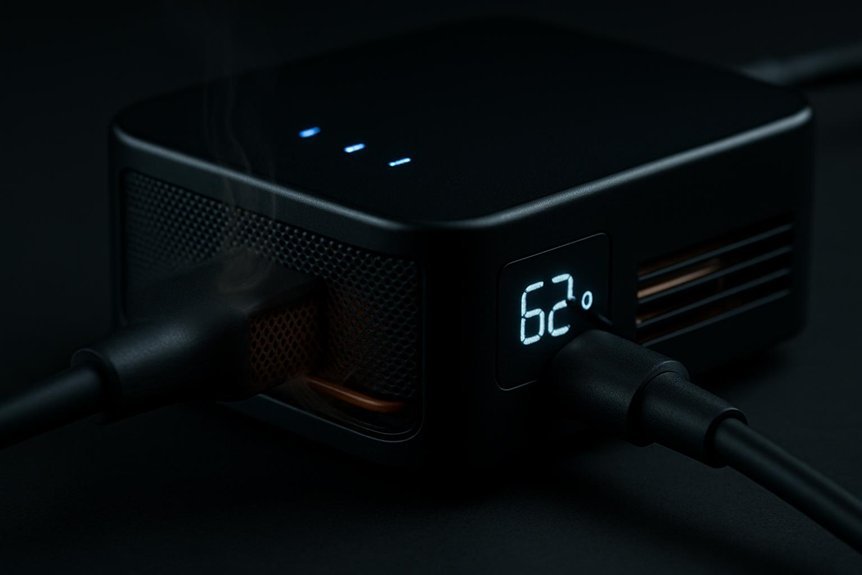
What heat sources drive temperature rise in chargers, and how do we identify them? We approach this by listing contributors, measuring with precision, and attributing effects to each source. We classify heat sources as electrical losses, short-term transients, and environmental loads, then quantify their power dissipation under controlled conditions. We monitor internal components—convertors, regulators, transformers, and semiconductors—to locate hotspots and track thermal pathways. We examine duty cycles, load profiles, and parasitic losses that elevate core temperatures. With data, we assess cooling strategies and their impact on steady-state temps. We conclude that a systematic mapping of heat sources guides targeted cooling improvements, reducing thermal impedance and improving reliability. This iterative method yields actionable insights for safer, longer-lasting chargers.
Ventilation Design for Better Charger Cooling

Ventilation design is essential to convert measured heat loads into predictable temperature outcomes. We approach it by mapping heat generation to exits and entries, then validating with real‑world data. We identify critical thermal pathways that connect hot components to vents, confirming that each pathway supports steady removal without creating bottlenecks. Our method emphasizes controlled airflow formats, avoiding turbulence where it harms heat transfer predictability. We implement airflow optimization by sizing ducts, selecting inlet and outlet locations, and balancing pressures to maintain consistent cooling across operating regimes. We also consider transient events, ensuring the system adapts without delayed responses. Documentation of sensor placement, airflow measurements, and temperature trends enables repeatable results, guiding design choices toward reliable, repeatable thermal performance rather than assumptions.
Pick Chargers With Solid Thermal Management
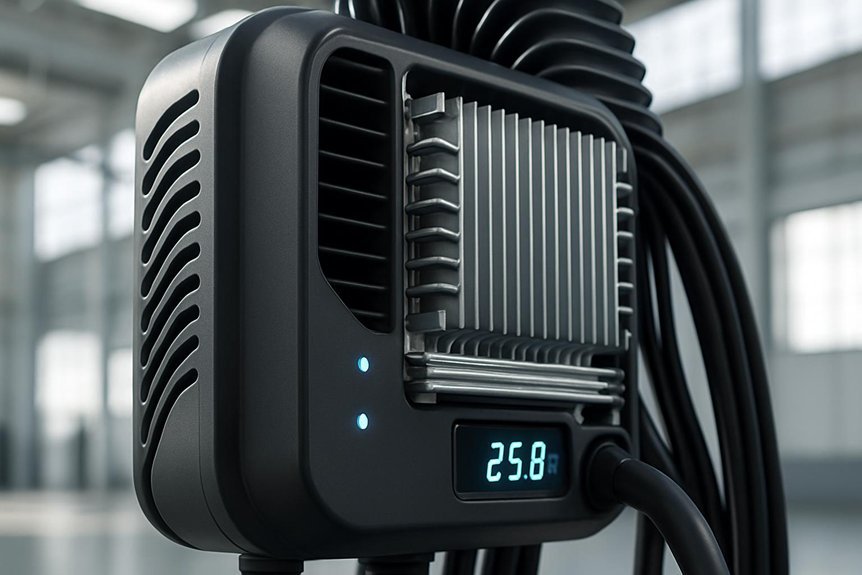
Picking chargers with solid thermal management starts by applying the ventilation lessons we already established. We evaluate how each unit handles heat during peak loads, focusing on materials, ferrule paths, and fan response. Our goal is predictable charging efficiency, stable temperatures, and minimal throttling. We compare thermal interfaces, heatsinks, and venting, ensuring they work in concert rather than in isolation. A disciplined assessment prevents hidden hotspots and reduces long-term wear. Below, a snapshot helps visualize relationships between components and performance.
| Component | Function | Expected Behavior |
|---|---|---|
| Interface | Conductive link | Low impedance, consistent transfer |
| Heatsink | Surface area management | Stable temps under load |
| Venting | Airflow path | Timely relief, no recirculation |
| Fan/aux | Active cooling | Quiet, responsive at threshold |
| Materials | Thermal mass | Delays peak overheating |
Monitor Temperature to Extend Charger Life
How we monitor temperature directly shapes charger longevity. We establish a baseline by measuring ambient and surface temps under typical load, then track deviations with calibrated sensors. We compare readings against manufacturer specs to identify safe operating windows and narrow hot zones. Our approach emphasizes consistency: same sensor positions, identical test procedures, and time-weighted averages to avoid transient spikes skewing data. When temperatures drift upward beyond thresholds, we document correlation with charging cycles and environmental conditions. By logging monitoring temperature data over multiple sessions, we can predict when prompts for airflow or cooldown are warranted, thereby extending lifespan. This disciplined method supports proactive maintenance and informed usage, reducing thermal stress and optimizing performance without guessing.
Troubleshoot Overheating and Optimize Airflow
Is overheating just a symptom or a signal that airflow needs adjustment? We approach this systematically, outlining steps to diagnose and mitigate heat buildup. First, identify overheating causes by correlating ambient temperature, load, and charger design with observed temperature spikes. Next, measure airflow paths, noting obstructions, vent blockages, and reseating cooling fans where applicable. We then test after each adjustment, comparing temperatures under identical loads to verify improvements. If hotspots persist, reassess thermal interface materials and contact pressure, ensuring proper mounting and minimal resistance. For airflow optimization, optimize ducting, reseal gaps, and enhance passive cooling where possible. Finally, document findings and repeat periodically, since variations in use patterns alter heat profiles. By iterating, we reduce overheating causes and sustain reliable performance.
Frequently Asked Questions
How Do Ambient Conditions Affect Charger Heat Buildup?
Ambient conditions substantially affect heat buildup: higher ambient temperatures reduce cooling efficiency, while cooler air aids dissipation; humidity can alter convection. We systematically measure, monitor, and model ambient conditions to predict and mitigate heat buildup in charging systems.
What Safety Standards Govern Charger Ventilation Design?
We answer: charger safety standards dictate ventilation design, aligning with recognized safety standards and design guidelines, while ventilation norms emphasize controlled heat dissipation; we analyze methodically, juxtaposing compliance expectations with practical implementation to ensure safe, reliable charger operation.
Can Overcrowding Reduce Cooling Efficiency in Chargers?
Overcrowding reduces cooling efficiency by restricting airflow and trapping heat, so yes, overcrowding effects degrade performance. We analyze airflow paths, measure temperature rise, and quantify how density impacts cooling, guiding safe enclosure designs and ventilation improvements for reliable operation.
Do Chargers Have Built-In Thermal Throttling Indicators?
We do observe built-in thermal throttling indicators in many chargers. For example, a hypothetical laptop charger signals throttle onset via LED change. When charger heat rises, ventilation indicators activate or warn, guiding users to improve cooling.
How Often Should Fans or Vents Be Cleaned?
We recommend cleaning frequency every 1–3 months, depending on environment, as part of a defined maintenance schedule. We’ll track results, measure temps, and adjust the maintenance schedule, ensuring consistent airflow and preventing overheating during use.
Conclusion
We’ve mapped heat sources, traced thermal pathways, and designed controlled airflow to keep chargers safe. By selecting components with solid thermal management, monitoring temps in real time, and testing airflow under peak loads, we reduce hotspots and extend life. If overheating occurs, we troubleshoot methodically and optimize venting and fan response. This disciplined approach—paired with rigorous sensing—aligns performance with reliability, and, like a careful equation, delivers calm, predictable charging even under stress. Meticulous discipline inspires confidence.