Like a quiet watchman at the gate, we observe how firmware updates tighten safety nets for LiFePO4 chargers. We’ll discuss how new monitoring, fault handling, and watchdogs reduce risks without changing the chemistry. Our goal is precise, practical improvements—overcharge, overheat, and short-circuit protections backed by redundancy and smarter thresholds. We’ll outline how updates adapt to aging cells and different chemistries, and why staged rollouts matter. There’s more to consider before you decide what’s next.
Key Takeaways
- Firmware updates tighten watchdogs and fault-handling logic to reduce misinterpretations during edge conditions, improving charger safety without changing core chemistry.
- Updated fault-detection thresholds and diagnostic analysis isolate fault paths, adjust charging parameters, and revalidate safety integrity.
- Guardrails with continuous monitoring and rapid fault indicators actively prevent dangerous conditions by reducing or disconnecting charging as needed.
- Update processes include staged rollouts, validation tests, and rollback options to avoid destabilization and preserve safety certifications.
- Aging-aware protections adapt to LiFePO4 chemistry variants, with firmware tuning for surface impedance growth and evolving state-of-health estimates.
What Firmware Updates Do for LiFePO4 Safety
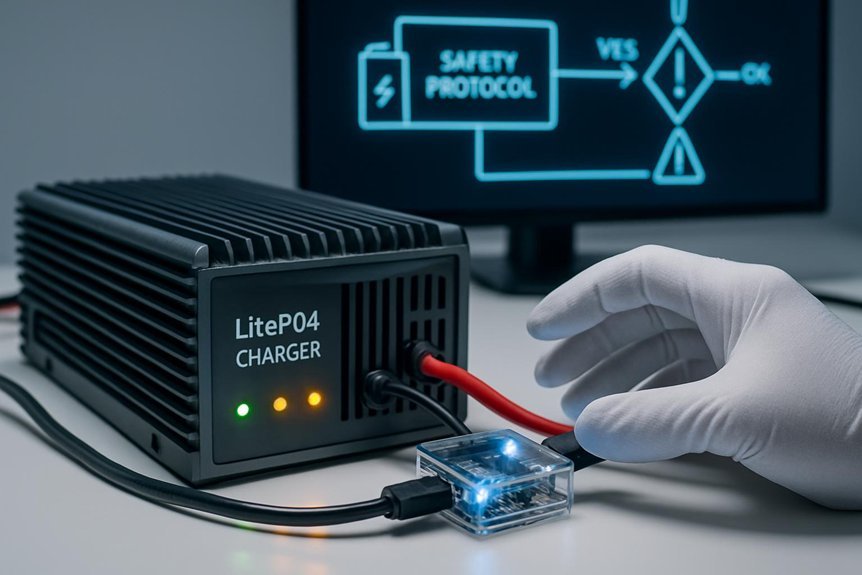
Firmware updates enhance LiFePO4 safety by correcting vulnerabilities, hardening monitoring, and refining fault-handling logic. We, as engineers and operators, describe how updates address known weaknesses without changing core chemistry. Updating firmware introduces tighter watchdogs, improved fault detection thresholds, and clearer state-machine transitions, reducing misinterpretations during edge conditions. We verify compatibility with existing safety certifications, ensuring that updated control loops remain within certified bounds and do not inadvertently invalidate approvals. Systematic patching targets communication channels, battery temperature sensing, and cell balancing strategies, enhancing overall reliability. We document changes, rollbacks, and validation tests to preserve traceability. By maintaining a disciplined update process, we sustain consistent safety performance across deployments, enabling trusted operation for end users and service teams alike.
How Updates Detect and Fix Charging Faults
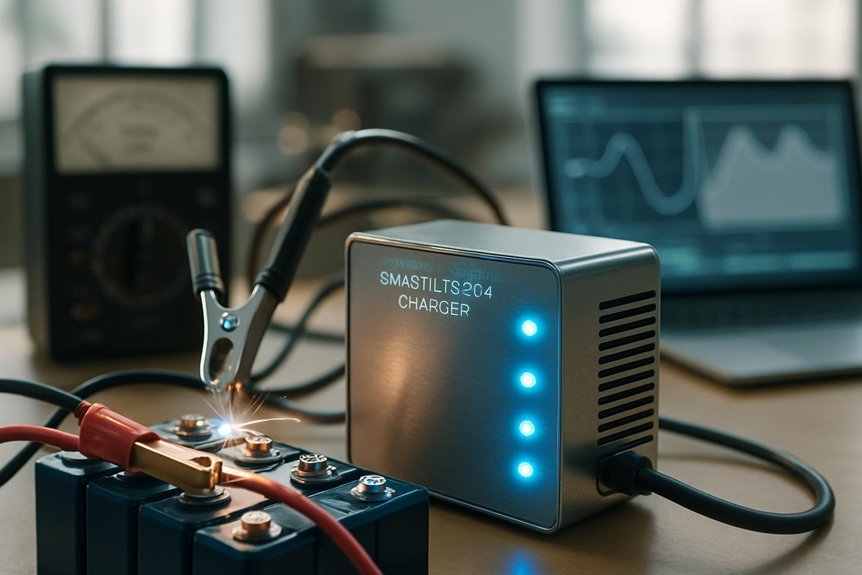
To detect and fix charging faults, our updates tighten the fault-detection logic and sharpen the diagnostic thresholds that govern charging operations. We systematically analyze input, voltage, current, and temperature signals to identify deviation patterns indicative of fault conditions. Our approach combines fault tolerance with responsive recovery: when anomalies appear, we isolate the fault path, adjust charging parameters, and revalidate integrity before resuming normal operation. Thermal mapping plays a critical role, enabling us to correlate spatial temperature distributions with electrical behavior, revealing localized overheating that could precede failure. We document every adjustment, maintain traceable decision criteria, and verify reproducibility across multiple test cases. By emphasizing rigorous checks and deterministic remediation steps, we reduce the likelihood of undetected faults propagating through cycles.
Protective Guardrails: Overcharge, Overheat, and Short-Circuit
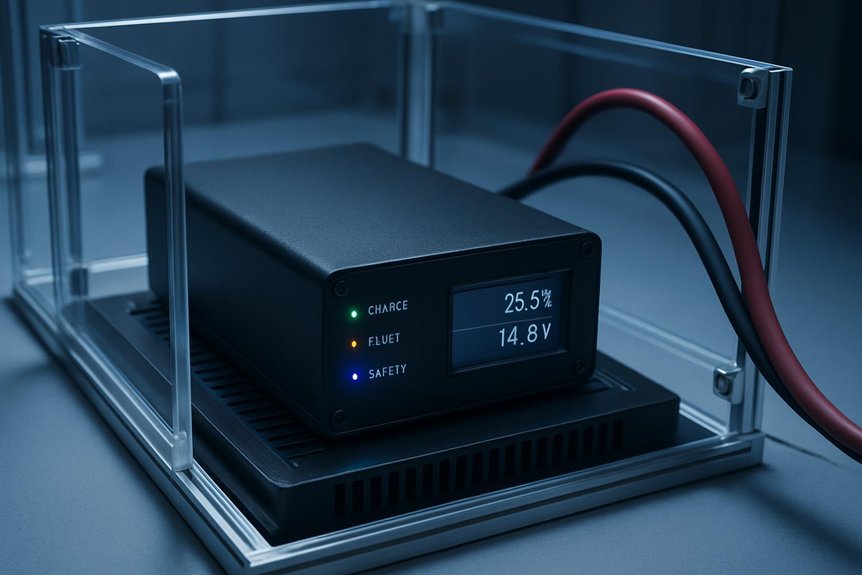
Are protective guardrails our first line of defense against dangerous battery states? We deploy firmware-driven guardrails to detect overcharge, overheat, and short-circuit conditions and to intervene immediately. Our approach leverages continuous monitoring, fast fault indicators, and predefined response thresholds aligned with safety standards. When a parameter exits acceptable bounds, the charger reduces or terminates charging, diverts current, or disconnects the pack as needed. We validate states through redundant sensing and cross-checks to minimize false positives while preserving safety margins. Updates tighten protection by refining fault indicators and re-tuning guard thresholds in response to new data. This disciplined process preserves reliability, reduces risk, and keeps users informed of any protective actions, ensuring consistent adherence to safety standards without compromising performance.
Aging LiFePO4 Cells and Different Chemistries
Aging LiFePO4 cells change in predictable ways that affect performance, safety, and charge behavior. We, as readers and practitioners, observe gradual capacity loss, higher internal resistance, and slightly altered voltage profiles. These shifts influence charge acceptance, temperature rise, and state-of-health estimates, demanding recalibration and guarded operation. Different chemistries present distinct aging pathways: LiFePO4 favors stable cycle life but can suffer from surface impedance growth; cobalt-rich chemistries may degrade faster under high-temperature stress; nickel-rich blends risk more pronounced capacity fade. Understanding aging degradation helps us set realistic expectations for lifespan, safety margins, and maintenance intervals. We weigh chemistry tradeoffs when selecting cell stacks for a given application, ensuring firmware protections remain aligned with each chemistry’s aging behavior and failure modes.
How Firmware Updates Happen and How Often They Roll Out
Firmware updates for smart LiFePO4 chargers roll out in carefully controlled stages to preserve safety and reliability. We explain the process to you with clarity and rigor. Updates begin after validation tests confirm bug fixes, security improvements, and performance gains. We push firmware packages through staged environments, then pilot deployments before wide distribution, monitoring for anomalies at each step. Rollouts prioritize hardware compatibility, ensuring drivers and metadata align with current component sets. When new features arrive, we assess risk versus reward, avoiding abrupt changes that could destabilize operation. We alert customers to deprecation paths and support timelines, including notes about obsolete firmware and required baselines. Release cadences vary by product line, regulatory requirements, and field feedback, but our objective remains consistent: dependable, safe charging through careful, transparent updates.
Practical Steps to Keep Your Charger Updated and Safe
To stay safe and up to date, we follow a precise, repeatable process for maintaining your LiFePO4 charger’s firmware. We keep a orderly schedule, verify compatibility, and confirm device identity before any change. Our focus is on updates rollout and robust fault detection, ensuring uninterrupted operation.
We uphold a precise, repeatable process to safely update LiFePO4 charger firmware with compatibility checks, identity verification, and robust fault detection.
- Verify model and firmware version before initiating any update.
- Schedule maintenance windows and backup current settings.
- Apply signed firmware, then run full self-checks and fault detection diagnostics.
- Confirm successful boot, log outcomes, and monitor performance for anomalies.
We communicate changes clearly, test rollback paths, and document each step. By adhering to these steps, we minimize risk, maximize safety, and maintain long-term reliability.
Frequently Asked Questions
Do Firmware Updates Impact Charger Warranty Coverage?
Firmware updates can affect warranty coverage; applying firmware licensing terms and ensuring proper procedure helps. We clarify that improper updates may lead to warranty exclusions, so we follow documented steps, preserving protections while maintaining device safety and performance.
Can Updates Increase Charging Speed or Efficiency?
We can, indeed, improve speed optimization and battery safety with updates. We prioritize speed optimization, reliability, and safety in every step; we monitor performance, verify compatibility, and confirm that enhancements preserve battery safety while boosting charging efficiency.
Are There Risks During Firmware Update Failures?
Yes, there are risks during firmware update failures. We assess firmware compatibility, implement safeguards, and plan update rollback mechanisms to recover. We communicate clearly, verify integrity, and preserve safety-critical functions while we mitigate potential bricking or misconfigurations.
How to Verify a Legitimate Firmware Update Source?
We verify legitimacy by checking the official verification source and cryptographic signatures, then confirm the update authenticity with checksum validation. We follow a rigorous process, ensuring the source is trusted and the firmware matches our device model and version.
Do Updates Support Different Lifepo4 Cell Voltages?
We can tailor updates to LiFePO4 cells; for example, a hypothetical 4-cell bank adapts via update compatibility, then performs voltage profiling to avoid over/under charging. We ensure precise, methodical steps for safe, robust operation.
Conclusion
We update with precision because safety isn’t static. Juxtaposing old risk with new safeguards, we see how tightened watchdogs and redundant sensing transform failure into foresight. Where yesterday’s limits blurred the line between fault and normal, today’s guardrails—overcharge, overheat, short-circuit—highlight proactive protection. Changes arrive methodically, with validation and rollback plans, ensuring aging chemistries stay trustworthy. Together, we keep charging safer, one measured update at a time, converging reliability and clarity in every cycle.