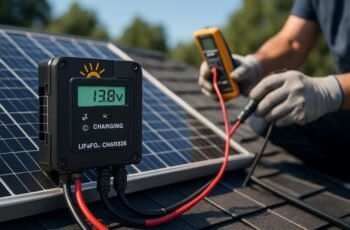
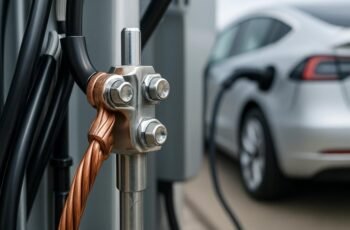
When we consider LiFePO4 chargers, it’s clear that dust, moisture, and corrosion each play a critical role in degrading their efficiency and safety. Dust clogs ventilation, moisture disrupts circuits, and corrosion elevates resistance, all of which accelerate wear and risk failure. Understanding these impacts allows us to identify vulnerabilities early. But what specific mechanisms cause these problems, and how can we effectively counteract them to protect our chargers?
Key Takeaways
- Dust accumulation obstructs ventilation, causing overheating and erratic charging behavior in LiFePO4 chargers.
- Moisture creates conductive pathways that disrupt voltage regulation and promote dielectric breakdown in chargers.
- Corrosion increases electrical resistance and can cause open or short circuits, compromising charger functionality.
- Metal oxidation progresses from insulating oxide layers to structural failure, leading to charger malfunction.
- Dust, moisture, and corrosion elevate fire risks and reduce charger lifespan without proper preventive measures.
How Dust Builds Up and Harms LiFePO4 Chargers
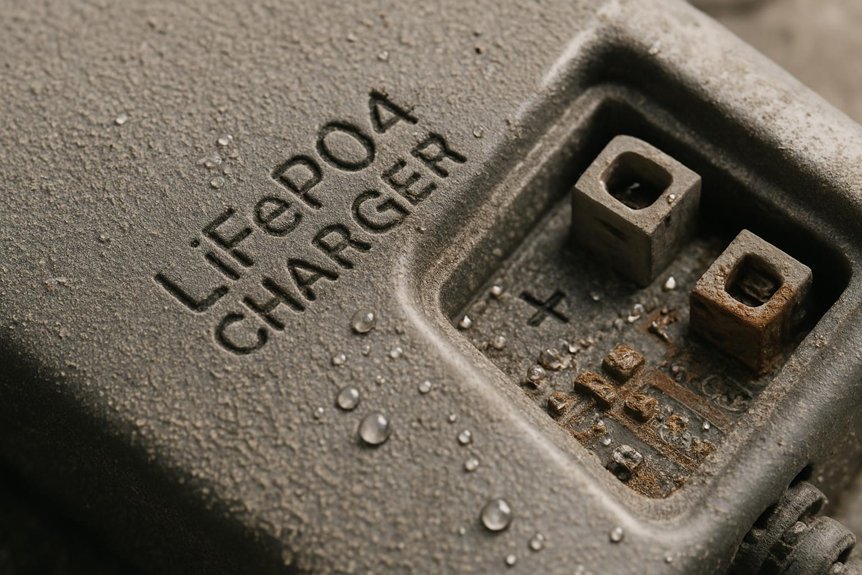
Although dust accumulation may seem harmless at first, it can greatly impair the performance of LiFePO4 chargers over time. Dust particles settle on internal components, obstructing ventilation pathways and causing localized overheating. This thermal stress accelerates component degradation, directly reducing charger lifespan. Additionally, dust acts as an insulating layer, diminishing heat dissipation efficiency and forcing the charger’s cooling system to work harder. Over time, this leads to increased electrical resistance at connection points, impairing current flow and causing erratic charging behavior. By analyzing dust accumulation’s impact, we see it compromises both thermal management and electrical integrity, which are critical for sustained charger operation. As a result, regular cleaning and maintenance are essential to mitigate dust’s detrimental effects and preserve the charger lifespan effectively.
Why Moisture Is a Hidden Threat to Charging Performance
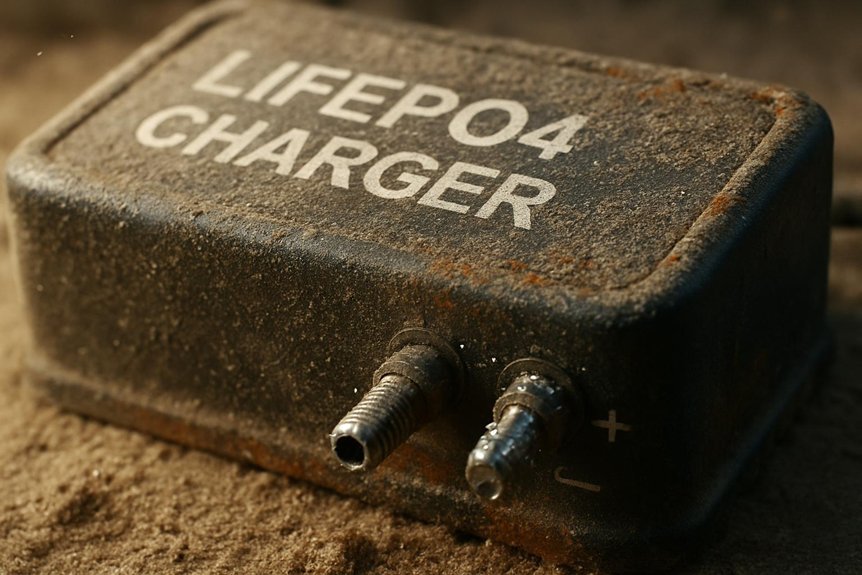
While dust disrupts thermal regulation and electrical connections, moisture introduces a different set of challenges that can be even more insidious for LiFePO4 chargers. Moisture accumulation inside charger components often occurs unnoticed, especially in environments with fluctuating humidity levels. This hidden moisture creates conductive pathways that interfere with the charger’s circuitry, leading to erratic voltage regulation and compromised current flow. Additionally, moisture promotes dielectric breakdown in insulating materials, reducing the charger’s overall reliability. Unlike visible dust, moisture’s impact is subtle yet persistent, gradually degrading performance without immediate symptoms. By monitoring and controlling ambient humidity levels, we can mitigate moisture accumulation and maintain peak charging efficiency. Understanding this invisible threat allows us to implement proactive measures, ensuring LiFePO4 chargers operate safely and effectively over their service life.
The Role of Corrosion in Damaging Charger Components
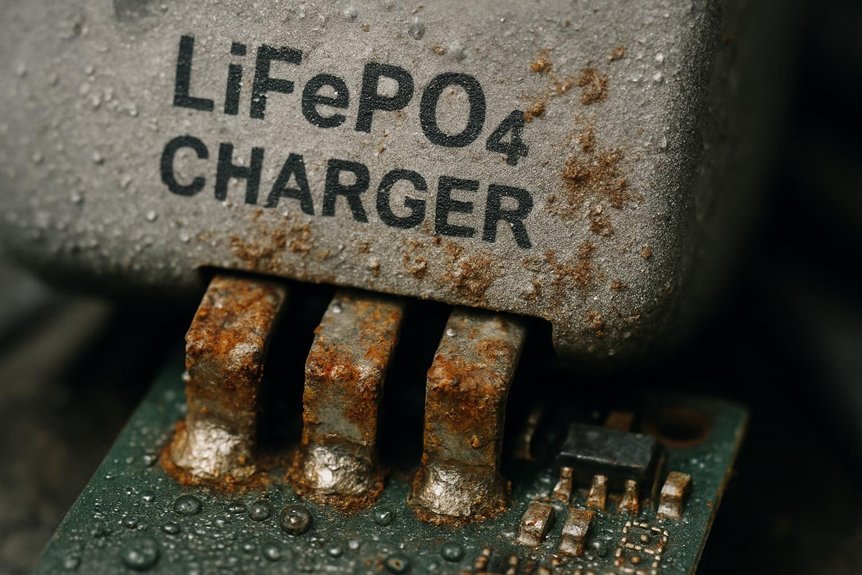
Corrosion accelerates metal oxidation, which directly impairs circuit integrity and electrical conductivity in LiFePO4 chargers. We need to understand how this degradation compromises component performance and leads to failures. Identifying effective prevention methods is essential to maintain charger reliability over time.
Corrosion Effects on Circuits
When metal surfaces within LiFePO4 charger circuits interact with environmental elements like moisture and salts, they undergo electrochemical reactions that degrade their integrity. This corrosion disrupts circuit integrity by increasing resistance, causing intermittent connections, and potentially leading to open circuits or short circuits. Corrosion products can also bridge conductive paths, resulting in malfunction or failure. To maintain reliable charger performance, corrosion prevention is essential. Effective strategies include applying conformal coatings, using corrosion-resistant materials, and ensuring proper sealing against moisture ingress. Regular inspection and cleaning further mitigate corrosion risks by removing contaminants that accelerate degradation. By understanding how corrosion impacts circuit components, we can implement targeted measures to preserve circuit integrity and prolong the operational lifespan of LiFePO4 chargers.
Metal Oxidation Impact
Because metal oxidation fundamentally alters the chemical composition of charger components, we need to carefully examine how this process compromises their functionality. Oxidation initiates corrosion, accelerating metal fatigue that weakens connectors and leads to electrical failures. Understanding the stages helps us identify essential vulnerabilities.
| Oxidation Stage | Impact on Components |
|---|---|
| Initial Oxide Layer | Insulating, disrupts current flow |
| Progressive Corrosion | Structural weakening, metal fatigue |
| Advanced Degradation | Cracking, loss of conductivity |
| Complete Failure | Component malfunction or short circuit |
This degradation reduces charger reliability and lifespan. While oxidation prevention is vital, analyzing the impact of metal oxidation informs maintenance and design improvements, enabling us to mitigate damage before failure occurs.
Preventing Component Degradation
Although corrosion presents a persistent threat to charger components, we can greatly extend their operational lifespan through targeted prevention strategies. Improving charger lifespan and maintaining component reliability hinge on minimizing corrosive effects at critical contact points. To achieve this, we recommend:
- Applying protective conformal coatings to shield vulnerable surfaces from moisture and contaminants.
- Utilizing corrosion-resistant alloys for connectors and terminals to reduce oxidation rates.
- Implementing controlled environmental conditions during manufacturing and storage to limit exposure to humidity.
- Conducting regular maintenance inspections to identify early corrosion signs and address them promptly.
How Dust, Moisture, and Corrosion Cause Safety Risks
We need to understand how dust, moisture, and corrosion actively contribute to electrical short circuits, which compromise charger safety. These factors also degrade battery performance by disrupting internal chemistry and increasing resistance. Ultimately, this combination elevates the risk of fire hazards, demanding careful analysis and mitigation.
Electrical Short Circuit
When dust, moisture, and corrosion accumulate within LiFePO4 chargers, they create conductive paths that greatly increase the risk of electrical short circuits. Understanding the short circuit causes is critical for preventing shorts and ensuring charger safety. These contaminants bridge electrical contacts, allowing unintended current flow that can lead to component damage, overheating, or fire hazards. To mitigate these risks, we must focus on:
- Regular cleaning to remove dust and debris.
- Implementing moisture barriers and seals.
- Using corrosion-resistant materials for internal components.
- Routine inspections to detect early signs of corrosion or contamination.
Battery Performance Degradation
Since dust, moisture, and corrosion directly impact the internal environment of LiFePO4 chargers, they accelerate battery performance degradation that compromises safety. Contaminants create resistive layers and promote electrochemical imbalances, reducing battery lifespan and skewing critical performance metrics such as capacity retention and internal resistance. Moisture ingress catalyzes corrosion on electrode surfaces and connectors, impairing ion exchange efficiency and causing uneven charge-discharge cycles. Dust particles obstruct ventilation and heat dissipation, raising internal temperatures that exacerbate material breakdown. Collectively, these factors degrade cell integrity and energy output consistency, increasing the risk of malfunction. By monitoring performance metrics closely and maintaining a contaminant-free environment, we can better preserve battery lifespan and operational reliability, mitigating safety risks linked to accelerated degradation processes.
Increased Fire Hazard
Although dust, moisture, and corrosion might seem like minor nuisances, they considerably elevate the fire hazard in LiFePO4 chargers by creating conditions conducive to electrical faults. These contaminants compromise fire safety by undermining the charger design’s integrity, increasing the risk of short circuits and overheating. We should focus on how these factors contribute to fire hazards:
- Dust accumulation causes insulation breakdown, raising the chance of arcing.
- Moisture promotes conductive pathways, leading to unintended current flow.
- Corrosion deteriorates contacts and connectors, increasing resistance and heat generation.
- Combined effects accelerate component failure, triggering thermal runaway.
Understanding these mechanisms helps us improve charger design and implement protective measures that mitigate fire risks, ensuring reliable and safe operation of LiFePO4 charging systems.
Simple Steps to Prevent Dust and Moisture Damage
Because dust and moisture can rapidly degrade LiFePO4 chargers’ performance, we must implement targeted preventive measures. First, situating chargers in controlled environments with low humidity and minimal airborne particles is essential. Utilizing enclosures with proper sealing reduces dust ingress and moisture exposure effectively. Second, applying protective coatings to sensitive components creates a barrier against corrosive agents and particulate contamination. These coatings must be electrically insulating and chemically stable under operational conditions to maintain charger integrity. Additionally, incorporating desiccants inside enclosures can absorb residual moisture, further minimizing corrosion risk. By combining environmental control, physical barriers, and chemical protection, we markedly extend charger lifespan and reliability. These straightforward preventive measures form the foundation of effective dust and moisture damage mitigation for LiFePO4 charging systems.
Cleaning and Maintaining Your LiFePO4 Charger Safely
When we regularly clean and maintain our LiFePO4 chargers, we can prevent performance issues caused by dust, moisture, and corrosion before they escalate. Proper charger storage and adherence to safety practices are essential to minimize environmental factors’ impact. Establishing systematic inspection routines helps identify early signs of contamination.
Regular cleaning and proper storage of LiFePO4 chargers prevent damage and ensure optimal performance.
Key steps include:
- Use appropriate maintenance tools to remove dust and moisture without damaging components.
- Follow a consistent cleaning frequency based on user habits and environmental exposure.
- Inspect connectors and circuit boards for corrosion during each maintenance session.
- Store chargers with protective covers to reduce exposure to harmful elements.
Choosing Protective Gear to Shield Chargers From Corrosion
Regular cleaning and proper storage help reduce contamination, but selecting the right protective gear adds a critical layer of defense against corrosion. We recommend applying specialized protective coatings designed to form a barrier against moisture and airborne contaminants. These coatings, often incorporating corrosion inhibitors, chemically interact with metal surfaces to prevent electrochemical reactions that cause rust and degradation. When choosing protective gear, consider materials compatible with the charger’s housing to avoid adverse reactions or compromised performance. Additionally, employing corrosion inhibitors within coatings extends protection by neutralizing corrosive agents. Implementing these measures systematically enhances the charger’s longevity and reliability. By combining targeted protective coatings with corrosion inhibitors, we create a robust shield, markedly reducing maintenance needs and operational failures related to environmental exposure.
Frequently Asked Questions
Can Lifepo4 Chargers Be Used in Extreme Temperatures?
We can use LiFePO4 chargers in temperature extremes, but we must monitor their thermal performance closely. These chargers operate efficiently within specified limits; outside those, performance degrades, risking damage and reduced lifespan from overheating or freezing conditions.
How Does Charger Age Affect Charging Efficiency?
We’ve noticed charger age subtly degrades charging efficiency due to wear in internal components, impacting charging cycles and battery chemistry interaction. Over time, this reduces precision in voltage control, leading to less ideal battery performance and longevity.
Are There Specific Brands More Resistant to Corrosion?
We’ve found that brands like Victron and Renogy offer superior corrosion resistance in their LiFePO4 chargers. Our brand comparisons show their robust coatings and sealed designs greatly enhance longevity in harsh environments.
What Are the Signs of Internal Battery Damage?
Notice battery swelling or circuit failure—could they be signs of internal damage? We’ve seen these indicators often. Voltage drops, overheating, and reduced capacity also signal problems; monitoring these helps us diagnose and prevent further battery issues effectively.
Can Software Updates Improve Charger Durability?
Yes, we can improve charger durability through software updates by implementing charger maintenance tips and leveraging software optimization benefits. These updates enhance thermal management, error detection, and charging algorithms, extending the charger’s operational lifespan and reliability.
Conclusion
Together, dust, moisture, and corrosion quietly weave a web that can cloud our LiFePO4 chargers’ clarity and reliability. By recognizing their subtle encroachments, we can act decisively to clear the fog, fortify essential connections, and maintain the charger’s pulse. With thoughtful maintenance and protective measures, we preserve the charger’s integrity, ensuring it continues to perform with precision and safety, much like a well-tuned instrument in a demanding symphony.