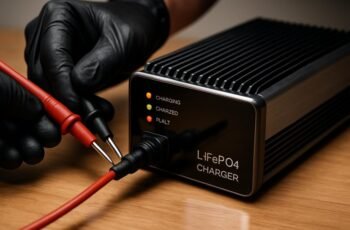
We understand LiFePO4 charging demands careful attention to chemistry-specific targets, temperature effects, and validated curves. If we assume generic rules or skip calibration, we risk improper termination, improper current limits, and imbalanced packs. We’ll outline conservative CC/CV profiles, proper preconditioning, and thermal management, while stressing continuous monitoring and documented procedures. There’s more to this than meets the eye, and the right safeguards keep packs safe and reliable—let’s examine where mistakes commonly occur and how to avoid them.
Key Takeaways
- Avoid aggressive, non-validated charging curves; rely on manufacturer specs and calibrated voltage readings to ensure proper termination and cell balance.
- Match charger voltage, current limits, and end-of-charge behavior to LiFePO4 chemistry; avoid generic profiles or misaligned algorithms.
- Implement thorough temperature management; precondition cold packs, monitor real-time temps, and adjust current to prevent plating and degradation.
- Document results with repeatable tests and instrumentation; verify safety features, logging, and fail-safes to ensure reliable charging.
- Align chemistry awareness with programmable charger capabilities; validate with explicit LiFePO4 compatibility and conservative current limits.
LiFePO4 Charging Basics: Why Good Charging Matters
Charging LiFePO4 correctly is essential because it directly affects cell longevity, efficiency, and safety. We, as readers and practitioners, focus on fundamentals that determine performance and reliability. Proper charging controls voltage to prevent overcharge, manages current to minimize stress, and respects temperature limits to sustain chemistry. LiFePO4 cells tolerate wide cycles, but improper methods introduce lithium safe concerns, reduce capacity, and accelerate degradation. We verify charger compatibility, monitor cell balance, and adhere to manufacturer guidelines to avoid charging mistakes. Our approach emphasizes gradual, controlled current during initial stages, and strict termination criteria once voltage targets are reached. By documenting procedures and inspecting connectors, we minimize parasitic losses and thermal buildup. Clear, disciplined charging practices uphold safety, efficiency, and long-term usable life for every pack.
Safe Voltage Targets for LiFePO4 Charging
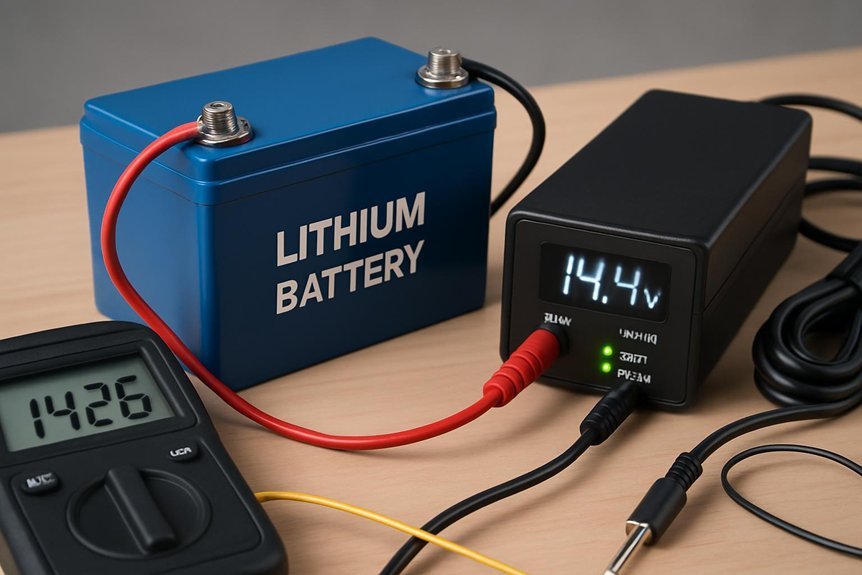
With LiFePO4, setting safe voltage targets guides the charging process and preserves long-term cell health. We define targets by chemistry data: charge voltage limits, taper behavior, temperature compensation, and balanced cell groups. Our approach avoids overvoltage that stresses cathodes, and undercharge that reduces capacity. We recommend adhering to manufacturer specifications and calibrating voltage readings across packs with consistent sensing. Beware of misleading hype that promises faster finishes or higher real-world energy without accounting for safety margins. We favor conservative targets during temperature extremes and aging, then verify with periodic impedance checks and cell-by-cell comparisons. Flawed assumptions about linear charge curves can mislead timing decisions; instead, we base targets on validated charging profiles, safe termination, and documented performance.
Signs of Undercharging and What It Costs Your Pack
Are you aware that undercharging a LiFePO4 pack quietly degrades performance and shortens its lifespan? We see subtle effects in capacity fade, reduced cycle life, and degraded runtime. Our focus is on signs indicators we can monitor without specialized gear: lower Crest voltage stability, earlier cutoff of usable capacity, and flatter discharge curves. Undercharging costs accumulate as frequent partial cycles, higher internal resistance, and skewed state-of-health metrics. To help, consider this compact view:
| Indicator | Impact | Action |
|---|---|---|
| Lower end-of-charge voltage | Capacity loss over cycles | Recalibrate charging target |
| Reduced runtime | Visible drop in available Ah | Inspect balance and SOC estimates |
| Slower voltage rebound | Aging cells, uneven cells | Equalize and verify pack health |
How Temperature Shapes LiFePO4 Charging and What to Do
Temperature sets the charging limits we must observe, as temperature-dependent charging thresholds vary with chemistry and state of health. We’ll outline how the acceptable charging window shifts with ambient and pack temperatures, and why thermal management directly affects current tolerances and charging duration. In practice, this means adjusting charge profiles and maintaining effective cooling to preserve efficiency, accuracy, and pack longevity.
Temperature-Dependent Charging Limits
How does temperature affect LiFePO4 charging limits, and what practical steps should we take? We track charging limits as a function of ambient and cell temperature, not as a fixed value. At low temperatures, charge acceptance drops and risk of lithium plating rises, so we reduce current and, if needed, use a preheating step to reach safe ranges. At elevated temperatures, increased impedance and gas generation can alter voltage thresholds, so we modestly trim charge current and monitor cell voltages closely. We avoid extrapolating from an irrelevant topic or stray detail; instead, we follow temperature-aware profiles and manufacturer guidance. We document observed deviations, ensure proper thermal management, and verify that protection circuits respond correctly across the operating envelope. Precision and caution guide our temperature-dependent charging limits.
Temperature Range For Charging
We’ve seen how ambient and cell temperature shape charging limits, and we must map these effects across the full temperature range we expect. Temperature range for charging defines safe windows for LiFePO4 packs, with precise limits we must respect to avoid degradation. We consider temperature sensitivity in both cell chemistry and electrolyte, ensuring we stay within recommended charging currents and voltages. Charger compatibility matters; not all units perform well at extremes, and some shut down at low or high ends. We advise predefined operating bounds and conditional overrides only when data support them. Below, table shows grouped ranges and implications for safe charging practice.
| Range (°C) | Typical Action | Risk Implication |
|---|---|---|
| -10 to 0 | Avoid aggressive charging | Increased impedance risks |
| 0 to 10 | Caution, slow ramp | Potential capacity loss |
| 10 to 40 | Optimal, standard charging | Best performance |
| 40+ | If permitted, monitor closely | Thermal stress risk |
Thermal Management Impacts Charging
Thermal management directly shapes charging behavior for LiFePO4, influencing not only safe current and voltage limits but also how quickly cells respond to ongoing charge. We must recognize that elevated temperatures can enable higher initial currents but increase degradation risk, while cold conditions suppress activity and extend charge times. Our guidance counters charging myths by detailing how temperature steadiness improves predictability, reduces voltage overshoot, and avoids premature termination. We acknowledge thermal anxiety in users and translate it into actionable controls.
- Maintain mid-range temperatures during bulk charging to balance speed and longevity.
- Use staged cooling or heating to keep cell packs within target bands, avoiding rapid hot spots.
- Monitor real-time temperature and adjust current in response to anomalies, preventing mistimed terminations.
Choosing the Right Charger for LiFePO4 Charging
We start by ensuring charger voltage matches LiFePO4 battery requirements to prevent under- or over-charging. We’ll also verify battery chemistry compatibility and confirm built-in safety features before connection. This helps us prevent common mistakes and protects performance and safety.
Charger Voltage Matching
Choosing the right charger for LiFePO4 cells hinges on matching the charger’s output voltage to the battery pack’s nominal voltage and end-of-charge requirements. We proceed with careful selection to avoid under- or over-voltage stress.
- Confirm nominal pack voltage and end-of-charge voltage spec, then select a charger whose voltage aligns within tolerance.
- Avoid chargers that exceed safe termination voltages, which can accelerate degradation or trigger protection shutoffs.
- Validate that the charger’s charge algorithm and current limits suit the pack chemistry, acknowledging an irrelevant topic or random idea may tempt unchecked customization.
We adopt a conservative approach, testing with proper instrumentation and documenting results to prevent future confusion or misapplication.
Battery Chemistry Awareness
Is it enough to know the pack’s chemistry to pick a charger, or must you align every charging parameter with LiFePO4 characteristics? We answer by focusing on battery chemistry awareness. LiFePO4 cells demand careful matching of voltage, current, termination, and temperature considerations; generic chargers often misinterpret chemistry labels. We assess the charger’s programmable settings, not just its advertised chemistry. Our approach minimizes charging misconceptions by validating that the charger’s CC/CV profile, termination voltage, and end-of-charge behavior align with LiFePO4 behavior and cell balance needs. We emphasize conservative current limits, proper preconditioning, and avoidance of aggressive profiles that can stress chemistries. In short, choose a charger that explicitly documents LiFePO4 compatibility and provides controllable parameters, then verify real-world performance with measured voltages and temperatures.
Safety Features Check
Safety features are essential because LiFePO4 charging tolerances demand reliable protection against overcurrent, overvoltage, and overheating. We approach the safety features check with a disciplined mindset, documenting each criterion and reader implications. We prioritize clear, verifiable signals over vague assurances, and we avoid assuming performance beyond specifications. Our checklists focus on charger behavior, temperature response, and fault handling, ensuring we select equipment that aligns with battery chemistry and system needs. We value repeatable results, auditable data, and conservative limits to prevent thermal runaway or late-life damage. By applying these guardrails, we reduce risk while preserving charging efficiency and pack longevity. Trust our safety features checklist to guide responsible charger selection and operational discipline.
- Verify input protections, fault alarms, and automatic shutdown behavior
- Confirm temperature sensing, thermal cutoffs, and derating profiles
- Validate communication, logging, and fail-safe indicators
Balancing LiFePO4 Packs: When to Balance and Why It Helps
When should you balance LiFePO4 packs, and why does it help? We approach balancing as a targeted maintenance step, not a default routine. We balance to correct cell-to-cell capacity and voltage disparities that drift during use, aging, or partial charging. Balanced packs improve runtime predictability, reduce false cell faults, and preserve overall pack health by ensuring each cell operates within its safe voltage window. We avoid overemphasis on balancing as a cure-all; misapplied balance cycles can waste energy and wear hardware. With LiFePO4, the balancing window is narrower than other chemistries, so we time balance events around noticeable voltage spread rather than calendar schedules. Be aware of misleading myths and equalization myths that overstate benefits or neglect practical safeguards.
Charging in Extreme Conditions: Cold, Heat, and Endurance Strategies
Charging LiFePO4 packs under extreme temperatures tests both chemistry and hardware limits, so we address strategies for cold, heat, and endurance operating conditions with careful, data-driven steps. We present actionable guidance we can trust, not guesswork, and we frame it around measurable outcomes, safety margins, and repeatable practices. Discussion ideas: charging etiquette, charging aesthetics.
Charging LiFePO4 under extreme temps with data-driven, safe, repeatable charging protocols and clear etiquette.
1) Cold conditions: preconditioning, moderate charging current, and ambient warming until cell resistance stabilizes, then proceed with calibrated profiles.
2) Hot conditions: short high-temperature intervals, active cooling, and vigilance for voltage sag, with strict termination thresholds to protect cell integrity.
3) Endurance strategy: balanced pacing, rest cycles, and metrics tracking to sustain service life while preserving performance margins.
We emphasize disciplined procedures, precise logging, and clear adherence to charging etiquette and aesthetics to minimize risk.
The BMS in Charging Safety: What It Does and Why It Matters
How does the Battery Management System protect you during LiFePO4 charging, and why does it matter? We rely on the bms role to monitor cell voltages, currents, and temperatures, ensuring safe operation within specifications. It prevents overcharge, undercharge, and thermal runaway by balancing cells and controlling charging current. It also isolates faults, flags deviations, and communicates with the charger or system controller for shutdown if needed. This is essential for long life, reliability, and safety, not merely electronics jargon. Charging safety hinges on accurate sensing, robust protection logic, and fail-safe actuation.
| Channel | Signal | Action |
|---|---|---|
| Voltage | Cells/readouts | Trip if limits breached |
| Current | Charge/discharge | Reduce or halt flow |
| Temperature | Thermal sensors | Adjust or stop charging |
Practical LiFePO4 Charging Routines to Extend Life and Performance
Effective LiFePO4 charging routines balance safety, longevity, and performance by applying a disciplined, stepwise approach that respects cell limits and temperature trends. We outline practical routines we trust to minimize aging while preserving capacity and safety, acknowledging charging myths and avoiding impulsive tweaks. Our approach combines measurable controls with disciplined execution, underpinned by monitoring and codified procedures instead of guesswork. We view digitized rituals as aids, not hacks, and we verify every parameter before, during, and after charging.
Effective LiFePO4 charging hinges on disciplined, monitored, stepwise routines that respect limits and temperature trends.
- Pre-charge checks, temperature-aware conditioning, and constant-current/constant-voltage profiling within manufacturer specs.
- Periodic rest periods and impedance tracking to detect aging signals, adjusting schedules accordingly.
- Documentation of cycles, voltages, temperatures, and outcomes to refine routines over time.
Frequently Asked Questions
Can Lifepo4 Charges Be Fast-Charged Safely in All Temps?
Yes, we can fast-charge LiFePO4 safely only within narrow temperature windows; charging safety hinges on temperature effects, aging cells risk rises otherwise, and balancing requirements must be met to avoid voltage drift and capacity loss.
How Does State of Charge Impact Cycle Life Differently?
State of charge substantially shapes cycle life; we observe slower degradation when kept within mid-range SOC and avoid extremes. We monitor SOC carefully, adjusting use and charging to preserve cycle life, communicating risks clearly to you.
What Happens if a BMS Fails During Charging?
What if a BMS fails during charging, we risk uncontrolled current, overcharge, or thermal runaway, we risk unsafe conditions; what could happen, what if scenarios, we outline BMS failure implications with cautious, precise guidance.
Are There Charger Compatibility Issues With Aging Cells?
Charger compatibility can be affected by aging cells; as cells age, voltage profiles shift and charging tolerances tighten. We carefully verify compatibility, monitor impedance, and adjust parameters to preserve safety and performance in aging cells.
Do All Lifepo4 Chemistries Require Balancing?
We do not require balancing for all LiFePO4 chemistries; some packs tolerate minimal balancing. However, we monitor for bare cell balancing and charging safety, ensuring cells remain within spec while charging, to prevent voltage drift and thermal issues.
Conclusion
We’ve covered why LiFePO4 charging demands chemistry-aware targets, calibrated readings, and strict thermal management. By sticking to manufacturer specs, using conservative CC/CV profiles, and verifying each stage, you prevent overcharge, undercharge, and thermal stress. Continuous monitoring and timely balancing keep packs healthy and safe. Don’t cut corners or skip checks—that’s a recipe for failure. In short, follow the data, stay vigilant, and charge with a steady hand—you’ll sleep better knowing you’ve got it under control.